Category: Uncategorized

  • What Is a Serious Adverse Event (SAE) in a Clinical Trial? Definition, Reporting, and Sponsor Obligations

    What Is a Serious Adverse Event (SAE) in a Clinical Trial? Definition, Reporting, and Sponsor Obligations

    A serious adverse event (SAE) is not a documentation checkbox. It is one of the most consequential safety signals a sponsor will encounter during a study — and how you respond to it, how fast, and how completely, has direct implications for your regulatory standing, your trial timeline, and your eventual FDA submission.

    This article covers the regulatory definition of an SAE, how it differs from an adverse event, the reporting timelines that apply under FDA and ICH-GCP frameworks, and the specific obligations that fall on sponsors when an SAE occurs.


    The Regulatory Definition of a Serious Adverse Event

    The FDA defines a serious adverse event as any untoward medical occurrence that results in one or more of the following:

    • Death
    • Life-threatening condition (the patient was at immediate risk of death at the time of the event)
    • Inpatient hospitalization or prolongation of existing hospitalization
    • Persistent or significant disability or incapacity
    • Congenital anomaly or birth defect
    • Important medical event that, based on appropriate medical judgment, may jeopardize the patient and may require medical or surgical intervention to prevent one of the outcomes listed above

    That last category is intentionally broad. It exists to capture events that do not technically meet the first five criteria but are clinically significant enough to warrant reporting. Regulatory reviewers and IRBs expect sponsors to apply judgment here — not just run through a checklist.

    The ICH-GCP E6(R2) guideline uses the same framework, which means this definition applies consistently whether your trial is running under an IDE in the United States or under a protocol governed by ISO 14155 in Panama, Chile, or El Salvador.


    SAE vs. Adverse Event: What Is the Difference?

    An adverse event (AE) is any unintended medical occurrence in a clinical trial participant, regardless of whether it is related to the investigational product or device. It does not have to be serious to be documented.

    An SAE is a subset of adverse events that meets one or more of the seriousness criteria above. Every SAE is an adverse event, but not every adverse event is an SAE.

    A third category worth knowing is the unanticipated adverse device effect (UADE), which applies specifically to medical device trials. Under FDA 21 CFR 812, a UADE is any serious adverse effect on health or safety — or any life-threatening problem or death caused by or associated with a device — where that effect, problem, or death was not previously identified in nature, severity, or degree of incidence in the investigational plan. UADEs carry their own reporting obligations and timelines, which are stricter than standard SAE reporting.

    A practical example

    A patient in a cardiovascular device trial develops a minor rash at the implant site. That is an adverse event. It gets documented in the case report form, but it does not trigger an expedited SAE report.

    Three days later, the same patient is hospitalized with a suspected device-related infection requiring surgical intervention. That hospitalization, combined with the need for surgical management, meets the SAE threshold. Reporting obligations activate immediately.


    Who Is Responsible for SAE Reporting?

    Responsibility is shared, but it is not equal. The investigator at the clinical site is responsible for identifying the event, assessing causality, and reporting it to the sponsor within the timeframe specified in the protocol. The sponsor then evaluates the event, determines whether it meets expedited reporting thresholds, and submits the appropriate report to the FDA and — where applicable — to the ethics committee and local health authority.

    In a first-in-human trial, the sponsor is often a small startup with a lean clinical team. That makes the CRO's role in SAE management especially important. A CRO that owns the pharmacovigilance workstream should have established SOPs for SAE intake, causality assessment, narrative writing, and regulatory submission — not a process that routes everything back to a two-person sponsor team to sort out.

    Under FDA 21 CFR 812.150(b), sponsors of device investigations must submit reports of unanticipated adverse device effects to FDA and all reviewing IRBs as soon as possible, but no later than 10 working days after first receiving notice. This is a hard deadline, not a target.


    SAE Reporting Timelines You Need to Know

    Timelines vary by event type, jurisdiction, and whether the event is considered related to the investigational product or device. Here is a practical summary for device and biopharma sponsors operating under FDA jurisdiction and ICH-GCP standards.

    For medical device trials (FDA 21 CFR 812)

    Event Type Reporting Deadline
    Unanticipated adverse device effect (UADE) 10 working days to FDA and all reviewing IRBs
    Death or unanticipated serious injury Immediate report to FDA if caused by or associated with the device
    Periodic safety reports Annual (or per IDE agreement)

    For drug and biopharma trials (FDA 21 CFR 312)

    Event Type Reporting Deadline
    Fatal or life-threatening unexpected SUSAR 7 calendar days (initial) + 8 calendar days (follow-up)
    Serious unexpected suspected adverse reaction (non-fatal) 15 calendar days
    Expected serious adverse reactions Annual IND safety report

    ICH-GCP E6(R2) baseline

    ICH-GCP requires investigators to report SAEs to the sponsor immediately, with a written follow-up within the timeframe specified in the protocol. Sponsors then apply their own regulatory reporting obligations on top of that baseline.

    If your trial is running in Latin America under a protocol designed for FDA submission, your SAE reporting obligations run in parallel: you must satisfy both the local health authority's requirements — MINSA in Panama, ISP in Chile, SRS in El Salvador — and FDA's requirements under 21 CFR 812 or 312, depending on your product type.


    What Sponsors Must Do When an SAE Occurs

    When an SAE is reported from a site, the sponsor's response follows a defined sequence. Skipping steps or delaying any of them creates regulatory risk.

    Step 1: Receive and timestamp the initial report

    The clock starts when the sponsor receives the first notification — not when the event occurred. Document the date and time of receipt. That timestamp anchors every subsequent deadline.

    Step 2: Assess causality and expectedness

    The sponsor's medical monitor or designated physician must assess whether the event is:

    • Related or unrelated to the investigational product or device
    • Expected (listed in the investigator's brochure or device description) or unexpected

    An unexpected, related SAE carries the highest reporting urgency. An unrelated, expected event may only require routine documentation in the safety database.

    Step 3: Determine whether expedited reporting is required

    Apply the applicable regulatory framework. For device trials under an IDE, the key question is whether the UADE threshold is met. For IND-governed drug trials, the SUSAR criteria apply. If the event qualifies for expedited reporting, initiate the report immediately.

    Step 4: Notify the FDA and IRB/ethics committee

    Submit the expedited report to FDA within the required window. Simultaneously, notify the reviewing IRB or ethics committee. In multi-site trials, all participating IRBs may need to receive the notification.

    In Latin American jurisdictions, local health authorities also require notification. The specific form, timeline, and submission channel vary by country. In Panama, MINSA/CNBI governs this process. In Chile, ISP/MINSAL. In El Salvador, SRS/CNEIS. A CRO with in-country regulatory experience handles these submissions as part of the trial operations workstream — not as an afterthought.

    Step 5: Prepare the SAE narrative

    The SAE narrative is a written account of the event that includes the patient's relevant medical history, the sequence of events, the investigator's causality assessment, the clinical outcome, and any actions taken. This narrative becomes part of the regulatory submission and the final clinical study report.

    A weak narrative — vague on timeline, missing causality rationale, or inconsistent with the case report form data — will draw questions from FDA reviewers. Write it with the assumption that a reviewer will read it alongside the raw data.

    Step 6: Follow up until resolution

    SAE reporting is not a one-time event. The sponsor must track the event to resolution or stabilization and submit follow-up reports as new information becomes available. If the patient's condition changes materially, a supplemental report may be required.

    Step 7: Update the investigator’s brochure or device description if warranted

    If the SAE reveals a new safety signal not previously identified, the sponsor must evaluate whether the investigator's brochure or device description needs to be updated. If it does, that update triggers a protocol amendment process and additional IRB review.


    SAE Documentation in the Trial Master File

    Every SAE must be documented in the Trial Master File (TMF) in a way that supports reconstruction of the event timeline during an audit. The TMF entry should include:

    • The initial SAE report from the investigator
    • All correspondence between the sponsor and investigator related to the event
    • The causality and expectedness assessment
    • The regulatory submission and any acknowledgment from FDA or the local authority
    • Follow-up reports through resolution
    • Any protocol amendments or brochure updates triggered by the event

    Under ISO 14155, which governs medical device clinical investigations, TMF requirements for SAEs are explicit. If your trial is designed to support an FDA submission under 21 CFR 812.28, the SAE documentation in your TMF must satisfy both the ISO 14155 standard and FDA's foreign clinical data requirements.


    SAE Reporting in Latin American Trials

    Running a first-in-human trial in Latin America does not reduce your SAE reporting obligations to FDA — it adds a parallel layer of local obligations. Sponsors who approach LatAm trial operations primarily as a cost-reduction strategy, without fully understanding the regulatory infrastructure, tend to underestimate this.

    In Panama, El Salvador, Chile, and the Dominican Republic, ethics and regulatory approvals are observed in 30 to 90 days — substantially faster than the 6 to 12 months typical in the U.S. or EU. That speed advantage is real. But it comes with the expectation that the sponsor and CRO are fully equipped to manage SAE reporting to both local authorities and FDA simultaneously.

    The FIH-12 program at bioaccess® includes pharmacovigilance and SAE management as one of its nine workstreams. Protocols are built under ISO 14155 architecture and structured to satisfy FDA 21 CFR 812.28 foreign clinical data standards, which means SAE documentation collected in Panama or Chile is organized for direct use in an IDE or IND submission. The final clinical study report and data room are structured for the sponsor's next FDA regulatory step, with SAE narratives and safety data integrated into the evidence package.

    For a seed-stage or Series A MedTech startup with a two-person clinical team, having a single accountable team manage SAE intake, causality assessment, local regulatory notification, and FDA reporting across all active sites is not a convenience — it is a prerequisite for keeping the trial on schedule.


    Common SAE Reporting Mistakes Sponsors Make

    Even experienced teams make avoidable errors. The most common ones:

    Starting the clock late. The reporting window opens when the sponsor receives notice — not when the medical monitor reviews the case. Delays in internal routing can push a submission past the deadline before anyone realizes it.

    Conflating AE and SAE thresholds. Sponsors sometimes downgrade events that meet the "important medical event" criterion because they do not result in hospitalization. That judgment call should be documented and defensible, not made informally.

    Incomplete causality assessments. Writing "possibly related" without explaining the clinical reasoning is not sufficient. FDA reviewers expect a rationale, not a label.

    Missing local authority notifications. Sponsors focused on FDA compliance sometimes overlook the fact that the local IRB or ethics committee in the trial country also requires notification — often within a shorter window than the FDA deadline.

    Failing to update the brochure. If an SAE reveals a new risk, the investigator's brochure must be updated. Deferring this step creates a gap between the documented risk profile and the actual emerging safety data.


    FAQs

    What is the difference between an SAE and an adverse event in a clinical trial?
    An adverse event is any unintended medical occurrence in a trial participant, regardless of severity or relationship to the investigational product. A serious adverse event is a subset that meets specific seriousness criteria: death, life-threatening condition, hospitalization, persistent disability, congenital anomaly, or an important medical event requiring intervention. Every SAE is an adverse event, but not every adverse event is an SAE.

    What is the FDA reporting deadline for a serious adverse event in a device trial?
    Under FDA 21 CFR 812.150(b), sponsors must report unanticipated adverse device effects to FDA and all reviewing IRBs within 10 working days of first receiving notice. Events involving death or unanticipated serious injury that may be caused by the device require immediate reporting.

    Does running a trial in Latin America change SAE reporting obligations to the FDA?
    No. If your trial is conducted under an IDE or IND, FDA reporting obligations apply regardless of where the trial is conducted. Running a trial in Panama, Chile, or El Salvador adds a parallel obligation to notify local health authorities — MINSA, ISP, SRS — within their own required timeframes, but it does not reduce or replace your FDA obligations.

    What is an unanticipated adverse device effect (UADE) and how does it differ from an SAE?
    A UADE is specific to medical device trials. It is a serious adverse effect on health or safety, or a life-threatening problem or death, caused by or associated with a device, where that effect was not previously identified in nature, severity, or degree of incidence in the investigational plan. A UADE is a type of SAE, but it carries a stricter reporting deadline — 10 working days — and triggers additional obligations including protocol review and possible IDE amendment.

    What must an SAE narrative include?
    An SAE narrative should document the patient's relevant medical history, the sequence of events leading to and following the SAE, the investigator's causality assessment with supporting rationale, the clinical outcome, and any actions taken in response. The narrative becomes part of the regulatory submission and the final clinical study report, so it must be consistent with the case report form data and defensible under audit.

    Who is responsible for SAE reporting in a sponsored trial?
    The investigator at the clinical site is responsible for identifying the event and reporting it to the sponsor immediately. The sponsor is responsible for causality assessment, expedited reporting to FDA and the reviewing IRB, and notification to local health authorities. In a CRO-managed trial, the CRO typically owns the pharmacovigilance workstream and executes these steps on the sponsor's behalf.

    Can SAE data collected in a Latin American trial be used in an FDA submission?
    Yes, when the trial is conducted in compliance with ICH-GCP, ISO 14155, and FDA 21 CFR 812.28 foreign clinical data standards. SAE documentation must be organized to satisfy both local regulatory requirements and FDA's standards for foreign clinical data. A submission-ready evidence package should include complete SAE narratives, causality assessments, and follow-up reports integrated into the clinical study report.


    Conclusion

    SAE reporting is one of the few areas in clinical trial operations where a missed deadline or incomplete documentation can halt a program entirely. The definition is standardized across FDA and ICH-GCP frameworks, but the execution — timely receipt, accurate causality assessment, parallel local and FDA notifications, narrative quality, TMF completeness — requires a team that has done it before.

    If you are planning a first-in-human trial and want to understand how SAE management fits into a structured, submission-ready program, bioaccess® builds it into the trial operations workstream from day one.

  • Clinical Summary Report for FDA Submission: Structure, Content, and Common Mistakes

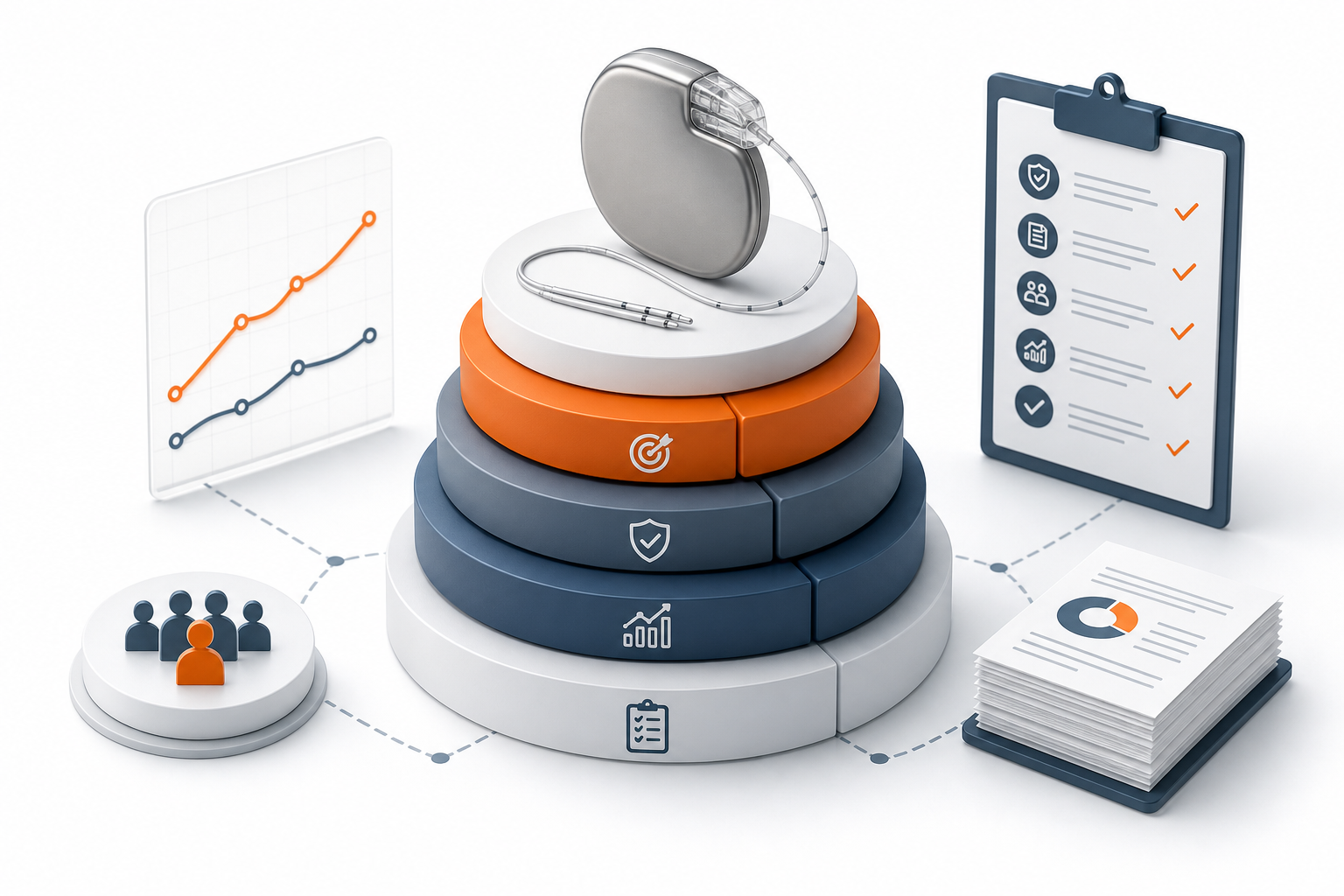
    Clinical Summary Report for FDA Submission: Structure, Content, and Common Mistakes

    A clinical summary report is one of the most consequential documents in your FDA submission package—and one of the most commonly mishandled. Whether you're preparing a 510(k), a PMA, or an IDE application, the clinical summary distills your entire body of clinical evidence into a structured narrative that reviewers use to assess safety, effectiveness, and regulatory adequacy. Get it right, and it accelerates your review. Get it wrong, and you're looking at deficiency letters that can add months to your timeline.

    This article covers the required structure, what each section actually needs to contain, and the mistakes that most often derail submissions.


    What a Clinical Summary Report Is and Why It Matters

    The clinical summary report is a standalone document that presents your clinical evidence in a format FDA reviewers can evaluate without cross-referencing every underlying study file. It is not a literature review, not a protocol, and not a data dump. It's a curated, interpretive document that connects your clinical data to your regulatory claim.

    For PMA submissions, 21 CFR 814.20 requires a summary of the clinical investigations. For 510(k)s, a clinical summary is required whenever clinical data are included. For IDEs, the clinical investigation plan and associated data must be structured so the agency can assess whether the study is adequate to generate the evidence needed for a future marketing submission.

    The clinical summary also figures into IDE applications and IND submissions when sponsors are running first-in-human or early-feasibility studies. In those cases, the summary must demonstrate that the proposed investigation is scientifically sound and that the sponsor has the infrastructure to execute it safely.


    Structure of a Clinical Summary Report

    FDA doesn't prescribe a single universal template, but guidance documents, reviewer expectations, and common practice have converged on a structure that holds up across device types. The sections below reflect that consensus.

    1. Device Description and Intended Use

    Open with a concise description of the device, its mechanism of action, and its intended use population. This section anchors everything that follows—reviewers need to understand what the device does before they can evaluate whether the clinical evidence is adequate.

    Keep the language clinical, not commercial. State the indication plainly, identify the patient population, and note any contraindications or use limitations already established.

    2. Summary of Clinical Investigations

    This is the core of the document. For each study included in the submission, provide:

    • Study design (prospective, retrospective, randomized, single-arm)
    • Objectives and endpoints (primary, secondary, and exploratory)
    • Patient population, inclusion and exclusion criteria
    • Number of subjects enrolled, completed, and analyzed
    • Follow-up duration
    • Statistical analysis approach
    • Key results for each endpoint, presented numerically
    • Adverse events and device deficiencies, with severity classifications

    If you're relying on multiple studies, present each one separately before synthesizing across them. Don't blend results from different studies into a single table without clearly labeling the source of each data point.

    3. Subject Accountability

    FDA reviewers consistently flag submissions that don't account for every enrolled subject. Your clinical summary must include a disposition table showing how many subjects were screened, enrolled, completed the study, withdrew, were lost to follow-up, or died. Reasons for discontinuation should be categorized and counted.

    If your protocol allowed both per-protocol and intent-to-treat analyses, explain which population was used for each endpoint and why.

    4. Safety Summary

    Adverse events must be presented systematically, not selectively. List all adverse events—device-related and non-device-related—by MedDRA term or equivalent coding, with counts and percentages. Serious adverse events and device deficiencies require individual narratives or a reference to the case report forms where those narratives appear.

    Don't bury safety signals in footnotes or appendices. If there were serious adverse events, present them clearly and explain how they were adjudicated. Reviewers are looking for transparency, not a clean record.

    5. Effectiveness Summary

    Summarize the primary effectiveness endpoint results with point estimates and confidence intervals. If your study used a performance goal or objective performance criterion, show the comparison explicitly. If you used a non-inferiority or superiority design, state the margin and whether it was met.

    Secondary endpoints should appear in a structured table. Pre-specified subgroup analyses can be included but should be clearly labeled as exploratory if they weren't powered for hypothesis testing.

    6. Benefit-Risk Assessment

    This is where many sponsors underinvest. FDA expects you to weigh the clinical benefits against the risks and explain why the benefit-risk profile supports approval or clearance for the intended use population.

    Reference the specific patient population, the severity of the condition being treated, the availability of alternatives, and the nature of the risks observed. A device that carries meaningful procedural risk may still have a favorable benefit-risk profile if it addresses an unmet need in a population with limited options.

    7. Conclusions

    State clearly whether the clinical evidence supports the intended use. Reference the specific endpoints that were met, the safety profile observed, and any conditions or limitations that apply. This section should be one to two paragraphs—not a re-summary of everything that came before.


    Common Mistakes in Clinical Summary Reports

    Understanding the structure is necessary but not sufficient. These are the errors that generate the most deficiency letters and review delays.

    Vague or Missing Endpoint Definitions

    Sponsors sometimes define endpoints in the protocol with precision but then describe them loosely in the clinical summary. If your primary endpoint was a composite of device success, absence of major adverse events at 30 days, and functional improvement on a validated scale, say exactly that. Don't simplify it to "clinical success" without defining the term.

    Reviewers will compare your summary to your protocol. Inconsistencies create questions that require formal responses and extend your review cycle.

    Incomplete Adverse Event Reporting

    One of the most common deficiencies is an adverse event table that doesn't match the study report. This typically happens when the clinical study report is updated after the summary was drafted, or when different team members compile each document. The clinical summary and the underlying study report must be reconciled before submission.

    Also watch for adverse events coded inconsistently across documents. If an event is coded as "device malfunction" in the case report form and "equipment problem" in the summary, reviewers will flag it.

    Overreliance on Narrative Without Data

    Some clinical summaries read more like persuasive essays than data presentations. Phrases like "the device demonstrated excellent safety" without a corresponding adverse event rate aren't acceptable. Every claim in the summary must be traceable to a number in a table or a specific study finding.

    Failure to Address Protocol Deviations

    If your study had major protocol deviations, they need to be disclosed and assessed for their potential impact on data integrity. Sponsors sometimes omit this section entirely, which signals to reviewers that deviations either weren't tracked or aren't being disclosed.

    Misalignment Between Summary and Labeling

    The indications for use in your proposed labeling must match the population studied and the endpoints evaluated. If your study enrolled patients with moderate-to-severe disease but your labeling claims broad use across all severity levels, reviewers will catch the mismatch. The clinical summary is the document that connects your evidence to your label—any gap between them will surface here.

    Inadequate Benefit-Risk Discussion

    Sponsors often treat the benefit-risk section as a formality. A single paragraph stating that "benefits outweigh risks" without supporting analysis doesn't satisfy FDA expectations. The benefit-risk framework should address the condition's severity, the unmet need, the magnitude of the observed benefit, the nature and frequency of observed risks, and the patient population's risk tolerance.

    Poor Document Hygiene

    This sounds minor but creates real problems. Inconsistent subject numbering across tables, unlabeled confidence intervals, tables that reference appendices that aren't included, and unreconciled version-controlled documents all generate reviewer questions. Before you submit, run a cross-check between the clinical summary, the clinical study report, and any referenced appendices.


    How Clinical Trial Design Affects the Summary You Can Write

    The quality of your clinical summary is constrained by the quality of your underlying study. A well-designed trial with pre-specified endpoints, a clear statistical analysis plan, and rigorous data collection gives you a summary that's straightforward to write and easy to defend.

    Studies designed without FDA alignment—using endpoints not validated for the intended population, or enrolling subjects outside the intended use population—produce summaries full of caveats and limitations. Those caveats invite reviewer questions.

    This is why FDA alignment before your study starts matters as much as the execution itself. Pre-Submission meetings (Pre-Subs) let you confirm that your study design, endpoints, and statistical approach will generate data FDA will accept. Sponsors who skip that step often discover the gap at the summary-writing stage, when it's too late to fix.

    For sponsors running first-in-human or early-feasibility studies in Latin America, bioaccess® structures every program around FDA Pre-Sub alignment from day one. The FIH-12™ program covers FDA Pre-Sub and IDE/IND pathway alignment as its first workstream, so the clinical evidence package that comes out of the study is built to support a submission-ready clinical summary from the start.


    Writing the Summary When You Have Multiple Data Sources

    PMA submissions often draw on more than one study—a pivotal trial, a continued access study, a registry, published literature, and post-market data from international markets. Each source needs to be described separately and then synthesized.

    The synthesis section should explain how each data source contributes to the overall evidence base, how the populations and endpoints relate to each other, and how the combined evidence supports the benefit-risk conclusion. Stacking tables from different studies without connecting them isn't a synthesis.

    When you're drawing on data from studies conducted in Latin American markets, you need to address the relevance of that population to the U.S. intended use population. FDA accepts data from foreign studies under 21 CFR 812.28 when the data are collected under ISO 14155 and the study conditions are comparable to U.S. practice. If you're using international data, your clinical summary should include a brief section explaining why the foreign study population is representative of the U.S. population for the intended use.


    Formatting and Length

    FDA doesn't specify a page limit for clinical summaries, but reviewers read a lot of them. A well-organized, concise summary is easier to review than one that buries key findings across 80 pages of narrative. Use tables for data, text for interpretation, and headings that match the content.

    For a single-study 510(k), a clinical summary might run 15 to 30 pages. For a PMA with multiple studies, 40 to 60 pages is common. What matters is that every section is present, every claim is supported, and the document can stand alone as a coherent presentation of your clinical evidence.


    FAQs

    What is a clinical summary report in an FDA submission?
    A clinical summary report is a structured document presenting the clinical evidence supporting a medical device's safety and effectiveness. It is required in PMA submissions under 21 CFR 814.20 and in 510(k) submissions when clinical data are included. It summarizes study designs, results, adverse events, and the benefit-risk assessment in a format FDA reviewers can evaluate independently.

    Is a clinical summary report required for a 510(k)?
    A clinical summary is required in a 510(k) when the submission includes clinical data. If your 510(k) relies on bench testing and predicate comparison alone, a clinical summary may not be required. However, if you include any clinical study data, you must provide a summary that meets FDA's content expectations.

    How long should a clinical summary report be?
    There is no prescribed length. A single-study 510(k) clinical summary typically runs 15 to 30 pages. A PMA with multiple studies may require 40 to 60 pages. The priority is completeness and clarity, not hitting a specific page count.

    What is the most common reason FDA issues deficiencies related to clinical summaries?
    Incomplete or inconsistent adverse event reporting is among the most frequent triggers. Other common causes include vague endpoint definitions, missing subject disposition data, inadequate benefit-risk discussion, and misalignment between the summary and the proposed labeling.

    Can data from Latin American clinical trials be used in a U.S. FDA submission?
    Yes. Data collected under ISO 14155 and structured per FDA 21 CFR 812.28 can be accepted for U.S. IDE and IND submissions. The clinical summary should include a section explaining the relevance of the foreign study population to the U.S. intended use population.

    What is the difference between a clinical summary and a clinical study report?
    A clinical study report is a comprehensive document presenting all data from a single study in full detail, following ICH E3 or equivalent structure. A clinical summary is a shorter, interpretive document that synthesizes findings across one or more studies to support a regulatory claim. The summary references the study report but doesn't replace it.

    How does a Pre-Submission meeting affect the clinical summary?
    A Pre-Sub meeting lets you confirm with FDA that your study design, endpoints, and statistical approach will generate data the agency will accept. When you have that alignment before the study starts, writing the clinical summary is straightforward—the evidence was structured to answer the right questions. Without it, sponsors often discover gaps at the summary stage that require additional data or study amendments.


    Build the Summary Into Your Study Design, Not After It

    A clinical summary report isn't a writing exercise you schedule after your study closes. It's the document your entire clinical program is building toward. The structure of your protocol, the choice of endpoints, the rigor of your data collection, and the quality of your adverse event adjudication all determine what you can honestly say in that summary.

    Sponsors who treat the summary as an afterthought spend months revising it in response to deficiency letters. Sponsors who design their studies with the summary in mind tend to move through review faster and with fewer surprises.

    If you're planning a first-in-human or early-feasibility study and want a clinical evidence package structured for FDA submission from day one, learn more at bioaccess®.

  • PMA Clinical Trial Requirements: How to Build the Clinical Evidence Package FDA Expects

    PMA Clinical Trial Requirements: How to Build the Clinical Evidence Package FDA Expects

    A PMA clinical trial is one of the most demanding regulatory milestones a medical device company will face. Unlike the 510(k) pathway, which relies on substantial equivalence to a predicate, Premarket Approval requires you to generate original clinical evidence demonstrating that your device is safe and effective for its intended use. The FDA will not approve a Class III device on bench data and animal studies alone. You need a clinical evidence package, and it needs to be built correctly from the start.

    This article covers what the FDA expects, how to structure that package, where most sponsors go wrong, and how your trial execution strategy affects the quality and timing of the data you ultimately submit.


    What Makes a PMA Different From Other Approval Pathways

    The PMA pathway applies to Class III devices: those that support or sustain human life, present a potential unreasonable risk of illness or injury, or lack a substantially equivalent predicate. Implantable cardiac devices, neurostimulators, and certain diagnostic systems are common examples.

    Because no predicate exists, the FDA requires sponsors to prove safety and effectiveness through valid scientific evidence. That standard is defined in 21 CFR Part 860 and typically means well-controlled clinical investigations producing statistically valid results.

    The 510(k) pathway can sometimes be cleared with retrospective data or literature reviews. The PMA pathway almost never can. You are building a prospective clinical record from scratch.


    The Core Components of a PMA Clinical Evidence Package

    The FDA expects the clinical section of a PMA submission to contain several interconnected elements. Missing or underpowered components are the most common trigger for Additional Information (AI) requests and major deficiencies.

    Investigational Device Exemption (IDE) Approval

    Before enrolling a single patient in a significant-risk device study, you need an approved IDE under 21 CFR Part 812. The IDE authorizes use of your device in human subjects during the investigation phase. For significant-risk devices, it is not optional.

    Your IDE application must include the investigational plan (protocol), a risk analysis, device description, informed consent procedures, IRB approvals, and a monitoring plan. The FDA has 30 days to respond. If they do not disapprove it within that window, you may proceed.

    The IDE is the foundation of your clinical evidence package. A weak protocol produces weak data. What you write at this stage directly determines whether the evidence you collect will hold up in the PMA submission.

    Clinical Protocol and Study Design

    The protocol is where most sponsors either set themselves up for success or create problems they will spend years correcting. The FDA expects a study design that:

    • Defines a primary endpoint that maps directly to the device's intended use
    • Specifies a statistically justified sample size with power calculations
    • Identifies a control arm or objective performance criteria (OPC) where applicable
    • Describes follow-up duration sufficient to capture the safety and effectiveness signals relevant to the indication
    • Pre-specifies analysis populations (intent-to-treat, per-protocol) and statistical methods

    Adaptive designs are increasingly accepted, but they require pre-specification of adaptation rules and FDA agreement before the trial begins. Do not adapt your protocol mid-study without prior FDA concurrence.

    Pre-Submission (Q-Sub) Meetings

    Before finalizing your protocol, request a Pre-Submission (Pre-Sub) meeting with the FDA under the Q-Submission program. This is one of the highest-leverage steps available to any PMA sponsor. A Pre-Sub gives you written FDA feedback on your proposed study design, endpoints, and statistical analysis plan before you commit to executing the trial.

    Sponsors who skip the Pre-Sub and design protocols in isolation frequently discover at the PMA review stage that the FDA had different expectations about endpoint definitions, follow-up duration, or the adequacy of the control. That discovery, made after data collection is complete, is expensive and sometimes fatal to the program.

    Use the Pre-Sub to confirm your primary endpoint, discuss the acceptability of your control strategy, and align on what "valid scientific evidence" means for your specific device and indication.

    Statistical Analysis Plan (SAP)

    The SAP must be finalized and locked before unblinding or completing enrollment. It specifies every analysis the FDA will review: primary and secondary endpoint analyses, subgroup analyses, handling of missing data, multiplicity adjustments, and interim analysis rules if applicable.

    A SAP written after the fact, or one that does not match the protocol, is a major deficiency. The FDA's reviewers are statisticians. They will compare your SAP to your protocol and to your actual analysis. Discrepancies get flagged.

    Clinical Study Report (CSR)

    The CSR is the formal document presenting all clinical findings from your investigation. It follows ICH E3 structure and must include:

    • Full protocol and amendments
    • Patient disposition and demographics
    • Primary and secondary endpoint results with confidence intervals
    • Adverse event and serious adverse event summaries
    • Subgroup analyses
    • Individual patient data listings

    The CSR is not a summary. It is a complete, auditable record of what happened in the trial. The FDA reviewer will read it alongside your raw data. Inconsistencies between the narrative and the data tables are a recurring source of deficiencies.

    Device History and Bench Data

    The clinical section does not stand alone. The FDA reviews it alongside your device description, bench testing, biocompatibility data (ISO 10993), sterilization validation, and software documentation where applicable. The clinical evidence package must be internally consistent with the device you tested. If your final design changed after IDE approval, document those changes and assess whether they affect the clinical data's applicability.


    Where Sponsors Build Weak Evidence Packages

    Several patterns consistently produce deficient PMA submissions.

    Underpowered studies. Sample size calculations that assume unrealistically high effect sizes or low event rates result in studies that cannot demonstrate effectiveness even when the device performs well. The FDA will not accept a study that was never capable of answering the question it was designed to answer.

    Endpoint drift. Changing the primary endpoint after data collection begins, even informally, is a serious problem. If your final CSR analyzes a different primary endpoint than the one in your IDE-approved protocol, the FDA will treat the original endpoint as primary and the new one as exploratory. Plan your endpoints carefully and hold to them.

    Inadequate follow-up. For implantable or long-term-use devices, the FDA often expects data at 12, 24, or 36 months. Sponsors who design studies with six-month follow-up to save time frequently receive AI requests requiring additional data collection, extending the overall timeline by more than the time they tried to save.

    Site qualification gaps. Sites that are not properly qualified, trained, or monitored produce data with integrity questions. The FDA can and does inspect clinical sites during PMA review. Data from sites with significant protocol deviations or monitoring deficiencies may be excluded from the analysis.

    Missing or incomplete informed consent documentation. Every enrolled patient must have a properly documented informed consent process. Missing consent forms, or forms that do not reflect the approved protocol version, are a recurring finding in FDA inspections.


    How Trial Location Affects Your Evidence Package

    Where you run your PMA clinical trial has a direct effect on how quickly you can generate data and what it costs to generate it. These are not trivial considerations when your runway is finite and your board is watching the milestone calendar.

    US-based trials for significant-risk devices face IRB review timelines of three to six months per site, site activation timelines that often stretch beyond a year for complex devices, and per-patient costs that can run well above $30,000 depending on the indication and site infrastructure.

    Latin American markets operate differently. In Panama, El Salvador, Chile, and the Dominican Republic, ethics and regulatory approvals are consistently observed in 30 to 90 days. That reflects actual observed performance across those markets, not a contractual guarantee from the health authorities. Patient populations in these countries are often treatment-naive for novel devices, which can improve enrollment rates and reduce the confounding effect of prior interventions on your primary endpoint.

    The critical question for PMA purposes is whether data collected outside the US will be accepted by the FDA. The answer is yes, when the data is collected under an IDE and structured in accordance with 21 CFR 812.28, which governs the acceptance of foreign clinical study data. The study must be conducted under conditions comparable to US standards, using ICH-GCP-compliant protocols and ISO 14155 trial architecture. When those conditions are met, foreign clinical data supports both IDE and PMA submissions.

    This is not a workaround. It is an established FDA framework that sponsors have used to accelerate timelines without compromising the quality of the evidence package.


    Building the Evidence Package With a Single Accountable Team

    The most common operational failure in PMA clinical programs is fragmentation. Sponsors use one vendor for regulatory strategy, a second for protocol development, a third for site management, and a fourth for data management. When the FDA asks a question about the relationship between a protocol amendment and a data collection change, no single person can answer it. The evidence package reflects the seams between vendors.

    A structured approach that covers all workstreams under one accountable team produces a more coherent evidence package and a faster path through FDA review. Every component, from the Pre-Sub meeting through the final CSR, needs to be built by people who understand how each piece connects to the next.

    bioaccess® operates the FIH-12 program on exactly this model: nine workstreams managed by a single team, from FDA Pre-Sub and IDE/IND pathway alignment through protocol development, site activation, patient enrollment, data management, and delivery of a submission-ready clinical evidence package within a 12-month timeline. Trial execution runs across 19 Latin American and Caribbean markets through a network of 50-plus pre-qualified sites, with the final deliverable structured for the sponsor's next FDA regulatory step.

    For PMA programs, that means the CSR and organized data room arrive ready for submission, not requiring reconstruction by a regulatory affairs team that was not present during the trial.


    The Pre-PMA Submission Checklist

    Before submitting your PMA, the clinical section should contain the following:

    • Approved IDE and all amendments
    • Final protocol with all versions documented
    • Locked statistical analysis plan
    • IRB approvals for all sites
    • Informed consent forms for all enrolled patients
    • Clinical study report following ICH E3 structure
    • Adverse event narratives for all serious adverse events
    • Individual patient data listings
    • Site monitoring reports and audit trails
    • Investigator qualifications and CVs
    • Device accountability records

    If any of these elements is missing or incomplete at submission, expect an AI request. AI requests add months to your review timeline. Getting the evidence package right before submission is faster than correcting it afterward.


    What the FDA Reviews in the Clinical Section

    The FDA's review of the clinical section focuses on several core questions:

    1. Was the study designed to answer the right question for the intended use?
    2. Was it conducted in accordance with the approved protocol and applicable regulations?
    3. Does the primary endpoint analysis demonstrate a reasonable assurance of safety and effectiveness?
    4. Are the adverse event data complete and accurately reported?
    5. Do the benefits outweigh the risks for the intended patient population?

    Reviewers are not looking for perfection. They are looking for scientific rigor, regulatory compliance, and honest reporting. A well-designed study showing modest benefit with a clear safety profile is more likely to succeed than an ambitious study with data integrity problems.


    FAQs: PMA Clinical Trial Requirements

    What is a PMA clinical trial and when is it required?
    A PMA clinical trial is a clinical investigation conducted to generate the safety and effectiveness data required for FDA approval of a Class III medical device. It is required when a device cannot be cleared through the 510(k) pathway because no substantially equivalent predicate exists, or when the device presents a high risk to patients.

    Do I need an IDE before starting a PMA clinical trial?
    Yes. For significant-risk devices, an approved Investigational Device Exemption (IDE) under 21 CFR Part 812 is required before enrolling patients. The IDE application includes your protocol, risk analysis, device description, and IRB approvals. The FDA has 30 days to respond before you may proceed.

    Can I use clinical data collected outside the United States in a PMA submission?
    Yes. Foreign clinical data is accepted in PMA submissions when collected under an IDE and structured in accordance with 21 CFR 812.28. The study must be conducted under ICH-GCP-compliant conditions and meet the applicable FDA standards for the evidence type.

    What is a Pre-Submission meeting and why does it matter for PMA programs?
    A Pre-Submission (Pre-Sub or Q-Sub) meeting is a formal FDA feedback mechanism that allows sponsors to get written agency input on study design, endpoints, and statistical approaches before committing to a trial. For PMA programs, it is one of the most important steps you can take to reduce the risk of a major deficiency at the review stage.

    How long does a PMA clinical trial typically take?
    Timeline depends on the indication, study design, enrollment rate, and follow-up requirements. US-based trials for significant-risk devices commonly take 18 to 36 months from IDE approval to CSR completion. Trials executed in Latin American markets with faster regulatory approval timelines can compress the pre-enrollment phase significantly, though follow-up duration is determined by the protocol, not the geography.

    What is the most common reason for a PMA clinical deficiency?
    Underpowered study designs, endpoint drift, inadequate follow-up, and site data integrity issues are the most frequent sources of major deficiencies. Endpoint drift is the most preventable, and it is eliminated by finalizing your endpoints during the Pre-Sub process and locking your SAP before data collection begins.

    How should the clinical study report be structured for a PMA submission?
    The CSR should follow ICH E3 structure and include the full protocol and amendments, patient disposition, primary and secondary endpoint results with confidence intervals, adverse event summaries, subgroup analyses, and individual patient data listings. It must be internally consistent with the data tables and the approved protocol. Inconsistencies between the narrative and the data are a common source of AI requests.


    Build the Evidence Package Before You Need It

    The clinical evidence package for a PMA submission is not something you assemble at the end of a trial. It is built incrementally, starting with the Pre-Sub meeting and ending with a locked CSR and organized data room. Every decision made during protocol development, site selection, and data management either strengthens or weakens the package you will eventually hand to the FDA.

    Sponsors who treat the evidence package as a documentation exercise discover its importance during review. Sponsors who treat it as the product of the trial build programs that move through FDA review with fewer deficiencies and shorter timelines.

    If you are planning a PMA clinical trial and want to understand how trial execution in Latin America fits into your FDA evidence strategy, bioaccess® works with MedTech sponsors at exactly this stage of program planning.


    WordPress category: Navigating Regulatory Landscapes in Latin America

  • Design Freeze in Medical Devices: What It Means for Your Clinical Trial Timeline

    Design Freeze in Medical Devices: What It Means for Your Clinical Trial Timeline

    Design freeze is one of the most consequential decisions in medical device development — and it sits directly on the critical path to your first-in-human trial. Get it right and your clinical timeline stays intact. Get it wrong and you're looking at protocol amendments, re-verification cycles, and months of delay before a single patient is enrolled.

    This article explains what design freeze means, why it matters for regulatory submissions, and how the timing of that decision shapes everything downstream — including your IDE application, site activation, and the overall clock on your FIH program.


    What Design Freeze Actually Means

    Design freeze is the formal point at which a medical device's design is locked. From that point forward, no changes are made to specifications, materials, software, or manufacturing processes without going through a controlled change management procedure.

    Under FDA 21 CFR Part 820 and ISO 13485, design freeze is embedded within the broader design control process. It typically follows design verification and validation (V&V) and precedes transfer to manufacturing. The device you freeze is the device you test in humans. That's the core logic.

    One clarification worth making: design freeze is not the same as design lock or design transfer, though early-stage teams often use all three interchangeably. Design lock tends to be informal — something used during iterative development. Design freeze is the formal, documented event. Design transfer is what comes after, when the device moves into a manufacturing environment for clinical unit production.


    Why Design Freeze Is a Hard Dependency for Clinical Trials

    Your clinical trial protocol is written around a specific device. The device description in your IDE application, the Instructions for Use, the risk analysis, the labeling — all of it references a defined configuration. If the device changes after the protocol is finalized, you have a mismatch.

    That mismatch creates real downstream problems:

    • Protocol amendments require ethics committee and regulatory authority re-approval, adding weeks or months to your timeline
    • IDE supplements may be required if the change is significant enough to affect safety or effectiveness
    • Site training has to be repeated if the device interface or operating procedure changes
    • Informed consent documents may need revision if the risk profile shifts

    None of these are fatal on their own. Compounded, they can push a 12-month FIH program into 18 or 24 months. For a startup with a board deadline tied to first human data, that's not an abstract risk.

    The practical rule: design freeze should be completed before your IDE submission, not alongside it. Many early-stage teams treat IDE filing as a parallel track to final design iterations. That approach almost always produces re-work.


    Design Freeze and the IDE Application

    The Investigational Device Exemption (IDE) application under 21 CFR Part 812 requires a device description specific enough for FDA to evaluate safety. If your device is still changing, you can't write a stable device description — and FDA reviewers will identify inconsistencies between the device description, the risk analysis, and the testing reports. Questions will follow.

    A Pre-Submission meeting (Pre-Sub) with FDA — which bioaccess® builds into the FIH-12 program from day one — is the right place to confirm what level of design finality FDA expects before you file. For most non-significant risk devices, FDA will want to see that V&V testing was conducted on the configuration that will actually be used in the trial. For significant risk devices, the bar is higher.

    The Pre-Sub also gives you the opportunity to align on your clinical protocol, primary endpoints, and statistical plan before you've committed to a frozen design. That sequencing matters: your protocol should inform your design requirements, not the other way around.


    The Verification and Validation Connection

    Design freeze can't happen in isolation from V&V. Verification asks whether the device meets its design specifications. Validation asks whether those specifications meet user needs and intended uses. Both must be completed on the device as it will be manufactured for the trial.

    This is where teams consistently run into trouble. Bench testing is often conducted on prototypes that differ from the final clinical unit. If the clinical unit is manufactured differently — different materials, different tolerances, different assembly process — the V&V data may not be representative. FDA and ethics committees reviewing your submission will ask whether testing was conducted on the same configuration that will be used in patients.

    The answer needs to be yes. That means your manufacturing process for clinical units must be defined and controlled before you freeze. If you're using a contract manufacturer, their process needs to be qualified. If you're producing units in-house, your production records need to be in place.

    This is not a small lift for an early-stage team. It's one of the main reasons the window between design freeze and IDE submission is often longer than founders expect.


    Design Freeze Timing and Your Clinical Trial Timeline

    Here's a practical timeline structure showing how design freeze fits into the broader FIH sequence:

    12 to 18 months before first patient enrolled:

    • Complete design history file (DHF) through final design inputs and outputs
    • Conduct design V&V on clinical-representative units
    • Complete risk management file per ISO 14971

    9 to 12 months before first patient enrolled:

    • Achieve formal design freeze
    • Finalize device description for IDE application
    • Begin protocol development and Pre-Sub preparation

    6 to 9 months before first patient enrolled:

    • Submit IDE application (or prepare for ethics-only submission in applicable jurisdictions)
    • Begin site qualification and ethics submissions in parallel

    3 to 6 months before first patient enrolled:

    • Receive IDE approval or ethics committee approvals
    • Complete site activation and investigator training
    • Begin enrollment

    Design freeze sits near the top of this sequence. It's a precondition, not a concurrent activity.

    For sponsors running trials in Panama, El Salvador, Chile, or the Dominican Republic through the FIH-12 program, ethics and regulatory approvals in those jurisdictions are observed in 30 to 90 days. That compressed approval window is a structural feature of those regulatory systems — not a best-case scenario. But it only helps you if your device is frozen and your submission is ready to file. A 30-day approval window doesn't recover time lost to late design changes.


    What Happens When Design Freeze Is Delayed

    Late design freeze is one of the most common sources of FIH timeline slippage, and it compounds in ways that aren't obvious at the outset.

    Consider a team that delays freeze by three months to incorporate feedback from a usability study. Those three months push the IDE submission. The IDE submission pushes ethics committee filing. Ethics committee filing pushes site activation. Site activation pushes enrollment. By the time the delay works through the system, the program is six to nine months behind.

    This isn't hypothetical. It's the standard pattern when design freeze is treated as a development milestone rather than a clinical trial dependency.

    Post-freeze changes carry their own risk. If a significant change is required after freeze — a material substitution, a software update that affects safety, a dimensional change that shifts the risk profile — you need a formal design change process. That includes impact assessment, updated V&V testing, and potentially a protocol amendment and regulatory re-submission. Even minor changes typically add four to eight weeks when they touch regulatory submissions.


    How Design Freeze Interacts With Non-U.S. Regulatory Submissions

    If your FIH trial is running outside the United States, design freeze still anchors the submission. Ethics committees in Panama (MINSA/CNBI), Chile (ISP/MINSAL), and El Salvador (SRS/CNEIS) review the device description as part of their safety evaluation. They want to see the same thing FDA wants: a defined, tested device that matches the protocol.

    One practical difference in LatAm submissions is that some jurisdictions accept a device description supported by bench testing data without requiring a full IDE. The evidentiary bar for ethics approval isn't identical to the FDA bar. But the underlying requirement — that the device is defined and stable — is the same across all of them.

    Under FDA 21 CFR 812.28, data collected in foreign clinical investigations can support U.S. IDE and IND submissions when the trial is conducted under comparable ethical and scientific standards. That means the device used in a Panama or Chile FIH trial needs to be the same device described in the eventual U.S. submission. Design freeze is the mechanism that ensures that consistency.


    Practical Steps to Prepare for Design Freeze

    If you're planning a FIH trial and haven't yet frozen your design, here's what needs to be in place before you do:

    Design history file (DHF) completeness. All design inputs, outputs, reviews, verification, and validation records should be current and traceable. Gaps in the DHF will surface during FDA review and ethics committee submission.

    Risk management file. Your risk analysis per ISO 14971 should reflect the final device configuration. Post-freeze changes that affect the risk profile require the file to be updated.

    Clinical-representative units. The units used in V&V testing should be manufactured using the same process, materials, and controls as the units that will be used in the trial. Document this explicitly.

    Manufacturing controls. Whether you're using a contract manufacturer or producing in-house, your production process should be defined, controlled, and capable of producing consistent units. Clinical unit manufacturing is not prototype manufacturing.

    Labeling draft. Your Instructions for Use and device labeling should be drafted before freeze. Labeling is part of the device definition, and post-freeze labeling changes can require re-approval.

    Change control procedure. Changes happen even after freeze. Having a formal change control procedure in place before you freeze means you can handle them systematically rather than reactively.


    Design Freeze as a Clinical Readiness Gate

    The most useful reframe for early-stage teams is to treat design freeze as a clinical readiness gate, not just a development milestone. The question isn't "is the device good enough to freeze?" It's "is the device defined well enough to submit to FDA and ethics committees, train investigators, and enroll patients?"

    That framing changes how you prioritize the work leading up to freeze. It pulls clinical operations, regulatory affairs, and quality into the design process earlier, rather than treating them as downstream consumers of whatever development produces.

    For teams working toward a first-in-human trial in 12 to 24 months, that earlier integration is what keeps the timeline intact. The bioaccess® FIH-12 program is structured around exactly this kind of parallel-track coordination — nine workstreams running concurrently, with FDA Pre-Sub alignment and protocol development happening alongside design finalization rather than after it.


    FAQs

    What is design freeze in medical device development?
    Design freeze is the formal, documented point at which a medical device's design is locked. No changes are made to specifications, materials, software, or manufacturing processes without a controlled change management procedure. It follows design verification and validation and precedes clinical unit manufacturing.

    Does design freeze have to happen before an IDE submission?
    Yes, in practice. The IDE application requires a stable device description, and FDA evaluates safety based on the device as it will be used in the trial. If the device is still changing, the device description will be inconsistent with the testing data — which typically generates FDA questions and delays.

    What happens if you need to change the device after design freeze?
    Post-freeze changes require a formal design change process: impact assessment, updated V&V testing if the change affects safety or performance, and potentially a protocol amendment and regulatory re-submission. Depending on the magnitude of the change, expect weeks to months added to the clinical timeline.

    Is design freeze required for trials outside the United States?
    The formal requirement varies by jurisdiction, but the underlying logic is consistent. Ethics committees in Panama, Chile, El Salvador, and the Dominican Republic review the device description as part of their safety evaluation. The device needs to be defined and stable regardless of where the trial runs.

    How does design freeze affect the timeline for a first-in-human trial?
    Design freeze is a hard upstream dependency. Delays in freeze push IDE submission, which pushes ethics committee filing, which pushes site activation and enrollment. A three-month delay in freeze can translate to six to nine months of total timeline slippage when compounded through the sequence.

    What documents need to be in place before design freeze?
    At minimum: a complete design history file (DHF), a risk management file per ISO 14971, V&V records conducted on clinical-representative units, manufacturing controls documentation, a labeling draft, and a formal change control procedure.

    Can data from a LatAm FIH trial support a U.S. IDE submission if the device was frozen before the trial?
    Yes. Under FDA 21 CFR 812.28, data from foreign clinical investigations conducted under comparable ethical and scientific standards can support U.S. IDE submissions. The device used in the LatAm trial must be the same device described in the U.S. submission — which is exactly what design freeze ensures.


    Conclusion

    Design freeze is not a bureaucratic checkpoint. It's the moment your device becomes a clinical asset rather than a development project. Everything that follows in your FIH program — protocol development, IDE submission, ethics approvals, site activation, enrollment — depends on that device being defined, tested, and stable.

    Teams that hit their FIH milestones on schedule treat design freeze as a clinical readiness gate and build their development timeline backward from it. Teams that miss those milestones usually delayed freeze while running parallel development tracks that eventually collided.

    If you're 12 to 24 months from first human data and working through what your FIH timeline should look like, bioaccess® works with device and biopharma sponsors to structure that sequence from design freeze through a submission-ready evidence package.

  • Radiopharmaceutical Clinical Trials in Latin America: Regulatory Pathways and Site Requirements

    Radiopharmaceutical Clinical Trials in Latin America: Regulatory Pathways and Site Requirements

    Radiopharmaceutical development has moved fast. Lutetium-177 DOTATATE reshaped the neuroendocrine tumor space, Actinium-225 programs are advancing across multiple oncology indications, and Gallium-68 diagnostics have become standard of care in several markets. If you are running a radiopharmaceutical program today, the question is no longer whether to pursue early human data — it is where to pursue it without burning through runway while a U.S. or EU regulatory clock ticks down.

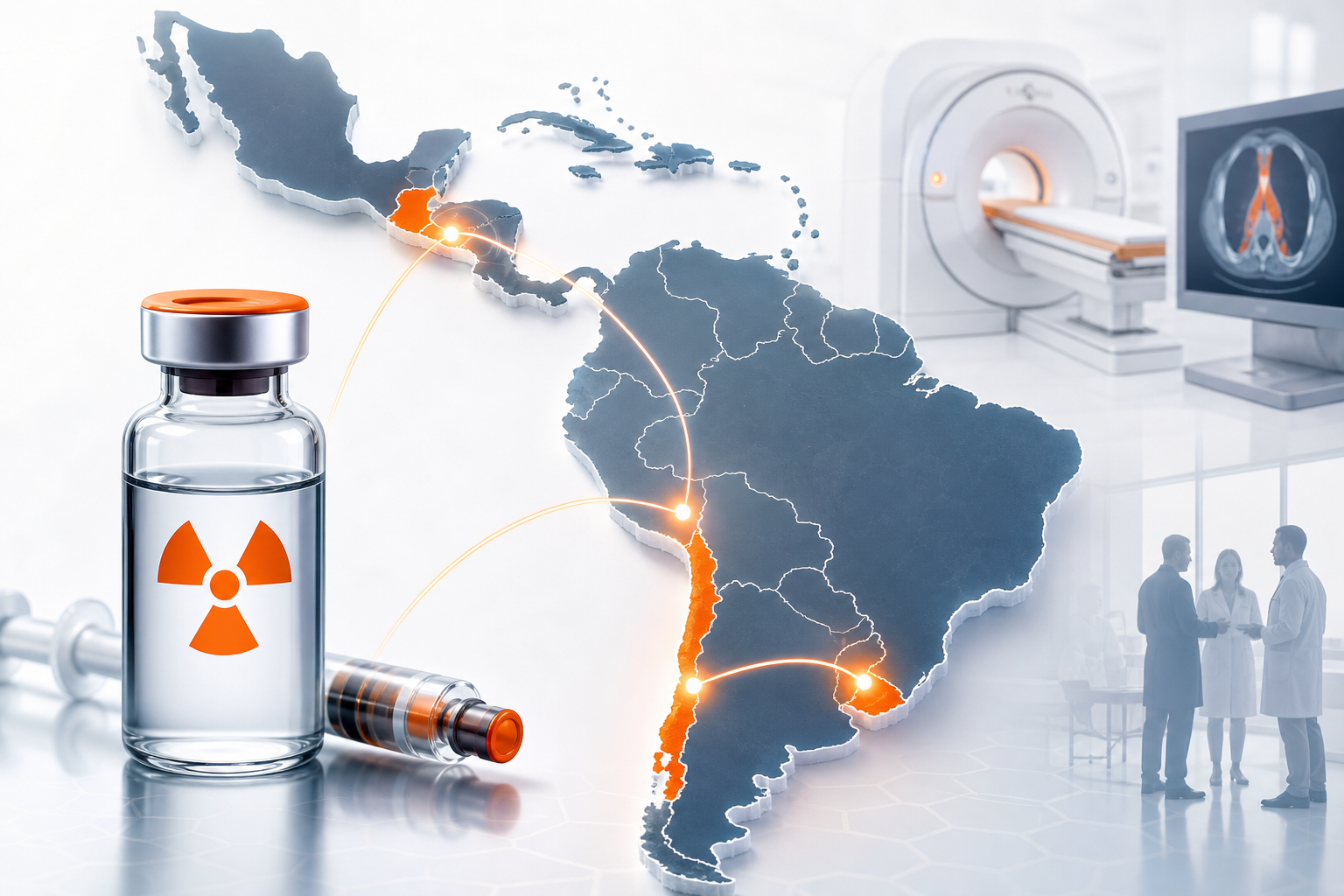
    Latin America has become a serious answer to that question. Ethics and regulatory approvals in Panama, El Salvador, Chile, and the Dominican Republic are observed in 30 to 90 days, compared to 6 to 12 months at equivalent stages in the U.S. or EU. For a seed-to-Series-B sponsor with 18 months of runway and a board milestone tied to first human data, that gap is the difference between making the next funding round and missing it.

    This article covers what you need to know before running a radiopharmaceutical clinical trial in Latin America: the regulatory pathways by jurisdiction, the site infrastructure requirements specific to radionuclide work, and the practical steps for building a submission-ready evidence package that holds up at FDA.


    Why Latin America Works for Radiopharmaceutical Development

    The appeal goes beyond speed. Latin American clinical populations are diagnostically naive to many novel radiolabeled compounds, which reduces confounding from prior treatment exposure. Patient enrollment rates at experienced oncology centers in the region tend to outpace U.S. sites for the same indications. The cost structure is also meaningfully different: per-patient costs in Panama run between $12,000 and $22,000 — a fraction of comparable U.S. trial costs.

    The regulatory data generated in these markets is not a workaround. Under FDA 21 CFR 812.28, foreign clinical data collected under ICH-GCP and ISO 14155 standards can be accepted in IDE and IND submissions when the evidence package is structured correctly. A first-in-human dataset completed in Panama or Chile can feed directly into your U.S. regulatory strategy without running a parallel domestic trial first.

    For radiopharmaceutical programs specifically, the combination of fast regulatory entry, experienced nuclear medicine infrastructure, and FDA-bridgeable data collection makes Latin America a practical first stop before a U.S. pivotal study.


    Regulatory Pathways by Jurisdiction

    Radiopharmaceuticals occupy a hybrid regulatory category across most Latin American markets — typically classified as either radiopharmaceutical drugs or radioactive medical devices, with the pathway depending on whether the compound is primarily diagnostic or therapeutic. Getting the classification right upfront saves months of back-and-forth with the relevant authority.

    Panama: MINSA and CNBI

    Panama's Ministry of Health (MINSA) and the National Bioethics Committee (CNBI) jointly govern clinical trial approvals. Radiopharmaceuticals fall under MINSA's pharmaceutical directorate, with CNBI providing parallel ethics review. The 30-to-90-day approval window reflects a well-established process for both drug and device sponsors.

    Nuclear medicine infrastructure is concentrated in Panama City, where several sites have cyclotrons or radiopharmacy capabilities for Ga-68 production and established protocols for Lu-177 administration. Ac-225 programs require additional radiation safety documentation, but the regulatory framework accommodates them. Panama is also the most cost-transparent market in the region for trial budgeting, which is why per-patient benchmarks are most reliably cited there.

    Chile: ISP and MINSAL

    Chile's Institute of Public Health (ISP) and Ministry of Health (MINSAL) share jurisdiction over clinical trial approvals. Chile has one of the most developed nuclear medicine networks in South America, with PET/CT infrastructure at major academic medical centers in Santiago and several regional cities.

    The ISP pathway for radiopharmaceuticals requires a dossier covering the investigational product's radiochemical characterization, dosimetry data, and radiation safety protocols. For Ga-68 diagnostics, ISP review tends to move faster because the compound class is well understood. For novel therapeutic isotopes like Ac-225, expect additional technical questions and plan for a documentation-heavy submission. Approval timelines are consistent with Panama's 30-to-90-day range, though novel radiopharmaceuticals can run toward the longer end.

    El Salvador: SRS and CNEIS

    El Salvador's Regulatory Health System (SRS) and the National Committee for Ethics in Health Research (CNEIS) manage clinical trial oversight. The market is smaller than Panama or Chile, but it has been used effectively for early feasibility studies where enrollment targets are modest. For radiopharmaceutical trials, the site network is more limited, and sponsors should confirm site-level radiation safety infrastructure before committing to El Salvador as a primary execution market for radionuclide therapeutics.

    Dominican Republic

    The Dominican Republic offers approval timelines comparable to Panama and El Salvador. For radiopharmaceutical development, it functions better as a secondary enrollment site than a primary execution market, given the current state of nuclear medicine infrastructure relative to Panama and Chile.


    Site Requirements for Radiopharmaceutical Trials

    Running a Lu-177, Ac-225, or Ga-68 trial is not the same as running a standard oncology drug or device study. The site infrastructure requirements are specific, and failing to qualify them upfront is one of the most common reasons radiopharmaceutical programs slip their timelines.

    Radiopharmacy and Isotope Handling

    Ga-68 diagnostic programs require either an on-site cyclotron or a reliable supply chain from a regional radiopharmacy. With a 68-minute half-life, the logistics of production-to-administration are tightly constrained. Sites in Panama City and Santiago have demonstrated this capability, but the specific supply arrangement for your compound needs to be confirmed before site selection is finalized.

    Lu-177 programs require a licensed radiopharmacy capable of receiving, labeling, and dispensing the therapeutic compound. The roughly 6.6-day half-life provides more logistical flexibility than Ga-68, but the radiation safety infrastructure requirements are higher — dedicated hot labs, appropriate waste disposal protocols, and staff trained in therapeutic radiopharmaceutical administration are all necessary.

    Ac-225 is the most demanding of the three. With a half-life of approximately 10 days and daughter isotopes requiring careful containment, Ac-225 programs need sites with advanced radiation safety programs, dosimetry expertise, and direct experience with alpha-emitting therapeutics. This narrows the qualified site pool in Latin America, but qualified sites do exist within bioaccess®'s 50-plus pre-qualified network, which was built specifically for this work.

    Imaging Infrastructure

    Most radiopharmaceutical trials require PET/CT or SPECT/CT imaging at defined protocol timepoints. Site qualification must confirm scanner availability, calibration standards, and image acquisition protocols that match your study's requirements. For multi-site trials, image standardization across sites is a protocol design consideration — not just an operations issue.

    Chile's academic centers offer modern PET/CT infrastructure with experience in quantitative imaging for research protocols. Panama's imaging infrastructure is concentrated at a smaller number of sites, which affects how many sites can realistically be activated for a radiopharmaceutical study.

    Radiation Safety and Regulatory Compliance

    Every site running a radiopharmaceutical trial needs a radiation safety officer, documented radiation protection protocols, and a license to handle the specific isotopes in the protocol. In Latin America, radiation safety oversight typically falls under the national nuclear energy authority in addition to the health ministry — CCHEN in Chile, and the National Secretariat of Energy in Panama.

    Site qualification should include a review of the site's current radiation safety license, the scope of isotopes covered, and prior experience with the specific compound class. This step cannot be skipped, and it should happen before ethics submission, not after.


    Building a Submission-Ready Evidence Package

    The goal of a Latin American radiopharmaceutical trial is not just to generate human data. It is to generate data your FDA regulatory team can use in an IND or IDE submission without repeating the study domestically.

    That requires three things from the start: a protocol designed to ICH-GCP and ISO 14155 standards, a data management system that produces audit-ready records, and a regulatory strategy that keeps the U.S. pathway in view throughout execution.

    Protocol Design Considerations

    Radiopharmaceutical first-in-human protocols need to address dosimetry, safety monitoring, and imaging endpoints in ways that satisfy both the local regulatory authority and FDA's expectations for foreign clinical data. Dosimetry assessments are typically required at multiple timepoints, with the protocol specifying how that data will be collected, analyzed, and reported.

    Stopping rules and dose escalation criteria need to be defined with the same rigor required for a U.S. IND submission. Local ethics committees in Panama and Chile are experienced with oncology protocols and will scrutinize these sections carefully.

    Data Management and Audit Readiness

    Electronic data capture systems used in Latin American radiopharmaceutical trials must meet FDA 21 CFR Part 11 requirements for electronic records — a non-negotiable condition for data destined for a U.S. submission. Data management plans should specify how imaging data, dosimetry calculations, adverse event records, and laboratory results will be captured, stored, and made available for FDA review.

    FDA Bridgeability

    Under 21 CFR 812.28, FDA can accept data from foreign clinical investigations conducted under conditions comparable to U.S. standards. For radiopharmaceutical programs, the evidence package needs to document the site's radiation safety infrastructure, principal investigator qualifications, GCP compliance of trial conduct, and the integrity of the data chain from collection to submission.

    Structuring for FDA bridgeability is not something you retrofit at the end of the trial. It has to be designed into the program from the protocol development stage.


    Working with a CRO That Knows the Terrain

    Radiopharmaceutical development in Latin America is not a standard clinical operations project. The combination of isotope-specific site requirements, dual-authority regulatory pathways, and FDA bridgeability standards demands a team that has run these programs before.

    bioaccess® operates dedicated radiopharmaceutical trial capability covering Lu-177, Ac-225, and Ga-68 programs across its 19-country Latin American and Caribbean footprint. The FIH-12 program covers all nine workstreams — from FDA Pre-Sub and IND/IDE pathway alignment through site activation, patient enrollment, data management, and delivery of a submission-ready evidence package — with a 12-month timeline guarantee on the program structure.

    The 50-plus pre-qualified site network includes locations with confirmed nuclear medicine and radiopharmacy infrastructure. Site qualification for radiopharmaceutical trials goes beyond standard GCP readiness to include radiation safety licensing, isotope handling capability, and imaging protocol standardization.

    Intake is capped at eight new programs per quarter — a reflection of the operational depth these programs require, not a volume model.


    Practical Steps Before You Commit to a Jurisdiction

    Before selecting a primary execution market for your radiopharmaceutical trial, work through these questions:

    Isotope logistics. What is the half-life of your compound, and what does that require from the site's radiopharmacy? Can the supply chain support your dosing schedule across the sites you plan to activate?

    Site qualification scope. Does the site hold a radiation safety license that covers your specific isotope? Has the principal investigator administered this compound class before, or would this be their first experience with it?

    Regulatory classification. How will the local authority classify your compound? Diagnostic and therapeutic radiopharmaceuticals follow different pathways in most jurisdictions, and getting the classification wrong at submission adds weeks to the review.

    FDA strategy alignment. Is your protocol designed to produce data FDA will accept under 21 CFR 812.28? Has your regulatory counsel reviewed it against FDA's expectations for foreign clinical data before you submit to the local authority?

    Timeline against runway. If approvals run toward the longer end of the 30-to-90-day observed range, does your program timeline still hold against your next funding milestone?

    These are not questions you answer once and move on. They should be revisited at each stage of program design, because the answers affect site selection, protocol design, and regulatory submission strategy simultaneously.


    FAQs

    What regulatory authorities govern radiopharmaceutical clinical trials in Latin America?
    It depends on the jurisdiction. Panama uses MINSA and CNBI. Chile uses ISP and MINSAL. El Salvador uses SRS and CNEIS. Beyond health ministry oversight, radiation safety for nuclear compounds typically falls under a separate national nuclear authority — CCHEN in Chile, the National Secretariat of Energy in Panama. Sponsors need to satisfy both sets of requirements before a trial can begin.

    Can data from a Latin American radiopharmaceutical trial be used in a U.S. IND submission?
    Yes, when the trial is conducted under ICH-GCP and ISO 14155 standards and the evidence package is structured per FDA 21 CFR 812.28. The data is not automatically accepted — it must be presented in a format that documents site qualifications, GCP compliance, data integrity, and the comparability of trial conditions to U.S. standards. Structuring for FDA bridgeability needs to happen at the protocol design stage, not after data collection is complete.

    Which Latin American markets have the strongest nuclear medicine infrastructure for radiopharmaceutical trials?
    Panama and Chile are the most developed for radiopharmaceutical trial execution. Chile has multiple academic centers with PET/CT infrastructure and experience in quantitative imaging research. Panama has established radiopharmacy capabilities for Ga-68 and Lu-177 programs in Panama City. Ac-225 programs require more selective site qualification in any market due to alpha-emitter handling requirements.

    How long does regulatory approval take for a radiopharmaceutical trial in Panama or Chile?
    Ethics and regulatory approvals in both markets are observed in 30 to 90 days. These are observed outcomes based on completed submissions, not a contractual guarantee from the health authorities. Novel radiopharmaceuticals — particularly Ac-225 programs — may prompt additional technical questions that push review toward the longer end of that range.

    What site infrastructure is required specifically for Lu-177 therapeutic trials?
    Sites need a licensed radiopharmacy capable of receiving, labeling, and dispensing Lu-177, along with dedicated hot lab space, radioactive waste disposal systems, and staff trained in therapeutic radiopharmaceutical administration. Dosimetry expertise and SPECT/CT imaging capability are also required for most Lu-177 protocols.

    What makes Ac-225 trials more complex than Lu-177 or Ga-68 programs?
    Ac-225 is an alpha emitter with daughter isotopes that require careful containment and monitoring. Radiation safety infrastructure requirements are higher than for Lu-177 or Ga-68, and fewer sites have the experience and licensing to handle it. Site qualification for an Ac-225 program needs to include a detailed review of the site's radiation protection program, dosimetry capabilities, and prior experience with alpha-emitting compounds.

    How does a CRO's role differ in a radiopharmaceutical trial compared to a standard device or drug study?
    A CRO running a radiopharmaceutical trial needs to manage isotope-specific site qualification, dual-authority regulatory submissions covering both health and radiation safety, imaging protocol standardization across sites, and dosimetry data management — on top of standard GCP-compliant trial operations. The operational complexity is higher, and the consequences of site qualification gaps are more severe because isotope logistics cannot be improvised mid-study.


    Start with the Right Infrastructure

    Radiopharmaceutical development in Latin America is achievable, and the regulatory speed advantage is real. But it requires more upfront site qualification work, more specific regulatory strategy, and more careful protocol design than a standard early feasibility study.

    If you are 12 to 24 months from needing first human data for a Lu-177, Ac-225, or Ga-68 program, the time to map the pathway is now — not after your IND is filed. Visit bioaccessla.com to get a preliminary country route and timeline estimate for your program.


    WordPress Category: Navigating Regulatory Landscapes in Latin America

  • Clinical Trial Insurance in Latin America: What Sponsors Need to Know Before Study Start

    Clinical Trial Insurance in Latin America: What Sponsors Need to Know Before Study Start

    Clinical trial insurance is one of those line items that sponsors tend to treat as an afterthought — something to sort out once the protocol is finalized and site contracts are signed. In Latin America, that approach creates real risk.

    Regulatory bodies across the region require proof of adequate coverage before a study can begin. Ethics committees review insurance documentation as part of their submission packages. And the specific requirements vary by country, device class, and study phase in ways that routinely catch first-time LatAm sponsors off guard.

    This article covers what clinical trial insurance actually covers in a LatAm context, what regulators and ethics committees typically require, how requirements differ across key jurisdictions, and what you should confirm with your CRO before your study start date.


    What Clinical Trial Insurance Covers in a Trial Context

    Clinical trial insurance — sometimes called clinical trial liability insurance or investigational product liability insurance — protects sponsors, investigators, and participants against financial harm arising from trial-related adverse events.

    For a first-in-human or early feasibility study, core coverage areas typically include:

    • Participant injury or death caused by the investigational device or drug
    • Medical expenses for trial-related adverse events not covered by the participant's own health insurance
    • Legal defense costs if a participant or their family brings a claim against the sponsor or investigator
    • Indemnification for sites and investigators named in the study agreement

    Some policies also cover trial interruption and data loss, though those riders are less universally required by regulators and more relevant to sponsors managing operational risk.

    What the policy does not cover matters just as much. Pre-existing conditions, injuries unrelated to the investigational product, and events outside the protocol-defined treatment window are typically excluded. The exclusion language in your policy deserves as much attention as the headline coverage amount.


    Why Latin America Has Its Own Insurance Considerations

    Running a first-in-human study in Latin America offers real structural advantages. Ethics and regulatory approvals in jurisdictions like Panama, El Salvador, Chile, and the Dominican Republic are observed in 30 to 90 days — compared to 6 to 12 months in the US or EU. That speed is why sponsors working through a structured program like bioaccess®'s FIH-12 program can reach a submission-ready evidence package within 12 months.

    But that same regulatory infrastructure carries specific insurance expectations. Most LatAm health authorities and institutional ethics committees — known variously as Comités de Ética en Investigación, Comités de Bioética, or Comités de Revisión Institucional depending on the country — require sponsors to submit insurance documentation as a condition of approval, not as a post-approval formality.

    Several factors make LatAm insurance requirements distinct from what US sponsors are used to:

    Local policy language requirements. Some countries require that the policy document be translated into Spanish and notarized locally. A certificate of insurance issued by a US carrier in English may not satisfy the submission requirement on its own.

    Named insured requirements. Ethics committees in several jurisdictions require that the local principal investigator and clinical site be named as additional insureds on the sponsor's policy. This is not always standard in US-issued policies and may require an endorsement.

    Minimum coverage thresholds. No single regional standard exists. Individual country requirements or ethics committee guidelines often specify minimum per-participant or per-occurrence limits, and those thresholds are set by the reviewing body, not by a pan-regional rule.

    Policy territory clauses. A US-domiciled sponsor's general liability or product liability policy may exclude coverage for trials conducted outside the United States. You need to confirm that your policy's territory clause explicitly extends to every country where your study will run.


    Country-by-Country Snapshot

    Requirements are not uniform across the 19 Latin American and Caribbean markets where LatAm-focused FIH trials operate. Here is a practical overview of what sponsors encounter in the primary jurisdictions.

    Panama

    MINSA/CNBI reviews insurance documentation as part of the clinical trial authorization package. Ethics committees typically require a certificate of insurance demonstrating coverage for trial-related participant injury, with the site and investigator named as additional insureds. Panama's approval timelines are among the fastest in the region, but insurance documentation gaps are a common cause of resubmission requests that push that timeline back.

    Chile

    ISP (Instituto de Salud Pública) and MINSAL-affiliated ethics committees are thorough in their documentation review. Requirements here tend to be more formalized — some committees specify minimum coverage amounts per participant, and sponsors should expect requests for a Spanish-language policy summary. In some cases, a legal opinion from a Chilean attorney confirming that the coverage is valid under Chilean law may also be required.

    El Salvador

    El Salvador's SRS/CNEIS framework includes insurance review as part of ethics committee submissions. Requirements are generally consistent with Panama's, though the reviewing committee may have specific expectations about the policy's validity period aligning with the study's projected duration plus a defined post-study coverage window.

    Dominican Republic

    The Dominican Republic's ethics review process includes insurance verification. Sponsors should confirm that their policy covers the full enrollment and follow-up period — ethics committees here have flagged policies that expire before the study's anticipated last patient last visit date.

    Brazil

    Brazil (ANVISA and CONEP) has some of the most detailed clinical research regulations in the region. Insurance or equivalent financial guarantee documentation is required, and CONEP's review process is comprehensive. Brazil is not always the first jurisdiction for a first-in-human study given its longer approval timelines relative to Panama or Chile, but sponsors expanding a LatAm program into Brazil need to plan for more detailed insurance documentation requirements from the outset.

    Colombia

    INVIMA requires that sponsors demonstrate financial responsibility for participant injury. Colombia's ethics committees have become more rigorous in recent years, and sponsors should approach insurance documentation here with the same level of preparation they would bring to a US IRB submission.


    What Your Policy Needs to Address Before Study Start

    Before your first site activation in any LatAm jurisdiction, work through this checklist with your insurance broker and your CRO:

    Territory confirmation. Does your policy explicitly cover clinical research activities in each country where your study will run? Get this in writing from your carrier — not a verbal assurance.

    Named insureds. Are the local principal investigator, the clinical site, and any sub-investigators named or covered as additional insureds? Some ethics committees will not accept a policy that names only the sponsor.

    Coverage period. Does the policy cover the full study period, including post-study follow-up? Many first-in-human protocols include follow-up windows of 30 to 90 days or longer after the last intervention. Your policy needs to remain valid through that window.

    Per-participant limits. Review any country-specific or ethics committee-specific minimum limits and confirm your policy meets or exceeds them.

    Language and notarization. Determine whether each jurisdiction requires a translated and/or notarized version of the policy or certificate, and build that into your submission timeline — not as an afterthought.

    Claims reporting obligations. Understand how your policy handles adverse event reporting in the context of a claim. Some policies require notification within a specific window after an adverse event, which needs to align with your protocol's SAE reporting procedures.

    Runoff coverage. If the sponsor is a startup and the policy lapses or the company undergoes a transaction during the study, what happens to coverage? Runoff or tail coverage provisions are worth discussing with your broker before the study starts — not after a corporate event forces the question.


    How a LatAm-Experienced CRO Helps You Get This Right

    Sponsors who have never run a study in Latin America often underestimate how much local knowledge matters in the insurance documentation process. The requirements are not published in a single, consolidated regulatory document. They live in ethics committee guidelines, health authority submission templates, and the institutional policies of individual sites — and they change.

    A CRO with deep LatAm experience will know what each ethics committee and health authority currently expects, which documentation formats they accept, and where the common gaps appear in sponsor-submitted packages. That knowledge has a direct effect on your approval timeline.

    bioaccess® structures its FIH-12 program around nine workstreams, one of which covers regulatory and ethics submission preparation. Insurance documentation is addressed as part of the submission package — not as a separate track that sponsors have to manage in parallel. The program's 12-month timeline guarantee from protocol to submission-ready evidence package depends on getting these details right early, and that starts with insurance.

    If you are planning a first-in-human study in Latin America and want to understand how insurance requirements fit into the broader regulatory pathway for your device or compound, bioaccess® works with sponsors to map that process before a single document is submitted.


    FAQs

    Is clinical trial insurance required by law in Latin American countries?
    Requirements vary by country. In most jurisdictions where first-in-human trials are common — Panama, Chile, El Salvador, the Dominican Republic, Colombia, and Brazil — ethics committees and health authorities require proof of insurance or equivalent financial coverage as a condition of study approval. The specific form and minimum amounts differ by jurisdiction and reviewing body.

    Can a US-issued policy cover clinical trials in Latin America?
    Yes, but only if the policy's territory clause explicitly extends to the countries where the study will run. Many standard US general liability or product liability policies exclude international clinical research activities. Get written confirmation from your carrier — don't rely on an assumption based on policy language.

    Do local investigators need to be named on the sponsor's policy?
    In many LatAm jurisdictions, yes. Ethics committees in Panama, Chile, and Colombia, among others, commonly require that the local principal investigator and clinical site be named as additional insureds. This typically requires an endorsement to the base policy.

    How far in advance should sponsors secure clinical trial insurance for a LatAm study?
    The insurance process should begin at the same time as protocol development — not after the protocol is finalized. Ethics committee submission packages in most LatAm countries require insurance documentation upfront. Delays in securing or translating the policy are a common cause of resubmission requests that push back approval timelines.

    What is the difference between clinical trial insurance and product liability insurance for medical devices?
    Product liability insurance covers claims arising from a commercially marketed product. Clinical trial insurance covers claims arising specifically from a participant's involvement in a study, including adverse events related to the investigational device or drug during the trial period. Sponsors running first-in-human studies need clinical trial-specific coverage — not just commercial product liability.

    What happens if a participant is injured and the sponsor's policy does not cover the jurisdiction?
    The sponsor remains legally and ethically responsible for the participant's care and compensation regardless of whether the insurance policy responds. In practice, that means the sponsor bears the cost directly and may face regulatory consequences — including study suspension — if the coverage gap is discovered by the health authority or ethics committee.

    Does the insurance requirement differ for medical devices versus drugs or biologics in Latin America?
    The general requirement for participant injury coverage applies across device, drug, and biologic studies. However, the specific documentation formats, minimum limits, and review processes can differ. Some LatAm health authorities maintain separate regulatory pathways for devices versus drugs, and the associated insurance documentation expectations may reflect those differences. Working with a CRO that has experience across both categories helps sponsors navigate these distinctions accurately.


    Conclusion

    Clinical trial insurance in Latin America is not a checkbox. It is a submission requirement, an ethics committee expectation, and a practical protection for your participants, your sites, and your program. Getting the documentation right before study start — with the correct territory coverage, named insureds, policy period, and language requirements for each jurisdiction — is one of the less visible but genuinely consequential parts of running a successful LatAm FIH study.

    If you are mapping out a first-in-human program and want to understand how insurance fits into the full regulatory and operational picture, start with a clear view of your country route and submission requirements. bioaccess® can help you build that map before you commit to a timeline.

    WordPress Category: Navigating Regulatory Landscapes in Latin America

  • First-in-Human Trial Timeline: From Protocol Approval to Last Patient Out

    First-in-Human Trial Timeline: From Protocol Approval to Last Patient Out

    A first-in-human (FIH) trial is one of the most consequential milestones in any medical device or biopharma program — and one of the most consistently misread from a timing standpoint. Founders anchor investor timelines to a vague "18 to 24 months," then discover mid-program that the approval queue alone consumed most of that window before a single patient was screened.

    This article maps the actual phases of a first-in-human trial timeline, from protocol approval through last patient out (LPO). It covers where time is lost, where it can be recovered, and which structural decisions made early determine whether your FIH data lands before or after your next funding round.


    What “Protocol Approval” Actually Means as a Starting Point

    The phrase sounds like a single event. In practice, it represents the convergence of several parallel workstreams: a finalized protocol document, an approved IDE or IND application, ethics committee clearance, and written authorization from the relevant in-country health authority.

    Each of those has its own queue. In the United States, IDE review alone typically takes three to six months after submission. Ethics review at U.S. sites often adds another two to four months — and sites may not run those processes concurrently. By the time you have a protocol approved and a site ready to screen patients, you may already be nine to twelve months into your clock.

    This is why jurisdiction selection is not a logistical detail. It is a timeline decision.


    Phase 1: Regulatory and Ethics Approvals

    This phase begins the moment your submission package is filed with the relevant health authority and ethics committee. It ends when you have written authorization to proceed at a qualified site.

    In the United States or European Union, this phase routinely takes six to twelve months. Review queues are long, and novel device classes often generate multiple rounds of questions and amendments before authorization is granted.

    In Panama, El Salvador, Chile, and the Dominican Republic, ethics and regulatory approvals are observed in 30 to 90 days. That is not a marketing claim — it reflects the structural design of those jurisdictions' review frameworks. MINSA/CNBI in Panama, SRS/CNEIS in El Salvador, ISP/MINSAL in Chile, and the Dominican Republic's equivalent health authority all operate under processes that are faster by design, not by exception.

    Recovering four to nine months at this phase alone changes the math for a startup operating on a 24-month runway.


    Phase 2: Site Activation

    Site activation covers everything between regulatory authorization and the first patient screened: finalizing site agreements, training investigators and coordinators, confirming equipment and logistics, and standing up your electronic data capture (EDC) system at the site.

    At a well-prepared site with an experienced coordinator team, this phase takes four to eight weeks. At a site that has never run a device trial under ISO 14155 or FDA 21 CFR 812.28 standards, it can stretch to three to four months.

    This is where a pre-qualified site network pays a measurable dividend. Sites that have already been verified for infrastructure, staffing, and regulatory familiarity compress activation to the shorter end of that range. bioaccess® maintains a network of 50-plus pre-qualified sites across 19 Latin American and Caribbean markets — which means you are not rebuilding site readiness from scratch every time you open a new location.

    Site activation also includes the practical work of setting up patient identification and screening pipelines. Enrollment projections made without a realistic assessment of site-level recruitment capacity are one of the most common sources of timeline slippage.


    Phase 3: Patient Enrollment

    Enrollment is where most FIH timelines diverge from plan. The variables are well known — inclusion/exclusion criteria, site-level patient flow, competing trials, screen failure rates — but they are still routinely underestimated.

    For a small FIH cohort of 10 to 30 patients, enrollment at a single site in a high-competition U.S. market can take six to twelve months. In Latin American markets with lower trial density and strong investigator engagement, the same cohort often enrolls in two to four months.

    A few factors that materially affect enrollment speed:

    • Indication prevalence at the site. A cardiovascular device trial at a high-volume cardiac center in Panama or Colombia will screen faster than the same trial at a community hospital with limited patient throughput.
    • Screen failure rate. For novel device classes with narrow eligibility criteria, screen failure rates of 40 to 60 percent are common. Building that into your enrollment model upfront prevents mid-trial surprises.
    • Regulatory flexibility on amendments. If your protocol requires a mid-enrollment amendment — a common occurrence in early feasibility studies — the time to get that amendment approved varies significantly by jurisdiction.

    Phase 4: Treatment and Follow-Up

    For most FIH device studies, the treatment period itself is relatively short — days to weeks per patient. The follow-up period is where the timeline stretches. Depending on device class and endpoint structure, follow-up windows of 30 days, 90 days, six months, or longer are common.

    Last patient out is defined as the date the final enrolled patient completes their last protocol-required visit. Everything before that point — enrollment, treatment, interim assessments — determines when LPO actually occurs.

    The relationship between enrollment pace and LPO is direct. Enroll your last patient at month eight of a study with a 90-day follow-up, and LPO lands at month eleven. Let enrollment drag to month twelve, and LPO moves to month fifteen. This is why front-end enrollment compression has compounding value: it pulls LPO forward and accelerates the entire downstream data and submission timeline.


    Phase 5: Data Lock and Submission-Ready Package

    After LPO, the trial is not over. Data cleaning, query resolution, statistical analysis, and clinical study report (CSR) preparation typically take two to four months for a small FIH study — and six months or more for larger or more complex programs.

    This phase is often treated as a formality in early planning conversations, but it is where regulatory acceptability is either confirmed or complicated. Data collected under ICH-GCP and structured per FDA 21 CFR 812.28 — the foreign clinical data framework — is accepted for U.S. IDE and IND submissions. Data collected under looser standards may not be.

    That distinction matters specifically for Latin American FIH data. The speed advantage of running a trial in Panama or Chile does not come at the cost of regulatory acceptability, provided the data is collected under the right framework from day one. A submission-ready clinical evidence package built to FDA standards travels with the data regardless of where the patients were enrolled.


    What a Realistic End-to-End Timeline Looks Like

    Putting the phases together, here is what a realistic FIH timeline from protocol approval to submission-ready package looks like:

    Phase Optimized (LatAm) Typical (U.S./EU)
    Regulatory and ethics approvals 1 to 3 months 6 to 12 months
    Site activation 1 to 2 months 2 to 4 months
    Patient enrollment (10 to 30 patients) 2 to 4 months 6 to 12 months
    Treatment and follow-up 1 to 6 months 1 to 6 months
    Data lock and CSR 2 to 3 months 3 to 6 months
    Total 7 to 18 months 18 to 40 months

    The treatment and follow-up window is largely fixed by the science, not the geography. Everything else is compressible with the right jurisdiction and site infrastructure.


    Where Startups Lose Time — and How to Avoid It

    The most damaging sources of FIH timeline slippage are rarely the obvious ones.

    Delayed regulatory strategy alignment. Sponsors who select a jurisdiction or site before finalizing their IDE or IND strategy often have to redo submission documents when the regulatory pathway shifts. Anchoring strategy to the intended U.S. pathway — whether IDE, 510(k), De Novo, PMA, or HDE — from day one prevents that rework.

    Underestimating the protocol development cycle. A protocol that has not been stress-tested against the target jurisdiction's ethics committee requirements will generate amendment cycles. Each cycle in a slower jurisdiction adds weeks or months to the clock.

    Fragmented vendor accountability. Sponsors using separate vendors for regulatory consulting, site selection, CRO operations, and data management often find that no single party owns the end-to-end timeline. Gaps between handoffs accumulate. A single accountable team covering all workstreams from protocol through submission-ready package eliminates those gaps.

    Optimistic enrollment projections. Enrollment models built on theoretical site capacity rather than observed recruitment rates at specific sites consistently underperform. Requiring site-level enrollment data before finalizing your timeline is not pessimism — it is planning.


    How the FIH-12 Program Structures the Timeline

    bioaccess® structures its FIH-12 program around a 12-month timeline from protocol to submission-ready clinical evidence package. The program covers nine workstreams: FDA Pre-Sub and IDE/IND pathway alignment, protocol development, ethics and regulatory submissions, site activation, patient enrollment, clinical monitoring, data management, safety reporting, and CSR preparation.

    The 12-month target applies to the FIH-12 program structure; individual timelines depend on device class and regulatory pathway. But the structural design — a single accountable team, pre-qualified sites, and primary execution in jurisdictions where approvals are observed in 30 to 90 days — is what makes that target achievable for most early-feasibility device studies.

    The FIH Launch Planner on the bioaccess® site takes six questions and outputs a preliminary country route, timeline range, and evidence package estimate. For sponsors still in the planning phase, it is a useful first step toward a grounded sense of what their specific program might look like before issuing an RFP.


    FAQs

    What is the typical timeline for a first-in-human trial from protocol approval to last patient out?

    For a small FIH cohort of 10 to 30 patients, the enrollment and follow-up phases alone range from approximately four to twelve months. Add regulatory approvals and site activation, and the total range is seven to eighteen months in an optimized Latin American execution versus eighteen to forty months in a typical U.S. or EU program.

    Does running a first-in-human trial in Latin America affect FDA acceptance of the data?

    No, provided the data is collected under the right framework. Latin American FIH data structured per FDA 21 CFR 812.28 and collected under ICH-GCP and ISO 14155 standards is accepted for U.S. IDE and IND submissions. Geographic origin does not reduce regulatory acceptability when the collection standards are met.

    What is "last patient out" and why does it matter for trial planning?

    Last patient out (LPO) is the date the final enrolled patient completes their last protocol-required visit. It marks the formal end of data collection and triggers data lock, statistical analysis, and CSR preparation. Because your submission timeline and funding milestones are anchored to it, LPO is one of the most important dates to plan around from the start.

    What causes the most timeline slippage in first-in-human trials?

    The most common causes are delayed regulatory strategy alignment, optimistic enrollment projections, protocol amendment cycles, and fragmented vendor accountability across workstreams. Each adds weeks or months to the timeline — and they tend to compound each other.

    How long does regulatory and ethics approval take for a first-in-human trial?

    In the United States or EU, regulatory and ethics approval typically takes six to twelve months. In Panama, El Salvador, Chile, and the Dominican Republic, approvals are observed in 30 to 90 days. This difference is structural to those jurisdictions, not a case-by-case exception.

    What is the difference between first patient in and last patient out?

    First patient in (FPI) is the date the first enrolled patient receives the investigational treatment or device. Last patient out (LPO) is the date the final enrolled patient completes all protocol-required follow-up visits. The interval between FPI and LPO reflects the combined enrollment duration and follow-up window across the full cohort.

    How many patients are typically enrolled in a first-in-human trial?

    FIH cohort sizes vary by device class and study design, but early feasibility studies for medical devices commonly enroll between 10 and 30 patients. The cohort is sized to generate initial safety and feasibility data, not to power a definitive efficacy conclusion. The FDA's guidance on early feasibility studies provides the framework for determining appropriate cohort size for a given device category.


    Plan the Timeline Before the Board Asks

    The most expensive FIH mistake is not a failed enrollment or a regulatory rejection. It is a timeline that was never grounded in how approvals, site activation, and enrollment actually work in the chosen jurisdiction.

    If you are 12 to 24 months from needing first human data, the time to map your timeline is now — not when the IDE is approved and the board is asking for a start date. A realistic phase-by-phase plan, built around a jurisdiction where approvals are observed in 30 to 90 days and sites are already qualified, is the difference between delivering FIH data before your next round closes and explaining to investors why it slipped.

    Learn more about how bioaccess® structures the FIH timeline at bioaccessla.com.

  • First-in-Human Clinical Trial: What Happens in Each of the Nine Workstreams

    First-in-Human Clinical Trial: What Happens in Each of the Nine Workstreams

    A first-in-human clinical trial is one of the most consequential milestones in any medical device or biopharma program. It's the moment your technology moves from bench to body — and every decision made in the months before that first procedure shapes whether your data will hold up to FDA scrutiny, satisfy your board, and carry you to the next funding round.

    Most sponsors underestimate how many distinct workstreams run in parallel before, during, and after a FIH study. It's not simply "get IRB approval, enroll patients, collect data." There are nine discrete areas of execution, each with its own regulatory requirements, dependencies, and failure modes. Understanding what happens in each one helps you ask sharper questions of any CRO you evaluate — and helps you spot the gaps before they become delays.

    This article walks through all nine workstreams in practical terms, with the regulatory grounding a sponsor-facing audience actually needs.


    Why the Nine-Workstream Model Matters

    FIH programs fail or stall for predictable reasons: a protocol that doesn't survive ethics review, a site that was never properly qualified, enrollment projections that were never stress-tested against the actual patient population, or a data package that arrives at FDA needing remediation before anyone can review it.

    Each of those failure modes maps to a specific workstream. When accountability for any one of them is unclear — or split across multiple vendors — the risk compounds. A single team holding ownership across all nine workstreams is a structural advantage, not a marketing claim.

    The nine workstreams described below reflect the architecture of the bioaccess® FIH-12 program, which carries a 12-month timeline guarantee from protocol to submission-ready evidence package.


    Workstream 1: FDA Pre-Submission and Regulatory Pathway Alignment

    Before a single patient is enrolled, you need clarity on which regulatory pathway applies to your device or molecule — and whether your FIH data strategy will satisfy FDA's evidentiary expectations.

    For medical devices, that typically means a Pre-Submission (Pre-Sub) meeting with FDA to align on IDE requirements, study design, and the evidence package FDA will need before granting clearance or approval. For drug or combination products, IND pathway alignment serves the same function.

    If your FIH study is conducted outside the US, this workstream also covers FDA 21 CFR 812.28 compliance — the framework governing how foreign clinical data from IDE studies is structured for US submission. Data collected under ISO 14155 protocol architecture and ICH-GCP standards satisfies this requirement when properly documented.

    Getting this workstream right at the start prevents costly protocol amendments and data gaps down the line.


    Workstream 2: Jurisdiction Selection and Regulatory Strategy

    Where you run your FIH study determines how fast you can start it, what it costs per patient, and how cleanly the data bridges back to FDA.

    Ethics and regulatory approvals in Panama (MINSA/CNBI), El Salvador (SRS/CNEIS), Chile (ISP/MINSAL), and the Dominican Republic are observed in 30 to 90 days. That compares to 6 to 12 months in the US or EU. For a startup operating on a 12-to-18-month runway between funding rounds, that difference is material.

    Jurisdiction selection also affects site access, patient population characteristics, and per-patient cost structure. This workstream produces a documented country route recommendation — with a timeline range and evidence package estimate — tied to your specific device or molecule.


    Workstream 3: Protocol Development

    The protocol is the operating document for everything that follows. A weak protocol creates downstream problems at every stage: ethics rejection, site confusion, data inconsistencies, and FDA questions during review.

    A strong FIH protocol defines the study design (typically a prospective, single-arm feasibility study for devices), primary and secondary endpoints, inclusion and exclusion criteria, safety monitoring rules, stopping criteria, and the statistical framework for the evidence package.

    For medical devices, ISO 14155 governs protocol architecture. For drug or combination products, ICH E6(R2) GCP applies. In practice, both frameworks demand the same discipline: endpoints that are measurable, criteria that are defensible, and a safety monitoring plan that satisfies both the ethics committee and FDA.

    Protocol development in this workstream also includes the informed consent document, adapted to the language and regulatory requirements of the operating jurisdiction.


    Workstream 4: Ethics and Regulatory Submissions

    Once the protocol is finalized, it goes to the relevant ethics committee and regulatory authority in the operating jurisdiction. This is where jurisdiction selection pays off most directly.

    In Panama, the Comité Nacional de Bioética de la Investigación (CNBI) and MINSA review submissions concurrently. In Chile, ISP and MINSAL handle device and drug trials respectively. In El Salvador, the SRS and CNEIS process submissions in parallel. Each jurisdiction has a defined review window, and across the four primary operating jurisdictions, that window falls within 30 to 90 days.

    This workstream covers preparation of the full submission dossier — protocol, investigator brochure or device description, informed consent forms, investigator CVs, and site documentation — formatted to each authority's requirements.


    Workstream 5: Site Activation

    Site activation is one of the most underestimated sources of delay in FIH programs. A site that looks qualified on paper may have no experience with your device category, an investigator overcommitted to other trials, or a pharmacy that can't handle your product's storage requirements.

    This workstream covers site feasibility assessment, investigator qualification review, site initiation visits, and execution of clinical trial agreements and financial disclosure forms. For radiopharmaceutical programs involving Lu-177, Ac-225, or Ga-68, site activation also includes verification of radiopharmacy infrastructure and isotope handling protocols.

    A pre-qualified site network eliminates most of the feasibility risk. With 50-plus pre-qualified sites across 19 Latin American and Caribbean markets, site selection becomes a matching exercise — not a cold-start recruitment effort.


    Workstream 6: Patient Enrollment and Retention

    Enrollment projections are where optimism most reliably collides with reality. Sites routinely overestimate their eligible patient population, and sponsors routinely underestimate the time from site activation to first patient in.

    This workstream covers enrollment planning — site-level projections, screen failure rate assumptions, and enrollment rate modeling — along with patient identification and screening, informed consent execution, and retention strategies for the duration of follow-up.

    In Latin American markets, patient populations for many device indications are larger, less fragmented across competing trials, and more accessible through established referral networks. That structural advantage translates directly into faster enrollment timelines.


    Workstream 7: Clinical Operations and Safety Monitoring

    Once patients are enrolled, clinical operations covers everything happening at the site level: procedure execution, adverse event capture, protocol deviation management, and ongoing safety monitoring.

    Safety monitoring is particularly intensive in FIH studies. With no prior human safety data to anchor your stopping rules, the stakes of every adverse event are higher. This workstream includes the Data Safety Monitoring Board (DSMB) or equivalent safety review mechanism, real-time adverse event reporting to the ethics committee and regulatory authority, and site monitoring visits — on-site or remote — to verify protocol compliance.

    ICH-GCP and ACRP-certified clinical operations staff are the standard here. Monitoring visit reports, deviation logs, and safety narratives generated in this workstream feed directly into the final evidence package.


    Workstream 8: Data Management and Biostatistics

    Data management converts raw clinical observations into a structured, auditable dataset. This workstream covers EDC system setup and validation, data entry and query resolution, database lock, and statistical analysis.

    For FDA submissions, the data package must be structured in a format that supports review without remediation — clean audit trails, resolved queries, and a statistical analysis plan that was pre-specified in the protocol, not reverse-engineered after database lock.

    Biostatistics in FIH studies is typically descriptive rather than inferential. The goal is to characterize safety and initial performance signals, not to power a hypothesis test. But the statistical analysis plan still needs to be prospectively defined and executed consistently.


    Workstream 9: Regulatory Submission Package Preparation

    The final workstream converts the completed study into a submission-ready evidence package for FDA. For device programs, that's the clinical section of a 510(k) or PMA submission, or the clinical data module of an IDE application for the next study phase. For drug programs, it's the clinical study report (CSR) and the relevant IND amendment.

    This workstream covers the clinical study report, summary of safety and effectiveness data (SSED), tabulations, listings, and figures (TLFs), and the narrative sections that contextualize the data for FDA reviewers.

    Data collected under ISO 14155 and structured per FDA 21 CFR 812.28 is accepted for US IDE and IND submissions. The submission-ready package produced here is the deliverable that closes the FIH milestone and opens the door to the next funding conversation.


    How the Nine Workstreams Fit Together

    The workstreams don't run strictly in sequence. Workstreams 1 and 2 — regulatory pathway alignment and jurisdiction selection — must complete before Workstream 3 (protocol development) can finalize. Workstreams 4 and 5 (ethics submissions and site activation) run in parallel. Workstreams 6, 7, and 8 (enrollment, clinical operations, and data management) overlap throughout the active study period. Workstream 9 begins before database lock, as report templates and statistical shells are built during the study.

    Managing those dependencies without a single accountable team is where most programs lose time. When the protocol team, the regulatory team, the site team, and the data team operate in silos, handoffs become bottlenecks.

    The bioaccess® FIH-12 program is structured around single-team ownership of all nine workstreams, with a 12-month timeline guarantee from protocol to submission-ready evidence package. If you're at the stage of mapping out your FIH program, the FIH Launch Planner on the bioaccess® website generates a preliminary country route, timeline range, and evidence package estimate based on six questions about your program.


    FAQs

    What is a first-in-human clinical trial?
    A first-in-human clinical trial is the initial study in which a new medical device, drug, or combination product is tested in human subjects for the first time. For medical devices, it typically takes the form of an early feasibility study (EFS) designed to assess safety and initial performance signals before a larger pivotal trial.

    How long does a first-in-human clinical trial take?
    Timeline depends heavily on jurisdiction and program structure. In the US or EU, ethics and regulatory approvals alone can take 6 to 12 months. In Panama, El Salvador, Chile, and the Dominican Republic, those approvals are observed in 30 to 90 days. A structured FIH program covering all nine workstreams — from protocol to submission-ready evidence package — can be completed in 12 months in those jurisdictions.

    Does FDA accept clinical data collected outside the United States?
    Yes. Under FDA 21 CFR 812.28, foreign clinical data from IDE studies conducted outside the US is accepted for US submissions when the study is conducted under ISO 14155 protocol architecture and ICH-GCP standards, and when the data is properly documented and structured for FDA review.

    What is the difference between an early feasibility study and a pivotal trial?
    An early feasibility study or FIH study is designed to generate initial safety and performance data in a small patient cohort, typically 10 to 30 subjects. A pivotal trial is a larger, statistically powered study designed to support a marketing authorization — 510(k), PMA, or NDA/BLA. FIH data often feeds directly into the design of the pivotal trial and may be included in the marketing submission.

    What does "submission-ready evidence package" mean?
    A submission-ready evidence package is a complete, auditable clinical data package formatted for FDA review. It includes the clinical study report, statistical analysis outputs, safety narratives, and supporting documentation structured to satisfy the evidentiary requirements of a 510(k), PMA, IDE, or IND submission. It's the deliverable that closes the FIH milestone.

    Why does single-team accountability across all nine workstreams matter?
    When different vendors own different workstreams, handoffs create delays and accountability gaps. A protocol amendment requested by the ethics committee may not reach the data management team in time to update the EDC. A site activation delay may not be reflected in enrollment projections until the sponsor is already behind. Single-team ownership eliminates those gaps by keeping all nine workstreams under one accountable point of contact.

    What is the per-patient cost for a first-in-human study in Latin America?
    Per-patient costs in Panama range from $12,000 to $22,000 — materially below US and EU CRO pricing for comparable FIH programs. Total program cost depends on the number of subjects, the device or molecule category, the number of sites, and the scope of the evidence package required.


    Plan Your FIH Program Around the Full Nine Workstreams

    Most FIH delays aren't caused by science. They're caused by gaps in planning, unclear ownership, and jurisdictions that weren't selected with regulatory speed in mind.

    Understanding what happens in each workstream gives you a framework for evaluating any CRO you consider — and for stress-testing your own timeline assumptions before you commit to a board milestone or investor deadline.

    If you're mapping out your first-in-human program, bioaccess® covers all nine workstreams under a single team, with a 12-month timeline guarantee and operations across 19 Latin American and Caribbean markets.

    WordPress Category: Navigating Regulatory Landscapes in Latin America

  • IOR vs registration holder: Latin America medical device compliance guide

    If you’re moving a medical device into Latin America after FDA clearance or CE marking, you’ll encounter two distinct compliance roles that are easy to confuse: the importer of record (IOR) and the in-country registration holder. Treating them as interchangeable is one of the most common (and costly) structural mistakes in LATAM medtech market entry.

    IOR and registration holder: what each role actually means

    The importer of record is the locally established legal entity accountable for a specific shipment entering the country. The IOR files the customs declaration, ensures the physical device and its documentation match, settles applicable import duties and VAT/IVA, and coordinates any import authorization required by the health authority to clear a regulated device. If something is wrong at the port, the IOR is liable.

    The in-country registration holder is a different role entirely. It’s the entity named on the sanitary registration issued by the national regulator, and that registration is the legal permit that allows a medical device to be marketed and sold at all. Depending on the country, this role is called the titular del registro (Colombia, Mexico), detentor de registro (Brazil), Mexico Registration Holder or MRH (Mexico/COFEPRIS context), or Argentina Authorized Representative (AAR). Each term maps to the same core function: ownership of the regulatory license that controls market access.

    The two gates every device must pass through

    Getting a device into Latin America means clearing two separate gates.

    Gate one is customs. The IOR handles entry paperwork, tariff classification, import duties, any health-authority-issued import permits, and the recordkeeping that makes future audits manageable. A mismatch between the named importer on the customs filing and the entity authorized under the sanitary registration can trigger a customs hold that no amount of follow-up phone calls will quickly resolve.

    Gate two is the health authority. The registration holder controls the sanitary registration and, in multi-importer regimes, decides which importers and distributors are authorized to operate under it. Post-market obligations flow through this role: vigilance reporting, renewals, labeling amendments, and any configuration changes that require a registration update.

    Getting gate one right while ignoring gate two sets up a market-access problem the moment you want to change distributors or enter a new sales channel.

    What separates multi-importer markets from single-IoR markets

    This is the structural distinction that shapes your entire LATAM commercial strategy. bioaccess® identifies two regulatory archetypes across the region (bioaccess® country-by-country guide, June 2026):

    In a multi-importer model, one sanitary registration can list multiple named importers. The registration holder adds or removes importers without re-registering the device. Switching a commercial partner becomes an administrative amendment rather than a full regulatory restart.

    In a single-IoR model, the registration is bound to one named entity that serves as both registration holder and importer of record. Multiple distributors can still operate downstream commercially, but at the regulatory level there’s only one accountable party per registration.

    The practical implication: if your distributor holds the registration in a single-IoR market, they control your market access. That’s the “registration hostage” problem. When contract negotiations turn adversarial, the distributor can use registration ownership as leverage over pricing, renewal timelines, or exclusivity terms. A neutral registration holder that doesn’t participate in commercial distribution eliminates that leverage entirely.

    How five key regulators structure these roles

    Brazil (ANVISA): RDC 751/2022 names a single detentor de registro, but ANVISA explicitly permits the detentor to authorize multiple importers under one registration. Adding or removing an importer doesn’t require re-registering the device. This is a multi-importer market.

    Mexico (COFEPRIS): The MRH owns the COFEPRIS sanitary registration and bears full product compliance accountability in Mexico. The MRH can add multiple distributors and importers to a single registration (MedEnvoy, August 2026; COFEPRIS/gob.mx). A distributor can hold the MRH designation, but giving a commercial partner that control creates dependency that can be difficult to unwind.

    Colombia (INVIMA): INVIMA explicitly contemplates “un titular con varios importadores” on a single registro sanitario. The titular controls the importer list. Multi-importer model.

    Argentina (ANMAT): The AAR is simultaneously the registration holder and the importer of record under Disposición ANMAT N° 64/2025 (which replaced Disposición 2318/2002). One AAR per registration, no splitting the roles. Strictly single-IoR.

    Ecuador (ARCSA): Per Resolución ARCSA-DE-2023-033-AKRG, the sanitary registration must be applied for by a locally registered Ecuadorian company, which becomes the sole registration holder. Single-IoR model.

    A quick decision framework before you appoint anyone

    Before signing with a registration holder or IOR service provider in any LATAM country, work through four questions:

    1. Is this country a multi-importer or single-IoR market for your device class? The answer determines how much flexibility you have to change commercial partners later.
    2. Who will hold the registration in the contract, and what are the transfer or termination terms? A registration held by a commercial distributor with no documented transfer path is a liability.
    3. Can the partner support both the shipment-level compliance function (IOR) and the license-level compliance function (registration holder) in single-IoR markets? If not, you need two providers coordinating tightly.
    4. What’s the documented path to add or remove an importer, or to transfer the registration? Get that in writing before you sign anything.

    Common mistakes that create customs holds and regulatory lock-in

    Assuming IOR and registration holder are the same thing because one vendor offers both is a structural error, not just a terminology confusion. The legal accountability for a shipment and the legal ownership of the sanitary registration are governed by separate frameworks and have separate consequences when something goes wrong.

    Not verifying the country model before appointing a distributor-as-registration-holder is equally problematic. In a single-IoR market like Argentina or Ecuador, that decision is very difficult to reverse quickly. In a multi-importer market like Brazil or Colombia, you have more room to restructure, but only if the original registration holder cooperates.

    One more operational failure worth calling out: import documentation that names an entity other than the one authorized under the sanitary registration. Customs authorities in LATAM cross-reference these, and the mismatch causes delays that compound into missed sales cycles.

    Frequently asked questions

    Is the customs broker the same as the IOR? No. A customs broker files paperwork on behalf of an importer but doesn’t carry legal accountability for the shipment’s compliance. The IOR is the legally responsible party. The broker is an agent.

    Do you need a separate IOR designation for every shipment? It depends on the country’s framework. In some markets, an import authorization from the health authority covers multiple shipments under one registration. In others, shipment-level permits are required. There’s no single LATAM-wide answer.

    Can a distributor own the MRH registration in Mexico? Yes. COFEPRIS doesn’t prohibit it. But if the distributor holds the MRH and the commercial relationship deteriorates, transferring the registration requires the current holder’s cooperation, which they may not provide on your preferred timeline.

    What happens when you change distributors in a multi-importer market vs. a single-IoR market? In a multi-importer market (Brazil, Colombia, Mexico), the registration holder files an amendment to add the new importer or remove the old one, without re-registering the device. In a single-IoR market (Argentina, Ecuador), a full registration transfer process is required, which takes considerably longer and depends on regulatory process timelines and the cooperation of the outgoing party.

    bioaccess® supports medtech companies navigating LATAM market entry by serving as a neutral registration holder in coverage countries, separating regulatory control from commercial distribution so companies retain the ability to appoint, change, or expand their distributor networks without triggering a registration crisis. If you’re mapping your device’s IOR and registration holder structure across multiple LATAM markets, a country-by-country assessment of which model applies to your device class and portfolio is the right starting point. Reach out to the bioaccess® market access team to get that mapping done before you sign your first distribution agreement.

  • Early Feasibility Study in Latin America: Regulatory Requirements and Site Criteria

    Early Feasibility Study in Latin America: Regulatory Requirements and Site Criteria

    Running an early feasibility study (EFS) outside the United States is not a workaround. For many MedTech and biopharma sponsors, it is the most direct path to a first-in-human dataset the FDA will actually accept. Latin America has become a serious destination for EFS execution because its regulatory timelines, site infrastructure, and per-patient economics align with what early-stage sponsors genuinely need.

    This article covers what an EFS requires across Latin American jurisdictions, which regulatory bodies are involved, what site qualification looks like in practice, and how the data you collect gets structured for your U.S. regulatory pathway.


    What an Early Feasibility Study Is and Why It Matters

    An early feasibility study is a small, limited first-in-human (FIH) clinical investigation designed to evaluate initial device or therapy performance, safety signals, and proof-of-concept in a human population. It typically precedes a pivotal trial and generates the foundational clinical evidence that informs protocol refinement, device iteration, and regulatory submissions.

    In the U.S., the FDA's EFS pathway under the IDE framework is well-defined but slow. Ethics and IDE approvals routinely take 6 to 12 months before a single patient is enrolled. For a startup with 18 months of runway and a Series A milestone tied to first human data, that timeline simply does not work.

    Latin American jurisdictions offer a structurally different environment. Ethics and regulatory approvals in Panama (MINSA/CNBI), El Salvador (SRS/CNEIS), Chile (ISP/MINSAL), and the Dominican Republic are observed in 30 to 90 days. That is not a promotional claim — it reflects documented operating experience running trials through those authorities. The health authorities retain full discretion over their review timelines; the 30-to-90-day range describes what sponsors actually encounter, not a contractual commitment from any regulatory body.


    Regulatory Requirements by Jurisdiction

    Panama (MINSA/CNBI)

    Panama's Ministry of Health (MINSA) and the National Bioethics Committee (CNBI) jointly govern clinical research approvals. Panama is one of the most commonly selected EFS jurisdictions in Latin America, valued for its approval speed, English-language familiarity in the clinical community, and established infrastructure for international trials.

    For a device EFS, the sponsor typically submits a clinical investigation protocol, investigator brochure or device description, informed consent forms, investigator CVs, site credentials, and evidence of GCP training. CNBI review focuses on ethical adequacy of the study design, subject protection, and risk-benefit framing. MINSA review addresses the regulatory classification of the device and the adequacy of the investigation plan.

    Per-patient costs in Panama range from $12,000 to $22,000 — materially lower than comparable FIH trial costs in the U.S. or EU.

    El Salvador (SRS/CNEIS)

    El Salvador's Regulatory Health Authority (SRS) and the National Ethics Committee for Health Research (CNEIS) handle clinical investigation approvals. El Salvador is a viable option for sponsors seeking a second site or a parallel enrollment pathway alongside Panama. The review structure is similar: protocol submission, ethics committee review, and authority-level regulatory clearance before site initiation.

    Chile (ISP/MINSAL)

    Chile's Public Health Institute (ISP) and Ministry of Health (MINSAL) govern clinical research. Chile has a more developed clinical research infrastructure than many other markets in the region, with experienced principal investigators and academic medical centers that are well-acquainted with ISO 14155 protocol architecture. For sponsors pursuing CE mark pathways in parallel with FDA submissions, Chile's regulatory environment is particularly relevant.

    Other Jurisdictions

    The operating footprint for EFS execution spans 19 Latin American and Caribbean markets, including Colombia, the Dominican Republic, Peru, Argentina, Brazil, and Mexico. Each jurisdiction has its own ethics committee and regulatory authority structure. Country selection for a specific EFS depends on device classification, therapeutic area, site capability, patient population availability, and the sponsor's intended regulatory pathway.


    How Latin American EFS Data Gets Accepted by the FDA

    This is the question sponsors ask most often, and it has a clear regulatory answer. FDA 21 CFR 812.28 governs the acceptance of foreign clinical data in IDE submissions. Data collected outside the U.S. is acceptable when the investigation was conducted in accordance with Good Clinical Practice (GCP), the submission includes a detailed description of the foreign regulatory framework, and the sponsor demonstrates that the data is relevant to the U.S. population and intended use.

    In practice, this means the protocol must be structured to ICH-GCP and ISO 14155 standards from the outset, the ethics and regulatory approval process must be fully documented, and the final clinical study report must be organized in a format that maps directly to the FDA's evidentiary expectations.

    Sponsors who try to retrofit a Latin American dataset into an FDA submission after the fact typically run into problems. The data package needs to be built for FDA use before the first patient is enrolled — not after the study closes.

    This is why pre-submission alignment with the FDA matters. A Pre-Sub meeting that confirms your EFS protocol, country selection, and evidence package structure are acceptable to the FDA before you start protects the value of everything you collect.


    Site Qualification Criteria for an Early Feasibility Study

    Not every clinical site in Latin America is appropriate for an EFS. The criteria that matter most are:

    Principal Investigator experience. The PI must have documented experience with the device type or therapeutic area, GCP certification, and familiarity with ISO 14155 for device studies. For novel device categories, the PI's ability to recognize and manage unanticipated adverse events is a primary selection criterion.

    Facility capability. The site must have the equipment, staffing, and emergency response infrastructure to support the specific procedure or intervention being studied. A cardiovascular device EFS has different facility requirements than one involving a diagnostic tool.

    IRB/ethics committee relationship. Sites with established relationships with the relevant national ethics committee — CNBI, CNEIS, or equivalent — move through the approval process more predictably. A site submitting to CNBI for the first time will face a longer runway than one with an established submission history.

    Regulatory compliance history. Sites should have a clean inspection record and documented SOPs for source data verification, adverse event reporting, and protocol deviation management. For FDA-bridgeable data, the site's compliance posture directly affects the data's credibility in a U.S. submission.

    Patient population access. EFS enrollment is typically small — often 5 to 30 subjects — but the site must have realistic access to the target population. Enrollment delays in an EFS are expensive relative to the study size. Sites with pre-screened patient registries or active referral networks in the relevant indication are preferable.

    A network of 50-plus pre-qualified sites across a 19-country footprint means site selection can be matched to therapeutic area, enrollment feasibility, and country-level regulatory considerations rather than defaulting to whatever site is geographically convenient.


    Protocol Architecture for a Latin American EFS

    The protocol for a Latin American EFS must satisfy two audiences simultaneously: the local ethics committee and regulatory authority, and the FDA reviewer who will eventually evaluate the data.

    Key protocol elements that affect both:

    • Primary and secondary endpoints must be defined with enough specificity to generate interpretable data, but the EFS is not a pivotal study. The FDA expects EFS data to be exploratory and hypothesis-generating, not statistically powered for regulatory approval.
    • Subject selection criteria must be defensible to the local ethics committee and relevant to the U.S. intended use population. If the enrolled population differs meaningfully from the U.S. target population, the sponsor needs to address that in the FDA submission.
    • Stopping rules and safety monitoring must be explicit. Ethics committees in Panama, El Salvador, and Chile expect clear criteria for study suspension and a defined safety monitoring process.
    • Data collection instruments must be structured for electronic data capture (EDC) systems that produce audit-ready, FDA-compatible data exports. Paper-based data collection in a 2026 EFS creates unnecessary friction in the FDA submission process.
    • Informed consent must be translated, culturally adapted, and approved by the local ethics committee. Submitting a U.S.-formatted consent form without adaptation is one of the most common sources of ethics committee delays.

    Timeline Structure for a Latin American EFS

    A realistic timeline from protocol finalization to last patient last visit looks like this:

    • Protocol development and Pre-Sub alignment: 4 to 8 weeks
    • Ethics and regulatory submission preparation: 2 to 4 weeks
    • Ethics and regulatory approval (observed): 30 to 90 days
    • Site initiation and investigator training: 2 to 4 weeks
    • Patient enrollment: Varies by indication and enrollment rate; 8 to 16 weeks is a reasonable planning assumption for a 10-to-20-subject EFS
    • Follow-up period: Defined by protocol; typically 30 days to 12 months depending on the device and endpoints
    • Data lock, analysis, and clinical study report: 8 to 12 weeks post-last visit

    When the regulatory approval phase runs 30 to 90 days rather than 6 to 12 months, the total elapsed time from protocol finalization to a submission-ready evidence package can fit within 12 months. That compression is what makes Latin America structurally different from U.S. or EU EFS execution for time-constrained sponsors.


    What the Evidence Package Needs to Contain

    When the EFS closes, the sponsor needs more than a clinical study report. An FDA submission-ready evidence package typically includes:

    • Final clinical study report (CSR) structured per ICH E3 or equivalent
    • Protocol and all approved amendments
    • Ethics committee and regulatory authority approvals for each site and country
    • Informed consent documentation
    • Investigator CVs and GCP training records
    • Site qualification documentation
    • Source data verification (SDV) records
    • Adverse event and serious adverse event (SAE) narratives
    • Device accountability records
    • Statistical analysis plan and output datasets
    • Organized data room with document indexing aligned to the sponsor's FDA submission format

    The data room structure matters more than sponsors often expect. An FDA reviewer evaluating an IDE submission that includes foreign clinical data needs to locate every supporting document quickly. Disorganized data rooms slow FDA review and generate unnecessary information requests.


    Working with a CRO That Knows Both Sides

    Running an EFS in Latin America requires a team that understands both the local regulatory environment and the FDA's expectations for foreign clinical data. Those are not the same skill set, and the gap between them is where sponsors lose time and data value.

    bioaccess® operates across 19 Latin American and Caribbean markets with regulatory authority integrations active in Panama, El Salvador, and Chile, and a network of 50-plus pre-qualified sites. The FIH-12 program covers all nine workstreams from protocol development through final evidence package delivery, with the entire process structured for FDA acceptance under 21 CFR 812.28. Intake is limited to eight new programs per quarter — worth knowing if your timeline is anchored to an investor milestone or board deadline.


    FAQs

    What is an early feasibility study, and how does it differ from a pivotal trial?
    An early feasibility study is a small first-in-human investigation designed to generate initial safety and performance data for a device or therapy. It is exploratory and typically enrolls 5 to 30 subjects. A pivotal trial is statistically powered to support a regulatory approval decision and enrolls a much larger population. EFS data informs protocol design and device refinement before a pivotal study begins.

    Can data from a Latin American early feasibility study be used in an FDA IDE or 510(k) submission?
    Yes. Under FDA 21 CFR 812.28, foreign clinical data is acceptable in IDE submissions when the investigation was conducted in accordance with GCP and the data is relevant to the U.S. population and intended use. The protocol must be structured for FDA acceptance from the start, and the evidence package must meet FDA evidentiary standards.

    How long does regulatory approval take for an EFS in Panama or Chile?
    Ethics and regulatory approvals in Panama (MINSA/CNBI), Chile (ISP/MINSAL), and El Salvador (SRS/CNEIS) are observed in 30 to 90 days. These are observed timelines based on operating experience in those jurisdictions, not contractual guarantees from the health authorities.

    What site criteria matter most when selecting a Latin American site for an EFS?
    The most important factors are principal investigator experience with the device type or therapeutic area, facility capability for the specific procedure, the site's established relationship with the national ethics committee, regulatory compliance history, and realistic access to the target patient population.

    Does the EFS protocol need to be different for a Latin American submission versus a U.S. submission?
    The core scientific and clinical content should be consistent. The protocol will need to be adapted for local ethics committee requirements, including translated informed consent forms and culturally appropriate subject communication. The protocol architecture should satisfy both ICH-GCP/ISO 14155 standards and the FDA's expectations for foreign clinical data from the outset.

    What is the typical per-patient cost for an EFS in Panama?
    Per-patient costs in Panama range from $12,000 to $22,000 — materially lower than comparable per-patient costs in U.S. or EU clinical trial settings.

    How do I know which Latin American country is right for my EFS?
    Country selection depends on your device classification, therapeutic area, target patient population, and intended U.S. regulatory pathway. Ethics committee review speed, site capability in your indication, and country-level regulatory classification of your device all factor into the decision. The FIH Launch Planner at bioaccessla.com can generate a preliminary country route and timeline estimate based on your specific program inputs.


    Start with the Right Structure

    An early feasibility study in Latin America is not a shortcut. It is a structured clinical investigation that has to satisfy both local regulatory authorities and the FDA's standards for foreign clinical data. The speed advantage is real — but only when the protocol, site selection, ethics submissions, and evidence package are built correctly from the beginning.

    If you are 12 to 18 months from needing first human data and your timeline cannot absorb a 12-month U.S. regulatory approval process before enrollment starts, Latin America deserves serious evaluation. The regulatory infrastructure is there. The site network is there. The question is whether your evidence package will be built to cross the FDA finish line.

    Learn more at bioaccessla.com.