Category: Uncategorized

  • Medical Device Regulatory Strategy: How to Sequence FDA and LATAM Approvals

    Medical Device Regulatory Strategy: How to Sequence FDA and LATAM Approvals

    WordPress Category: Navigating Regulatory Landscapes in Latin America


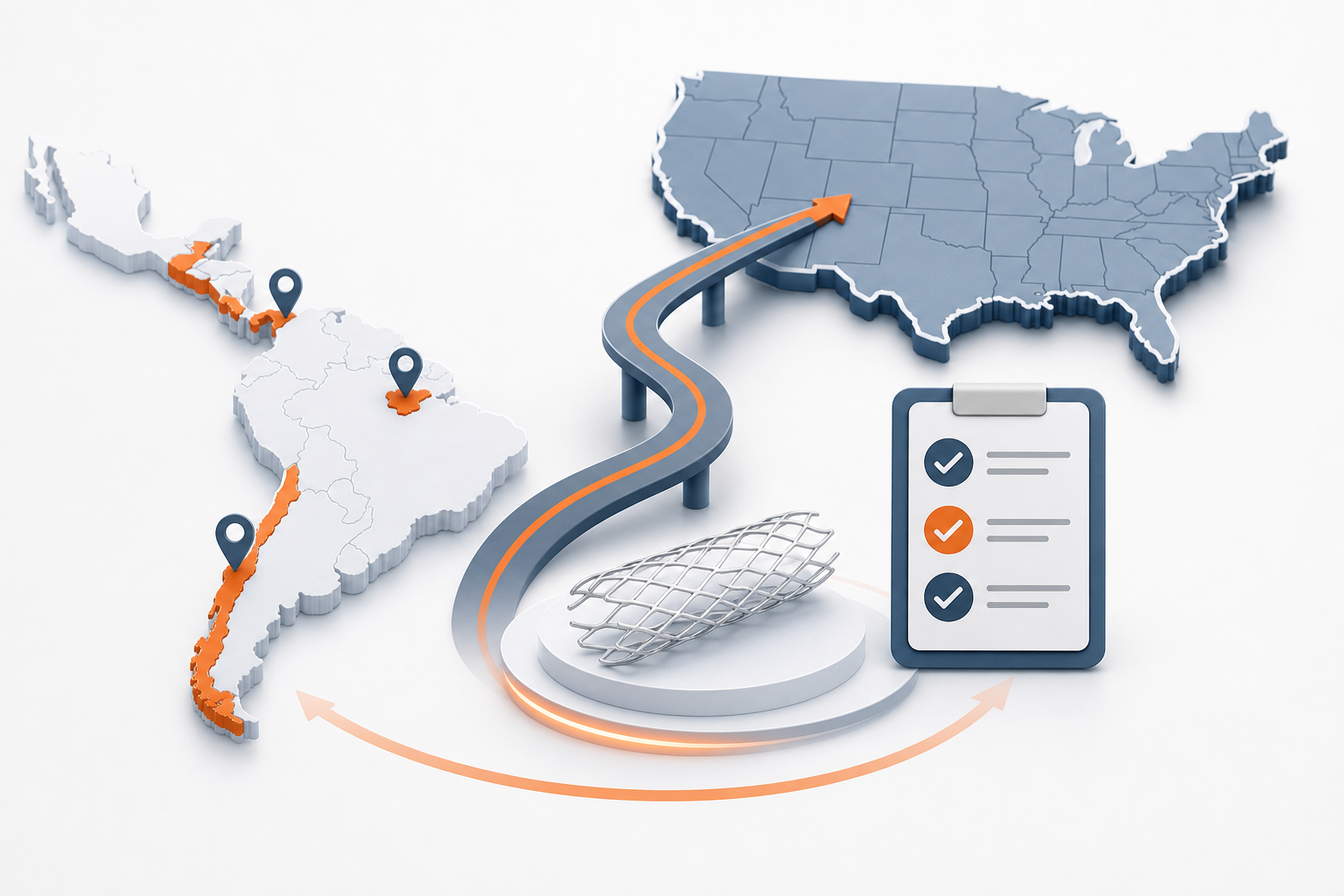
    Most MedTech founders treat regulatory strategy as a linear problem: get FDA clearance, then figure out the rest. That framing costs time and money. The smarter approach treats your FDA pathway and your first-in-human data strategy as a single sequenced plan — not two separate workstreams running independently.

    If you're a startup CEO or CSO sitting on an IDE approval or approaching a Series A close, this article walks through how to think about that sequence, why Latin American regulatory jurisdictions belong in your plan, and how to structure the evidence you generate so it holds up at every step.


    Why Sequencing Matters More Than Speed Alone

    Speed is the obvious reason founders look at Latin America. Ethics and regulatory approvals in jurisdictions like Panama, El Salvador, Chile, and the Dominican Republic take 30 to 90 days, compared to 6 to 12 months in the US or EU. That gap alone can determine whether you have first human data before your next funding round closes — or after it.

    But speed without regulatory alignment creates its own problem. If your LATAM trial isn't structured to FDA's foreign clinical data requirements from day one, the data you generate may not be usable for your IDE, 510(k), De Novo, or PMA submission. You'll have spent the time and the budget, and FDA will ask for more.

    The goal isn't just to run a trial fast. It's to generate a submission-ready evidence package that bridges directly to your next FDA step.


    Understand Your FDA Pathway First

    Before you select a country, a site, or a protocol design, you need to know which FDA pathway your device is targeting. That determination shapes everything downstream.

    The Five Core Pathways

    IDE (Investigational Device Exemption): Required for significant risk devices entering US clinical investigation. LATAM FIH data can support the IDE application or inform the protocol for the US pivotal study that follows.

    510(k): Clearance through substantial equivalence to a predicate device. First-in-human data from a LATAM feasibility study can strengthen a 510(k) by demonstrating clinical performance in a controlled setting.

    De Novo: For novel low-to-moderate risk devices with no predicate. The clinical evidence standard is higher than 510(k), and a well-documented LATAM FIH study can serve as the primary clinical evidence basis.

    PMA (Premarket Approval): For high-risk Class III devices. LATAM FIH and early feasibility data typically forms the foundation for a subsequent US pivotal study. The quality of your early data directly affects how FDA evaluates your pivotal protocol.

    HDE (Humanitarian Device Exemption): For rare disease devices affecting fewer than 8,000 US patients annually. Early clinical data from a LATAM feasibility study can satisfy the probable benefit standard.

    Knowing your pathway tells you what evidence FDA will need — which tells you what your LATAM protocol must produce.


    The FDA Framework That Makes LATAM Data Count

    Under FDA 21 CFR 812.28 (see FDA's official page on Acceptance of Data from Clinical Investigations for Medical Devices), data from foreign clinical investigations of medical devices may be accepted in support of an IDE or marketing submission, provided the study was conducted in accordance with Good Clinical Practice, including review and approval by an independent ethics committee, and the sponsor can verify data quality and integrity.

    This isn't a loophole. It's a documented, established framework. What it requires is that your LATAM study be designed and executed to the same quality standard you'd apply to a US study — ISO 14155 protocol architecture, ICH-GCP compliance, independent ethics review, and an audit-ready data room.

    If any of those elements are missing or inconsistently applied, the data's usability for FDA submissions becomes uncertain. This is exactly why protocol design and regulatory strategy must be aligned before enrollment begins, not after.


    Choosing the Right LATAM Jurisdiction for Your Device

    Not every Latin American country offers the same regulatory environment. For a startup, the practical distinction comes down to approval timeline and regulatory body predictability.

    Fast-Approval Jurisdictions

    Panama (MINSA/CNBI): Consistently among the fastest ethics and regulatory approval timelines in the region. Well-suited for first-in-human feasibility studies across a broad range of device classes.

    El Salvador (SRS/CNEIS): Regulatory approvals in the 30-to-90-day range. A strong option for sponsors who need to move quickly and have a straightforward device profile.

    Dominican Republic: Comparable approval timelines, with a growing clinical research infrastructure.

    Chile (ISP/MINSAL): A slightly more structured process, but still substantially faster than US or EU timelines. Well-regarded for cardiovascular and interventional device studies.

    Colombia: An established clinical research ecosystem with experienced investigator networks, particularly for complex device categories.

    What Drives Jurisdiction Selection

    Three factors should drive your choice: the device class and indication (some jurisdictions have deeper investigator experience in specific specialties), the regulatory body's familiarity with your device category, and your target FDA pathway. A device heading toward De Novo has different evidence requirements than one supporting a PMA, and those differences affect which jurisdiction and site network best fits your protocol.


    How to Sequence the Two Tracks

    Here's a practical sequencing framework for a startup that is IDE-ready or approaching that milestone.

    Phase 1: FDA Strategy Alignment (Months 1 to 2)

    Before any country selection or protocol drafting, align your LATAM study design to your FDA pathway. That means defining the primary and secondary endpoints your submission will need, confirming the study design (feasibility vs. pivotal), and identifying what a Pre-Submission meeting with FDA should accomplish before you enroll the first patient.

    If you haven't had a Pre-Sub meeting yet, this is the time. The output of that meeting shapes your protocol. Running a LATAM study without it is a sequencing error that's difficult to correct after the fact.

    Phase 2: Protocol Development and Jurisdiction Selection (Months 2 to 3)

    With FDA alignment in place, develop your protocol under ISO 14155 architecture. Select your LATAM jurisdiction based on device class, indication, and approval timeline requirements, then submit to the relevant ethics committee and regulatory authority.

    In Panama, El Salvador, and the Dominican Republic, ethics and regulatory approvals typically come back within 30 to 90 days of a complete submission. That window is your planning horizon for site activation.

    Phase 3: Site Activation and Enrollment (Months 3 to 8)

    Activate pre-qualified sites, enroll patients, and collect data under ICH-GCP standards with audit-ready documentation at every step.

    The quality of your data management during this phase determines how clean your evidence package will be. Errors in data collection that seem minor during enrollment tend to become significant problems during FDA review.

    Phase 4: Evidence Package Assembly (Months 8 to 12)

    Compile your clinical study report, statistical analysis, and organized data room structured for your specific FDA next step. Whether that's an IDE application, a 510(k) submission, or the clinical evidence section of a PMA, the deliverable should be organized to FDA's expectations — not just internally coherent.


    The Startup-Specific Consideration: Runway and Milestones

    For a seed-to-Series-B startup, the regulatory strategy question is inseparable from the capital question. Your investors have a milestone schedule. Your board has a timeline. Your next round has a closing date.

    A US or EU CRO timeline of 18 to 24 months for first human data doesn't fit inside a typical startup runway. A LATAM FIH study structured for FDA bridgeability can deliver a submission-ready evidence package within 12 months under the right program structure. That difference is often the difference between having data for your Series B and not having it.

    This isn't an argument to cut corners on quality. It's an argument to select the regulatory jurisdictions and execution model that match your actual timeline constraints — without compromising the standards that make the data usable.


    Common Sequencing Mistakes to Avoid

    Starting protocol development before confirming your FDA pathway. If you don't know whether you're targeting a De Novo or a PMA, you can't write the right protocol. The evidence standard is different, and rewriting a protocol after enrollment has started is expensive.

    Selecting a jurisdiction for speed alone. A fast approval timeline only matters if the site network in that jurisdiction has genuine experience with your device category and can execute to ISO 14155 standards. Speed and quality aren't mutually exclusive, but they require deliberate site selection.

    Treating the LATAM study as separate from the FDA strategy. Every decision in your LATAM trial — from endpoint selection to data collection procedures — should be made with your FDA submission in mind. The two tracks are one plan.

    Underestimating the data room requirement. FDA reviewers expect organized, auditable data. A clinical study report that's internally coherent but not structured for FDA review creates unnecessary friction at submission. Build the data room to FDA's expectations from the start.


    How bioaccess® Structures This for Sponsors

    bioaccess® is a CRO that manages first-in-human clinical trials for MedTech, Biopharma, and Radiopharma startups through exactly this kind of sequenced approach. The FIH-12™ program covers all nine workstreams — from FDA strategy alignment and protocol development through site activation, patient enrollment, data management, and delivery of a submission-ready clinical evidence package — within 12 months.

    One accountable team manages all nine workstreams across a network of 50-plus pre-qualified sites in Panama, Colombia, El Salvador, Chile, and the Dominican Republic. Every study is anchored to the sponsor's intended FDA pathway from day one, and the final deliverable is a clinical study report and organized data room structured for the sponsor's next FDA step.

    Intake is limited to a maximum of eight new programs per quarter — worth factoring into your planning timeline.


    FAQs

    Does FDA actually accept clinical data from Latin American trials?
    Yes. Under FDA 21 CFR 812.28, data from foreign clinical investigations of medical devices may be accepted in support of IDE and marketing submissions, provided the study was conducted in accordance with Good Clinical Practice and the sponsor can verify data quality and integrity. The key requirement is that the study is designed and executed to the same standards FDA would expect from a US study.

    How long do regulatory approvals take in Panama, El Salvador, and the Dominican Republic?
    Ethics and regulatory approvals in these jurisdictions typically take 30 to 90 days from a complete submission. That refers to the approval process specifically, not the overall trial duration.

    What is the difference between a feasibility study and a pivotal study in this context?
    A feasibility study evaluates the preliminary safety and performance of a device in a small patient population. A pivotal study generates the primary clinical evidence for a marketing submission. For most startups, the LATAM FIH study is a feasibility study that informs and supports the subsequent US pivotal study.

    Can LATAM FIH data support a 510(k) submission directly?
    In some cases, yes. If the 510(k) requires clinical data to demonstrate substantial equivalence, a well-documented LATAM feasibility study conducted under ISO 14155 and ICH-GCP standards can serve as that clinical evidence. The specific requirements depend on the device class and the predicate.

    What is ISO 14155 and why does it matter for FDA submissions?
    ISO 14155 is the international standard for Good Clinical Practice in clinical investigations of medical devices. FDA recognizes it as the applicable GCP standard for medical device trials, and studies conducted under its framework are structured to meet FDA's foreign clinical data acceptance requirements under 21 CFR 812.28.

    When should a startup begin thinking about LATAM regulatory strategy?
    Ideally, before protocol development begins. The earlier you align your LATAM study design to your FDA pathway, the less rework you'll face later. For most startups, the right entry point is at or shortly after an IDE approval or Series A close, when both the capital and the regulatory authorization to proceed are in place.

    What happens if the LATAM jurisdiction doesn't have experienced investigators for my device category?
    This is a real risk — and a reason why jurisdiction selection should be based on more than approval timelines alone. Site networks with documented experience in your device category reduce protocol execution risk. Evaluating investigator experience and site qualification before finalizing your jurisdiction is an important part of the planning process.


    Where to Start

    Sequencing LATAM approvals with your FDA pathway isn't complicated in principle. It requires knowing your FDA pathway before you design your protocol, selecting jurisdictions based on both approval timelines and site capability, and building your evidence package to FDA's expectations from the first day of enrollment.

    If you're approaching that planning window, the bioaccess® FIH-12™ program is structured specifically for this sequence. Learn more at bioaccessla.com.

  • Best EDC Systems for Clinical Trials: How to Pick the Right Platform for a FIH Study

    Best EDC Systems for Clinical Trials: How to Pick the Right Platform for a FIH Study

    Your electronic data capture system isn't a back-office detail when you're running a first-in-human trial. It's the infrastructure that determines whether your dataset is FDA-submittable or a rework project. Pick the wrong platform and you'll spend months cleaning data that should have been clean from day one.

    This guide covers what actually matters when selecting an EDC for a FIH study — not a 200-site Phase III, but an early-feasibility or first-in-human trial where your team is lean, your timeline is tight, and the data package you generate needs to hold up under FDA scrutiny.


    Why EDC Selection Looks Different for FIH Studies

    Most EDC comparisons are written for large-scale trials with dedicated IT teams, established data management departments, and long build timelines. FIH studies operate under different conditions.

    You're typically working with a small investigator team, a limited subject count, and a protocol that may still be evolving close to site activation. You need a platform that configures quickly, doesn't require months of validation work before you can collect a single data point, and produces outputs that map cleanly to your regulatory submission format — whether that's an IDE, a 510(k) package, or an IND.

    The compliance bar doesn't change. ICH-GCP standards apply regardless of study size. If your trial runs outside the US, FDA 21 CFR 812.28 governs how that foreign clinical data is accepted. Your EDC needs to support audit trails, access controls, and data integrity standards that will survive a regulatory review.


    The Core Requirements for a FIH-Ready EDC

    21 CFR Part 11 Compliance

    This is non-negotiable. Any EDC used in a trial intended to support an FDA submission must meet 21 CFR Part 11 requirements for electronic records and electronic signatures — audit trails for every data entry and modification, role-based access controls, and validated software with documented testing.

    If a vendor can't provide a current validation package and a 21 CFR Part 11 compliance statement, move on.

    ISO 14155 Compatibility for Medical Device Trials

    Medical device FIH studies follow ISO 14155, the international standard for clinical investigation of medical devices. Your EDC needs to support data collection structures that align with this standard: adverse event capture, device accountability, protocol deviation tracking, and investigator assessments that map to the endpoints defined in your clinical investigation plan.

    Not every EDC vendor has experience with device trials. Many are built primarily for drug studies, where the data architecture looks different. Ask specifically about ISO 14155 support and request examples of prior device study builds.

    Fast Configuration and Startup

    A FIH study on a 12-month timeline cannot absorb a 16-week EDC build. The best platforms for early-phase device and biopharma studies offer library-based form building, pre-validated study templates, and configuration timelines measured in weeks. Look for vendors who can demonstrate how quickly they activate a study from a finalized protocol — and get a realistic timeline in writing before you sign.

    Multi-Site and Multi-Country Data Collection

    If your trial runs across sites in Panama, Colombia, El Salvador, Chile, or the Dominican Republic, your EDC needs to support multi-language data entry, local time zone handling, and site-level access controls. Data collected across different regulatory jurisdictions still needs to flow into a single, clean, centralized database.

    This is especially relevant when site staff are working in Spanish and your data management team is reviewing in English. The platform needs to handle that workflow without introducing transcription risk.

    Regulatory Submission Export Formats

    Your EDC should export data in CDISC CDASH and SDTM formats — the standards FDA expects for data submissions. If it can't produce clean SDTM datasets, your data management team will be doing manual conversions, which adds time, cost, and the risk of errors entering your submission package. Confirm the export formats before you commit to a platform.


    What to Evaluate Beyond the Feature List

    Vendor Experience with Early-Phase Studies

    A vendor's reference list matters. Ask how many FIH or Phase I studies they've supported, and specifically whether any involved medical devices or international sites. A platform built primarily for large Phase III oncology trials may not have the configuration flexibility or support model that works for a 15-subject FIH feasibility study.

    Data Management Support Model

    Some EDC vendors sell software only. Others offer managed data management services alongside the platform. For a startup running its first FIH trial, a fully managed model often makes more sense than purchasing a license and building out your own DM team. Understand what's included in the contract and what's billed separately before you sign.

    Integration with Your CRO’s Workflow

    If you're working with a CRO that manages data management as part of its engagement, your EDC selection may be partially dictated by that CRO's existing infrastructure. This is worth discussing early. A CRO with validated workflows built around a specific EDC platform will execute faster and with fewer errors than one adapting to an unfamiliar system mid-study.

    At bioaccess®, data management is one of the nine workstreams covered under the FIH-12™ program. EDC setup, data monitoring, and preparation of the final evidence package are handled by the same team managing your protocol, your sites, and your regulatory submissions — not handed off to a separate vendor.


    Platforms Commonly Used in Early-Phase Trials

    This isn't an exhaustive market review, and the right choice depends on your specific protocol, budget, and CRO relationship. That said, a few platforms appear consistently in early-phase and FIH study contexts.

    Medidata Rave is the most widely deployed EDC in clinical research globally. It has strong 21 CFR Part 11 compliance infrastructure and broad regulatory acceptance. The tradeoff is configuration complexity and cost — it's better suited to sponsors with experienced data management teams or CROs with deep Medidata expertise.

    REDCap is widely used in academic and early-phase settings for its low cost and fast setup. It can be configured for 21 CFR Part 11 compliance, but that requires careful validation work. It's not a commercial EDC and lacks some of the enterprise support features larger trials need. For a lean FIH study with a strong data management team, it can work — but the validation burden needs to be managed carefully when the data is intended to support an FDA submission.

    Veeva Vault EDC has gained adoption in recent years, particularly in biopharma. It integrates well with other Veeva modules and has strong audit trail and compliance features. Configuration is generally faster than Medidata for straightforward protocols.

    Castor EDC is built specifically for early-phase and academic trials, with a faster setup model and strong multi-language support. It's used in international studies and has a compliance framework that supports 21 CFR Part 11. For FIH studies with international sites, it's worth evaluating.

    OpenClinica has a strong compliance pedigree, particularly in studies requiring CDISC output. It has both a commercial and an open-source version; the commercial version includes the validation documentation needed for regulatory submissions.


    The Biggest Mistakes Sponsors Make with EDC Selection

    Selecting based on price alone. The cheapest platform often carries the highest total cost once you factor in configuration time, data cleaning, and conversion work at submission. A platform that produces clean SDTM output from day one is worth more than one that requires manual post-processing.

    Treating EDC as a standalone decision. Your EDC choice affects your CRO, your data management team, your regulatory timeline, and your submission package. Make the decision in context, not in isolation.

    Underestimating the validation requirement. Every EDC used in a regulated trial needs to be validated. If the platform isn't already validated for your use case, that work takes time and costs money. Build it into your timeline from the start.

    Locking in a platform before your protocol is finalized. EDC configuration is driven by your data collection requirements, which come from your protocol. Starting the build before the protocol is stable leads to expensive amendments and delays.


    How EDC Fits Into a FIH Program

    A FIH study generates the foundational dataset your entire regulatory pathway depends on. The EDC is the system that captures, validates, and stores that data. Set it up correctly and your final data package is clean, audit-ready, and formatted for submission. Get it wrong and you're looking at data remediation that can delay your IDE or 510(k) by months.

    The most efficient path is to select your EDC as part of your overall FIH program design — not as a separate procurement. When your CRO manages data management as an integrated workstream alongside protocol development, site activation, and regulatory submissions, the EDC configuration is built to match the protocol from the start.

    That integration is part of what makes a structured FIH program different from assembling vendors independently. If you're evaluating CRO options, it's worth understanding how each handles data management and what EDC infrastructure they bring to the engagement.


    FAQs

    What is an EDC system in clinical trials?
    An electronic data capture (EDC) system is software used to collect, manage, and store clinical trial data in a structured, validated digital format. It replaces paper case report forms and provides the audit trail and access controls required for regulatory submissions.

    Does my EDC need to be 21 CFR Part 11 compliant for a FIH study?
    Yes. Any EDC used in a trial intended to support an FDA submission must comply with 21 CFR Part 11, which governs electronic records and electronic signatures. This includes audit trails, role-based access, and validated software with documented testing.

    Can I use REDCap for a trial intended to support an FDA submission?
    REDCap can be configured to meet 21 CFR Part 11 requirements, but it requires careful validation work that the sponsor or CRO must manage. It doesn't come with built-in regulatory validation packages the way commercial platforms do, so the compliance burden is higher.

    How long does EDC configuration typically take for a FIH study?
    For a straightforward FIH protocol, commercial EDCs with template libraries can typically be configured in four to eight weeks. More complex protocols or custom builds take longer. Factor this into your overall study startup plan.

    What data export formats does FDA expect for EDC submissions?
    FDA expects CDISC-compliant formats — specifically CDASH for data collection standards and SDTM for submission datasets. Your EDC should produce these formats directly. If it can't, your data management team will need to perform conversions, which adds time and risk.

    Does the EDC need to support multiple languages for international FIH studies?
    If your trial runs at sites where staff work in a language other than English, multi-language data entry support is important. For studies conducted in Latin American countries, site staff typically work in Spanish. Clean data collection in the local language reduces transcription errors and simplifies data review.

    How does EDC selection affect my FDA submission timeline?
    A well-configured EDC that produces clean, CDISC-compliant data shortens the time between last patient visit and a submission-ready data package. A poorly configured one can add months of cleaning and reformatting. EDC selection is a direct input to your regulatory timeline — not a separate operational decision.


    Choosing the right EDC for a FIH study comes down to one question: will this platform produce a clean, FDA-submittable dataset within your timeline? Get the compliance infrastructure right, align the platform with your protocol and your CRO's workflow, and treat EDC selection as part of your overall program design from day one.

    If you're planning a first-in-human trial and want to understand how data management fits into a structured FIH program, bioaccess® manages all nine workstreams under one engagement — including EDC setup and data management — across its network of sites in Panama, Colombia, El Salvador, Chile, and the Dominican Republic.

  • 510k vs PMA: Which FDA Pathway Should Your Medical Device Pursue?

    510k vs PMA: Which FDA Pathway Should Your Medical Device Pursue?

    Choosing between a 510(k) and a Premarket Approval (PMA) is one of the most consequential decisions a medical device founder makes. Get it right early, and your clinical strategy, budget, and investor timeline all line up. Get it wrong, and you may spend 18 months collecting data that doesn't satisfy the evidentiary standard your pathway actually requires.

    This article breaks down the core differences between the two pathways, how to determine which applies to your device, and what that choice means for your first-in-human trial design.


    What the FDA Is Actually Asking

    Both pathways exist to answer the same fundamental question: is this device safe and effective enough to be on the US market? The difference lies in how much evidence the FDA needs to reach that answer — and that requirement flows directly from how your device is classified.

    The FDA assigns every medical device to one of three classes based on patient risk.

    • Class I devices carry low risk. Most are exempt from premarket review entirely.
    • Class II devices carry moderate risk. Most reach market through the 510(k) pathway.
    • Class III devices carry the highest risk — typically because they sustain or support life, are implanted, or present an unreasonable risk of illness or injury. These require PMA.

    Your device's classification is the starting point for everything else.


    The 510(k) Pathway: Substantial Equivalence

    A 510(k) submission asks the FDA to clear your device by demonstrating substantial equivalence to a legally marketed predicate. You're not proving safety and effectiveness in isolation — you're showing your device performs comparably to something already on the market.

    What “substantially equivalent” means in practice

    Your device must share the same intended use as the predicate and either the same technological characteristics, or different characteristics that don't raise new safety or effectiveness questions. That framing matters because it shapes what kind of clinical data — if any — you actually need to collect.

    Many 510(k) submissions rely primarily on bench testing, biocompatibility data, and performance testing. When clinical data is required, it's typically a focused study rather than a full pivotal trial.

    Timeline and workload

    The FDA's standard review period for a 510(k) is 90 days from acceptance, though total elapsed time often runs longer when the agency issues additional information requests. For a device with a clear predicate and strong bench data, the 510(k) can be a relatively fast path to market.

    The risk is predicate selection. A weak or distant predicate invites a Not Substantially Equivalent determination — which can push you toward De Novo or PMA territory without warning.


    The PMA Pathway: Valid Scientific Evidence

    A PMA requires you to demonstrate reasonable assurance of safety and effectiveness through valid scientific evidence. There's no predicate to point to. The FDA evaluates your device on its own merits, which means your clinical dataset needs to stand alone.

    This is the pathway for Class III devices: implantable cardiac devices, certain neurological implants, high-risk diagnostics, and others where failure could cause serious harm.

    What a PMA clinical program looks like

    A PMA typically requires at least one well-controlled pivotal trial — often with a statistically powered sample size, defined primary endpoints, and a comparator arm. The FDA's review of that data is rigorous, and the agency may convene an advisory panel for high-profile submissions.

    The IDE (Investigational Device Exemption) is the mechanism that allows you to collect pivotal data in the first place. Before you enroll a single patient in a significant-risk device study, you need an approved IDE. That application itself requires preliminary safety data — which is exactly where a first-in-human or early feasibility study fits in.

    Timeline and investment

    PMA is a longer, more expensive process than 510(k). Total development timelines from first-in-human to PMA approval can run five to ten years for complex devices. The clinical program alone typically spans multiple phases: an early feasibility study to establish safety signals, followed by a pivotal trial to generate primary effectiveness data.

    For a startup, that timeline has direct implications for how you structure your FIH study and what evidence you need before your next funding round.


    Key Differences at a Glance

    Factor 510(k) PMA
    Device class Primarily Class II Class III
    Standard of review Substantial equivalence to a predicate Valid scientific evidence of safety and effectiveness
    Clinical data requirement Often limited or none Required; typically a pivotal trial
    IDE required Only for significant-risk studies Yes, for pivotal and often for early feasibility
    FDA review timeline ~90 days (standard) 180 days (after filing acceptance)
    Post-approval requirements Generally lighter Ongoing post-approval studies common

    The De Novo Pathway: A Third Option Worth Knowing

    If your device is genuinely novel, poses low to moderate risk, and has no valid predicate, De Novo is worth serious consideration. It creates a new device classification and, once granted, establishes your device as a predicate for future 510(k) submissions.

    De Novo is not a shortcut. It requires more documentation than a standard 510(k), and the FDA's review period is longer. But for a first-of-kind device that doesn't belong in Class III, it's the appropriate route — and it avoids the burden of a full PMA.


    How Pathway Choice Shapes Your FIH Study

    Your regulatory pathway determines the evidentiary standard your clinical data must meet. That standard, in turn, determines what your first-in-human study actually needs to accomplish.

    For a 510(k) device, your FIH study is often a relatively small early feasibility study designed to confirm safety signals and support predicate comparisons. Endpoints are narrower, enrollment targets are smaller, and the study can typically be completed faster.

    For a PMA device, your FIH study is the first step in a longer clinical program. The FDA will evaluate it as part of the overall evidence package, and the data needs to be structured to support the IDE application for your pivotal trial. Endpoints, patient population, and follow-up duration all have to be designed with that pivotal study in mind from day one.

    This is why FDA strategy alignment can't be an afterthought. Design your FIH study without anchoring it to your intended pathway, and you risk collecting data that doesn't move your program forward.


    Aligning FIH Trial Design to Your Pathway

    At bioaccess®, every study in the FIH-12™ program begins with FDA strategy alignment as the first of nine workstreams. The protocol is built around the sponsor's intended pathway — whether that's IDE, 510(k), De Novo, PMA, or HDE — so the clinical evidence package that comes out of the program is structured for the submission it needs to support.

    Trials run in Panama, Colombia, El Salvador, Chile, and the Dominican Republic, where ethics and regulatory approvals are observed in 30 to 90 days, compared to 6 to 12 months in the US or EU. That speed matters when your runway is finite and your next funding milestone depends on having human data in hand.

    The FIH-12™ program delivers a submission-ready evidence package within 12 months. All data is structured for FDA acceptance under 21 CFR 812.28, which governs the use of foreign clinical data in US submissions.


    Practical Questions to Ask Before You Choose

    Before committing to a pathway, work through these with your regulatory team:

    What is your device's intended use, and does it match an existing predicate? If yes, 510(k) is likely your starting point. If no, you're looking at De Novo or PMA.

    What risk class does the FDA assign to devices with your intended use? The FDA's product classification database is the first place to check. If your device type is consistently Class III, PMA is your pathway regardless of predicate availability.

    Have you had a Pre-Submission (Q-Sub) meeting with the FDA? A Pre-Sub is the most direct way to get the agency's early read on your classification and pathway. It's not binding, but it significantly reduces the risk of a wrong-pathway investment.

    What does your clinical evidence need to show? For 510(k), you need to demonstrate comparability. For PMA, you need to demonstrate safety and effectiveness. These are different evidentiary standards that require different study designs.

    What is your funding timeline? If you have 18 months of runway and need human data before a Series B closes, a PMA pivotal trial isn't achievable in that window. But a well-designed early feasibility study that supports your IDE application can be.


    When Founders Get This Wrong

    The most common mistake is assuming a 510(k) pathway because a similar device exists on the market. Predicate selection is more nuanced than it looks. A device with the same intended use but meaningfully different technology may not qualify as substantially equivalent — and a Not Substantially Equivalent determination late in the process is expensive.

    The second common mistake is under-designing the FIH study for a PMA pathway. Founders sometimes treat the early feasibility study as a standalone safety check rather than as the foundation for a pivotal trial. When the pivotal trial IDE application reaches the FDA, gaps in the early data create delays that could have been avoided.

    Both mistakes come down to the same root cause: regulatory strategy that starts too late.


    FAQs

    What is the main difference between a 510(k) and a PMA?
    A 510(k) clears a device by showing it is substantially equivalent to a legally marketed predicate. A PMA approves a device based on valid scientific evidence of safety and effectiveness, without relying on a predicate. PMA applies to Class III devices and requires a full clinical program; 510(k) applies primarily to Class II devices and often requires limited or no clinical data.

    Does a 510(k) device need clinical trials?
    Not always. Many 510(k) submissions rely on bench testing, biocompatibility data, and performance testing. Clinical data is required when bench testing alone can't establish substantial equivalence, or when the device's intended use involves a clinical performance claim that needs human data to support it.

    What is an IDE and when do you need one?
    An Investigational Device Exemption (IDE) is FDA authorization to use an investigational device in a clinical study. You need an IDE for any significant-risk device study conducted in the United States. For PMA devices, the IDE is the mechanism that allows you to collect the pivotal trial data the FDA requires for approval.

    Can a Class II device require PMA?
    In rare cases, yes. The FDA can require a Class II device to go through PMA if it determines that general and special controls aren't sufficient to provide reasonable assurance of safety and effectiveness. This is uncommon but worth confirming for novel device types.

    What is the De Novo pathway and how does it differ from 510(k) and PMA?
    De Novo is a classification pathway for novel, low-to-moderate-risk devices with no valid predicate. It creates a new device type and establishes the device as a predicate for future 510(k) submissions. It requires more documentation than a standard 510(k) but is less burdensome than PMA — making it the right route for genuinely first-of-kind devices that don't pose Class III risk.

    How does my FDA pathway choice affect my first-in-human study design?
    Your pathway determines the evidentiary standard your clinical data must meet. A 510(k) FIH study typically needs to confirm safety and support predicate comparisons, with narrower endpoints and smaller enrollment. A PMA FIH study is the first step in a longer clinical program and must be designed with the pivotal trial in mind from the start — including endpoints, patient population, and follow-up duration.

    How long does PMA approval typically take compared to 510(k)?
    The FDA's standard review period for a 510(k) is 90 days from acceptance, though total elapsed time is often longer. For PMA, the FDA has 180 days from filing acceptance to act, but the full development timeline from first-in-human to PMA approval for complex devices can span several years — including the time required to complete a pivotal trial.


    Pathway selection is a regulatory decision with clinical, financial, and strategic consequences. The earlier you align your FIH study design to your intended submission, the less time and capital you spend collecting data that doesn't move your program forward.

    If you're mapping your device's regulatory strategy and want to understand how a structured FIH program fits into that plan, learn more at bioaccessla.com.

  • INVIMA Colombia Clinical Trial Approval: Timeline, Documents, and Common Delays

    INVIMA Colombia Clinical Trial Approval: Timeline, Documents, and Common Delays

    Colombia is one of the most frequently considered Latin American markets for clinical trial expansion. It has a large patient population, established academic medical centers, and a reasonably mature research infrastructure. But for MedTech and biopharma sponsors evaluating where to run a first-in-human or early-feasibility study, INVIMA's approval process carries a reputation worth examining honestly before you commit budget and timeline to it.

    This article covers how INVIMA clinical trial approvals actually work, what documents you need, how long the process takes, and where sponsors most often lose weeks or months to delays that could have been avoided.


    What Is INVIMA and What Does It Regulate?

    INVIMA (Instituto Nacional de Vigilancia de Medicamentos y Alimentos) is Colombia's national health regulatory authority. It oversees clinical trial authorization for drugs, biologics, and medical devices conducted on Colombian territory.

    For clinical research, INVIMA operates under Decree 2378 of 2008 and Resolution 8430 of 1993, which establish the ethical and scientific framework for human research in Colombia. Device trials also intersect with INVIMA's medical device registration framework, adding a classification review layer depending on the investigational product.

    INVIMA is not a passive registry. It conducts substantive scientific review of protocols — which is one reason timelines run longer than sponsors sometimes expect when they first look at Colombia as a LATAM option.


    INVIMA Clinical Trial Approval Timeline

    INVIMA's official review window is 30 to 60 business days from the date of an accepted submission. In practice, sponsors should plan for 4 to 9 months total elapsed time — from initial submission to authorization — once you account for document preparation, parallel institutional ethics committee (IEC) review, query resolution, and any resubmission cycles.

    Here is how the timeline typically breaks down:

    Pre-Submission and Document Preparation

    Assembling the dossier usually takes 4 to 8 weeks before submission. This phase is consistently underestimated. Missing or incorrectly formatted documents are the single most common source of delay, and INVIMA will not begin its substantive review until the submission passes an administrative completeness check.

    Institutional Ethics Committee (IEC) Review

    Colombia requires IEC approval from a recognized ethics committee at each participating site before INVIMA will issue final authorization. IEC timelines vary by institution but typically run 4 to 8 weeks. Some sponsors submit to both IEC and INVIMA simultaneously to compress the overall timeline; others wait for IEC approval first. Running them in parallel is more efficient, but it requires your protocol and consent forms to be finalized before either submission goes in.

    INVIMA Scientific Review

    Once the submission is accepted, INVIMA's scientific review team evaluates the protocol, investigator qualifications, site suitability, and the study's risk-benefit profile. This phase generates formal queries — called requerimientos — that the sponsor must respond to within a defined window. A single query round can add 4 to 8 weeks, and complex protocols sometimes generate two rounds.

    Authorization Issuance

    After satisfactory responses to all queries, INVIMA issues the clinical trial authorization. No subjects can be enrolled until this document is in hand.


    Required Documents for INVIMA Clinical Trial Submission

    The exact document list varies depending on whether the study involves a drug, biologic, or medical device, but the core dossier for most clinical trials includes:

    • Clinical study protocol (in Spanish or with a certified Spanish translation)
    • Investigator's Brochure (IB) or equivalent device description document
    • Informed consent form(s) in Spanish, compliant with Resolution 8430
    • Investigator CVs for principal investigators at each site
    • Site qualification documentation (infrastructure, equipment, staff)
    • Ethics committee approval letter from the IEC at each participating site
    • Sponsor authorization letter and legal representation documentation for the sponsor's local representative or CRO
    • Product dossier including manufacturing information, quality data, and preclinical safety summary
    • Insurance or indemnification documentation covering trial participants
    • INVIMA application form completed in the required format

    For medical device trials specifically, INVIMA may also request the device's risk classification under Colombian regulation and, in some cases, prior regulatory clearance or CE/FDA status as supporting context.

    All documents must be submitted through INVIMA's digital platform (VUE, Ventanilla Única Empresarial) in the required format. Paper submissions are no longer accepted for most trial types.


    Common Causes of Delay in INVIMA Approvals

    Knowing where approvals stall is more useful than knowing the official timeline. These are the delays sponsors run into most often:

    Incomplete or Incorrectly Formatted Submissions

    INVIMA's administrative completeness check is strict. A missing document, an incorrectly formatted file, or a translation that does not meet certification standards will result in the submission being returned. The review clock does not start until the submission clears this check.

    Protocol Language and Translation Quality

    The protocol and consent forms must be in Spanish. Machine-translated documents or low-quality translations regularly generate queries during scientific review — and errors in technical terminology can raise substantive scientific questions that take multiple rounds to resolve.

    Ethics Committee Timing Misalignment

    If IEC review at a site is delayed, INVIMA will not issue final authorization even if its own review is complete. Sponsors who treat IEC review as a sequential step after INVIMA review, rather than a parallel track, routinely add 6 to 10 weeks to their overall timeline.

    Query Response Delays

    INVIMA's formal queries must be answered within a specified window. Sponsors who are not organized to respond quickly — or who need to revise the protocol to address a query — can lose significant time. Each query round resets a portion of the review clock.

    Investigator and Site Documentation Gaps

    INVIMA scrutinizes investigator qualifications carefully. CVs that do not reflect relevant therapeutic area experience, or sites that lack documented GCP training records, frequently generate queries or requests for additional information.

    Regulatory Classification Uncertainty for Devices

    For medical device trials, INVIMA's classification of the investigational device under Colombian regulation can introduce uncertainty. If the device does not map cleanly to an existing Colombian classification, INVIMA may request additional technical documentation before proceeding with clinical trial review.


    How Colombia Compares to Other LATAM Jurisdictions

    For sponsors evaluating where to run a first-in-human or early-feasibility study, the INVIMA timeline is a meaningful planning input. The realistic 4 to 9 month window for clinical trial authorization in Colombia is significantly longer than what sponsors can achieve in certain other Latin American jurisdictions.

    In Panama, El Salvador, Chile, and the Dominican Republic, ethics and regulatory approvals are typically observed in 30 to 90 days. That gap matters when your runway is tied to a Series A milestone or a board deadline. A 6-month difference in regulatory approval timing can determine whether you have data in hand before your next funding round closes.

    This is one reason sponsors working with bioaccess® on FIH programs operate in those four jurisdictions rather than Colombia. The faster approval windows are not a workaround — Panama, El Salvador, Chile, and the Dominican Republic are established regulatory environments with qualified sites and data structured for FDA acceptance under 21 CFR 812.28 for foreign clinical data.


    What to Do If Colombia Is Still the Right Fit

    Some sponsors have specific reasons to run in Colombia: existing investigator relationships, a patient population with particular disease prevalence, or a market access strategy that makes Colombian data valuable beyond the FIH milestone. If that describes your situation, the practical steps to minimize delay are:

    1. Start document preparation 3 to 4 months before your target submission date. Certified translations and site qualification packages take longer than most teams expect.
    2. Run IEC and INVIMA submissions in parallel. Coordinate with your sites so ethics committee submissions go in at the same time as your INVIMA dossier.
    3. Engage a local regulatory affairs consultant or CRO with active INVIMA experience. Familiarity with current query patterns and administrative requirements is worth more than general LATAM regulatory knowledge.
    4. Finalize your protocol before submission. Amendments after submission restart portions of the review process.
    5. Build query response capacity into your team. Assign a dedicated person to monitor INVIMA communications and coordinate responses within the required window.

    FAQs

    What is the official INVIMA review timeline for clinical trial authorization?
    INVIMA's official review window is 30 to 60 business days from the date of accepted submission. In practice, total elapsed time from initial submission to authorization is typically 4 to 9 months when accounting for document preparation, IEC review, and query resolution rounds.

    Does Colombia require ethics committee approval before INVIMA authorization?
    Yes. INVIMA requires IEC approval from a recognized institutional committee at each participating site as part of the authorization process. Running IEC and INVIMA submissions in parallel is the most efficient way to manage overall timeline.

    What language must clinical trial documents be submitted in for INVIMA?
    The protocol, informed consent forms, and most supporting documents must be in Spanish. Certified translations are required for documents originally prepared in other languages. Low-quality translations are a common source of queries and delays.

    Can a foreign sponsor submit directly to INVIMA without a local representative?
    No. Foreign sponsors must designate a local legal representative in Colombia or engage a CRO with local legal standing to submit and manage the application on their behalf.

    What is the most common reason INVIMA submissions are delayed?
    Incomplete or incorrectly formatted submissions that fail the administrative completeness check are the most frequent cause. This prevents the substantive review clock from starting and can add weeks to the process before the sponsor receives any feedback.

    How does INVIMA's timeline compare to other Latin American jurisdictions?
    Colombia's realistic 4 to 9 month window is longer than what is achievable in jurisdictions like Panama, El Salvador, Chile, and the Dominican Republic, where ethics and regulatory approvals are typically observed in 30 to 90 days for clinical trials in those markets.

    Is INVIMA clinical trial data accepted by the FDA?
    Foreign clinical data submitted to the FDA must meet the requirements of 21 CFR 812.28 for investigational devices, or equivalent standards for drugs and biologics. Whether INVIMA-authorized Colombian trial data satisfies those requirements depends on study design, ICH-GCP compliance, and the specific submission context. Sponsors should confirm FDA alignment before initiating any study intended to support a US regulatory pathway.


    Plan Your Timeline Around the Approval Process, Not After It

    INVIMA is a capable regulatory authority, and Colombia is a legitimate clinical research market. But the approval timeline is not forgiving of late starts or incomplete submissions. If you are managing a startup runway, a 4 to 9 month regulatory approval window needs to be factored into your FIH planning from the moment you begin site selection — not after your protocol is finalized.

    If your primary goal is getting first human data within a timeline that works for your next funding round, it is worth understanding all your jurisdiction options in Latin America before defaulting to Colombia. Learn more at bioaccessla.com.

    WordPress category: Navigating Regulatory Landscapes in Latin America

  • Clinical Trial Protocol Development: A Step-by-Step Walkthrough for FIH Medical Devices

    Clinical Trial Protocol Development: A Step-by-Step Walkthrough for FIH Medical Devices

    WordPress Category: Navigating Regulatory Landscapes in Latin America

    Writing a clinical trial protocol for a first-in-human (FIH) medical device study is not a documentation exercise. It is a strategic decision that shapes your regulatory pathway, your site selection, your enrollment timeline, and ultimately whether your data will be accepted by FDA. Get it right, and you have a submission-ready evidence package. Get it wrong, and you are rewriting sections after your first ethics review, burning weeks you cannot afford.

    This walkthrough covers what founders and clinical operations leads need to understand before a single word of their protocol is drafted.


    Why Protocol Development Is Different for FIH Medical Devices

    FIH drug trials follow a relatively standardized dose-escalation framework. Medical device FIH studies are more variable. The protocol must account for device-specific risks, operator learning curves, procedural endpoints, and the regulatory route the sponsor intends to pursue — whether that is IDE, 510(k), De Novo, PMA, or HDE.

    FDA's investigational device exemption guidance and ISO 14155:2020 — the international GCP standard for medical device trials — together define the architecture your protocol must satisfy. If your study will generate data used in a US submission, structuring under ISO 14155 from the start is not optional. It is how you ensure the data qualifies under FDA 21 CFR 812.28 for foreign clinical data acceptance.

    That regulatory anchor needs to be set before protocol drafting begins, not after.


    Step 1: Align on Your US Regulatory Pathway First

    Before writing a single inclusion criterion, confirm which FDA pathway the study data will support. Protocol design follows from that answer.

    • IDE pathway: Your protocol must satisfy FDA's investigational device exemption requirements. For studies conducted outside the US, you will need to demonstrate that the study design, GCP compliance, and data collection meet the standards FDA applies to foreign clinical data under 21 CFR 812.28.
    • 510(k) or De Novo: The protocol must define substantial equivalence endpoints or performance criteria that map directly to your predicate or device classification.
    • PMA or HDE: Expect a more rigorous statistical plan, longer follow-up windows, and a higher bar for safety documentation.

    Drafting a protocol to a generic GCP standard without first confirming the regulatory pathway is one of the most common and costly mistakes in early-stage device development. You end up with data that is scientifically valid but regulatorily incomplete.


    Step 2: Define Study Objectives and Endpoints Precisely

    The primary objective of a FIH device study is typically safety and feasibility, not efficacy. That distinction matters for how you structure your endpoints.

    Primary endpoints should capture:

    • Device-related adverse events and serious adverse events (SAEs)
    • Technical success at the procedural level
    • Early performance indicators tied to the device's mechanism of action

    Secondary endpoints might include:

    • Subject-reported outcomes at defined follow-up intervals
    • Imaging or biomarker data supporting performance claims
    • Operator assessment of usability and handling

    Be specific. "Safety will be assessed" is not an endpoint. "Incidence of device-related SAEs at 30 days post-procedure" is. Vague endpoints create ambiguity during data analysis and give ethics committees a reason to request revisions.


    Step 3: Write Eligibility Criteria That Reflect Real Patient Populations

    Overly restrictive eligibility criteria are the single largest driver of enrollment delays in FIH device trials. Founders often write criteria that reflect their ideal study subject rather than the patients who actually present at clinical sites.

    A few practical guidelines:

    • Anchor criteria to your intended indication. If your device is intended for a broad population, your criteria should not narrow to a subgroup so specific that enrollment stretches to 18 months.
    • Exclude for safety, not convenience. Every exclusion criterion should have a documented safety or scientific rationale. Ethics committees will ask.
    • Pressure-test criteria against site feasibility data. If your CRO has pre-qualified sites in your target geography, they should be able to tell you whether the criteria are achievable given the patient populations those sites actually see.

    In jurisdictions like Panama, El Salvador, Chile, and the Dominican Republic, patient populations are often well-suited for FIH feasibility work, with disease prevalence and site infrastructure that support enrollment within realistic timelines. Even so, your criteria still need to match the site's actual patient flow.


    Step 4: Design the Safety Monitoring Plan

    For a FIH device study, the safety monitoring plan is not a boilerplate appendix. It is a core section that regulators and ethics committees scrutinize carefully.

    Your plan should define:

    • Stopping rules: Specific, measurable criteria that would pause or terminate the study
    • DSMB or independent safety review: Whether one is required, how often it convenes, and what data it reviews
    • Adverse event reporting timelines: Expedited reporting requirements for SAEs, including timelines to the sponsor, ethics committee, and regulatory authority
    • Device deficiency reporting: ISO 14155 requires a clear distinction between adverse events and device deficiencies — your protocol needs to reflect that

    Sponsors running multi-site studies increasingly use dedicated ICSR (Individual Case Safety Report) platforms to manage regulatory submissions across jurisdictions, which reduces the risk of missed reporting windows during active enrollment.


    Step 5: Build the Statistical Analysis Plan Into the Protocol From the Start

    Many early-stage sponsors treat the statistical analysis plan (SAP) as something to write after enrollment closes. That is the wrong sequence.

    Your protocol should include, at minimum:

    • Sample size justification: For FIH feasibility studies, this is often based on precision estimates rather than power calculations — but you still need a documented rationale
    • Primary analysis method: How you will analyze your primary safety and feasibility endpoints
    • Handling of missing data: Especially relevant for device studies with procedural endpoints where some subjects may not complete follow-up

    FDA reviewers will look at whether your analysis was pre-specified. A post-hoc safety analysis carries less weight than one defined prospectively in the protocol.


    Step 6: Address Regulatory Submission Requirements for Your Target Jurisdiction

    If you are running your FIH study in Latin America, your protocol needs to satisfy both the local regulatory authority and FDA's foreign data acceptance standards simultaneously.

    In the four jurisdictions where bioaccess® operates, ethics and regulatory approvals take 30 to 90 days. That speed advantage is only realized if your protocol is structured correctly from submission. A document that requires multiple revision cycles with MINSA/CNBI in Panama or SRS/CNEIS in El Salvador will erode the timeline advantage those jurisdictions offer.

    Key requirements to address in the protocol:

    • Informed consent language: Must satisfy local ethics committee requirements and be available in the local language
    • Investigator qualifications: Document the PI's experience with the device type and procedure
    • Site infrastructure requirements: Define what the site needs to have in place — equipment, staff, and follow-up capabilities
    • Data management standards: If the data will be submitted to FDA, your EDC and data collection instruments need to meet the requirements for foreign clinical data acceptance under 21 CFR 812.28

    Step 7: Write the Protocol Amendment Process Into the Document

    FIH studies generate new information. Your protocol will almost certainly need at least one amendment — whether to adjust stopping rules based on early safety data, modify follow-up windows, or refine eligibility criteria after the first few enrollments.

    Define the amendment process in the protocol itself:

    • What types of changes require ethics committee re-approval versus administrative notification
    • How protocol deviations will be documented and reported
    • Who has authority to approve amendments on the sponsor side

    Ethics committees in Latin American jurisdictions, like those anywhere, expect sponsors to have a clear governance process for protocol changes. Having it documented upfront prevents delays when an amendment is actually needed.


    How the FIH-12™ Program Structures Protocol Development

    For startups running their first device trial, the protocol development process described above is often unfamiliar territory. The FIH-12™ program at bioaccess® integrates protocol development as one of nine structured workstreams, alongside FDA strategy alignment, site activation, patient enrollment, data management, and final evidence package delivery.

    One accountable team manages all nine workstreams, which means the protocol is written with the site network, enrollment feasibility, and submission requirements already factored in — rather than developed in isolation and handed off to execution teams who find problems later.

    If you are 12 to 24 months from needing your first human dataset and want a preliminary view of your country route, timeline range, and evidence package requirements, the FIH Launch Planner at bioaccessla.com generates a preliminary estimate based on your device class in six questions.


    Common Protocol Development Mistakes in FIH Device Studies

    A few patterns appear repeatedly in early-stage device programs:

    Starting protocol development before regulatory strategy is confirmed. The protocol should follow from the regulatory pathway, not the other way around.

    Writing endpoints that cannot be measured at your sites. If your primary endpoint requires imaging equipment or lab infrastructure that your sites do not have, you have an enrollment problem before you start.

    Underestimating the ethics committee review process. Even in fast-approval jurisdictions, a poorly structured protocol will generate questions that extend your timeline. The 30 to 90 day approval window in Panama, El Salvador, Chile, and the Dominican Republic assumes a submission-ready document.

    Separating the statistical plan from the protocol. Pre-specified analysis is a credibility signal for FDA reviewers. Build it in from the start.

    Treating the protocol as a static document. Plan for amendments. They are not a sign that the study is failing — they are a normal part of FIH execution.


    FAQs

    What is the difference between a clinical trial protocol for a medical device versus a drug?
    Drug protocols typically follow dose-escalation frameworks with pharmacokinetic endpoints. Medical device protocols focus on procedural safety, technical success, operator performance, and device-specific adverse events. They must also comply with ISO 14155 for GCP — the applicable standard for medical device trials — rather than the ICH E6 framework used for drugs.

    Does a FIH protocol written for a Latin American study need to meet FDA standards?
    Yes, if the data will be used in a US regulatory submission. Under FDA 21 CFR 812.28, foreign clinical data is acceptable when the study was conducted under GCP standards equivalent to those FDA requires. Structuring the protocol under ISO 14155 and aligning data collection with FDA's foreign data acceptance requirements from the start is how you ensure the data is usable for your IDE or 510(k) submission.

    How long does it typically take to develop a FIH protocol for a medical device?
    Timelines vary based on device complexity, regulatory pathway, and how much pre-clinical data is already available to inform safety parameters. Within the FIH-12™ program, protocol development is one of nine structured workstreams managed by a single accountable team, with the goal of a submission-ready evidence package within 12 months from program start.

    What happens if the ethics committee requests protocol revisions?
    Revision requests are normal and should be anticipated. The key is having a protocol that is well-structured enough to minimize revision cycles. In the four jurisdictions where bioaccess® operates, the 30 to 90 day approval window assumes a submission-ready document. Poorly structured protocols extend that window and erode the timeline advantage those jurisdictions offer.

    How should sample size be justified for a FIH feasibility study?
    For FIH device studies, sample size justification is typically based on precision estimates or feasibility criteria rather than statistical power calculations. You need a documented rationale explaining why the number of subjects is sufficient to characterize safety and feasibility for the intended use. FDA reviewers will look for this justification in the protocol.

    What is ISO 14155 and why does it matter for FIH device protocols?
    ISO 14155:2020 is the international standard for good clinical practice in medical device investigations. It defines requirements for protocol content, ethics committee submissions, informed consent, adverse event reporting, and data management. Structuring your FIH protocol under ISO 14155 is how you demonstrate GCP compliance to both local regulatory authorities in Latin America and FDA when submitting foreign clinical data.

    When should a Data Safety Monitoring Board be included in a FIH device protocol?
    A DSMB is not required for all FIH device studies, but it is strongly advisable for studies involving novel mechanisms, high-risk device classifications, or vulnerable patient populations. The protocol should define whether a DSMB is included, how often it convenes, what data it reviews, and what authority it has to recommend study modifications or early termination.


    Start With the Right Foundation

    A clinical trial protocol is the document that every downstream decision in your study depends on. Site selection, enrollment planning, data management, ethics submissions, and the final evidence package all trace back to choices made during protocol development.

    For medical device founders running their first FIH study, the most important thing to get right is the regulatory anchor. Know your FDA pathway before you write your first endpoint. Structure your data collection for foreign data acceptance from day one. And build your safety monitoring plan with the same rigor you would apply to a pivotal trial — because for many FIH studies, this data will eventually support one.

    If you are in the early stages of planning your FIH program, bioaccess® manages protocol development as part of a fully integrated nine-workstream engagement across Panama, El Salvador, Chile, and the Dominican Republic, where regulatory approvals take 30 to 90 days.

  • Clinical Trial Data Management: What a Sponsor Needs to Know Before Choosing a CRO

    Clinical Trial Data Management: What a Sponsor Needs to Know Before Choosing a CRO

    WordPress Category: General

    Data management is one of the least glamorous parts of running a first-in-human trial. It is also one of the most consequential. A clean, audit-ready dataset is what separates a submission-ready evidence package from a pile of files that need months of remediation before they can go anywhere near the FDA.

    If you are a MedTech or biopharma founder evaluating CROs, how a prospective partner handles clinical trial data management will tell you a great deal about how the rest of the engagement will go.

    This article covers what data management actually involves in an early-phase trial, the questions worth asking before you sign a contract, and the structural factors that shape data quality from day one.


    What Clinical Trial Data Management Actually Covers

    The term gets used loosely. In practice, clinical trial data management is the end-to-end process of collecting, cleaning, validating, and locking study data so it meets regulatory standards for submission.

    For a first-in-human study, that process spans several distinct activities:

    • Electronic Data Capture (EDC) setup and validation — building case report forms (CRFs) that map to your protocol endpoints and configuring the system to flag out-of-range values automatically
    • Data entry and source data verification (SDV) — confirming that what was recorded at the site matches source documents
    • Query management — identifying and resolving discrepancies between site-entered data and expected values
    • Medical coding — applying standard dictionaries (MedDRA for adverse events, WHO Drug for concomitant medications) so your safety data is interpretable
    • Database lock — the formal closure of the database after all queries are resolved, after which no changes can be made without documented justification
    • Data transfer and archiving — packaging the final dataset in formats compatible with your regulatory submission

    Each of these steps has its own timeline, personnel requirements, and documentation burden. When any one of them is handled by a separate vendor, coordination risk multiplies.


    Why Data Management Decisions Affect Your Regulatory Outcome

    The FDA does not just review your clinical findings. It reviews the integrity of the process that produced them. Under 21 CFR 812.28, foreign clinical data submitted in support of a US device application must meet the same quality standards as data collected domestically. That means your EDC configuration, audit trails, query logs, and database lock documentation all become part of the evidentiary record.

    For a startup running a first-in-human study on a 12-to-18-month timeline, data management quality has a direct effect on whether your clinical study report is submission-ready or requires remediation. Remediation after database lock is expensive, time-consuming, and sometimes impossible without reopening the database — which itself requires a documented rationale.

    Protocols built to ISO 14155 architecture include data management requirements as a defined component, not an afterthought. If your CRO cannot describe how their data management plan aligns with ISO 14155, that is a meaningful gap.


    The Fragmentation Problem

    Most early-phase sponsors underestimate how often data management gets split across vendors. A CRO may handle protocol development and site activation while a separate EDC vendor manages the database, a biostatistics firm owns the analysis plan, and a medical writing group produces the final report. Each handoff is a point of failure.

    When the EDC vendor configures CRFs without input from the biostatistician, you get a dataset that technically captures the data but does not support the analysis you need. When the medical writing group receives the final dataset without context from the clinical team, the narrative in the study report may not align with the data tables. These are not hypothetical problems. They are common ones.

    The practical question to ask any CRO: who owns data management within your organization, and at what point do external vendors enter the process?


    Questions to Ask a CRO Before You Commit

    Before issuing an RFP or signing a master service agreement, these questions will give you a clearer picture of how a CRO actually manages data:

    1. What EDC platform do you use, and is it validated under 21 CFR Part 11?
    21 CFR Part 11 governs electronic records and signatures in FDA-regulated trials. Any EDC system used in a study intended for FDA submission must meet these requirements. Ask for documentation.

    2. Who writes the data management plan, and when?
    The data management plan (DMP) should be finalized before the first patient is enrolled. If a CRO cannot walk you through their DMP process in detail, that is a flag.

    3. How are queries generated and resolved?
    Automated edit checks catch many discrepancies, but manual review by a clinical data manager is still necessary. Ask about turnaround time for query resolution and how unresolved queries get escalated.

    4. What is your process for medical coding?
    MedDRA and WHO Drug coding require trained personnel and version-controlled dictionaries. Ask which version they use and how coding decisions are documented.

    5. How is the final dataset structured for regulatory submission?
    If your intended pathway is a 510(k), De Novo, PMA, or IDE, your dataset needs to be organized to support that specific submission. A generic data export is not the same as a submission-ready data room.

    6. Who has access to the database during the study, and how is access controlled?
    Audit trail integrity depends on controlled access. Ask how the CRO manages user permissions and what happens when a site coordinator leaves mid-study.

    7. What does database lock look like, and what is your timeline from last patient visit to locked database?
    Some CROs take 90 days or more to lock a database after last patient visit. For a startup on a funding timeline, that gap matters more than most founders realize.


    How Data Management Fits Into the Broader FIH Workstream

    Data management does not exist in isolation. It is one workstream within a larger clinical operations structure, and its quality depends on decisions made well upstream — how the protocol was written, how sites were trained, how CRFs were designed, and how adverse events were captured in real time.

    This is why the organizational structure of your CRO matters as much as their technical capabilities. When one accountable team manages protocol development, site activation, patient enrollment, and data management under a single engagement, the decisions that affect data quality are made with the downstream submission already in mind.

    bioaccess® structures its FIH-12™ program around nine integrated workstreams, with data management as a defined component of the evidence package deliverable. The final output is a clinical study report and organized data room structured for the sponsor's next FDA regulatory step — not a raw dataset handed off to a third party.


    What “Submission-Ready” Actually Means

    Sponsors sometimes assume a locked database is the same as a submission-ready package. It is not.

    A submission-ready evidence package includes the clinical study report, the statistical analysis, data tables and listings, the protocol and amendments, informed consent documentation, site qualification records, and an organized data room that an FDA reviewer or Pre-Sub meeting team can navigate without additional explanation.

    Producing that package requires tight coordination between data management, biostatistics, medical writing, and regulatory strategy. When those functions are siloed, the package often requires significant assembly work after the study closes — adding weeks or months to the timeline.

    For a startup 12 to 18 months from a funding milestone, that assembly time is not a minor inconvenience. It is a material risk to your Series B narrative.


    The Regulatory Context for Foreign Clinical Data

    Running a first-in-human study outside the US does not lower the bar on data management. Under 21 CFR 812.28, the FDA accepts foreign clinical data in support of device applications when it meets the same quality standards as domestic data — including audit trail integrity, source data verification documentation, and a data management plan that was in place before enrollment began.

    This is not a formality. FDA reviewers do examine data management documentation during Pre-Sub meetings and IDE reviews. A data room missing query logs, lacking a signed DMP, or showing gaps in audit trail continuity will generate questions that slow your submission.


    Practical Checklist Before Choosing a CRO for Data Management

    Use this as a starting point when evaluating vendors:

    • EDC system validated under 21 CFR Part 11
    • Data management plan finalized before first patient enrolled
    • Protocols built to ISO 14155 (for medical devices)
    • MedDRA and WHO Drug coding with documented version control
    • Audit trail intact and exportable
    • Clear timeline from last patient visit to database lock
    • Final dataset structured for your specific FDA pathway
    • One team accountable for data management through submission, not a handoff to a third party

    FAQs

    What is clinical trial data management in the context of a first-in-human study?
    It is the end-to-end process of collecting, cleaning, validating, and locking study data to meet regulatory standards. For a FIH study, that covers EDC setup, source data verification, query management, medical coding, database lock, and final dataset packaging for FDA submission.

    Does the FDA review data management documentation for foreign clinical studies?
    Yes. Under 21 CFR 812.28, foreign clinical data submitted in support of a US device application must meet the same quality standards as domestic data — including audit trail documentation, the data management plan, and query resolution records.

    What is a data management plan, and when should it be written?
    A data management plan (DMP) describes how data will be collected, validated, stored, and transferred throughout the study. It should be finalized before the first patient is enrolled. A DMP written after enrollment begins is a regulatory gap.

    What is the difference between a locked database and a submission-ready evidence package?
    A locked database is the final, closed dataset. A submission-ready evidence package includes the locked database plus the clinical study report, statistical analysis, data tables and listings, protocol documentation, and an organized data room structured for your specific FDA pathway.

    How does fragmented vendor management affect data quality?
    When EDC configuration, biostatistics, and medical writing are handled by separate vendors without a single accountable team, upstream decisions made by one vendor routinely create problems for the next. CRF design that does not account for the analysis plan is a common example. One integrated team reduces these handoff risks significantly.

    What EDC standards apply to trials intended for FDA submission?
    Any EDC system used in a study intended for FDA submission must comply with 21 CFR Part 11, which governs electronic records and electronic signatures. The system must maintain a complete audit trail, control user access, and support data export in formats compatible with regulatory review.

    How long does it typically take to lock a database after last patient visit?
    It varies by CRO and study complexity. Some organizations lock within 30 to 45 days; others take 90 days or more. For a startup on a funding timeline, the gap between last patient visit and a locked, submission-ready dataset is a material planning variable — one worth clarifying before you sign.


    Data management is not where most founders spend their due diligence time when evaluating a CRO. It should be. The quality of your final evidence package is determined by decisions made at the protocol stage, executed through enrollment, and finalized at database lock. A CRO that treats data management as a downstream function rather than an integrated workstream will cost you time at the moment you can least afford it.

    If you are planning a first-in-human study and want to understand how data management fits into a structured, submission-ready program, bioaccessla.com is a useful starting point.

  • How Much Does a First-in-Human Trial Cost in Latin America vs the United States?

    How Much Does a First-in-Human Trial Cost in Latin America vs the United States?

    If you're a MedTech or biopharma founder with $1M–$5M earmarked for your first-in-human milestone, where you run the trial matters as much as how you design it. The same protocol can carry dramatically different price tags depending on geography — and the gap isn't just about per-patient rates. It's about regulatory timelines, site activation delays, and the compounding cost of time when you're burning runway.

    This article breaks down the real cost drivers behind a first-in-human medical device trial in the United States versus Latin America, so you can make a more informed decision before issuing an RFP.


    Why Medical Device Clinical Trial Cost Varies So Much

    A first-in-human trial isn't a single line item. Total cost is the sum of several distinct cost centers, and each one behaves differently depending on where you run the study.

    The main buckets are:

    • Regulatory and ethics approval fees and timelines
    • Site activation costs (qualification, contracting, training)
    • Per-subject costs (screening, procedures, follow-up, stipends)
    • CRO management fees (project management, monitoring, data management)
    • Clinical study report and submission preparation
    • Overhead from delays (extended site management, sponsor team time, investor timeline pressure)

    That last item is the one founders most consistently underestimate. A six-month regulatory delay in the US doesn't just cost you six months of CRO fees. It costs you six months of burn rate, a potentially missed funding milestone, and the compounding risk of a competitor reaching clinical data first.


    The US Baseline: What a First-in-Human Trial Costs Domestically

    Running a first-in-human medical device study in the United States under an IDE means navigating FDA review, IRB approval, and site contracting at academic medical centers or specialized Phase I clinics. None of those steps move quickly.

    Regulatory and IRB timelines

    FDA IDE review alone takes 30 days for a non-significant risk determination and up to 180 days for a significant risk device. IRB review at a single institution typically adds another 30–90 days. Multi-site studies multiply that burden. In practice, US sponsors routinely spend 6–12 months in the pre-enrollment phase before a single patient is screened.

    Per-subject costs in North America

    Published market data puts North American Phase I per-subject costs between $15,000 and $50,000-plus, depending on device complexity, procedure intensity, and follow-up duration. For a 15-subject feasibility study, that's $225,000 to $750,000 in subject-related costs alone — before CRO fees, site management, or data work.

    CRO and operational overhead

    Large US CROs typically scope FIH engagements across multiple internal teams: regulatory affairs, clinical operations, data management, and medical writing each operate as separate cost centers. Sponsors coordinate across those silos, which adds both cost and timeline risk. A full-service FIH engagement through a major US CRO can run well into seven figures for a medical device study with meaningful complexity.

    The timeline tax

    At a typical seed-to-Series-B burn rate, 18–24 months of US trial execution represents a material portion of a funding round. If your Series A closes in Q3 and your board expects first human data before your Series B roadshow, a 24-month US timeline doesn't fit. That gap is where Latin America stops being operationally interesting and starts being financially necessary.


    Latin America: Where the Cost Advantage Actually Lives

    The cost advantage of running a first-in-human trial in Latin America is real — but it's more nuanced than a simple per-patient discount. The advantage compounds across three separate dimensions.

    Regulatory speed in specific jurisdictions

    Not all Latin American countries offer the same regulatory environment. In Panama, El Salvador, Chile, and the Dominican Republic, ethics and regulatory approvals are observed in 30–90 days. That's not a general claim about the region — it's specific to those four jurisdictions and the regulatory bodies that govern them: MINSA/CNBI in Panama, ISP/MINSAL in Chile, and SRS/CNEIS in El Salvador.

    Compare that to 6–12 months in the US or EU. For a founder on a 12–18 month runway, that difference can determine whether you hit a milestone or miss it.

    Other Latin American markets — Argentina, Brazil, Colombia, Mexico, Peru — carry longer regulatory timelines that narrow or eliminate this advantage. Jurisdiction selection is not interchangeable.

    Site activation and per-subject economics

    Pre-qualified sites in Panama, El Salvador, Chile, and the Dominican Republic operate with lower overhead than US academic medical centers. Site activation timelines are shorter, contracting is more straightforward, and per-subject costs reflect a different economic baseline — producing meaningfully lower cost per enrolled subject compared to North American Phase I clinic rates.

    This doesn't mean lower quality. Sites operating under ICH-GCP standards and ISO 14155 protocol architecture produce data that meets FDA requirements for foreign clinical data acceptance under 21 CFR 812.28. The cost savings don't come at the expense of regulatory usability.

    The compounding value of 12 months vs. 24 months

    If a US trial takes 18–24 months and a structured Latin America program delivers a submission-ready evidence package within 12 months, the cost comparison isn't just about per-patient rates. It's about total capital consumed during the trial period.

    A 12-month program means:

    • Fewer months of CRO management fees
    • Less sponsor team time allocated to trial oversight
    • A faster path to the data package that unlocks the next funding round
    • Lower risk of timeline-driven dilution or bridge financing

    For a startup with $2M–$3M allocated to the FIH milestone, the difference between a 12-month and a 24-month program can represent 30–50% of total trial spend — before you account for per-subject cost differences.


    What Drives Cost Differences at the Program Level

    Beyond geography, the structure of your CRO engagement has a significant impact on total cost. Two variables matter most.

    Single-vendor vs. multi-vendor coordination

    When a sponsor coordinates across separate regulatory, clinical operations, data management, and medical writing vendors, every handoff creates cost and delay. Scope gaps between vendors generate change orders. Misaligned timelines create idle time that still gets billed.

    A single-vendor engagement — where one accountable team manages all workstreams from protocol development through final clinical study report — eliminates most of that friction. The savings from reduced coordination overhead are real, even if they're harder to quantify on a line-item basis than per-subject rates.

    Packaged vs. bespoke scoping

    Large CROs typically scope FIH studies from scratch, which means weeks of back-and-forth on protocol, budget, and timeline before a contract is signed. A structured program with defined workstreams and a fixed timeline framework reduces pre-contract friction and gives sponsors a clearer picture of total program cost before they commit.


    How bioaccess® Structures the Cost Comparison

    bioaccess® operates specifically in Panama, El Salvador, Chile, and the Dominican Republic — the four jurisdictions where 30–90 day regulatory approvals are achievable. Its FIH-12™ program is a nine-workstream engagement that takes a sponsor from protocol development to a submission-ready evidence package within 12 months, managed by one accountable team.

    That structure addresses both the geographic cost advantage and the coordination overhead problem at once. Sponsors don't manage separate regulatory, clinical, and data vendors. One team handles FDA strategy alignment, protocol development, site activation, patient enrollment, data management, and final clinical study report delivery — start to finish.

    The program is built specifically for seed-to-Series-B startups whose capital cycles don't accommodate 18–24 month US timelines. All data is structured for FDA acceptance under 21 CFR 812.28, so the evidence package produced in Latin America is directly usable for US IDE and IND submissions.

    Pricing is not publicly disclosed. bioaccess® offers a FIH Launch Planner — a six-question tool that generates a preliminary country route, timeline range, and evidence package estimate based on your device class. Intake is limited to 8 new programs per quarter.


    A Practical Cost Framework for Founders

    If you're building a budget for your FIH milestone, here's how the two paths compare:

    US-based FIH trial (IDE pathway):

    • Regulatory and IRB timeline: 6–12 months pre-enrollment
    • Per-subject costs: $15,000–$50,000-plus (published North American market range)
    • CRO management: typically scoped across multiple internal teams
    • Total program timeline: 18–24 months common for medical device FIH studies
    • Data usability: directly FDA-applicable

    Latin America FIH trial (bioaccess® FIH-12™, specific jurisdictions):

    • Regulatory and ethics timeline: 30–90 days in Panama, El Salvador, Chile, Dominican Republic
    • Per-subject costs: lower than North American baseline given site economics
    • CRO management: single-vendor, nine-workstream accountability
    • Total program timeline: 12 months under the FIH-12™ structured program
    • Data usability: FDA-accepted under 21 CFR 812.28

    The decision isn't purely about cost per subject. It's about total capital consumed, how well the timeline fits your funding cycle, and the risk profile of each path.


    FAQs

    Is data from a Latin American first-in-human trial accepted by the FDA?

    Yes, when structured correctly. The FDA accepts foreign clinical data under 21 CFR 812.28, provided the study meets applicable standards. bioaccess® structures all FIH data under ICH-GCP and ISO 14155 protocol architecture specifically to meet this requirement, making the evidence package usable for US IDE and IND submissions.

    Why are regulatory approvals faster in Panama, El Salvador, Chile, and the Dominican Republic than in the US?

    These jurisdictions have streamlined ethics and regulatory review processes that operate on 30–90 day timelines. This is specific to these four countries and the regulatory bodies governing them — MINSA/CNBI in Panama, ISP/MINSAL in Chile, and SRS/CNEIS in El Salvador. It does not apply to Latin America broadly; markets like Brazil or Argentina carry longer timelines.

    What is the published per-subject cost range for North American Phase I trials?

    Published market data cites North American Phase I per-subject costs between $15,000 and $50,000-plus, depending on device complexity, procedure intensity, and follow-up requirements. This is a market range, not a bioaccess® figure.

    Does running a trial in Latin America mean lower data quality?

    No. Sites operating under ICH-GCP standards and ISO 14155 protocol architecture meet the same quality standards required for FDA submission. The cost difference reflects site economics — not a reduction in data integrity or regulatory usability.

    What is the FIH-12™ program and how does it affect total trial cost?

    FIH-12™ is bioaccess®'s structured nine-workstream program that delivers a submission-ready evidence package within 12 months. Because one team manages all workstreams — from FDA strategy alignment through final clinical study report — sponsors avoid the coordination overhead and change order risk that comes with multi-vendor engagements. That structure affects total cost as much as per-subject rates do.

    How does the 12-month timeline affect startup fundraising?

    Most seed-to-Series-B MedTech founders need first human data before their next funding round closes. A 12-month program fits within a typical Series A-to-Series-B window. An 18–24 month US timeline often doesn't, which forces founders into bridge financing or timeline compression — both of which carry their own costs and risks.

    How do I get a cost estimate for a Latin American FIH trial?

    bioaccess® does not publish pricing publicly. The FIH Launch Planner on the website generates a preliminary country route, timeline range, and evidence package estimate based on six questions about your device class and program stage. Intake is limited to 8 new programs per quarter.


    Make the Cost Comparison Before You Commit

    The cost of a first-in-human trial isn't fixed by your protocol. It's shaped by where you run it, how your CRO is structured, and how well the program timeline fits your capital cycle.

    If you're 12–24 months from needing first human data and your funding window doesn't accommodate a 24-month US timeline, the Latin America comparison is worth running in detail — not as a fallback, but as a primary strategic option.

    Use the FIH Launch Planner at bioaccessla.com to get a preliminary country route and timeline estimate for your specific device class.

  • Clinical Trial Budget Planning for Medical Device Startups: What Drives Cost in a FIH Study

    Clinical Trial Budget Planning for Medical Device Startups: What Drives Cost in a FIH Study

    Planning a clinical trial budget is one of the most consequential decisions a medical device startup makes before first-in-human work begins. Get it right, and you protect your runway while hitting the data milestone your next funding round depends on. Get it wrong, and you either burn cash on delays or arrive at your Series B with incomplete evidence.

    This article breaks down the real cost drivers in a first-in-human (FIH) medical device study — where budgets tend to slip, and how geography and program structure affect what you actually spend.


    Why FIH Budgets Are Hard to Estimate Early

    Most founders underestimate FIH costs because they anchor on a single line item — usually the CRO fee — and treat everything else as rounding error. In practice, that fee is only one component of a budget that spans regulatory strategy, site operations, patient enrollment, data management, and submission preparation.

    The other common mistake is treating a US-based CRO quote as the only benchmark. US and EU trial infrastructure carries a cost structure built for large pharma programs. When a startup with $2 million allocated for FIH work receives a quote sized for a 24-month, multi-site Phase I at a US academic medical center, the numbers rarely fit.


    The Major Cost Drivers in a Medical Device FIH Study

    1. Regulatory Strategy and Pre-Submission Work

    Before a single patient is enrolled, you need a clear FDA pathway and a protocol that will generate data FDA will accept. That means Pre-Sub meetings, IDE preparation where applicable, and protocol architecture aligned to your 510(k), De Novo, PMA, or HDE route.

    This workstream is consistently underbudgeted because it feels like planning rather than execution. But a protocol that misaligns with your intended regulatory pathway can force an amendment mid-study — and amendments cost both time and money. Solid regulatory strategy work at the front end is one of the most cost-efficient investments in the entire budget.

    2. Ethics and Regulatory Approval Timelines

    Approval timelines directly affect burn rate. Every month your study sits in a regulatory queue is a month of overhead, staff time, and deferred data.

    In the US and EU, ethics and regulatory approvals typically take 6 to 12 months. In Panama, El Salvador, Chile, and the Dominican Republic, the same approvals are observed in 30 to 90 days. That difference alone can represent several hundred thousand dollars in carrying costs for a startup maintaining a standing team, device inventory, and site readiness while waiting.

    Geography is a budget variable, not just a logistics preference.

    3. Site Activation and Investigator Fees

    Site activation covers site qualification, contract negotiation, ethics submissions at the site level, and investigator training. For a multi-site study, these costs multiply quickly.

    Investigator fees vary significantly by country and specialty. Device trials requiring surgical implantation or specialized procedural skills command higher per-procedure fees than simpler interventional studies. Budgeting accurately here requires knowing your device category, the investigator profile the protocol demands, and the site's patient volume in your target indication.

    Working with a network of pre-qualified sites reduces activation time and can lower the cost of feasibility work. A CRO with established site relationships doesn't need to rebuild that infrastructure from scratch for each new sponsor.

    4. Patient Enrollment

    Enrollment is where most FIH budgets experience their largest unplanned overruns. The primary causes are overly optimistic enrollment rate assumptions and underestimated screen failure rates.

    Eligibility criteria in medical device FIH studies tend to be narrow. You may need a specific anatomical profile, disease severity range, or prior treatment history. Screen failure rates of 30 to 50 percent are common. If your budget assumes a one-to-one screening-to-enrollment ratio, you will run out of money before you hit your sample size.

    Enrollment costs include patient stipends, screening visits, protocol-required diagnostics, and site staff time per patient contact. In jurisdictions with strong patient availability for your indication and experienced site coordinators, these costs are lower and enrollment moves faster.

    5. Data Management and EDC

    Electronic data capture setup, data entry, query resolution, and database lock are both fixed and variable costs that scale with protocol complexity and visit count. A lean protocol with fewer endpoints and fewer visits costs less to manage than a heavily instrumented study.

    This is worth considering at the protocol design stage. Every additional data collection point adds cost downstream. Protocol authors who haven't managed data operations often add endpoints that sound useful but are expensive to collect and never appear in the final submission package.

    6. Safety Monitoring and Adverse Event Reporting

    For a first-in-human study, safety monitoring is non-negotiable. This includes a Data Safety Monitoring Board or equivalent independent review, Medical Monitor fees, and the infrastructure to capture, adjudicate, and report adverse events in compliance with ICH-GCP and ISO 14155 standards.

    Adverse event reporting workflows that are well-structured from the outset cost less to operate than those assembled after enrollment begins.

    7. Clinical Study Report and Submission Package

    The end product of a FIH study is not raw data. It is a clinical study report and an organized data room structured for your next FDA regulatory step. Under FDA 21 CFR 812.28, foreign clinical data collected under the appropriate framework is accepted for US IDE and IND submissions — but the data must be organized and presented in a format FDA can use.

    Sponsors who treat the CSR as an afterthought often face significant cost and time reconstructing documentation that should have been captured prospectively. Building the submission package into the program from day one keeps this cost predictable.


    How Program Structure Affects Total Cost

    The difference between a structured FIH program and a fragmented vendor approach is meaningful from a budget standpoint.

    When a sponsor coordinates regulatory consultants, a CRO, a site management organization, a data management vendor, and a medical writer as separate contracts, they pay for the overhead of managing all those relationships. Each vendor has its own scope boundaries, change order process, and communication overhead. Gaps between vendor scopes become the sponsor's problem to resolve — and resolving them costs money.

    A single-vendor program covering all workstreams under one engagement eliminates that coordination tax. It also makes the budget more predictable because scope is defined once, not renegotiated across five separate contracts.

    bioaccess® structures its FIH-12™ program around nine workstreams managed by one accountable team — from FDA strategy alignment and protocol development through site activation, enrollment, data management, and final submission-ready evidence package delivery. The 12-month timeline is designed to fit within a startup's capital cycle between funding rounds.


    Geography as a Budget Variable

    Running a FIH study in the US or EU is not inherently more rigorous than running one in a jurisdiction with faster approvals. What matters is whether the data is collected under a framework FDA will accept and whether the protocol architecture meets the applicable standard.

    Under FDA 21 CFR 812.28, clinical data collected outside the US is accepted for US regulatory submissions when the study meets applicable requirements. Protocols built to ISO 14155 architecture, with ACRP-certified clinical operations, produce data that travels to FDA submissions.

    The budget implication is direct. A 30 to 90-day approval window in Panama, El Salvador, Chile, or the Dominican Republic versus a 6 to 12-month window in the US means a faster enrollment start, lower carrying costs, and a submission-ready dataset delivered within a timeline that aligns with your next funding milestone.


    Common Budget Mistakes to Avoid

    Anchoring on a single line item. The CRO fee is visible; site costs, regulatory delays, and screen failure overruns are not. Budget for the full program, not just the contract.

    Underestimating screen failures. Build a realistic screen failure assumption into your enrollment budget from the start. For most device FIH studies, plan for at least a 2:1 screening-to-enrollment ratio.

    Treating submission preparation as separate. The CSR and data room are part of the study, not a separate project. If your budget doesn't include them, your total cost estimate is incomplete.

    Ignoring approval timeline costs. A 9-month regulatory queue is not free. It carries a real cost in staff time, site readiness, and deferred data. Factor approval timelines into your total program cost, not just your CRO fee.

    Choosing a CRO by lowest fee. A low CRO fee attached to a 24-month timeline and fragmented workstreams may cost more in total than a higher fee attached to a 12-month structured program with single-vendor accountability.


    Building a Budget That Fits Your Capital Cycle

    For seed-to-Series-B medical device startups, the FIH budget is not purely a clinical operations question — it is a capital strategy question. The goal is a submission-ready dataset before your next funding round closes, delivered within the $1 million to $5 million range most early-stage programs are working with.

    That requires a program structure where timeline, scope, and cost are defined together, not independently. It requires a geography where approvals don't consume half your runway. And it requires a CRO that can deliver the full evidence package, not just enrollment.

    The early-phase CRO services market reached USD 6.73 billion in 2026 per Mordor Intelligence, reflecting how central this decision has become for life sciences startups. Choosing the right program structure and jurisdiction is one of the highest-leverage decisions in that market.

    If you are at the stage of building your FIH budget, the bioaccess® FIH Launch Planner generates a preliminary country route, timeline range, and evidence package estimate from six sponsor inputs — a practical starting point before you issue an RFP.


    FAQs

    What is a realistic budget range for a medical device FIH study?
    Most medical device FIH studies at seed-to-Series-B startups fall in the $1 million to $5 million range, depending on device complexity, sample size, number of sites, and the jurisdiction where the study runs. This range covers regulatory strategy, site activation, enrollment, data management, and submission preparation.

    Does running a FIH study in Latin America cost less than running one in the US?
    Geography affects both direct costs and timeline costs. In Panama, El Salvador, Chile, and the Dominican Republic, regulatory approvals take 30 to 90 days versus 6 to 12 months in the US or EU. Faster approvals reduce carrying costs and get you to enrollment sooner, which affects total program cost in a meaningful way.

    Will FDA accept data from a FIH study conducted in Latin America?
    Under FDA 21 CFR 812.28, clinical data collected outside the US is accepted for US IDE and IND submissions when the study meets applicable requirements. Protocols built to ISO 14155 architecture and conducted under ICH-GCP standards produce data that supports US regulatory submissions. FDA acceptance of foreign clinical data under this framework is not unconditional approval of the trial itself, but the pathway is well-established.

    What causes FIH clinical trial budgets to overrun?
    The most common causes are underestimated screen failure rates, regulatory approval delays that extend carrying costs, scope gaps between fragmented vendors, and treating submission preparation as a separate project rather than part of the study budget.

    How does a single-vendor CRO program affect budget predictability?
    When one team manages all workstreams under a single engagement, scope is defined once and change orders are less frequent. Fragmented vendor models require sponsors to manage scope boundaries across multiple contracts, which creates cost exposure that is difficult to budget in advance.

    What is the minimum sample size for a medical device FIH study?
    There is no universal minimum. Sample size depends on your regulatory pathway, the endpoints you need to support, and the statistical requirements of your protocol. IDE feasibility studies often enroll 10 to 30 subjects, while studies supporting a 510(k) or De Novo may require larger cohorts. Your protocol architecture and FDA pathway determine the number.

    When should a startup start planning its FIH budget?
    Ideally 12 to 24 months before you need first human data. That window allows time for regulatory strategy alignment, protocol development, site selection, and approval processes without compressing your timeline. Starting budget planning after IDE approval or a Series A close is common, but it leaves less margin for adjustment.


    Planning your clinical trial budget well before you need it is not excessive caution — it is how startups protect their runway and arrive at their next funding milestone with the data they promised. The decisions you make on program structure, geography, and vendor accountability shape not just what you spend, but whether you spend it on time.

  • PMA Meaning: When a Medical Device Requires the Most Rigorous FDA Approval Pathway

    PMA Meaning: When a Medical Device Requires the Most Rigorous FDA Approval Pathway

    If you're developing a high-risk medical device and someone tells you it needs a PMA, that's not a minor regulatory detail. It means your path to US market clearance will require the most demanding clinical evidence package the FDA asks for. Understanding what PMA means, when it applies, and what it actually demands from a clinical program is foundational for any MedTech founder planning their development timeline and capital strategy.

    What PMA Means

    PMA stands for Premarket Approval. It's the FDA's regulatory mechanism for Class III medical devices — those that sustain or support human life, are implanted in the body, or present a potential unreasonable risk of illness or injury.

    Unlike the 510(k) pathway, which clears a device based on substantial equivalence to a predicate, PMA requires the sponsor to independently demonstrate that the device is safe and effective. The FDA isn't comparing your device to something already on the market. It's evaluating the scientific evidence you generate entirely on its own merits.

    That distinction has significant consequences for clinical planning. A 510(k) submission can sometimes rely on bench testing and limited clinical data. A PMA application typically requires a full pivotal clinical trial with statistically powered endpoints — often preceded by first-in-human feasibility data to support the pivotal design.

    Which Devices Require PMA

    Class III is the operative classification. Devices automatically placed in Class III include those that are life-sustaining, life-supporting, or implanted, and for which there's insufficient information to determine that general controls and performance standards would provide reasonable assurance of safety and effectiveness.

    Common examples include:

    • Implantable cardiac defibrillators
    • Left ventricular assist devices
    • Cochlear implants
    • Certain neurostimulation systems
    • High-risk ophthalmic implants
    • Novel vascular grafts without a predicate

    A device can also be required to go through PMA if it was originally classified as Class III at the time of the Medical Device Amendments of 1976, or if a De Novo classification request is denied and the device remains Class III.

    If you're unsure of your device's classification, the FDA's product code database and a Pre-Submission (Pre-Sub) meeting are the right starting points. Misclassifying your device early creates downstream risk that compounds as your program advances.

    The PMA Application: What It Actually Contains

    A complete PMA submission is a substantial document. The FDA reviews it against a defined set of required elements, and any deficiency can trigger a Major Deficiency letter that resets the review clock.

    The core components include:

    Device description and manufacturing information. Full technical documentation covering design specifications, materials, manufacturing processes, and quality system compliance.

    Non-clinical laboratory studies. Bench testing, biocompatibility data, electrical safety, software validation, and animal study results. These preclinical studies establish the safety foundation before any human exposure.

    Clinical investigation data. This is the weight-bearing component of most PMA applications. The FDA expects data from well-controlled clinical studies demonstrating that the device performs as intended in the target patient population. The clinical data section must include the study protocol, IRB approvals, patient demographics, primary and secondary endpoint results, adverse event reporting, and a complete clinical study report.

    Risk-benefit analysis. A structured analysis showing that the probable benefits of the device outweigh its probable risks for the intended use population.

    Proposed labeling. Draft instructions for use, indications, contraindications, warnings, and precautions.

    References. Published literature supporting the scientific rationale and clinical context.

    The FDA has 180 days to review a PMA application once it's accepted as complete — though the actual timeline from submission to approval is typically longer when you account for deficiency responses and panel meetings.

    The Role of First-in-Human Data in a PMA Program

    Most PMA-track devices don't go straight from animal studies to a pivotal trial. The standard development arc includes an early feasibility or first-in-human (FIH) study that generates initial safety and performance data in a small patient cohort, followed by a pivotal trial designed with the statistical power to support the PMA application.

    The FIH study serves several functions. It confirms the device can be safely used in humans at all. It surfaces any unexpected adverse events that need to be addressed before scaling enrollment. It generates preliminary effectiveness signals that inform pivotal endpoint selection. And it produces the clinical evidence needed to support an IDE application for the pivotal trial — or to refine an existing one.

    For startups on a Series A or Series B timeline, the FIH study is often the most capital-efficient milestone to hit before the next funding round. Investors want to see human data. A FIH dataset is what moves a device from "promising preclinical results" to "de-risked asset with clinical proof of concept."

    The challenge is that running a FIH study in the US takes time. Ethics and regulatory approvals typically require 6–12 months before the first patient is enrolled. For a founder with 18 months of runway and a board milestone tied to a pivotal trial start, that timeline is a serious constraint.

    Why Sponsors Running PMA-Track Devices Look Beyond the US for FIH Studies

    FDA regulations under 21 CFR 812.28 explicitly permit the use of foreign clinical data in IDE and PMA submissions, provided the data was collected under conditions comparable to FDA standards and the studies were conducted in accordance with Good Clinical Practice.

    This isn't a workaround. It's a documented regulatory framework that allows PMA-track sponsors to generate FIH data in jurisdictions with faster approval timelines, then use that data to support their US regulatory submissions.

    Latin America has become a recognized jurisdiction for this purpose. Panama, El Salvador, Chile, and the Dominican Republic have ethics and regulatory review processes that operate on 30–90-day timelines — compared to the 6–12 months typical in the US or EU. That difference can compress a FIH program by six months or more, which is material when your next funding round has a defined close date.

    bioaccess® manages FIH clinical trials specifically for MedTech and Biopharma startups across these four jurisdictions. Its FIH-12™ program is a structured 9-workstream engagement designed to take a sponsor from protocol development to a submission-ready clinical evidence package within 12 months. Every study is aligned to the sponsor's intended US regulatory pathway from day one — PMA, IDE, 510(k), De Novo, or HDE — so the final data package is built for the sponsor's next FDA step.

    PMA vs. Other FDA Pathways: A Practical Comparison

    Understanding where PMA sits relative to other pathways helps clarify when it applies and when an alternative might be available.

    Pathway Device Class Clinical Evidence Required Typical Timeline
    510(k) Class II (mostly) Substantial equivalence to predicate; clinical data often limited 3–12 months
    De Novo Class II (novel) Performance data; clinical data may be required 12–24 months
    PMA Class III Independent clinical trial demonstrating safety and effectiveness 3–7+ years total program
    HDE Class III (rare disease) Probable benefit; less rigorous than full PMA Similar to PMA but with lower evidence threshold

    The Humanitarian Device Exemption (HDE) is worth noting for sponsors developing devices for conditions affecting fewer than 8,000 patients per year in the US. The evidence threshold is lower than a full PMA, but the pathway is only available for qualifying rare disease indications.

    If your device is Class III but has a predicate cleared before the 1976 amendments, a 510(k) may still be available. That's a nuanced determination that requires Pre-Sub engagement with the FDA.

    What Makes a PMA Clinical Program Succeed

    The FDA's standard for PMA approval is "reasonable assurance of safety and effectiveness." That phrase sounds straightforward, but translating it into a clinical program that actually meets the standard requires several things to be true at once.

    Endpoint selection must be clinically meaningful and measurable. The FDA won't approve a device based on surrogate endpoints alone if direct clinical benefit endpoints are feasible. Choosing endpoints that are both scientifically valid and practically achievable in your patient population is one of the most consequential decisions in PMA program design.

    The study population must reflect the intended use population. Enrollment criteria that are too narrow produce data the FDA may not accept as generalizable. Criteria that are too broad create heterogeneity that obscures the safety and effectiveness signal.

    Adverse event reporting must be complete and transparent. PMA reviewers scrutinize adverse event data closely. Incomplete or inconsistently reported events are a common source of Major Deficiency letters.

    The clinical study report must be organized for FDA review. A PMA application isn't just a collection of data — it's a structured argument that the evidence supports approval. The clinical study report and supporting data room need to be organized in a way that makes the FDA reviewer's job tractable.

    For startups, this last point is frequently underestimated. A well-organized, submission-ready evidence package can meaningfully accelerate FDA review. A disorganized one adds months to the process.

    Planning Your PMA Timeline as a Startup

    A full PMA program from FIH study to approval typically spans several years. That doesn't mean every phase needs to move at the same pace. The FIH and early feasibility phases are where startups have the most flexibility to compress timelines, because the regulatory approval bottleneck is shorter and enrollment numbers are smaller.

    A realistic planning framework for a PMA-track device looks something like this:

    1. Pre-clinical completion and design freeze. Bench testing, biocompatibility, and animal studies complete. Design locked.
    2. Pre-Sub meeting with FDA. Confirm classification, discuss IDE requirements, and align on the clinical evidence needed for PMA.
    3. FIH / early feasibility study. Small cohort — typically 5–30 patients — to establish initial safety and performance data. This is where Latin American jurisdictions with 30–90-day approval timelines offer a meaningful speed advantage.
    4. IDE application for pivotal trial. FIH data supports the IDE. FDA review takes approximately 30 days for non-significant risk determinations, or up to 30 days after receipt for significant risk devices.
    5. Pivotal clinical trial. Statistically powered enrollment. This is the weight-bearing clinical phase for the PMA application.
    6. PMA submission and review. 180-day statutory review period, plus time for deficiency responses.

    Founders who treat the FIH study as a capital-efficient milestone — rather than a regulatory formality — tend to enter the pivotal phase with better data, a more refined protocol, and a stronger investor narrative.


    FAQs

    What does PMA stand for in medical devices?
    PMA stands for Premarket Approval. It's the FDA's most rigorous review process for Class III medical devices, requiring the sponsor to independently demonstrate that the device is safe and effective through clinical evidence — not by showing equivalence to a predicate device.

    What is the difference between a 510(k) and a PMA?
    A 510(k) clears a device based on substantial equivalence to a legally marketed predicate. A PMA requires the sponsor to generate original clinical evidence demonstrating safety and effectiveness. PMA applies to Class III devices; 510(k) applies primarily to Class II. The evidentiary burden and timeline for PMA are substantially higher.

    Does a PMA application require a clinical trial?
    In most cases, yes. PMA applications for novel Class III devices typically require data from at least one well-controlled clinical investigation. For many devices, the program includes an early feasibility or first-in-human study followed by a pivotal trial with statistically powered enrollment.

    Can foreign clinical data be used in a PMA submission?
    Yes. Under FDA 21 CFR 812.28, foreign clinical data may support a PMA application if it was collected under conditions comparable to FDA standards and the study was conducted in accordance with Good Clinical Practice. This is a documented regulatory framework, not an exception.

    How long does PMA approval take?
    The FDA has a 180-day statutory review period once a PMA application is accepted as complete. The total time from initial FIH study to PMA approval — including all clinical phases — typically spans several years, depending on device complexity, enrollment timelines, and the number of deficiency cycles during review.

    What is a Humanitarian Device Exemption (HDE) and how does it differ from PMA?
    An HDE is a pathway for Class III devices intended to treat or diagnose conditions affecting fewer than 8,000 patients per year in the US. The evidentiary standard is "probable benefit" rather than the full "reasonable assurance of safety and effectiveness" required for PMA. HDE-approved devices may not be sold for profit unless certain conditions are met.

    When should a MedTech startup engage a CRO for a PMA-track device?
    Before the FIH study — ideally during or immediately after the Pre-Sub meeting with FDA. Early engagement ensures the FIH protocol is designed to generate data that directly supports the IDE application and, ultimately, the PMA submission. Engaging a CRO after the FIH study is complete often means the data package needs to be restructured, which adds time and cost.


    The meaning of PMA is straightforward on its face: it's the FDA's highest-evidence approval pathway for devices with the most direct impact on patient safety. What it means for your development program is more specific. Your clinical evidence package needs to be built from the ground up, and every study you run — starting with the first human exposure — needs to be structured to support that submission.

    If you're planning a PMA-track program and want to understand how your FIH study fits into the broader regulatory strategy, bioaccess® works exclusively with MedTech and Biopharma startups on first-in-human programs aligned to FDA pathways including PMA, IDE, and De Novo.

  • Best CROs for First-in-Human Medical Device Studies in LATAM: bioaccess® vs Medpace, IQVIA, and Parexel (2026 Comparison)

    Choosing a CRO for a first-in-human (FIH) medical device study in Latin America is a different problem than choosing one for a global Phase III program. The top global CROs — Medpace, IQVIA, and Parexel — are excellent at scale, but LATAM early feasibility studies reward speed, in-country regulatory depth, and hands-on site management. This 2026 comparison from bioaccess® lays out how the four CROs stack up specifically for FIH medical device work in LATAM.

    Head-to-head: LATAM FIH medical device capabilities

    Capabilitybioaccess®MedpaceIQVIAParexel
    LATAM-only focusYesNoNoNo
    In-country regulatory teams (CO, MX, PA, AR, BR)All 5PartialPartialPartial
    Panama FIH pathway (6–10 wk)YesLimitedLimitedLimited
    Medical device specializationPrimaryStrongBroadBroad
    Typical FIH startup time in LATAM8–12 wk4–6 mo4–7 mo4–7 mo
    Sponsor size fitStartup–MidMid–LargeLargeLarge

    When Medpace is the right choice

    Medpace is a strong option for sponsors running large, therapeutically diverse programs across multiple regions where LATAM is one of many geographies. Their infrastructure suits pivotal-phase medical device and drug trials with global enrollment targets.

    When IQVIA is the right choice

    IQVIA excels when you need integrated real-world data, commercial analytics, and a global operating model. Best for post-market, registry, and late-phase programs at scale.

    When Parexel is the right choice

    Parexel is a solid pick for regulatory-heavy submissions and global Phase II–III programs, particularly where FDA and EMA strategy integration is central.

    When bioaccess® is the right choice

    bioaccess® is purpose-built for medical device sponsors who need fast, credible FIH clinical data in LATAM — typically to support an FDA IDE, CE MDR, or Series B/C fundraise. Advantages: LATAM-only focus, in-country teams across Colombia, Mexico, Panama, Argentina, and Brazil, direct KOL relationships with LATAM interventional cardiology and neurovascular centers, and a Panama FIH pathway that can deliver first-patient-in in 8–12 weeks. Ideal fit: startup to mid-cap medical device companies running EFS, FIH, or pilot studies.

    Decision framework

    • Need FIH data in <12 weeks for an IDE/CE submission or fundraise → bioaccess®
    • Running a global pivotal with LATAM as one of 5+ regions → Medpace or Parexel
    • Need RWE, registry, or commercial analytics integration → IQVIA
    • Multi-country LATAM EFS with tight budget and hands-on PM → bioaccess®

    Talk to bioaccess®

    If your medical device program needs LATAM FIH data on a startup timeline, book a scoping call with our team. We’ll benchmark your protocol against comparable studies we’ve run in Colombia, Panama, and Mexico and give you a realistic timeline in one call.