Category: Uncategorized

  • El Salvador, Panama, Chile, Costa Rica: Latin America’s Fast-Track FIH Corridor

    PRACTICAL GUIDE | 2026

    El Salvador, Panama, Chile, Costa Rica: Inside Latin America's Fast-Track FIH Corridor

    Speed is a pathway design, not a shortcut.

    By Julio G. Martinez-Clark

    CEO, bioaccess®

    Last verified: September 2026 | General information only—not legal or regulatory advice. Rules change frequently; confirm the strategy with qualified regulatory counsel.

    Publishing package

    FIH is first-in-human: the first time a device or drug is tested in people. Sponsors ask which Latin American country activates fastest, and the honest answer has been stable for years: Panama, El Salvador, Chile, and Costa Rica. This is the fast-track FIH corridor — not because standards are lower, but because the pathway is designed for speed: ethics committee and regulator receive submissions in parallel rather than sequentially, committee cadence is frequent, and requirements are predictable.

    A companion post — How Long Does It Take to Start a First-in-Human Trial in Latin America? A Country-by-Country Startup Clock — publishes the comparison table across all major markets. This post is the deep dive: why each corridor country is fast, what infrastructure each offers, where each falls short, and which study types fit. Timelines below are drawn from bioaccess® operational experience; treat country-level clocks as indicative and confirm the current pathway before planning around them.

    Why is Panama the corridor's proven sprinter?

    Panama is the country bioaccess® cites when sponsors ask whether fast activation is real: 'We got it activated in about 15 days in Panama.' The mechanics behind that number: the ethics submission receives an ID number in about three business days, the Ministry of Health (MINSA) pathway runs in parallel with the ethics review, and requirements are few — 'we barely get any requirements.'

    • Speed drivers: parallel ethics/regulator submissions; ~3-business-day ethics ID; predictable, light requirements.
    • Infrastructure: experienced private-hospital research sites; established trial import mechanics.
    • Where it falls short: small population — recruitment can be the constraint, not the approval. Panama rewards narrow, well-defined indications and punishes optimistic enrollment models.
    • Cost tier: mid-to-upper among corridor countries; hospital fees run higher than El Salvador's.
    • Best fit: small early cohorts where speed to first-patient-in dominates and the indication matches available patient flow.

    What makes El Salvador the cost leader?

    El Salvador matches the corridor on pathway speed and undercuts it on cost. Julio's standing comparison: 'hospital fees in El Salvador are way less than in Panama.' For budget-sensitive FIH programs, that gap can decide the country.

    • Speed drivers: fast ethics and regulatory pathway; parallel submissions where applicable.
    • Infrastructure: capable hospital sites at a lower cost tier; growing investigator experience with early-stage trials.
    • Where it falls short: small population and a thinner investigator bench than Panama or Chile — backup sites matter more here.
    • Cost tier: the corridor's cost leader on hospital and site fees.
    • Best fit: cost-sensitive FIH programs with modest enrollment targets and a defined patient population.

    Why does Chile punch above its weight?

    Chile is the corridor country that also sits in the top tier of perceived data rigor — alongside Brazil, Argentina, Mexico, and Colombia in how regulators and partners view its clinical data. That combination is rare: corridor speed without the 'small fast market' discount some sponsors worry about.

    • Speed drivers: efficient ethics and Instituto de Salud Pública (ISP) pathways; experienced committees.
    • Infrastructure: deep investigator bench, strong academic hospitals, mature research ecosystem.
    • Where it falls short: higher cost tier than El Salvador or Panama; competition for top investigators and sites.
    • Cost tier: upper among corridor countries — you pay for depth and perception.
    • Best fit: programs where the FIH data must impress FDA reviewers or licensing partners, and where enrollment needs a real investigator bench.

    What does Costa Rica offer?

    Costa Rica completes the corridor: a fast, stable pathway with solid hospital infrastructure and a research-friendly regulatory posture. It is the corridor's quiet option — less cited in sponsor conversations than Panama, but consistent in execution.

    • Speed drivers: streamlined ethics and Ministry of Health pathway; predictable requirements.
    • Infrastructure: strong private-hospital sector; experienced coordinators.
    • Where it falls short: small population like the rest of the corridor; investigator depth concentrated in a few centers.
    • Cost tier: mid-range within the corridor.
    • Best fit: sponsors who want corridor speed with institutional stability and are comfortable with concentrated site options.

    How do the four corridor countries compare?

    Country Speed driver Key strength Key limitation Cost tier
    Panama Parallel submissions; ~3-business-day ethics ID; ~15-day activation achieved Proven speed record Small population; enrollment risk Mid-upper
    El Salvador Fast ethics/regulatory pathway Lowest hospital/site fees in the corridor Thinnest investigator bench Lowest
    Chile (ISP) Efficient ethics + ISP pathway Top-tier perceived data rigor + investigator depth Higher cost; site competition Upper
    Costa Rica Streamlined ethics/Ministry pathway Stable institutions; solid private hospitals Concentrated sites; small population Mid

    Clocks are indicative and drawn from bioaccess® operational experience — confirm the current pathway per country before building a program around any specific number.

    Which study types fit the fast-track FIH corridor — and which do not?

    • Strong fit: small first-in-human cohorts (the classic 5–15 patient early study); early feasibility studies; programs where months of runway are worth more than marginal per-patient savings.
    • Conditional fit: moderate-enrollment studies, if feasibility confirms real patient flow at the specific sites — investigator interest beats headline population.
    • Poor fit: large-enrollment programs that need deep patient pools; indications with no established referral flow in small markets. That is when the major markets (Brazil, Mexico, Colombia, Argentina) earn their longer clocks.

    The recurring mistake: picking the fastest country, then discovering the indication cannot enroll there. Speed to activation means nothing if enrollment never starts. Inside Latin America's fast-track FIH corridor, feasibility — real site-level patient flow for your indication — is the selection step that matters more than the startup clock.

    Frequently asked questions

    Which Latin American country is fastest for a first-in-human trial?

    Panama, El Salvador, Chile, and Costa Rica form the fast-track FIH corridor, with activation measured in weeks versus 6–9 months in the major markets. Panama holds the demonstrated record at bioaccess: about 15 days to activation.

    Why is Panama so fast for clinical trial startup?

    Ethics committee and regulator (MINSA) submissions run in parallel; the ethics submission receives an ID in about three business days; and requirements are light — 'we barely get any requirements.' It is pathway design, not lower standards.

    Is El Salvador really cheaper than Panama for FIH trials?

    On hospital and site fees, yes — materially so, in bioaccess® experience. El Salvador is the corridor's cost leader, which makes it the value option for budget-sensitive programs with modest enrollment needs.

    Does fast mean lower data quality for FDA purposes?

    No. FDA acceptance turns on ICH-GCP (International Council for Harmonisation Good Clinical Practice) compliance and qualified sites and investigators, not on how fast the trial activated. Chile additionally offers top-tier perceived data rigor for sponsors who need it.

    What is the biggest risk of choosing a fast-corridor country?

    Enrollment. All four are small markets; the approval is rarely the constraint — patient flow is. Model enrollment from actual site flow, not population, and prequalify backup sites.

    Should we run feasibility in more than one corridor country?

    Yes. Test two to three countries and let the feasibility numbers choose. That screening costs little and is the cheapest insurance in the program.

    Find your corridor fit before you commit to a clock

    Inside Latin America's fast-track FIH corridor, the right country is the one whose patient flow matches your indication — not simply the fastest one. bioaccess® runs feasibility across two to three corridor markets, models enrollment from real site flow, and activates in weeks where the data supports it.

    Talk with bioaccess® about your Latin America FIH strategy

    Regulatory references

    • Panama: Ministry of Health (MINSA) clinical trial and ethics submission procedures; timelines per bioaccess® operational experience, confirm current procedure at filing.
    • El Salvador: national clinical trial authorization procedures; cost comparisons per bioaccess® operational experience.
    • Chile: Instituto de Salud Pública (ISP) clinical trial procedures; confirm current procedure at filing.
    • Costa Rica: Ministry of Health clinical trial procedures; confirm current procedure at filing.
    • ICH E6 Good Clinical Practice (GCP).
    • bioaccess® blog: How Long Does It Take to Start a First-in-Human Trial in Latin America? A Country-by-Country Startup Clock (2026).
    • bioaccess® blog: Will the FDA Accept Data from a Latin American First-in-Human Trial? (2026).
  • Ethics Committees in Latin America: Parallel vs. Sequential Submissions and Committee Cadence

    PRACTICAL GUIDE | 2026

    The parallel pathway most sponsors don't expect.

    By Julio G. Martinez-Clark

    CEO, bioaccess®

    Last verified: September 2026 | General information only—not legal or regulatory advice. Rules change frequently; confirm the strategy with qualified regulatory counsel.

    Suggested URL slug latam-ethics-committees-parallel-submissions
    SEO title Ethics Committees in Latin America: Parallel vs. Sequential Submissions | 2026 Guide
    Meta description In LATAM's fast markets, ethics committee and regulator submissions run in parallel — a designed-in accelerator. How pathway design, not IRB shopping, shapes the startup clock.
    Suggested excerpt Sponsors expect ethics review, then regulatory review. In Panama, Chile, El Salvador, and Costa Rica, both run at once — by design. How parallel submissions change the FIH startup clock.

    Sponsors expect a sequence: ethics committee first, regulator second. In Latin America's fast markets, that is not how it works. The ethics committee and the regulator receive submissions in parallel — a designed-in timeline accelerator that most sponsors never see coming. Here is how ethics committees in Latin America actually shape the startup clock, and why the sponsors who plan for parallelism start faster.

    • bioaccess® — a first-in-human (FIH) contract research organization (CRO) running early-stage clinical trials across Latin America.
    • FIH (first-in-human) — the first clinical use of a device or drug in people — typically a small, closely monitored early-feasibility study.
    • Ethics committee — the independent body that reviews a trial's ethics — known as an IRB (institutional review board) in the United States.
    • Regulator — the national health authority that authorizes the clinical trial — for example, INVIMA in Colombia or COFEPRIS in Mexico.
    • Fast corridor — bioaccess®'s term for the fastest FIH startup markets in the region: Panama, Chile, El Salvador, and Costa Rica — typically 15–45 days to activation.
    • Committee cadence — how often an ethics committee meets and issues decisions — a direct input to the startup clock.

    Do the ethics committee and the regulator review in parallel or sequentially?

    In the fast markets, in parallel. The ethics committee and the national regulator receive the submission at the same time and run their reviews concurrently. This is not a shortcut or a favor — it is the designed pathway. Sponsors who plan for a sequential process over-budget their startup clock by weeks they do not need to spend.

    Sequential submission Parallel submission
    How it works Ethics committee first; regulator after approval. Both receive the submission at the same time.
    Timeline math The two review clocks add together. The startup clock is the longer of the two — not the sum.
    Where it applies Markets without a parallel pathway. The fast corridor: Panama, Chile, El Salvador, Costa Rica.
    Planning risk Over-budgeted startup; unnecessary delay. Requires both packages submission-ready at once.

    Why does parallel submission change the timeline?

    Sequential review adds the two clocks together. Parallel review runs them against each other — the startup clock becomes the longer of the two reviews, not the sum. In a fast market, that design choice is a meaningful part of how activation lands in weeks rather than months. It is also why the submission package has to be complete on day one: parallelism only works if neither reviewer is waiting on documents.

    Which markets does this apply to?

    The fast corridor: Panama, Chile, El Salvador, and Costa Rica. These are the markets where the parallel pathway is an established part of startup design. Outside the corridor, confirm the pathway market by market — do not assume parallelism travels. Pathway design starts with knowing which map you are on.

    What does committee cadence have to do with the startup clock?

    Committees meet on schedules, and those schedules are a line item in the startup clock — alongside translation, import permits, and contracting. Committee cadence, meeting frequency, and the national-versus-hospital pathway all shape how fast a parallel submission converts into an approval. We plan around the actual cadence of the actual committee reviewing the study — not a generic average, and not a number from a brochure.

    How fast can activation actually be?

    In Panama, we have seen activation in about 15 days. The ethics-submission ID number arrives in about three business days, and the regulator's follow-up requirements are typically minimal — in our experience, we barely get any requirements. Those are real outcomes from real programs, not a promised standard: the parallel pathway makes them possible, and execution makes them happen.

    Designing the ethics pathway: a checklist

    • Confirm whether the target market runs ethics and regulatory review in parallel or sequentially — before quoting the startup clock.
    • Get both packages submission-ready at once; parallelism fails if either reviewer waits on documents.
    • Confirm the actual committee's cadence during startup planning and build the clock from it.
    • Resolve the national-versus-hospital pathway question where both exist.
    • Use the universal submission package (protocol, IB, ICF, CRF, insurance, preclinical) to prevent rounds of committee questions — the most common preventable delay.
    • Never select a committee for leniency; select the pathway for design.

    Frequently asked questions

    Should we submit to the ethics committee before the regulator?

    In the fast-corridor markets, submit to both at once — that is the designed pathway. Planning for a sequential process over-budgets the startup clock.

    Does parallel submission mean a less rigorous ethics review?

    No. It is the same review, run concurrently. Parallelism changes timing, not standards.

    Which is better: a hospital or a national ethics committee?

    It depends on the market and the program. That is a pathway-design question, not a shopping question — confirm which pathways exist in the target market first.

    How do we plan around committee meeting schedules?

    Confirm the actual committee's cadence during startup planning and build the clock from it. This post states no per-country cadence as fact — cadence is verified program by program.

    Is parallel submission available in Brazil or Mexico?

    Confirm market by market. This post describes the fast corridor — Panama, Chile, El Salvador, and Costa Rica — where the parallel pathway is established.

    What is the biggest preventable delay in ethics review?

    An incomplete submission package cycling through rounds of committee questions. The universal six-document package is the prevention.

    Design the pathway before you file

    bioaccess® designs FIH startup pathways across Latin America — parallel submissions where the market supports them, committee cadence built into the clock, and a submission package that survives first review. Tell us your target markets; we will map the fastest honest route.

    Talk with bioaccess® about your Latin America FIH strategyTalk with bioaccess® about your Latin America FIH strategy

    References

    • Parallel-submission practice described reflects bioaccess® programs in the fast-corridor markets (Panama, Chile, El Salvador, Costa Rica) and sponsor Q&A, 2021–2026 (all clients anonymized).
    • Panama program outcomes cited (about 15-day activation; about three business days for the ethics-submission ID) are real program results, not guaranteed standards.
    • No dedicated ethics-committee post previously existed on the bioaccess® blog.
    • General: confirm the submission pathway and committee cadence for the specific market and committee before committing timelines.
  • Importing Investigational Devices into Latin America: 2026 Guide

    PRACTICAL GUIDE | 2026

    Importing Investigational Devices into Latin America: Formal Importation, Timelines, and the Hand-Carry Trap

    Your devices cannot enter on a promise. They enter on paperwork.

    By Julio G. Martinez-Clark

    CEO, bioaccess®

    Last verified: September 2026 | General information only—not legal or regulatory advice. Rules change frequently; confirm the strategy with qualified regulatory counsel.

    Publishing package

    An investigational device is a medical device that is not yet registered or cleared for marketing in the country where the trial runs. It enters under a research authorization, not a commercial one. That distinction drives everything that follows: the import is tied to the clinical trial approval, limited to the quantities the trial needs, and documented device by device. Importing investigational devices into Latin America is therefore not a logistics task you hand to a freight forwarder at the last minute. It is a regulatory workstream that starts when the submission strategy starts.

    This post builds on our earlier guide on the IOR vs Registration Holder: Latin America Medical Device Compliance Guide. That post answered who holds the registration. This one answers how the physical devices cross the border for a trial — the import permits, the timelines, and the hand-carry trap sponsors fall into when the startup clock is tight.

    What does formal importation of an investigational device require?

    The core package is consistent across the region, with local mechanics on top. Before any shipment moves, the clinical trial itself must be authorized by the national health authority and the ethics committee. The import authorization is then issued in connection with that trial approval — for the named devices, in the approved quantities, for the approved sites.

    • A licensed importer of record (IOR). Someone legally responsible for the import must exist in the country. In several LATAM markets the IOR for trial product is the same local entity structure used for registration holding; in others it is a separate licensed importer. Confirm which applies before you ship.
    • An import authorization tied to the trial. This is not a commercial import permit. It references the trial authorization and is typically limited to the device quantities in the protocol plus a defined margin for replacements.
    • A device-level manifest. Model numbers, quantities, serial or lot numbers, and values for customs. The trial master file should be able to account for every unit that entered, was implanted or used, was returned, or remains in inventory.
    • Investigational labeling. Devices must be identifiable as for clinical investigation only, consistent with the approved protocol and labeling submitted to the authority.
    • A customs broker who has done this before. Trial-product imports clear under different codes and authorizations than commercial shipments. A broker who only moves commercial freight will slow you down.

    How do import permits work country by country?

    Mechanics vary. The table below gives the orientation sponsors need to plan — the agency that governs the import, and how the authorization connects to the trial. Procedures change; treat every row as a starting point to confirm with current local procedure, not as a filing instruction.

    Market Import authorization for trial devices Planning note
    Brazil — ANVISA Two layers: ANVISA approval of the device clinical investigation (RDC 837/2023; the Comunicado Especial lists the investigational products and authorized quantities), plus a Licença de Importação (LI) in Siscomex with ANVISA release at the port of entry. The importer needs AFE (Autorização de Funcionamento). Note: the import rulebook (RDC 81/2008) is under revision — confirm the current instrument before citing it. Build import lead time into the startup plan from day one; Brazilian import processing is its own critical path.
    Colombia — INVIMA A per-shipment import permit filed through VUCE (MinCIT) with INVIMA visto bueno, after INVIMA approves the protocol; nationalization at DIAN. Each shipment needs its own permit. Device lists and quantities must match the approved protocol.
    Mexico — COFEPRIS Import permit for research use, connected to the COFEPRIS trial authorization. Confirm the current COFEPRIS procedure at filing; the agency's processes have been changing (see our COFEPRIS coverage).
    Panama — MINSA Import authorization tied to the trial authorization from the Ministry of Health. Panama's fast startup clock only holds if the import workstream runs in parallel with ethics and regulatory submissions.
    Chile — ISP Import authorization in connection with the ISP trial authorization. Coordinate the import filing with the trial submission so devices arrive when the site is ready, not before or months after.
    Argentina — ANMAT Import authorization linked to the ANMAT trial approval. Argentina's import documentation requirements are exacting; reconcile every document before filing.
    Smaller / import-permit-only markets Where no device registration system exists, a straightforward import permit may be the entire requirement (see our guide to markets where no registration is needed). Simpler does not mean informal: the permit, the manifest, and the IOR still apply.

    Why is hand-carry the trap?

    When the startup clock is tight, someone always suggests it: a team member flies down with the devices in a suitcase and the trial starts Monday. Here is why that is the trap, even when it technically gets a unit across the border.

    1. It breaks traceability. The trial master file must account for every investigational unit. A device that entered without an import authorization has no clean paper trail — and it breaks ISO 14155 device accountability (lot/UDI, shipping records, chain of custody), which matters if the data is later offered to FDA. An inspector will notice.
    2. It risks seizure. Customs officers see undeclared medical devices, not clinical urgency. A seized shipment at the airport delays the trial far more than a planned import would have.
    3. It cannot scale. Hand-carry might move one urgent replacement unit. It cannot move the full trial supply, backups, and the inevitable second shipment.
    4. It teaches the wrong lesson. Every successful hand-carry convinces the team that formal importation is optional. It is not. Regulators and ethics committees expect the import authorization to exist.
    5. It complicates re-export and returns. Unused and explanted devices often must leave the country under documented procedures. Units that entered informally cannot exit formally.

    The narrow exception proves the rule: in a genuine emergency — a replacement unit needed for an enrolled patient — a documented, declared hand-carry with prior local counsel guidance can serve as a bridge while the formal authorization catches up. That is a bridge. It is not a plan.

    How do import timelines fold into the startup clock?

    Importing investigational devices into Latin America fails most often as a sequencing error. Sponsors treat importation as step five — after trial approval — when it should run as a parallel workstream from the submission phase. The practical sequencing:

    1. During submission prep: identify the IOR, confirm the import authorization procedure, and draft the device manifest from the protocol's device list.
    2. At trial submission: open the import workstream — engage the customs broker, confirm labeling and valuation requirements, and prepare the authorization application so it can be filed the moment the trial is approved.
    3. At trial approval: file the import authorization immediately; do not wait for site initiation to be complete.
    4. Before first shipment: verify the authorization covers the exact models, quantities, and consignee. Reconcile the manifest against the approved protocol.
    5. During the trial: track every unit in and out. Plan the replacement-device import before you need it.

    What should the sponsor prepare before the first shipment?

    • Final device list with models, quantities, serial/lot numbers, and customs values.
    • Confirmed importer of record with a signed agreement.
    • Trial authorization and ethics approval references for the import application.
    • Investigational labeling matching the approved protocol.
    • Customs broker briefed on trial-product (not commercial) import codes.
    • Re-export/return procedures agreed for unused and explanted units.
    • A replacement-unit plan: how many spares, and the lead time to import more. Import permits are typically per-shipment and validity varies by country — a permit can expire before you use it, so plan the second import before you need it.

    The checklist: importing investigational devices without derailing first-patient-in

    1. Name the IOR before submission. Do not discover at shipping time that no licensed entity can receive the devices.
    2. File the import workstream in parallel. Import preparation starts with the trial submission, not after approval.
    3. Match the manifest to the protocol. Models, quantities, and sites on the import authorization must mirror the approved trial documents.
    4. Never plan around hand-carry. One emergency bridge, documented and declared, is the most it should ever be.
    5. Account for every unit. Implanted, used, returned, in inventory, re-exported — the trial master file closes only when the device count closes.

    Frequently asked questions

    Can we hand-carry investigational devices into Latin America for a trial?

    At most as a limited, documented bridge for an urgent unit — never as the import plan. Formal importation with an authorization tied to the trial approval is required, and hand-carried units break the traceability the trial master file demands.

    Does the import permit depend on the clinical trial being approved first?

    Yes. Import authorization for investigational devices is issued in connection with the trial approval. That is exactly why the import workstream must be prepared in parallel with the submission — so the application can be filed the day the trial is authorized.

    Who acts as the importer of record for trial devices?

    A locally licensed entity in each country. Depending on the market, this may be the same local structure used for registration holding or a separate licensed importer. See our IOR vs Registration Holder guide for the distinction.

    How many devices can we import for the trial?

    The authorization typically covers the quantities in the approved protocol plus a defined margin for replacements. Importing commercial-scale quantities under a trial authorization is not permitted.

    What happens to unused devices when the trial ends?

    They must be accounted for — returned to the sponsor or destroyed under documented procedures, often requiring re-export authorization. Plan the exit at the same time you plan the entry.

    Do import-permit-only markets still need formal importation?

    Yes. A simpler permit is still a permit. The device manifest, the licensed importer, and the paper trail apply even where no device registration system exists.

    Move devices across borders without moving your timeline

    bioaccess® runs the import workstream as part of every Latin America FIH program: importer-of-record setup, authorization filings tied to the trial approval, device-level manifests, and replacement-unit planning — so importing investigational devices into Latin America never becomes the reason first-patient-in slips.

    Talk with bioaccess® about your Latin America FIH strategy

    Regulatory references

    • Brazil: ANVISA clinical trial and import licensing procedures; confirm current requirements at filing.
    • Colombia: INVIMA research import authorization procedures; confirm current requirements at filing.
    • Mexico: COFEPRIS research import permit procedures; confirm current requirements at filing.
    • Panama: Ministry of Health (MINSA) trial and import authorization procedures; confirm current requirements at filing.
    • Chile: Instituto de Salud Pública (ISP) trial and import authorization procedures; confirm current requirements at filing.
    • Argentina: ANMAT trial import authorization procedures; confirm current requirements at filing.
    • bioaccess® blog: IOR vs Registration Holder: Latin America Medical Device Compliance Guide (2026).
    • bioaccess® blog: The Latin American Countries Where You Don't Need a Medical Device Registration (2026).
  • What Your CRO Needs to Quote Your First-in-Human Study: Pre-Quote Checklist

    PRACTICAL GUIDE | 2026

    What Your CRO Needs to Quote Your First-in-Human Study: The Sponsor's Pre-Quote Checklist

    A precise quote is built, not guessed.

    By Julio G. Martinez-Clark

    CEO, bioaccess®

    Last verified: September 2026 | General information only—not legal or regulatory advice. Rules change frequently; confirm the strategy with qualified regulatory counsel.

    Publishing package

    'Just give me a ballpark.' Every CRO hears it. Here is the honest answer bioaccess® gives: a rough quote from the synopsis alone is fine — precision needs the full package. What your CRO needs to quote your first-in-human study is not a secret; it is three inputs, each unlocking a different level of accuracy.

    This post is written to be sent to every prospect who asks for a fast quote. If you are that prospect, work through the checklist below and both sides will save weeks.

    What are the three inputs — and what does each one unlock?

    Input What it is What it unlocks
    1. Protocol or synopsis The study design: objectives, population, endpoints, treatment, follow-up. A rough range. Enough to say whether the study is a $300k program or a $1M program — not enough to price it.
    2. Schedule of events Visit by visit: what happens at each contact, which assessments, which procedures, how many visits, over what duration. The line-item structure. Site costs, monitoring visits, lab and imaging pass-throughs, and CRO effort all derive from this table.
    3. Feasibility questionnaire answers Patient type, planned activities, visit structure, patient count, site preferences, timelines — the operational facts the protocol implies but never states. A precise quote. This is where assumptions die and real numbers appear.

    Why is the schedule of events the input that matters most?

    Because everything billable hangs off it. The schedule of events answers the questions a synopsis never does:

    • How many site visits per patient — which sets site payments and monitoring visit counts.
    • Which procedures happen where — which sets hospital fees, lab costs, and imaging pass-throughs.
    • How long follow-up runs — which sets the CRO's management duration and data-management scope.
    • What the staff must do at each visit — which sets coordinator and investigator effort.

    Two synopses can describe similar-looking studies with radically different schedules of events — and radically different budgets. Quoting from the synopsis alone means guessing all of the above. An honest CRO will tell you it is guessing; a dishonest one will present the guess as a quote.

    What does the feasibility questionnaire cover?

    The customized feasibility questionnaire converts the protocol into operational facts. Expect questions on:

    • Patient type. Indication, severity, inclusion/exclusion profile — who exactly must be found, and how hard they are to find.
    • Activities. What the sites and the CRO must actually do: procedures, assessments, device handling, training, proctoring.
    • Visit structure. Number, spacing, duration, and location of visits — site, hospital, or remote.
    • Patient count. Target enrollment and any cohort or staging structure.
    • Timelines and constraints. When you need first-patient-in, and what cannot move.

    Answering this questionnaire is also the fastest way to qualify yourself as a serious prospect. Sponsors who answer it get precise quotes. Sponsors who will not answer it get ranges — and should be suspicious of any CRO that offers more.

    What should a good FIH quote show you?

    Once the inputs are in, judge the quote by its structure. A serious FIH quote has three buckets:

    1. Site costs. Investigator and hospital payments per the schedule of events. These are pass-throughs negotiated at the clinical trial agreement — the CRO should show them transparently, not bury them.
    2. CRO professional fees. Project management, monitoring, regulatory, data management. This is the bucket with flexibility — it is what the CRO controls.
    3. Third-party pass-throughs. Labs, imaging, couriers, translations, EDC hosting. The CRO does not control these costs but should influence them through negotiation — and every one should be auditable against invoices.

    Two more honesty tests: the quote should state its assumptions explicitly (patient count, visit numbers, timelines), and it should require an advance payment to start work — standard in the industry, because startup costs are real and immediate. A quote with no assumptions and no advance is not a quote; it is a marketing document.

    The sponsor's pre-quote checklist

    Before you ask any CRO for a number on your first-in-human study, assemble this package. It is the difference between a quote you can budget against and a conversation you will have twice.

    1. Protocol or detailed synopsis. Final if you have it; near-final with flagged open points if you do not. Flag what is still changing — it affects the quote's shelf life.
    2. Schedule of events. Visit-by-visit table: assessments, procedures, and timing for every patient contact from screening through last follow-up.
    3. Patient count and cohort structure. Total enrollment target plus any dose-escalation or staged-cohort design.
    4. Patient type definition. Indication, key inclusion/exclusion criteria, and any recruitment constraints you already know about.
    5. Target timelines. When you need startup complete and first-patient-in — and which date is real versus aspirational.
    6. Country preferences or constraints. Any markets already chosen or ruled out, and why.
    7. Budget signals. A range you need to land in is not a weakness; it lets the CRO design to it or tell you honestly that it cannot be done.
    8. Decision process and timeline. Who decides, and when. It focuses everyone's effort where it matters.

    Frequently asked questions

    Can you give me a ballpark quote from just the synopsis?

    Yes — a rough range, honestly labeled as one. Precision needs the full package: protocol or synopsis, schedule of events, and feasibility questionnaire answers. Treat any 'precise' number built from a synopsis alone as fiction.

    Why do you need the schedule of events to quote accurately?

    Because every cost line derives from it: site payments, monitoring visits, hospital and lab pass-throughs, and CRO effort. Two similar synopses can hide very different schedules of events — and very different budgets.

    What is the feasibility questionnaire for?

    It converts the protocol into operational facts: patient type, activities, visit structure, patient count, and timelines. It is also where unrealistic assumptions surface before they become contract disputes.

    How long does a precise quote take once we send everything?

    That depends on the CRO and the study's complexity — but the clock starts when the full package arrives, not when the first email was sent. Sending a partial package and asking 'how much longer' restarts nothing; it just delays the start.

    Should we get quotes from multiple CROs?

    Yes — and give every CRO the same package. Quotes built from different inputs are not comparable, and the cheapest number built from the thinnest inputs is usually the most expensive study.

    What if our protocol is still changing?

    Say so upfront. A good CRO will quote against the current version, flag the assumptions, and tell you which changes would move the number. Quoting against a moving protocol without flagging it helps no one.

    Send the package, get a number you can use

    What your CRO needs to quote your first-in-human study is the full package: protocol or synopsis, schedule of events, and feasibility answers. Send bioaccess® yours and you will get a structured, three-bucket quote with explicit assumptions — a number you can take to your board.

    Talk with bioaccess® about your Latin America FIH strategy

    Regulatory references

    • bioaccess® blog: First-in-Human Trial Budgets in Latin America: What the Money Actually Buys — and Where You Can Cut (2026).
    • bioaccess® blog: First-in-Human Clinical Trial: What Happens in Each of the Nine Workstreams (2026).
    • bioaccess® blog: How We Qualify FIH Sites and Investigators in Latin America (2026).
    • ICH E6 Good Clinical Practice (GCP).
  • Bilingual Physician Project Managers: How FIH Studies Are Staffed in Latin America

    PRACTICAL GUIDE | 2026

    Bilingual Physician Project Managers: How FIH Studies Are Actually Staffed in Latin America

    In first-in-human, the person running your study should be a doctor.

    By Julio G. Martinez-Clark

    CEO, bioaccess®

    Last verified: September 2026 | General information only—not legal or regulatory advice. Rules change frequently; confirm the strategy with qualified regulatory counsel.

    Publishing package

    Ask who will run your study day to day, and most CRO proposals answer with a title: 'project manager.' Ask what that person is trained in, and the answers get vaguer. In first-in-human research — the first time a device or drug is tested in people — that vagueness is a risk. Bilingual physician project managers are how FIH studies are actually staffed at bioaccess®: every study gets a project manager who is a physician, fully bilingual, supported by physician assistants, with weekly sponsor meetings built in. Nothing less than physicians.

    This is not a brochure claim; it is an operating standard, and it is the reason this post is framed as five questions to ask any LATAM CRO about staffing. Use them on us too.

    Why does physician-led management matter in first-in-human?

    FIH studies are where the unknowns live. The protocol is being executed for the first time in humans, safety signals are ambiguous by definition, and the investigator needs a counterpart who can think clinically — not just track milestones. Three reasons a physician project manager changes the study:

    1. Safety judgment in real time. When an unexpected event occurs, a physician PM triages it clinically before it becomes a reporting question: is this plausibly device-related, what does the investigator need to know right now, and what cannot wait until Monday. Process knowledge matters; clinical judgment matters more.
    2. Peer credibility with investigators. Principal investigators are physicians. A physician PM speaks to them as a peer — about the procedure, the anatomy, the risk — which is a different conversation than a status update. That credibility is what keeps investigators engaged when enrollment gets hard.
    3. Protocol interpretation under ambiguity. First-in-human protocols encounter situations the writers did not foresee. A physician PM interprets intent, not just text, and knows when a deviation needs an immediate safety conversation versus a documented note.

    What does 'fully bilingual' actually buy you?

    Bilingual here means working-level fluency in both directions, not a translation app and good intentions. The physician PM reads the source protocol in English, works with sites in Spanish or Portuguese, and reports to the sponsor in English — with nothing lost between those steps. In practice that means:

    • Site conversations happen in the investigator's language, at full clinical depth.
    • Sponsor updates arrive in English, with nuance intact — not filtered through a translator's summary.
    • Safety discussions do not wait for an interpreter to become available.
    • Documents are reviewed by someone who understands both the language and the medicine.

    Weekly sponsor meetings are the cadence that holds it together: a standing touchpoint where enrollment, safety, and roadblocks are reviewed with the people who can act on them. In FIH, a week is a long time to go without one.

    What does the full FIH staffing model look like?

    The physician PM does not work alone. The standard team around a Latin America FIH study:

    Role Profile What they own
    Project manager Physician; fully bilingual (English/Spanish, Portuguese where applicable) Day-to-day study leadership; safety triage; investigator relationship; sponsor communication; timeline and budget stewardship.
    Physician assistants Physicians supporting the PM Site support, medical review tasks, backup coverage — clinical depth below the PM, not administrative support.
    Clinical research associates / monitors Trained CRAs On-site and remote monitoring, source data verification, site compliance.
    Regulatory specialists Country-specific regulatory staff Ethics and health-authority submissions, import workstreams, ongoing compliance per market.
    Data management EDC and data staff Database build, data cleaning, query management to ICH-GCP standards.

    ICH-GCP is the International Council for Harmonisation's Good Clinical Practice — the international quality standard every role above works to. The point of the table: clinical depth sits at the top of the team, not somewhere in an advisory footnote.

    5 questions to ask any LATAM CRO about staffing

    Use these verbatim in your next CRO evaluation. The answers — and the pauses before them — tell you how your study will actually be run.

    1. Who exactly will be my day-to-day project manager, and what is their medical training? You want a name and a degree, not a role description. 'A senior PM will be assigned' is not an answer.
    2. Is the PM a physician — and is that standard or a premium? If physician leadership costs extra, physician leadership is not the company's standard. Ask what the non-physician alternative looks like.
    3. Is the PM fully bilingual, and in which direction does information flow? Test it: ask how a safety discussion with a Spanish-speaking investigator reaches the English-speaking sponsor, and how fast.
    4. Who supports the PM, and what happens when they are unavailable? Physician assistants providing clinical backup is the answer you want. A single point of failure with no clinical backup is the answer you fear.
    5. How often do we meet, and who from your side attends? Weekly sponsor meetings with the physician PM attending should be the baseline. Monthly status decks are not study management.

    Frequently asked questions

    Why do FIH studies need physician project managers specifically?

    Because first-in-human is where clinical ambiguity is highest: unexpected events, protocol situations nobody foresaw, and safety signals that need clinical triage before they become reporting questions. A physician PM brings judgment a process manager cannot.

    Is a bilingual physician PM standard at bioaccess or an upgrade?

    Standard. Every FIH study gets a bilingual physician project manager plus physician assistants and weekly sponsor meetings. It is the baseline, not a premium tier.

    What does 'fully bilingual' mean in practice?

    Working fluency in both directions: the PM works with sites in Spanish or Portuguese and reports to sponsors in English, with clinical nuance intact — including in real-time safety discussions, where waiting for an interpreter is not an option.

    What is the difference between physician assistants and administrative support?

    Physician assistants are physicians who provide clinical depth beneath the PM: site support, medical review, backup coverage. They extend the clinical leadership of the team; they do not file paperwork.

    How often should we expect to hear from the study team?

    Weekly, at minimum, in a standing sponsor meeting with the physician PM — covering enrollment, safety, and roadblocks. In FIH, anything less frequent is a gap, not a cadence.

    Does physician-led staffing cost more?

    It is built into the CRO's professional fees as the operating standard — not priced as an add-on. When comparing CRO quotes, check whether clinical leadership is in the baseline or hiding in an optional line item.

    Meet the physicians who would run your study

    Bilingual physician project managers are how FIH studies are actually staffed at bioaccess® — every program, every country, as standard. Ask us the five questions above, then ask our competitors. The comparison will be instructive.

    Talk with bioaccess® about your Latin America FIH strategy

    Regulatory references

    • ICH E6 Good Clinical Practice (GCP) — the standard all study staff operate under.
    • bioaccess® blog: First-in-Human Clinical Trial: What Happens in Each of the Nine Workstreams (2026).
    • bioaccess® blog: How We Qualify FIH Sites and Investigators in Latin America (2026).
    • bioaccess® blog: What Happens After First-in-Human (2026).
  • Medical Device Risk Classification in Latin America: 2026 Guide

    PRACTICAL GUIDE | 2026

    Get the class and grouping right before you build the dossier.

    By Julio G. Martinez-Clark

    CEO, bioaccess®

    Last verified: September 2026 | General information only—not legal or regulatory advice. Rules change frequently; confirm the strategy with qualified regulatory counsel.

    The short version

    Risk classification is not a label you carry from the United States or Europe into Latin America. It is a country-specific regulatory decision that determines the registration route, grouping architecture, supporting evidence, fees, timing, and even which products can share one filing. Make that decision before translation and dossier assembly—not after an agency asks you to split the application.

    Classification derails filings before the dossier does

    When a medical-device registration stalls in Latin America, the instinct is to blame the dossier: a missing certificate, a bad translation, or an incomplete technical file. In practice, the more expensive mistake often happens earlier. The product was classified or grouped incorrectly before the dossier was built.

    bioaccess® recently developed a Colombia-and-Peru registration strategy for a US electrosurgery manufacturer's full device line. The portfolio included generators, monopolar and bipolar instruments, reusable and single-use variants, neutral plates, cables, footswitches, and a factory kit. The hard question was not whether the documents existed. It was which products could legally share a registration—and why.

    That distinction matters. A classification error can change the application type, evidence requirements, grouping logic, government fees, review clock, and number of registrations. If the error is found after filing, the sponsor may face an agency requirement, a forced split, or an entirely new submission.

    Rule No. 1

    Do not assume a US Food and Drug Administration product code or a European Union Medical Device Regulation class maps one-to-one onto a Latin American class. Each authority applies its own rules, definitions, intended-use analysis, and grouping criteria.

    The country map: similar class numbers, different consequences

    Use this as an orientation map, not as a substitute for a device-specific classification memo. The intended purpose, duration of use, invasiveness, active function, anatomy, and combination with other products can change the outcome.

    Market Risk classes Core basis What changes
    Colombia — INVIMA I, IIa, IIb, III Decreto 4725/2005, as amended I and IIa: automatic registration. IIb and III: full technical evaluation.
    Peru — DIGEMID I, II, III, IV D.S. 016-2011-SA, as amended; Ley 29459 Low, moderate, high and critical risk. Approved family composition governs future additions.
    Brazil — ANVISA I, II, III, IV RDC 751/2022 I and II: notificação. III and IV: registro.
    Mexico — COFEPRIS I, II, III RIS, Art. 83; LGS, Art. 262 Check the low-risk no-registration list and available equivalence routes.
    Argentina — ANMAT I, II, III, IV Disposición 2318/02 (TO 2004), as amended Confirm the procedural dispositions in force at filing.
    Chile — ISP I, II, III, IV Decreto Supremo 825/1998 Historically, mandatory registration has applied only to a listed subset. Confirm transition status.

    Colombia: classification changes the procedure, not just the label

    Decreto 4725 de 2005, as amended, establishes Classes I, IIa, IIb, and III in Article 5. Article 7 contains the 18 classification rules. Article 6 sets the implementing principles: intended purpose governs; products used in combination are classified separately; accessories are classified separately from the parent device; software that drives a device takes that device's class; and when several rules apply, the strictest rule governs.

    The commercial consequence is immediate. Class I and IIa registrations proceed under Colombia's automatic-registration regime. Class IIb and III products receive a full technical evaluation. If the class is wrong, the sponsor has selected the wrong procedure—not merely the wrong box on a form.

    Grouping requires equal care. Article 28 permits several devices to share a sanitary registration when they have the same risk classification, use, and generic denomination, and it addresses systems and kits used together. Under INVIMA's current grouping circulars—including Circular 5000-0001-22 and Circular 500-3052-16, subject to confirmation that they remain in force—exclusive parts, accessories, consumables, and spare parts may sometimes be covered by the parent equipment's registration. Factory kits must be assessed under the rules for kits and systems, with the highest-risk component governing classification.

    Peru: the approved family defines what you can add later

    Peru uses four classes under D.S. 016-2011-SA, as amended and issued under Ley 29459: Class I (low risk), Class II (moderate risk), Class III (high risk), and Class IV (critical risk).

    Do not treat family composition as flexible after approval. The approved registration defines the family's scope. Adding products that fall outside that scope generally requires a new registration or a formal modification that DIGEMID may reject. The practical rule is simple: decide the family architecture before filing, and document why every model belongs.

    Brazil: the current rule is RDC 751/2022

    Brazil retains Classes I through IV under ANVISA RDC 751/2022, in force since March 2023. Classes I and II proceed through notificação; Classes III and IV require registro. RDC 185/2001 is revoked and should not be used as the operative legal basis. A classification error therefore changes the regulatory pathway.

    Mexico: check the low-risk list before building a registration

    Mexico uses Classes I, II, and III under Article 83 of the Reglamento de Insumos para la Salud; the medical-device definition appears in Article 262 of the Ley General de Salud. COFEPRIS also publishes an Acuerdo listing certain low-risk products that do not require sanitary registration. Missing that list can waste a full registration effort. Mexico also provides an equivalence route for qualifying devices with United States Food and Drug Administration or Health Canada approval; confirm eligibility for the exact product and current procedure.

    Argentina and Chile: confirm the procedural regime in force

    Argentina uses Classes I through IV under ANMAT Disposición 2318/02 (texto ordenado 2004), as amended. Confirm the procedural dispositions and submission route that are current when the filing starts.

    Chile recognizes Classes I through IV under Decreto Supremo 825/1998, but historically mandatory Instituto de Salud Pública registration has applied only to a listed subset of medical devices. Do not describe Chile as a comprehensive mandatory-registration market without checking the current list. Chile is moving toward a broader medical-device law, so sponsors must confirm the transition status immediately before acting.

    Scope carve-outs

    This guide addresses general medical devices. In Colombia, in vitro diagnostic devices are governed separately by Decreto 3770 de 2004; Brazil also regulates IVDs under a separate RDC. Software as a medical device follows specialized rules and should receive its own classification analysis.

    Five mistakes that create preventable delay

    1. Treating FDA or EU classification as portable

    A 510(k) letter, FDA product code, or EU Medical Device Regulation certificate is evidence. It is not a Latin American classification decision. Start with the intended purpose and the local rules in each country. Then use the foreign authorization to support—not replace—the local analysis.

    The same warning applies to grouping. A set of models organized as one European technical-file "family" is not automatically one INVIMA family, one DIGEMID family, or one ANVISA notification. The legal tests are different.

    2. Mixing risk classes inside an ordinary family

    In the electrosurgery project, the manufacturer's first instinct was to group Class I neutral plates with Class IIb active electrodes in one monopolar family. That may look logical from a catalog perspective. It is not an ordinary family under Colombia's Article 28, which requires the same risk classification for ordinary grouping.

    Filing Class I and IIb products as one ordinary family creates a predictable risk: an INVIMA request or a forced split. A defensible alternative may be to place exclusive accessories and consumables under the generator's registration, using the equipment-with-exclusive-accessories route in INVIMA's current grouping rules. When accepted, those accessories can be imported and marketed under the equipment's registration number. The factual record must show that the accessories were designed and approved for use with that equipment.

    3. Hiding a multi-function kit inside a device family

    A factory kit can combine products that do not share one function or class. In the real project, a blepharoplasty kit included monopolar and bipolar instruments, neutral plates, and cables. That commercial reference could not simply ride inside the monopolar family.

    If the manufacturer wants to market the kit as a named, factory-established reference, assess it as a kit or system under Colombia's Article 28 and the applicable INVIMA grouping circulars. A separate registration may be required. The highest-risk component governs classification—a principle also reflected in the approaches used in Brazil and Argentina. Do not assume that bundling products in one box makes them one device.

    4. Splitting variants automatically—or grouping them without evidence

    In Colombia, sterile versus non-sterile, or single-use versus reusable, variants of the same device do not automatically require separate registrations when intended purpose, generic denomination, and risk classification remain compatible. The distinction still needs technical support through labeling, sterilization or reprocessing validation, shelf life, and the instructions for use.

    Do not export that conclusion to every market. In other countries, these variants can affect grouping, evidence requirements, and, under some rule sets, classification itself. Run the local analysis.

    5. Letting the documents contradict the strategy

    A sound classification can still fail if the source documents disagree. Before filing, reconcile the Certificate to Foreign Government or Certificate of Free Sale, CE certificate, instructions for use, labels, technical files, and declarations of conformity. The names, models, intended uses, indications, sterility status, reusability, and claimed class must match the filing architecture.

    Legalization, apostille, and validity-period problems for CFS/CFG and ISO 13485 certificates generate agency questions just as often as content inconsistencies. Check both substance and formal validity.

    In the electrosurgery project, a reissued CE certificate added devices and changed the filing scope. But a model newer than the current CFG could not enter the submission merely because it appeared on the CE certificate. Those stock-keeping units became fileable only when the supporting market-authorization certificate was reissued to include them. One updated document does not cure a mismatch across the set.

    Before you file: a classification and consistency check

    Complete this review before translation, legalization, pricing, or submission. If any answer is uncertain, stop and resolve it before the dossier hardens around the wrong strategy.

    • Freeze the intended purpose. Use one approved statement across the IFU, labels, certificates, technical file, and application.
    • Classify country by country. Document the local rule, the facts that trigger it, and why stricter competing rules do or do not apply.
    • Classify accessories separately. Then determine whether exclusive accessories qualify to sit under the equipment registration.
    • Build a model-level matrix. List every catalog number, generic name, intended use, class, sterility, reusability, and proposed registration.
    • Test every family. Confirm the models meet the local tests for class, use, generic denomination, design, and presentation.
    • Test every kit. List each component and class; identify the highest-risk component; decide whether the named kit requires a separate registration.
    • Reconcile every source document. Match product names, models, indications, class, sterility, and reusability across the CFG/CFS, CE certificate, IFUs, labels, technical files, and declarations.
    • Check formal validity. Confirm issuer, validity period, legalization or apostille, and required translations for the CFS/CFG and ISO 13485 certificate.
    • Verify the current procedure. Confirm that the law, agency circulars, low-risk lists, equivalence routes, and transition rules are still in force on filing day.
    • Write the rationale. Keep a short classification-and-grouping memorandum in the submission file so the strategy can survive agency scrutiny and later portfolio additions.

    The operating principle

    Classification first. Grouping second. Document reconciliation third. Translation and filing come after all three are stable. Reversing that order turns a regulatory judgment into expensive rework.

    Build the registration architecture before the agency does it for you

    bioaccess® helps medical-device companies classify, group, and register portfolios across Latin America. Our Medical Device Registration & Market Access team supports ANVISA, INVIMA, COFEPRIS, ANMAT, ISP, and DIGEMID strategies—from the first model matrix and document-gap review through local representation, submission, and post-market requirements.

    If your portfolio includes multiple models, accessories, kits, sterile and reusable variants, or certificates that do not line up perfectly, resolve the architecture before filing. A short strategy review now is cheaper than a forced split later.

    Talk with bioaccess® about your Latin America registration strategy

    Regulatory references

    • Colombia: Decreto 4725 de 2005, as amended; Decreto 3770 de 2004 for in vitro diagnostics; applicable INVIMA grouping circulars, including 5000-0001-22 and 500-3052-16, subject to confirmation that they remain in force.
    • Peru: Ley 29459; Decreto Supremo 016-2011-SA, as amended.
    • Brazil: ANVISA RDC 751/2022 for general medical devices; separate regulation applies to in vitro diagnostics.
    • Mexico: Ley General de Salud, Article 262; Reglamento de Insumos para la Salud, Article 83; current COFEPRIS low-risk Acuerdo and equivalence procedures.
    • Argentina: ANMAT Disposición 2318/02 (texto ordenado 2004), as amended, together with current procedural dispositions.
    • Chile: Decreto Supremo 825/1998; current Instituto de Salud Pública mandatory-registration list and medical-device-law transition materials.

    Last verified: September 2026

    This guide is general information only and does not constitute legal or regulatory advice. Agency rules, circulars, lists, and procedures change frequently; confirm your strategy with qualified regulatory counsel before relying on it. Mike provides decision-support and is not a licensed attorney.

  • Class II Medical Device: FDA Rules Every Sponsor Must Know

    Class II Medical Device: FDA Rules Every Sponsor Must Know

    Medical device classification sits at the center of every regulatory strategy, and class II is where most sponsors land — and where the rules carry the most nuance. Class II covers an unusually wide range of device types, from blood pressure monitors to orthopedic implants, and the regulatory requirements attached to that classification shape your entire path to market and, critically, your clinical evidence strategy.

    This article breaks down what class II means under FDA rules, how the 510(k) pathway works, where clinical data becomes necessary, and what sponsors need to understand before committing to a trial strategy.


    What Makes a Device Class II

    FDA classifies medical devices into three classes based on the level of control needed to provide reasonable assurance of safety and effectiveness. Class I carries the lowest risk. Class III carries the highest. Class II sits in the middle — and that middle ground is where the regulatory complexity lives.

    A class II device is one for which general controls alone (labeling, manufacturing standards, registration) are insufficient to provide that assurance, but for which enough existing scientific and clinical knowledge exists to establish special controls. Special controls include performance standards, post-market surveillance requirements, guidance documents, and clinical data requirements that vary by device type.

    FDA assigns every device a product code and a regulation number under 21 CFR Parts 862 through 892. That regulation number tells you the device type, the classification, and the applicable special controls. If your device doesn't have a predicate in an existing product code, you may need to petition FDA to create one — a process that adds time and cost before you've submitted anything.


    The 510(k) Pathway: Core Mechanics

    Most class II devices reach the US market through a 510(k) premarket notification. The 510(k) is not an approval — it is a clearance. You are not proving your device is safe and effective in absolute terms. You are demonstrating substantial equivalence to a legally marketed predicate device.

    Substantial equivalence requires showing that your device has the same intended use as the predicate and either the same technological characteristics, or different technological characteristics that don't raise new questions of safety and effectiveness and perform at least as well as the predicate.

    Three types of 510(k) submissions exist:

    • Traditional 510(k): The standard route. Full summary of safety and effectiveness data, comparison to predicate, and supporting bench, animal, and clinical data where required.
    • Abbreviated 510(k): Used when FDA has issued a special controls guidance document for the device type. You demonstrate compliance with that guidance rather than building a full predicate comparison from scratch.
    • Special 510(k): Used for modifications to your own legally cleared device. Relies on design controls and risk analysis to demonstrate the modification doesn't affect safety or effectiveness.

    FDA's target review time for a standard 510(k) is 90 days. In practice, the clock stops whenever FDA issues an Additional Information (AI) request — which means real-world timelines frequently extend to 6 to 12 months or longer, depending on submission complexity and the number of AI cycles.


    When Clinical Data Is Required for Class II

    This is the question most sponsors underestimate. The assumption that class II devices don't need clinical data is wrong. Whether clinical data is required depends on the device type, the predicate, the technological differences, and the special controls applicable to your product code.

    FDA's guidance on 510(k) content makes clear that clinical data may be needed when bench and animal testing can't adequately characterize performance in the intended use environment, when the device interacts with the human body in ways that require in vivo evidence, or when the special controls for your device type specifically call for clinical performance data.

    For implantable class II devices, active devices with direct patient contact, or devices where the predicate comparison involves performance claims that can only be validated clinically, a clinical study is not optional. It is a submission requirement.

    This is where the clinical strategy decision becomes consequential. If your 510(k) will require a clinical dataset, you face the same planning questions as any sponsor preparing for a first-in-human study: where to run the study, how long it will take, what the per-patient cost looks like, and whether the resulting data will satisfy FDA's review criteria.


    Class II vs. Class III: Where the Line Falls

    Understanding what separates class II from class III matters because some devices start as class III candidates and work toward reclassification, while others are developed with the intent to pursue a De Novo pathway to establish a new class II category.

    Class III devices require Premarket Approval (PMA) — the most demanding regulatory pathway FDA operates. PMA requires valid scientific evidence, typically from well-controlled clinical investigations, demonstrating reasonable assurance of safety and effectiveness. The evidentiary bar is substantially higher than 510(k), and the timeline is correspondingly longer.

    A device that lacks a predicate and doesn't fit neatly into an existing class I or class II product code is automatically class III by default. The De Novo pathway allows sponsors to petition FDA to reclassify such a device into class I or class II by establishing new special controls. A successful De Novo creates a new product code, and the approved device then becomes a predicate that other sponsors can reference.

    For sponsors at the pre-clinical or IDE-ready stage, knowing whether your device is genuinely class II eligible — or whether it will require De Novo or PMA — determines the entire regulatory timeline and capital requirement.


    Special Controls and What They Actually Require

    Special controls are the mechanism FDA uses to manage class II risk. They are not uniform. Each product code carries its own set, and those controls define the evidence you need to generate.

    Common special controls include:

    • Performance testing standards (mechanical, electrical, biocompatibility per ISO 10993)
    • Software validation requirements under 21 CFR 820 and FDA's Software as a Medical Device (SaMD) guidance
    • Labeling requirements specifying contraindications, warnings, and instructions for use
    • Post-market surveillance obligations under 21 CFR 822
    • Clinical performance data requirements specifying study design, endpoints, and patient population

    When a device's special controls include clinical performance data, the study design must satisfy those requirements precisely. An underpowered study, a poorly defined primary endpoint, or a patient population that doesn't match the intended use will generate an AI request — or a Not Substantially Equivalent (NSE) determination.

    Getting the study design right before you start enrolling patients is not a detail. It is the foundational work that determines whether your clinical investment produces a usable 510(k) dataset.


    The IDE Question for Class II Studies

    If your class II device requires a clinical study and poses more than minimal risk, you may need an Investigational Device Exemption (IDE) before that study can begin in the United States. Under 21 CFR Part 812, a significant risk (SR) device study requires an approved IDE from FDA before enrollment begins.

    Non-significant risk (NSR) studies don't require a formal IDE application to FDA, but they do require Institutional Review Board (IRB) approval and must comply with abbreviated IDE requirements.

    The SR/NSR determination is made by the IRB in the first instance, but FDA's guidance makes clear that sponsors should conduct their own SR/NSR assessment and be prepared to defend it. Getting this wrong — treating an SR device as NSR — creates compliance exposure that can invalidate the data.

    For sponsors who want to generate clinical evidence before committing to a US IDE, running a first-in-human study outside the United States is a legitimate and well-established strategy. Foreign clinical data is accepted for US IDE and IND submissions under FDA 21 CFR 812.28, provided the data is collected under conditions comparable to US standards and the study design meets FDA's requirements. Acceptance is not automatic — it depends on study design and data quality.


    Class II Clinical Strategy: The LATAM Acceleration Option

    For class II device sponsors who need clinical evidence to support a 510(k) or build toward an IDE, running that study in Latin America offers a materially different cost and timeline profile than the US or EU.

    Ethics and regulatory approvals in Panama, El Salvador, Chile, and the Dominican Republic are observed in 30 to 90 days — compared to 6 to 12 months in the US or EU. Per-patient costs in Panama range from $12,000 to $22,000. For a sponsor working within a $1 million to $5 million clinical budget with an investor milestone tied to a specific date, those numbers change what is achievable within a single funding cycle.

    The Cook Group's multi-site first-in-human study of an artificial venous valve, run across Colombia with more than 142 INVIMA regulatory submissions managed, is one example of how complex class II-adjacent device programs have been executed in the region with full regulatory rigor. The Cook Group case study on the bioaccess® site details the operational and regulatory mechanics of that program.

    Envveno Medical's path to the first-ever FDA IDE for a non-surgical replacement venous valve illustrates how a LATAM first-in-human foundation translates directly into a US regulatory submission — exactly the bridge that class II sponsors with clinical data requirements need to understand.

    The key requirement is that the study is designed to FDA standards from the start. Data collected under ISO 14155 protocol architecture and structured per FDA 21 CFR 812.28 can support a US submission. Data collected without that design discipline cannot.


    510(k) Submission: What FDA Reviews

    A complete 510(k) submission includes a defined set of elements. Understanding what FDA reviewers look for helps sponsors build the right evidence package from the beginning rather than retrofitting data after an AI request.

    FDA reviews:

    • Device description: Intended use, indications for use, technological characteristics
    • Predicate comparison: Substantial equivalence argument with side-by-side feature comparison
    • Performance testing summary: Bench, animal, and clinical data supporting safety and effectiveness claims
    • Biocompatibility: ISO 10993 testing appropriate to the device's nature of contact and duration
    • Software documentation: If applicable, per FDA's Software as a Medical Device guidance
    • Labeling: Draft labeling consistent with the intended use and special controls
    • Sterilization and shelf life: If applicable
    • Clinical data: When required by special controls or the nature of the predicate comparison

    The most common reasons for AI requests are incomplete performance testing, inadequate predicate comparison, missing or insufficient clinical data, and labeling that doesn't match the intended use. Each AI cycle adds months to the review clock.


    De Novo: Creating a New Class II Category

    When a novel device lacks a predicate and the sponsor believes class II controls are sufficient to manage the risk, the De Novo pathway is the route to market. A successful De Novo results in a new product code, a classification order, and a legally marketed device that other sponsors can use as a predicate.

    The De Novo process requires demonstrating that general controls and special controls together provide reasonable assurance of safety and effectiveness. FDA reviews the proposed special controls as part of that process. For genuinely novel devices, the evidentiary requirements sit closer to PMA than to a standard 510(k).

    De Novo timelines are longer than 510(k) — FDA's target is 150 days, but complex submissions take longer. Sponsors pursuing De Novo need to plan for a clinical evidence package that supports the proposed special controls, which often means a well-designed first-in-human or early feasibility study.

    The ClarVista Medical case study — a LATAM first-in-human program that ultimately led to an Alcon acquisition — illustrates how early-stage clinical execution in Latin America can support the kind of evidence package that moves a novel ophthalmic device through the US regulatory process.


    Post-Market Requirements for Class II Devices

    Clearance is not the end of the regulatory relationship with FDA. Class II devices carry post-market obligations that sponsors need to plan for before they reach market.

    Medical Device Reporting (MDR) under 21 CFR Part 803 requires manufacturers to report device malfunctions, serious injuries, and deaths to FDA. Reporting timelines are strict: 30 days for most events, 5 days for events requiring remedial action to prevent unreasonable risk.

    Post-market surveillance under 21 CFR Part 822 may be ordered by FDA for class II devices when the agency determines that post-market data is needed to protect public health. This is more common for implantable devices and devices with novel technologies.

    Quality System Regulation (QSR) under 21 CFR Part 820 — now transitioning to alignment with ISO 13485 — applies to all class II manufacturers. Design controls, corrective and preventive action (CAPA), complaint handling, and production and process controls are all auditable.

    Sponsors who treat regulatory compliance as a pre-market activity only will encounter problems. Building quality system infrastructure in parallel with clinical development is the standard FDA expects.


    Preparing for a Pre-Sub Meeting

    Before committing to a 510(k) strategy, most class II sponsors benefit from a Pre-Submission (Pre-Sub) meeting with FDA. A Pre-Sub is a formal mechanism to get FDA's feedback on your regulatory approach, your proposed predicate, your study design, and your performance testing plan before you invest in generating the data.

    FDA responds to Pre-Sub requests in writing within 90 days. The response is not binding, but it provides a documented basis for your development decisions. If FDA identifies a problem with your predicate selection or proposed clinical study design in a Pre-Sub response, you can address it before spending the budget — not after.

    For sponsors considering a LATAM clinical study to generate 510(k) or IDE-supporting data, the Pre-Sub is the right place to confirm that FDA will accept foreign clinical data for your specific submission and to agree on study design requirements in advance.


    Practical Checklist for Class II Sponsors

    Before finalizing your regulatory strategy, confirm the following:

    • Your device's product code and regulation number under 21 CFR Parts 862–892
    • The applicable special controls for your product code and whether they require clinical data
    • Whether a predicate device exists and whether it supports a substantial equivalence argument
    • Whether your study, if required, qualifies as SR or NSR under IDE rules
    • Whether a Pre-Sub meeting would de-risk your predicate or study design decisions
    • Whether your clinical budget and timeline are compatible with a US-based study or whether a LATAM execution strategy better fits your financial runway

    For device types where LATAM execution is appropriate, the Hasten/Ampcare case study demonstrates how the COFEPRIS-04-050 abbreviated pathway in Mexico was used to register a TENS device — a practical example of how Latin American regulatory infrastructure can serve device sponsors at different stages of their commercial strategy.


    Frequently Asked Questions

    What is a class II medical device under FDA rules?
    A class II medical device is one for which general controls alone are insufficient to provide reasonable assurance of safety and effectiveness, but for which special controls — such as performance standards, post-market surveillance, and clinical data requirements — can provide that assurance. Most class II devices reach the US market through a 510(k) premarket notification demonstrating substantial equivalence to a legally marketed predicate.

    Does a class II device always need clinical data for a 510(k)?
    Not always, but more often than sponsors expect. Whether clinical data is required depends on the device type, the applicable special controls, and the nature of the predicate comparison. Implantable devices, active devices with direct patient contact, and devices where performance claims can only be validated in vivo typically require clinical data as part of the 510(k) submission.

    What is the difference between a 510(k) and a De Novo for class II?
    A 510(k) relies on substantial equivalence to an existing predicate device. A De Novo is used when a novel device lacks a predicate and the sponsor wants to establish a new class II product code. A successful De Novo creates a new predicate that other sponsors can reference. De Novo requires more evidence than a standard 510(k) and takes longer to review.

    Can clinical data from Latin America support a US 510(k) or IDE submission?
    Yes. Under FDA 21 CFR 812.28, foreign clinical data is accepted for US IDE and IND submissions when collected under conditions comparable to US standards. The study must be designed to FDA requirements from the start — including ISO 14155 protocol architecture and appropriate GCP compliance. FDA acceptance depends on study design and data quality and is not automatic.

    When does a class II study require an IDE?
    A clinical study involving a class II device that poses significant risk requires an approved IDE from FDA before enrollment begins in the United States. Non-significant risk studies require IRB approval and compliance with abbreviated IDE requirements but do not require a formal FDA IDE application. The SR/NSR determination should be made carefully — misclassifying an SR device as NSR creates compliance exposure.

    What are special controls and why do they matter for class II sponsors?
    Special controls are device-type-specific requirements FDA uses to manage class II risk. They vary by product code and can include performance testing standards, biocompatibility requirements, software validation, labeling requirements, post-market surveillance obligations, and clinical data requirements. Understanding the special controls for your specific product code is essential before you design your evidence generation strategy.

    How long does a 510(k) review take?
    FDA's target review time for a standard 510(k) is 90 days, but the clock stops during any Additional Information request period. In practice, complex submissions with clinical data requirements or multiple AI cycles frequently take 6 to 12 months from submission to clearance. A Pre-Sub meeting before submission can reduce AI cycles by resolving predicate and study design questions in advance.


    Build the Right Evidence Package from the Start

    Class II regulation is not a single rule — it is a framework that varies significantly by device type, predicate, and the specific special controls attached to your product code. The sponsors who move through the 510(k) process efficiently are the ones who understand those specifics before they start generating data, not after.

    If your class II device requires clinical evidence and your timeline can't absorb a 12-to-18-month US study startup, understanding your LATAM options is a practical next step. bioaccess® works with device sponsors at the pre-clinical to IDE-ready stage to design and execute first-in-human and early feasibility studies structured for FDA submission. Learn more at bioaccessla.com.
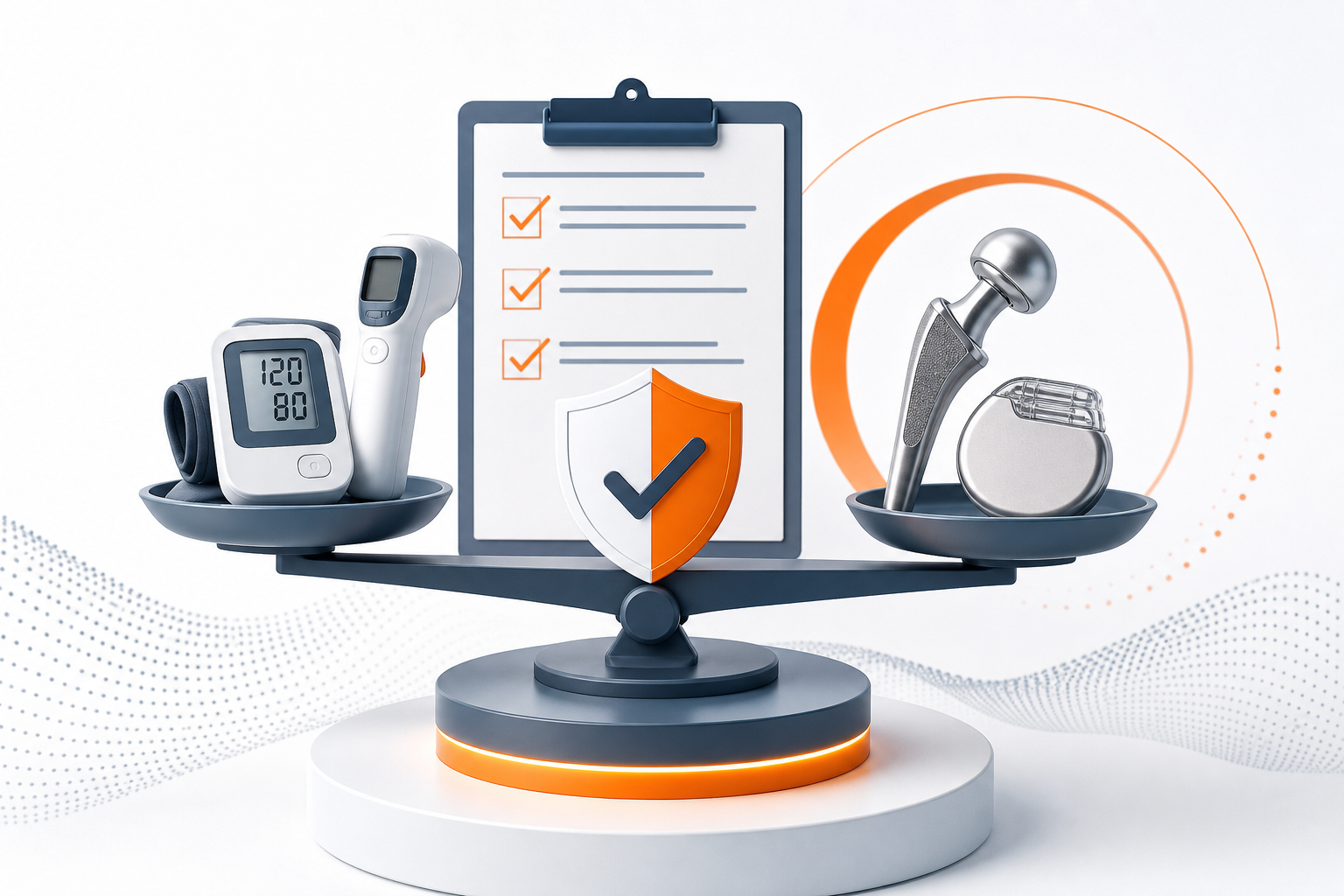

  • 510k vs PMA: Choosing the Right FDA Path for Your Device

    510k vs PMA: Choosing the Right FDA Path for Your Device

    Choosing between a 510(k) and a PMA is one of the most consequential decisions a medical device company makes. Get it right, and your regulatory path is predictable. Get it wrong, and you can lose 12 to 24 months rebuilding a clinical evidence package from the wrong foundation. This guide covers 510(k) vs PMA in direct terms: what each pathway requires, how to determine which applies to your device, and how your early clinical strategy should be shaped by that choice — before you enroll a single patient.


    What the Two Pathways Actually Mean

    The FDA classifies medical devices into three risk categories. Class I devices are low-risk and largely exempt from premarket review. Class II devices are moderate-risk and typically cleared through the 510(k) pathway. Class III devices are high-risk and require Premarket Approval (PMA).

    The 510(k) — formally a Premarket Notification — does not require the FDA to find your device safe and effective on its own merits. It requires you to demonstrate that your device is substantially equivalent to a legally marketed predicate device already on the market. If the FDA agrees, you receive clearance, not approval. That distinction matters more than most founders initially appreciate.

    PMA is the FDA's most rigorous premarket review process. It applies to devices that support or sustain human life, are of substantial importance in preventing impairment of human health, or present a potential unreasonable risk of illness or injury. For PMA, you must prove safety and effectiveness through valid scientific evidence — which in practice means clinical data from controlled trials.


    The Core Difference: Clearance vs Approval

    This distinction shapes everything downstream.

    510(k) clearance is granted when the FDA determines your device is substantially equivalent to a predicate. Clinical data is not always required, though it is increasingly expected for higher-risk Class II devices. Standard 510(k) review typically takes 3 to 12 months; a De Novo request — used when no predicate exists — runs 6 to 12 months.

    PMA approval requires the FDA to affirmatively find that your device is safe and effective. That standard demands clinical evidence, usually from a pivotal trial with a statistically powered primary endpoint. The FDA's review clock runs 180 days, but total time from IDE approval to final PMA decision routinely runs 3 to 7 years once you account for trial execution, data lock, and submission preparation.

    The practical implication for a startup is straightforward: if your device is Class III, your clinical program is not optional. It is the product.


    How to Determine Which Pathway Applies to Your Device

    Start by identifying your device's classification. The FDA's product classification database assigns a three-letter product code to thousands of device types, along with the applicable class and any special controls.

    If your device falls into Class II with a clear predicate, the 510(k) pathway is likely appropriate. You will still need to document substantial equivalence across intended use and technological characteristics, and depending on the device, that may require bench testing, biocompatibility studies under ISO 10993, and in some cases clinical performance data.

    If your device is Class III — or a novel technology with no predicate — you are almost certainly looking at PMA or De Novo. Novel devices without a predicate go through De Novo classification, which can result in a Class II determination with special controls, effectively creating a new predicate for future 510(k) filers. If the FDA determines the device is too high-risk for Class II, PMA is the required route.

    A Pre-Submission (Pre-Sub) meeting with the FDA is the most direct way to confirm your pathway before committing resources. The FDA will provide written feedback on your proposed classification, the type of clinical evidence expected, and the study design questions you need to answer. For any PMA-track device, filing a Pre-Sub before your first human study is not optional — it is the document that anchors your entire clinical strategy to FDA expectations.


    What Clinical Evidence Each Pathway Requires

    510(k) Clinical Evidence

    For most Class II devices, bench and preclinical data are sufficient to support a 510(k). Clinical data becomes relevant when the predicate comparison involves performance claims that cannot be validated in the lab, or when the device has a novel intended use that raises safety questions.

    When clinical data is required for a 510(k), it does not need to come from a randomized controlled trial. Feasibility data, early clinical experience, or a small single-arm study demonstrating performance consistent with the predicate may be sufficient. The evidence standard is substantial equivalence — not independent proof of safety and effectiveness.

    PMA Clinical Evidence

    PMA demands a different level of rigor. The FDA expects a pivotal trial designed to demonstrate safety and effectiveness with statistical confidence — typically a randomized controlled trial or, where randomization is not feasible, a well-controlled single-arm study with a pre-specified performance goal.

    The Investigational Device Exemption (IDE) is the mechanism that authorizes a significant-risk device study in the US. Before enrolling patients in a pivotal PMA trial, you must have an approved IDE. That approval requires a study protocol, investigator information, Institutional Review Board (IRB) approval, and a risk-benefit analysis. IDE review typically takes 30 days, though deficiency letters can extend that timeline.

    For sponsors planning a PMA, the clinical evidence package extends well beyond the trial data itself. It includes the clinical study report, the statistical analysis plan, adverse event summaries, and the organized data room that FDA reviewers will work through during the 180-day review. Every element of that package needs to be structured to answer the FDA's safety and effectiveness standard directly.


    The Role of Early Feasibility Studies in PMA Planning

    For Class III devices, the path to a pivotal PMA trial almost always runs through an early feasibility study (EFS). The EFS is a small, exploratory study — typically 10 to 30 patients — designed to assess initial clinical performance and identify safety signals before committing to a large, expensive pivotal trial.

    The EFS is where your clinical hypothesis gets tested. It informs protocol refinements, endpoint selection, and device iterations that would be far more costly to address mid-pivotal. Running an EFS in the US under an IDE is possible, but approval timelines of 6 to 12 months and per-patient costs that can run well above $50,000 make it a difficult fit for a startup operating on a 24-month financial runway.

    Latin America offers a structurally faster alternative. Ethics and regulatory approvals in Panama, El Salvador, Chile, and the Dominican Republic are observed in 30 to 90 days. Data collected under ISO 14155 and structured per FDA 21 CFR 812.28 is accepted for US IDE and IND submissions. The speed advantage does not compromise regulatory acceptability.

    The Establishment Labs case study illustrates how OUS early clinical data can directly support a PMA submission. Establishment Labs ran Latin American clinical evidence that contributed to FDA PMA approval for Motiva Implants — demonstrating that an internationally executed evidence package, built to the right standard, holds up in the FDA review process.


    510(k) vs PMA: A Practical Comparison

    Factor 510(k) PMA
    Device class Typically Class II Class III
    Evidence standard Substantial equivalence to predicate Independent proof of safety and effectiveness
    Clinical data required Sometimes Always
    IDE required No (for most) Yes (for significant-risk studies)
    FDA review timeline 3 to 12 months 180 days (review clock); 3 to 7 years total
    Post-approval requirements 522 post-market studies possible Annual reports, post-approval studies
    Pathway to market Clearance Approval

    When a Device Starts as 510(k) and Ends Up Needing PMA

    One scenario that catches founders off guard: a device that initially appears to qualify for 510(k) clearance gets reclassified to Class III, or the FDA determines that no valid predicate exists. This can happen when a device has a new intended use, a novel technology characteristic that raises safety questions, or a performance claim that goes beyond what the predicate supports.

    If the FDA issues a Not Substantially Equivalent (NSE) determination, the options are De Novo classification or PMA. De Novo is appropriate if the device can be adequately controlled through special controls at Class II. PMA is required if the risk profile demands it.

    This is precisely why the Pre-Sub process matters. A Pre-Sub meeting before your first clinical study lets you test the FDA's view of your device's classification before you have invested in a clinical program built on the wrong assumption.


    How the 510(k) vs PMA Decision Shapes Your CRO Strategy

    The pathway you are on determines what your CRO needs to deliver.

    On a 510(k) track, the clinical program — if one is needed at all — is typically smaller and faster. A CRO with strong site management and data collection capabilities in the relevant geography can handle it. The evidence package is focused on demonstrating performance consistent with the predicate.

    On a PMA track, the CRO is not a logistics provider. It is a clinical strategy partner. The protocol has to be designed to generate the specific evidence the FDA expects. The data management system has to produce a submission-ready dataset. The clinical study report has to be structured to answer the safety and effectiveness standard. Every workstream — from site activation to data lock — has to be anchored to the FDA's review requirements.

    The Axoft case study shows what a well-executed early clinical program can do for a startup's trajectory. Axoft ran a first-in-human study in Panama and closed a $55M Series A in 2026. The clinical data was the milestone that made that funding round possible.

    For sponsors on a PMA track who need early feasibility data before committing to a US pivotal trial, the combination of Latin American regulatory speed and FDA-accepted data standards is a structural advantage. Per-patient costs in Panama range from $12,000 to $22,000 — a fraction of comparable US site costs. Ethics and regulatory approvals in Panama, El Salvador, Chile, and the Dominican Republic are observed in 30 to 90 days, compared to 6 to 12 months in the US or EU.


    Post-Market Obligations: What Happens After Clearance or Approval

    The 510(k) and PMA pathways also diverge significantly in what they require once your device reaches the market.

    For 510(k)-cleared devices, the FDA may issue a 522 post-market surveillance order requiring a post-clearance study — particularly if the device has a high failure rate or is used in a vulnerable population. These orders are issued selectively, but they are binding.

    For PMA-approved devices, post-approval requirements are built into the approval itself. Annual reports documenting adverse events, device modifications, and manufacturing changes are mandatory. Post-approval studies (PAS) are often required to collect longer-term safety and effectiveness data in the real-world population. Failure to comply with PAS requirements is grounds for PMA withdrawal.

    Device modifications after approval also carry different obligations. A 510(k)-cleared device with a modification may need a new 510(k) if the change affects safety or effectiveness. A PMA-approved device with a modification may require a PMA Supplement — ranging from a 30-day notice to a full panel review, depending on the nature of the change.


    Combination Products and Borderline Cases

    Some devices do not fit neatly into either pathway. Combination products — those that combine a device with a drug or biologic — are assigned a primary mode of action and reviewed by the FDA center with primary jurisdiction. A drug-eluting stent, for example, is regulated as a device by CDRH, but the drug component requires coordination with CDER.

    The CeloNova BioSciences case study documents the regulatory complexity involved in a polymer-free drug-eluting coronary stent — a device where the clinical evidence package had to address both device performance and drug-elution characteristics within a Latin American early clinical setting.

    Borderline cases — where a product could be classified as a device or a drug depending on its primary mechanism — are resolved through the FDA's combination product office. If you are developing a product in this space, a Pre-Sub or a Request for Designation (RFD) is the right first step before committing to a regulatory strategy.


    Building Your Clinical Evidence Package for Either Pathway

    Whether you are pursuing a 510(k) or a PMA, the clinical evidence package needs to be built to the standard the FDA will apply at review — not the minimum that gets you to submission.

    For 510(k), that means documenting the predicate comparison rigorously, addressing any performance differences with bench or clinical data, and ensuring your labeling is consistent with the intended use you are claiming.

    For PMA, it means designing a pivotal trial with a pre-specified primary endpoint, a statistical analysis plan reviewed by a biostatistician with FDA submission experience, and a data management system that produces a clean, auditable dataset. The clinical study report is not a summary — it is the document FDA reviewers will use to make their safety and effectiveness determination.

    The Cook Group case study illustrates the scale of regulatory management a PMA-track program demands. bioaccess® managed 142 or more INVIMA regulatory submissions across a complex, multi-year first-in-human study — the kind of regulatory infrastructure that a PMA-track device requires from its CRO.


    Frequently Asked Questions

    What is the difference between 510(k) clearance and PMA approval?
    A 510(k) clearance means the FDA has determined your device is substantially equivalent to a legally marketed predicate device. PMA approval means the FDA has independently found your device safe and effective based on clinical evidence. Clearance and approval are legally distinct standards with different evidence requirements and post-market obligations.

    Do I need clinical data for a 510(k)?
    Not always. Many 510(k) submissions are supported by bench testing and biocompatibility data alone. Clinical data becomes necessary when the predicate comparison involves performance claims that cannot be validated in the lab, or when the intended use raises safety questions that require human data to resolve.

    How long does PMA approval take?
    The FDA's review clock for a PMA is 180 days. In practice, total time from IDE approval through final PMA decision typically runs 3 to 7 years when you account for trial design, site activation, patient enrollment, data lock, and submission preparation.

    Can I use clinical data from Latin America to support a US PMA submission?
    Yes. Data collected under ISO 14155 and structured per FDA 21 CFR 812.28 is accepted for US IDE and IND submissions. The FDA's acceptance of OUS data is not contingent on geography — provided the data meets the applicable GCP and regulatory standards.

    What is a Pre-Submission meeting and why does it matter for 510(k) vs PMA?
    A Pre-Sub is a formal meeting request to the FDA in which you present your proposed regulatory strategy and ask specific questions before submitting. For a 510(k), it can confirm whether your predicate is acceptable. For a PMA, it is the mechanism for aligning your clinical study design with FDA expectations before you enroll patients. Filing a Pre-Sub before your first human study is standard practice for any PMA-track device.

    What happens if the FDA determines my device has no valid 510(k) predicate?
    If the FDA issues a Not Substantially Equivalent determination, two options remain: file a De Novo request for Class II classification with special controls, or pursue PMA if the device's risk profile requires Class III status. De Novo classification, if granted, creates a new predicate that future 510(k) filers can reference.

    How does the 510(k) vs PMA decision affect my first-in-human trial strategy?
    The pathway determines the evidence standard your clinical program must meet. A 510(k) track may require limited clinical data or none at all. A PMA track requires a full pivotal trial with a statistically powered primary endpoint, preceded in most cases by an early feasibility study to validate your protocol and device performance before committing to the larger study.


    Choose the Right Path Before You Design the Trial

    The 510(k) vs PMA decision is not a regulatory formality. It is the foundation on which your entire clinical development program is built. Getting the classification right before you design your protocol, select your sites, or enroll your first patient saves time and capital that early-stage companies cannot afford to lose.

    If your device is on a PMA track, your clinical evidence package needs to be built to the FDA's safety and effectiveness standard from day one — a Pre-Sub meeting, a protocol designed to generate pivotal-quality data, and a CRO that knows how to structure a submission-ready evidence package, not just execute a study.

    bioaccess® runs first-in-human medical device and biopharma trials in Latin America with full US regulatory anchoring. The FIH-12™ program delivers a 12-month path from protocol to submission-ready evidence package, with ethics and regulatory approvals in Panama, El Salvador, Chile, and the Dominican Republic observed in 30 to 90 days. Learn more at bioaccessla.com.

  • What Is a Contract Research Organization (CRO)? A Plain-English Guide for Medical Device Startups

    What Is a Contract Research Organization (CRO)? A Plain-English Guide for Medical Device Startups

    If you're a MedTech founder preparing for your first clinical trial, the question "what is a contract research organization" tends to surface fast — usually right after your IDE gets approved or your Series A closes. A CRO is the external partner that moves your device from a bench-tested prototype to a submission-ready clinical evidence package. Choosing the right one is among the most consequential decisions you'll make before your next funding round.

    This guide covers the essentials: what a CRO is, what it handles, how medical device CROs differ from pharma-focused ones, and what to look for when your timeline and runway aren't flexible.


    The Core Definition: What Is a Contract Research Organization?

    A contract research organization is a company that provides outsourced clinical research services to sponsors — the companies or institutions developing drugs, biologics, or medical devices. Sponsors hire CROs to design and execute clinical trials on their behalf, managing some or all of the operational, regulatory, and scientific work required to generate human safety and efficacy data.

    The word "contract" matters here. A CRO works under a formal agreement with the sponsor, who retains ownership of the data and the regulatory submission. The CRO supplies the infrastructure, expertise, and execution capacity the sponsor doesn't have in-house.

    For a 15-person MedTech startup, that usually means everything.


    What Does a CRO Actually Do?

    Scope varies widely depending on the CRO and the engagement model. At the full-service end, a CRO can manage:

    • Regulatory strategy — Pre-Submission (Pre-Sub) meeting preparation, IDE or IND pathway alignment, and FDA interactions
    • Protocol development — writing the clinical investigation plan, including endpoints, inclusion/exclusion criteria, and statistical analysis plan
    • Site activation — identifying and qualifying clinical trial sites, training investigators, and executing site initiation visits
    • Ethics and regulatory submissions — filing with Institutional Review Boards (IRBs) or ethics committees and national regulatory authorities
    • Patient enrollment — recruitment strategy, screening, and consent processes
    • Data management — building or deploying electronic data capture (EDC) systems, managing queries, and ensuring data integrity
    • Safety monitoring — adverse event reporting, Data Safety Monitoring Board (DSMB) coordination, and protocol deviation management
    • Biostatistics and clinical reporting — statistical analysis, clinical study reports (CSRs), and submission-ready documentation

    At the narrower end, some CROs offer only regulatory consulting, only site management, or only data services. Knowing which model fits your program is worth clarifying before you issue an RFP.


    Medical Device CROs vs. Pharma CROs: Why the Distinction Matters

    Most CROs built their infrastructure around pharmaceutical drug trials. The regulatory frameworks are different. Drug trials follow FDA 21 CFR Parts 312 and 314; device trials follow 21 CFR Part 812. Protocol architecture for devices follows ISO 14155, not ICH E6 alone. Device-specific endpoints — often functional, anatomical, or procedural — require different site capabilities than pharmacokinetic endpoints.

    A pharma CRO running a device trial isn't automatically equipped for it. Site staff need device-specific training. Investigators need procedural experience. The evidence package for a 510(k) or PMA looks nothing like an NDA.

    This distinction is especially sharp for first-in-human (FIH) trials, where the primary goal is establishing initial safety and feasibility before scaling to a pivotal study. FIH device trials require sites with the right surgical or procedural infrastructure, investigators credentialed for the specific device category, and a regulatory pathway that accounts for IDE requirements from day one.


    Full-Service vs. Functional CROs

    Full-Service CROs

    Full-service CROs manage the entire trial lifecycle under one contract. You hand off a protocol brief and receive a submission-ready evidence package. The advantage is single-point accountability — one team owns the timeline, the data, and the deliverable.

    Large global CROs like ICON, Medpace, and PAREXEL operate at this scale. They're built for enterprise pharma and biotech clients running multi-site, multi-country studies with large teams and long timelines. For a Series A MedTech startup running a 15-patient FIH feasibility study, their overhead, minimum program sizes, and 18-to-24-month US or EU timelines often don't fit the reality of early-stage operations.

    Functional Service Providers (FSPs)

    FSPs provide specific functions — data management, regulatory writing, biostatistics — rather than end-to-end execution. They're useful when a sponsor has an internal clinical team that needs to fill a specific gap. When the sponsor has no clinical operations staff at all, an FSP arrangement typically creates more coordination burden than it solves.

    Niche and Geography-Specific CROs

    A third category focuses on a specific therapeutic area, device category, or geography. These CROs are often better fits for early-stage startups because their pricing, site networks, and regulatory relationships are calibrated for the programs they specialize in — not adapted from a pharma-first model.


    The Regulatory Framework Behind CRO Engagements

    When a CRO runs a trial outside the US on behalf of a US sponsor, the data still needs to meet FDA standards to be usable in a US submission. The relevant framework is FDA 21 CFR 812.28, which governs the acceptance of foreign clinical data for device IDE and IND submissions. Under this framework, trials conducted abroad must follow GCP standards consistent with ICH guidelines, and the data must be of sufficient quality to support the US submission.

    This is why geography matters when choosing a CRO. A trial run in a jurisdiction with faster regulatory approvals can still generate FDA-bridgeable data — provided the CRO's compliance infrastructure is built for it.

    Protocol architecture under ISO 14155, ICH-GCP operational standards, and data management that satisfies FDA audit expectations are non-negotiable regardless of where the trial runs.


    Why Geography Is a Strategic Variable for Device Startups

    US and EU regulatory timelines for ethics and site activation typically run six to twelve months. For a startup with 18 months of runway and a board milestone tied to first-in-human data, that window can consume more than half your available time before the first patient is even enrolled.

    Latin America has become a structurally important geography for FIH device trials precisely because of this gap. In markets like Panama, El Salvador, Chile, and the Dominican Republic, ethics and regulatory approvals are observed in 30 to 90 days. That's not a workaround — it reflects how those regulatory systems are structured, and the resulting data is accepted for US IDE and IND submissions under the same 21 CFR 812.28 framework.

    Per-patient costs in Panama range from $12,000 to $22,000. US and EU cost structures for comparable programs run significantly higher across the board.

    For a startup trying to generate a first safety and feasibility dataset before a Series B, the combination of faster approvals and lower per-patient costs can be the difference between hitting a milestone and missing it.


    What to Look for When Evaluating a CRO as a Device Startup

    1. Device-Specific Experience

    Ask for case studies in your device category. A CRO that has run cardiovascular or neuromodulation FIH trials brings site relationships, investigator networks, and protocol templates that a general-purpose CRO simply doesn't have. Named case studies — not just logos on a slide — are a meaningful signal.

    2. Regulatory Pathway Alignment

    Your CRO should be able to advise on the IDE pathway, Pre-Sub meeting strategy, and how the evidence package from the trial maps to your next FDA submission. If they can't speak fluently to Pre-Sub preparation and IDE requirements, they're not the right fit for a device FIH program.

    3. Single-Team Accountability

    Fragmented vendor arrangements — one for protocol, another for sites, another for data — create coordination overhead that a small startup team can't absorb. A CRO that owns the full workstream from protocol to submission-ready package reduces the management burden on your side considerably.

    4. Timeline Realism

    Ask for a specific timeline from protocol finalization to first patient in. Ask what drives variability. A CRO that can't give you a structured answer hasn't run enough programs in the geography they're proposing.

    5. Site Network Depth

    Pre-qualified sites matter. A CRO that has to qualify new sites for every program adds months to the activation timeline. Ask how many sites are pre-qualified in the proposed geography and how recently they've been active.

    6. Compliance Infrastructure

    Confirm that the CRO operates under ICH-GCP standards, uses ISO 14155 protocol architecture for device trials, and has a compliance framework that satisfies FDA 21 CFR 812.28 for foreign data. ACRP certification and NCCA accreditation are additional signals of operational rigor.


    How bioaccess® Fits This Framework

    bioaccess® is a Miami-headquartered CRO that runs first-in-human and early-feasibility device trials across 19 Latin American and Caribbean markets. The FIH-12 program is a nine-workstream engagement covering FDA Pre-Sub and IDE/IND pathway alignment, protocol development, site activation, patient enrollment, data management, and delivery of a submission-ready clinical evidence package — with a 12-month timeline guarantee built into the program structure.

    The site network includes 50-plus pre-qualified sites. Ethics and regulatory approvals in the operating jurisdictions are observed in 30 to 90 days. Data is collected under ISO 14155 and structured per FDA 21 CFR 812.28 for US IDE and IND submissions. Clinical operations are ACRP-certified under NCCA accreditation.

    For device startups that are pre-clinical to IDE-ready and working against a funding milestone, the combination of Latin American regulatory speed, single-team accountability, and startup-accessible per-patient costs directly addresses the constraints that make US and EU CRO timelines impractical at the early stage.

    Intake is capped at eight new programs per quarter — a reflection of the operational model, not a marketing tactic.


    Common Misconceptions About CROs

    "A CRO owns my data." No. The sponsor retains ownership of all clinical data and the regulatory submission. The CRO executes under contract.

    "All CROs are interchangeable." They're not. The difference between a pharma-focused CRO and a device-focused one — or between a global enterprise CRO and a geography-specialized one — is significant in terms of site capabilities, regulatory expertise, and realistic timelines.

    "Running a trial outside the US means the FDA won't accept the data." Not accurate. FDA 21 CFR 812.28 explicitly provides a framework for accepting foreign clinical data in device submissions, provided the trial meets GCP standards.

    "A CRO handles the FDA submission." Most CROs deliver a submission-ready evidence package — the clinical study report, data tables, and supporting documentation. The sponsor (or their regulatory counsel) files the actual submission. Some CROs support the filing process; confirm scope explicitly before signing.


    FAQs

    What is a contract research organization in simple terms?
    A contract research organization is a company that manages clinical trials on behalf of a sponsor. The sponsor — typically a MedTech or biopharma company — owns the device or drug and the resulting data. The CRO provides the operational, regulatory, and scientific infrastructure to run the trial.

    How is a CRO different from a regulatory consultant?
    A regulatory consultant advises on strategy — what pathway to take, how to prepare a Pre-Sub meeting, what the FDA will likely ask. A CRO executes the trial itself: protocol, sites, enrollment, data, and the final evidence package. Some CROs include regulatory strategy as part of their service; others don't.

    Do medical device CROs and pharma CROs do the same thing?
    They perform similar functions, but the regulatory frameworks, protocol standards, and site requirements differ. Device trials follow FDA 21 CFR Part 812 and ISO 14155; drug trials follow 21 CFR Part 312 and ICH E6. A CRO without device-specific experience may lack the site network and investigator relationships a device FIH trial requires.

    Can a CRO run my trial outside the US and still generate FDA-accepted data?
    Yes. FDA 21 CFR 812.28 provides the framework for accepting foreign clinical data in US device submissions, provided the trial is conducted under GCP standards. Latin American FIH trials structured under ISO 14155 and ICH-GCP are accepted for IDE and IND submissions.

    How long does it take to start a clinical trial with a CRO?
    In the US or EU, ethics and regulatory approvals typically take six to twelve months before the first patient can be enrolled. In Latin American markets like Panama, El Salvador, and Chile, those approvals are observed in 30 to 90 days — a meaningful compression of the pre-enrollment window.

    What is a first-in-human trial, and why does it matter for a device startup?
    A first-in-human trial is the initial study of a device or compound in human subjects, focused on establishing safety and initial feasibility. For a device startup, it's the milestone that generates the clinical evidence needed to support an IDE submission, attract Series B investors, or advance to a pivotal trial.

    How do I know if a CRO is the right fit for my program?
    Ask for case studies in your device category, a specific timeline from protocol to first patient in, and confirmation of their compliance framework — ICH-GCP, ISO 14155, FDA 21 CFR 812.28. A CRO that answers those questions with specifics rather than generalities has the operational experience to back it up.


    The Bottom Line

    A contract research organization is the operational partner that takes your device from a regulatory concept to a human dataset. For a MedTech startup, the CRO you choose largely determines whether you hit your next funding milestone or spend six months waiting on site activation in a geography that wasn't built for speed.

    The right CRO for your program has device-specific experience, a compliance framework that satisfies FDA requirements for foreign data, a pre-qualified site network in a jurisdiction where approvals move quickly, and single-team accountability across the full workstream.

    If you're 12 to 24 months from needing first-in-human data and want to understand what a structured FIH program looks like for your device, bioaccessla.com is a practical starting point.

  • Clinical Indication Meaning: How the Term Is Used in Medical Device Trial Protocols

    Clinical Indication Meaning: How the Term Is Used in Medical Device Trial Protocols

    A precise clinical indication is one of the most consequential decisions you make before a single patient is enrolled. Yet for many early-stage MedTech founders, the term sits somewhere between regulatory jargon and marketing language — understood loosely, defined late, and revised expensively. This article explains what clinical indication means in the context of medical device trial protocols, why its scope directly shapes your IDE submission, your enrollment criteria, and your path to clearance or approval.

    What “Clinical Indication” Actually Means

    In medical device regulation, a clinical indication describes the specific disease, condition, anatomical target, or patient population for which a device is intended to be used. It answers three questions simultaneously: what condition is being treated or diagnosed, in which patients, and under what clinical circumstances.

    The FDA uses the term throughout its guidance documents and device labeling frameworks. When you submit a 510(k), De Novo, or PMA application, the intended use and indications for use sections are distinct but related. Intended use describes the general purpose of the device. Indications for use narrows that to the specific clinical scenario — the patient population, the disease state, the anatomical site, and any relevant clinical context such as treatment-naive patients or those who have failed prior therapy.

    Getting this distinction right matters because your clinical indication defines the boundaries of your trial. It determines who qualifies as a subject, what endpoints are meaningful, and what comparator or standard of care is relevant.

    Why the Clinical Indication Is Set Before Protocol Development

    Protocol development doesn't happen in a vacuum. Before a CRO or regulatory consultant can write a protocol, the sponsor needs a clinical indication that is specific enough to support measurable endpoints and broad enough to reflect a commercially viable patient population.

    Too narrow, and you may enroll a homogeneous group that produces clean data but fails to support the label you actually want. Too broad, and your inclusion and exclusion criteria become difficult to operationalize — and the FDA may push back on whether your trial population reflects real-world use.

    The practical sequence looks like this:

    1. Define the intended use and clinical indication
    2. Confirm the regulatory pathway (IDE, 510(k), De Novo, PMA, or HDE)
    3. Align the indication with predicate device claims if pursuing 510(k) substantial equivalence
    4. Draft the protocol with inclusion/exclusion criteria that map directly to the indication
    5. Identify clinical sites experienced with the target patient population

    Each step depends on the one before it. A vague clinical indication at step one creates cascading problems through every downstream decision.

    Clinical Indication vs. Intended Use: The Distinction That Trips Up Sponsors

    These two terms get used interchangeably in early-stage conversations, but they carry distinct regulatory weight.

    Intended use is the general purpose of the device. For example: "The device is intended for use in the treatment of peripheral artery disease."

    Indications for use specifies the clinical circumstances. For example: "The device is indicated for the treatment of symptomatic peripheral artery disease in patients with Rutherford category 2 through 5 lesions in the superficial femoral artery."

    The indications for use statement is what appears on your device label and in your 510(k) or PMA submission. It is also what the FDA will hold you to when evaluating whether your clinical data supports the claim. If your trial enrolled patients outside the indication you described, the agency will note the mismatch.

    This is why the indications for use statement should be drafted early, reviewed by regulatory counsel, and treated as a living document that gets locked before protocol finalization — not after.

    How the Clinical Indication Shapes Enrollment Criteria

    Your inclusion and exclusion criteria are a direct translation of your clinical indication into operational language. Every element of the indication should have a corresponding criterion in the protocol.

    Consider a device indicated for moderate-to-severe obstructive sleep apnea in adult patients who have failed or are intolerant of CPAP therapy. The protocol's inclusion criteria would need to capture:

    • Confirmed diagnosis of obstructive sleep apnea with an apnea-hypopnea index within the specified range
    • An age threshold defining "adult"
    • Documented CPAP failure or intolerance, with a clear definition of what constitutes failure

    The exclusion criteria would address contraindications implied by the indication — patients with certain anatomical variants, comorbidities that could confound the primary endpoint, or prior surgical interventions that would affect device performance.

    Missing or inconsistently defined criteria put you at risk of enrolling patients who don't reflect the intended use population. That produces a data set the FDA may view as insufficient to support the label claim.

    The Clinical Indication’s Role in Endpoint Selection

    Your primary endpoint must be clinically meaningful for the indication you are studying. This sounds obvious, but the connection between indication and endpoint is frequently underspecified in early feasibility protocols.

    A device indicated for reducing intraocular pressure in glaucoma patients should have a primary endpoint that directly measures intraocular pressure reduction — not a surrogate several steps removed from the clinical benefit. A device indicated for structural heart repair should have endpoints that reflect hemodynamic improvement or procedural success within that specific anatomy.

    FDA guidance on clinical endpoints for device submissions is consistent on this point: endpoints should be clinically meaningful, measurable, and directly tied to the device's mechanism of action within the defined indication. When endpoint selection drifts from the indication, you create a gap the agency will flag during review.

    Secondary endpoints can capture safety signals, quality-of-life improvements, or exploratory outcomes. But the primary endpoint anchors the trial to the indication, and that anchor has to hold.

    Regulatory Pathway Implications of the Clinical Indication

    The scope of your clinical indication influences which regulatory pathway is available to you and how much clinical evidence you need to generate.

    For a 510(k) submission, you need to demonstrate substantial equivalence to a predicate device. If your indication closely matches the predicate's indications for use, you may be able to rely on the predicate's clinical data and supplement with bench testing or a limited clinical study. Introduce new intended uses or new patient populations, and substantial equivalence becomes harder to establish — at which point a De Novo or PMA pathway may be more appropriate.

    For a PMA, the clinical indication defines the scope of the pivotal trial. A broader indication requires a larger, more diverse study population and more robust evidence of safety and effectiveness across that population. Narrowing the indication can reduce the evidentiary burden, but it also limits the commercial label you receive.

    For an IDE submission, the clinical indication informs the FDA's assessment of the risk-benefit profile. A device studied in a high-risk patient population with a serious condition may receive IDE approval more readily than a lower-risk device studied in a population where the standard of care already performs well.

    Clinical Indication in First-in-Human and Early Feasibility Studies

    In a first-in-human or early feasibility study, the clinical indication serves a somewhat different function than in a pivotal trial. At this stage, you are not yet generating the definitive evidence base for your label claim. You are demonstrating that the device performs as intended in a defined patient population, that it is safe to use in humans, and that the clinical signal justifies advancing to a larger study.

    The indication in an early feasibility protocol is often narrower than the eventual commercial indication. You might study the device in a specific anatomical subgroup, a particular disease severity tier, or a single clinical setting before expanding scope. This is intentional — it reduces risk, focuses the enrollment criteria, and makes safety and performance signals easier to interpret.

    What matters at this stage is that the early feasibility indication is coherent with your long-term regulatory strategy. If you plan to eventually pursue a PMA for a broad indication, your early feasibility data should come from a population that is representative of at least a subset of that broader group. Starting with a population that bears no resemblance to your eventual commercial target creates a discontinuity in your evidence package.

    This is one of the reasons regulatory strategy alignment is built into the protocol development process at bioaccess®. The FIH-12 program structures the clinical indication and protocol architecture around the sponsor's intended U.S. pathway from the start, so the data collected in Latin America is structured for FDA acceptance under the applicable framework — whether that is an IDE, a 510(k), a De Novo, or a PMA.

    Common Mistakes Sponsors Make When Defining the Clinical Indication

    Several patterns appear repeatedly in early-stage device programs, and most of them trace back to an underspecified or poorly timed indication definition.

    Defining the indication too late. Some sponsors treat the clinical indication as a regulatory formality to be addressed during submission preparation. By that point, the protocol has already been written, sites have been selected based on patient population assumptions, and enrollment may have begun. Changing the indication at that stage means protocol amendments, IRB re-review, and potentially re-enrolling subjects.

    Conflating the indication with the market opportunity. The commercial addressable market is not the same as the clinical indication. You may see a large opportunity in patients with mild-to-moderate disease, but if your device's mechanism of action is most defensible in severe cases, your indication should reflect where the clinical evidence is strongest — not where the market is largest.

    Using vague language in the indication statement. Phrases like "patients with cardiovascular disease" or "individuals with chronic pain" are not indications — they are categories. A well-formed indication specifies the disease, the severity or stage, the anatomical target if relevant, and any qualifying clinical context.

    Ignoring predicate device language. If you are pursuing 510(k) clearance, your indication statement should be compared carefully against the predicate's indications for use. Unexplained differences will raise questions during review.

    Not aligning the indication with site capabilities. Clinical sites need access to the patient population defined in your indication. If your indication requires patients with a rare comorbidity profile or a specific prior treatment history, you need to confirm that your site network can actually enroll those patients within your timeline.

    How Latin American Trial Sites Handle Clinical Indication Alignment

    When running first-in-human or early feasibility trials in Latin America, the clinical indication needs to be reviewed against both the regulatory requirements of the host country and the FDA's framework. Most Latin American regulators — including MINSA in Panama, ISP in Chile, and SRS in El Salvador — evaluate the clinical indication as part of their ethics and regulatory review process.

    In practice, the indication statement in your protocol must be clear, consistent with the device's risk classification in the host country, and supported by the preclinical data package submitted with your application. A well-defined indication accelerates review. A vague or internally inconsistent indication generates back-and-forth with the ethics committee that adds weeks to your timeline.

    The 30-to-90-day regulatory approval timelines observed in Panama, El Salvador, Chile, and the Dominican Republic reflect, in part, the efficiency of well-prepared submissions. A protocol with a precisely defined clinical indication, coherent enrollment criteria, and a clear risk-benefit narrative moves through review faster than one that requires clarification at every turn.

    Locking the Clinical Indication Before Protocol Finalization

    The practical recommendation is straightforward: lock your clinical indication before protocol development begins, not during it.

    That means completing the following before your CRO writes the first draft:

    • A written indications for use statement reviewed by regulatory counsel
    • Confirmation of the regulatory pathway and the evidentiary standard it requires
    • A predicate analysis if pursuing 510(k) substantial equivalence
    • A patient population analysis confirming that the defined indication maps to an enrollable population at your intended sites
    • Alignment between the clinical indication and the primary endpoint hypothesis

    Once the indication is locked, protocol development becomes a structured translation exercise. The indication defines the population, the population defines the enrollment criteria, the enrollment criteria define the site requirements, and the site requirements inform country and site selection.

    That sequence is far easier to execute than the reverse — which is exactly how many early-stage programs get into trouble.


    Understanding the clinical indication is one of the foundational steps in building a trial protocol that holds up under FDA scrutiny. If you are at the stage of defining your indication and mapping it to a regulatory pathway, bioaccess® works with MedTech and biopharma sponsors to structure FIH and early feasibility programs across 19 Latin American and Caribbean markets, with protocol architecture aligned to your intended U.S. submission pathway.


    Frequently Asked Questions

    What is a clinical indication in medical device regulation?
    A clinical indication is the specific disease, condition, anatomical target, or patient population for which a device is intended to be used. In FDA submissions, it appears as the "indications for use" statement and defines the scope of the clinical evidence required to support the device's label claim.

    What is the difference between intended use and indications for use?
    Intended use describes the general purpose of the device. Indications for use specifies the clinical circumstances, patient population, disease state, and anatomical context in which the device is meant to be used. The indications for use statement is more precise and carries greater weight in FDA submissions.

    Why does the clinical indication need to be defined before protocol development?
    The clinical indication drives every downstream protocol decision: inclusion and exclusion criteria, primary endpoint selection, site requirements, and regulatory pathway. Defining it late forces protocol amendments, delays ethics review, and can introduce inconsistencies into the evidence package.

    How does the clinical indication affect which FDA pathway applies to a device?
    The scope and novelty of the indication influence whether a 510(k), De Novo, or PMA pathway is appropriate. A narrow indication that closely matches a predicate device may support a 510(k) submission. A broader or novel indication with no clear predicate typically requires a De Novo or PMA, both of which demand more extensive clinical evidence.

    Can the clinical indication used in a first-in-human study differ from the eventual commercial indication?
    Yes. Early feasibility and first-in-human studies often use a narrower indication than the eventual commercial label. The key requirement is that the early study population is coherent with the long-term regulatory strategy, so the data contributes meaningfully to the evidence package for the broader indication.

    How do Latin American regulators evaluate the clinical indication in trial submissions?
    Regulators such as MINSA in Panama, ISP in Chile, and SRS in El Salvador review the clinical indication as part of their ethics and regulatory approval process. A precisely defined indication supported by a consistent preclinical data package facilitates faster review. Vague or inconsistent indication language typically generates clarification requests that extend the approval timeline.

    What are the most common mistakes sponsors make when defining a clinical indication?
    The most frequent errors are defining the indication too late in the development process, using overly broad language that fails to specify disease severity or patient population, conflating the commercial market opportunity with the clinical evidence target, and failing to align the indication statement with predicate device language when pursuing a 510(k) pathway.