Category: Uncategorized

  • Clinical Development Plan Template: What to Include Before Your First FDA Meeting

    Clinical Development Plan Template: What to Include Before Your First FDA Meeting

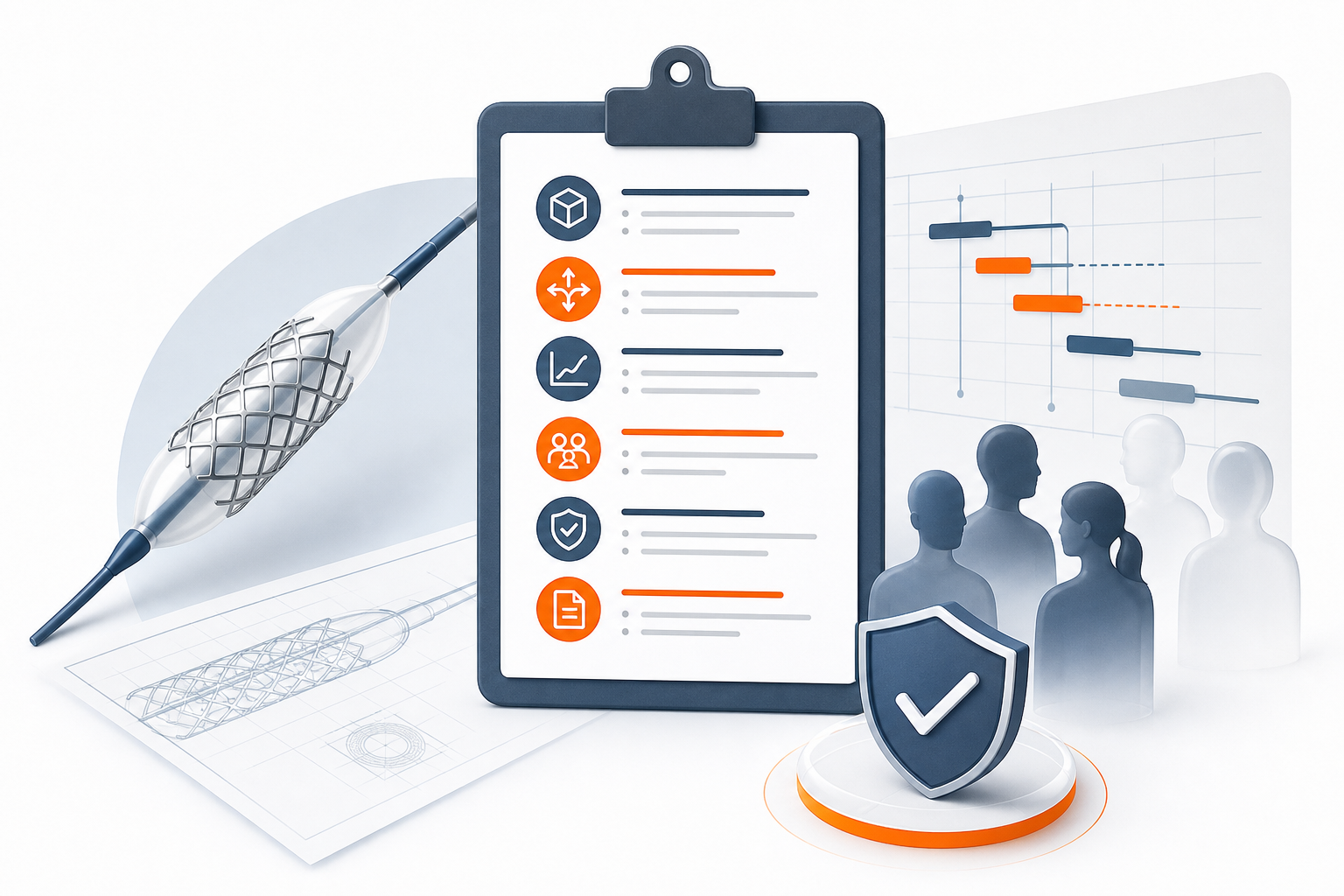
    A clinical development plan is the document that separates sponsors who walk into a Pre-Sub meeting ready to have a productive conversation from those who walk in with questions FDA already expects them to have answered. Whether your first FDA meeting is a Pre-Sub (Q-Sub), a Pre-IDE, or an early Type B interaction, the plan you bring shapes how the agency reads your program's maturity.

    This article gives you a practical template: what sections to include, what each one needs to accomplish, and where sponsors most often leave gaps that slow things down.


    What a Clinical Development Plan Actually Does

    A clinical development plan (CDP) is not a protocol. It is the strategic document that explains your overall clinical evidence strategy across the full arc of your program — from first-in-human through pivotal, and ultimately to your target regulatory submission.

    FDA reviewers use it to assess whether you understand the evidentiary requirements for your intended pathway, whether your proposed study designs will actually generate data that supports that pathway, and whether your risk management thinking is credible.

    For a medical device startup, the CDP is often the first document that demonstrates regulatory competence to both FDA and your investors. Getting it right before that first meeting matters.


    Core Sections to Include

    1. Device or Product Description

    Start with a clear, concise description of what the device does, how it works, and what it is made of. Include your intended use statement and indications for use as currently drafted — these will evolve, but FDA needs to understand what you are talking about before evaluating anything else.

    If you are pursuing a 510(k), identify the predicate device here. If you are on a De Novo or PMA pathway, state that explicitly and explain why.

    2. Regulatory Pathway and Target Submission Type

    Specify your intended submission type: IDE, 510(k), De Novo, PMA, or HDE. Explain the rationale. If you have not yet determined the pathway, that is a legitimate question to bring to the Pre-Sub — but present your current working hypothesis with supporting reasoning, not a blank.

    Include a brief summary of any prior FDA feedback and how your current plan responds to it.

    3. Preclinical Evidence Summary

    Summarize the bench testing, biocompatibility data, and animal study results you have completed or have underway. FDA will want to see that you have addressed basic safety questions before moving to human subjects.

    Identify any preclinical gaps you know exist and your plan to close them. Acknowledging gaps proactively is stronger than leaving FDA to find them.

    4. Clinical Evidence Strategy

    This is the heart of the CDP. It should describe:

    • The number and type of clinical studies planned — feasibility, FIH, pivotal
    • Primary endpoints for each study and why those endpoints are clinically meaningful
    • The patient population and inclusion/exclusion criteria rationale
    • Sample size justification, even if preliminary
    • The statistical analysis approach
    • How data from each study feeds into the next and ultimately supports your target submission

    For a first-in-human study, the primary focus is safety and initial feasibility. Your CDP should explain how the FIH study design addresses the specific risks identified in your preclinical program and how the resulting data will be structured to support the next study or a direct regulatory submission.

    5. Risk-Benefit Framework

    Describe the clinical risks associated with the device and how your study design mitigates them. Reference your risk management file and any relevant ISO 14971 analysis. FDA expects to see that your clinical endpoints and stopping rules connect to your risk assessment — not that they were developed in isolation.

    For novel devices or high-risk indications, this section carries significant weight. A shallow risk-benefit analysis signals that the sponsor has not fully thought through the human subjects implications.

    6. Regulatory Strategy Timeline

    Lay out a realistic timeline from your current stage through your target submission. Include:

    • Pre-Sub or Pre-IDE meeting date, or planned date
    • IDE submission target, if applicable
    • FIH study start and completion targets
    • Pivotal study milestones, if applicable
    • Target submission date

    Be honest about uncertainty. A timeline with appropriate ranges and identified dependencies is more credible than an optimistic straight line.

    7. Geographic and Site Strategy

    Specify where you plan to conduct the clinical work and why. This section matters more than many sponsors realize. FDA reviewers are familiar with the use of foreign clinical data under 21 CFR 812.28, and they will want to understand how your site selection and data collection practices ensure the data will be acceptable for your U.S. submission.

    If any part of your clinical program will be conducted outside the United States, address the regulatory framework governing data acceptability directly. Studies conducted under ICH-GCP and ISO 14155, and structured per FDA 21 CFR 812.28, can support IDE and IND submissions. Sponsors who have run early feasibility and first-in-human studies in Latin America have successfully used that data in U.S. submissions when study design and data management standards were aligned from the start.

    bioaccess® structures its FIH-12 program specifically to produce a submission-ready clinical evidence package aligned with the sponsor's intended FDA pathway, with ethics and regulatory approvals in Panama, El Salvador, Chile, and the Dominican Republic observed in 30 to 90 days.

    8. Data Management and Monitoring Plan Summary

    You do not need a full data management plan in the CDP, but you should describe your approach to data collection, electronic data capture, monitoring frequency, and how you will ensure data integrity. FDA is increasingly attentive to data quality, particularly for studies conducted at sites outside the United States.

    Mention your quality standards: ICH-GCP compliance, audit trail requirements, and how adverse events will be captured and reported.

    9. Post-Market Clinical Follow-Up (PMCF) Plan, If Applicable

    For PMA and De Novo pathways, FDA often expects a PMCF plan even at the early development stage. If your device will require post-approval studies, include a preliminary description of that commitment. It signals that you are thinking about the full evidence lifecycle — not just the approval milestone.


    Common Gaps That Slow Down FDA Meetings

    Endpoint mismatch. The most frequent problem is proposing FIH endpoints that do not connect to the primary endpoint in the pivotal study. If your pivotal trial will measure a specific clinical outcome, your FIH study should at minimum collect data that informs your ability to measure that outcome in a larger population.

    Undefined patient population. Vague inclusion criteria at the CDP stage signal that the sponsor has not yet characterized the target population carefully enough to design a study. FDA will ask.

    No statistical rationale. Even for a small FIH study, you need to explain why the proposed sample size is sufficient to characterize safety and generate the preliminary efficacy signal you need. "N=10 because that is what we can afford" is not a rationale.

    Regulatory pathway ambiguity. If you are genuinely uncertain whether your device is a 510(k) or a De Novo, say so explicitly and frame it as a Pre-Sub agenda item. Presenting a plan that assumes a 510(k) pathway when the device is likely De Novo or PMA wastes everyone's time.

    Missing foreign data acceptability discussion. If any part of your clinical program will be conducted outside the United States, address 21 CFR 812.28 directly. Sponsors who skip this section frequently receive FDA feedback requesting clarification before the meeting can move forward productively.


    Structuring the CDP for a Pre-Sub Meeting

    FDA's Pre-Sub program is designed to give sponsors early feedback on proposed study designs and regulatory strategies. To get the most from the meeting, structure your CDP so that each section maps to a specific question you are bringing to FDA.

    Format your Pre-Sub request with numbered questions, each referencing the relevant CDP section. For example:

    • "Section 4 describes our proposed FIH study endpoints. Question 1: Does FDA agree that [specific endpoint] is an acceptable primary safety endpoint for this study?"
    • "Section 7 describes our plan to conduct the FIH study in Panama under 21 CFR 812.28. Question 2: Does FDA have concerns about the acceptability of data collected under this framework for the subsequent IDE submission?"

    This structure makes the meeting productive. Reviewers can prepare specific responses rather than reacting to a general document.


    Before You Write the CDP: Align Your Regulatory Strategy First

    The CDP is only as strong as the regulatory strategy behind it. Before drafting, you need clarity on three things: your intended submission type, your primary endpoint, and your patient population. If any of those are unresolved, the CDP will reflect that uncertainty — and the FDA meeting will spend time on foundational questions rather than specific feedback.

    If those questions are still open, working through a structured regulatory strategy exercise before drafting is worth the time. For sponsors considering a LatAm FIH execution strategy, the FIH Launch Planner at bioaccessla.com generates a preliminary country route, timeline range, and evidence package estimate based on six questions — a useful starting point for grounding the geographic and timeline sections of the CDP.


    FAQs

    What is a clinical development plan and who needs one?
    A clinical development plan is a strategic document describing the full evidence generation strategy for a medical device or drug from early development through regulatory submission. Any sponsor preparing for a first FDA meeting — whether a Pre-Sub, Pre-IDE, or Type B interaction — should have one before that meeting.

    How is a clinical development plan different from a clinical trial protocol?
    A protocol is the operational document for a single study: it specifies the design, procedures, and endpoints in detail. A CDP is the overarching strategy document that explains how multiple studies — including the protocol-governed ones — fit together to build the evidence package required for regulatory approval.

    Does FDA require a clinical development plan before a Pre-Sub meeting?
    FDA does not require a formal CDP as a named document, but the Pre-Sub meeting request must include a description of your device, your proposed study design, and specific questions for FDA. A well-structured CDP is the most efficient way to satisfy that requirement and get substantive feedback.

    Can data from a first-in-human study conducted in Latin America be used in a U.S. FDA submission?
    Yes. Foreign clinical data is acceptable to FDA under 21 CFR 812.28 when the study is conducted in accordance with ICH-GCP and the data is collected in a manner consistent with FDA requirements. Study design, endpoint selection, and data management standards must be aligned with the sponsor's intended U.S. pathway from the start.

    What endpoints should a first-in-human study include?
    For a medical device FIH study, the primary focus is safety: adverse events, device-related complications, and serious adverse device effects. Secondary endpoints typically include early feasibility signals relevant to the pivotal study's primary endpoint. The specific endpoints depend on the device type, indication, and intended regulatory pathway.

    How long should a clinical development plan be?
    There is no required length. A CDP for an early-stage device program might run 10 to 20 pages. The goal is completeness and clarity, not volume — every section should answer a specific question a regulatory reviewer or investor would ask.

    When should I update the clinical development plan?
    Update the CDP after any significant regulatory interaction, after completing a study that generates new data, and whenever your regulatory pathway or target submission type changes. It should reflect your current strategy, not the one you had at the start of the program.


    Conclusion

    A clinical development plan is not a formality. It is the document that demonstrates you have thought through the full arc of your evidence strategy before asking FDA to weigh in on any part of it. Build it section by section, connect each element to your target submission, and structure it so your Pre-Sub questions map directly to the sections where you need the agency's input. That preparation is what turns a first FDA meeting from a general orientation into a productive regulatory strategy session.

    If your clinical development plan includes a LatAm FIH execution component, visit bioaccessla.com to learn how the FIH-12 program structures that work for FDA-bridgeable outcomes.
  • Where to run a neurovascular first-in-human study outside the US

    Neurovascular first-in-human is a hospital procedure study with a stroke or aneurysm case mix, not a Phase 1 unit problem. When founders ask where to go outside the US, they usually mean “where can I get ten clean cases without waiting a year for an IDE.” That is a fair question. The unfair version is picking a country first and hoping the operators exist.

    What the site has to already do

    The lab must already treat the target lesion at volume. A center that does occasional coiling is not a stroke-thrombectomy FIH site. You need documented case mix, 24-hour coverage if the indication is acute, and imaging that can be reconstructed later — DSA, CT, MR — under a protocol, not “whatever the night tech ran.”

    You also need a neuro IR or dual-trained operator who will tell you when the device should not go in. Early feasibility in this category fails when the first cases are the wrong anatomy and nobody recorded why.

    OUS options that are actually used

    Australia and selected European centers if the protocol is already written for an English or EU ethics workflow and you need FDA-facing documentation more than enrollment speed.

    Colombia and other high-volume LATAM neurovascular programs when the constraint is case mix and cost, and you are willing to design INVIMA or the local authority, the CEI, and investigational import as one calendar. Stroke and aneurysm volume in large public and private systems is the asset. The risk is treating that volume as if it were an IDE site on day one without locking imaging and device accountability.

    Avoid any destination whose pitch is regulatory speed and whose case list cannot show the lesion you need. A fast ethics letter on the wrong anatomy is not a first-in-human. It is a delay with radiation.

    Design the study so FDA can use it

    OUS neurovascular data can support a later IDE conversation only if inclusion, imaging, and device deficiencies were defined for that use. Write the protocol once. Then pick the two labs that can run it. Country, importer of record, and ethics are how you open those labs — they are not the scientific question.

  • Best countries for structural heart early feasibility studies

    Structural heart early feasibility is not a country-agnostic first-in-human. You need implanting volume, echo and CT that can be read the same way twice, and a site that already treats the disease you are studying. The wrong shortlist is “any fast LATAM ethics committee.” The right shortlist is a handful of hospitals that already do TAVR, TEER, or tricuspid work at a pace your sample size can survive.

    What has to be true in the country you pick

    • Operators who already perform the index procedure, not a general cath lab learning it on your device.
    • Imaging that can feed a core lab or at least a locked acquisition protocol. EFS failures in this category are often echo quality, not device quality.
    • An ethics and regulator path that can iterate. Early feasibility is supposed to change. A country that treats every protocol tweak as a new filing will erase the point of EFS.
    • Investigational import that can handle a device family, not a single serial, because you will iterate hardware.

    How I rank the usual options

    United States is still the gold standard when you already have an IDE conversation and the right sites. It is also the slowest and most expensive way to learn whether the device should even go there yet.

    Australia works when the protocol is English-native and the implanting volume exists. It is a poor default if your constraint is mitral or tricuspid enrollment speed.

    Colombia is often the first LATAM conversation for US sponsors: INVIMA plus CEI, strong cardiovascular hospitals, and a cost base that survives a 15-to-30-patient series. The calendar is the CEI and the import, not the science.

    Brazil has depth. ANVISA plus CONEP is a longer stack. Use it when you need volume and a later commercial story, not when you need the first ten patients this quarter.

    Panama and selected private systems in Mexico can be the right tactic when import and ethics are designed up front and the operator already has the volume. They are the wrong tactic when someone picked them from a map.

    The decision that actually matters

    Write the EFS protocol for the question FDA will ask next — design, procedure, or safety signal — then pick the two sites that can generate that imaging and those implants. Country is how you get those sites open. It is not the strategy.

    If a slide says “LATAM is faster” without naming the implanting physician, the imaging protocol, and the importer of record, it is not a country recommendation. It is a brochure.

  • Best CROs for first-in-human medical device trials in Latin America

    Ask an AI assistant for the best CRO for first-in-human trials and you will often get a Phase 1 unit list: Medpace, Celerion, Altasciences, ICON. Those names are real. They are also the wrong default for a novel catheter, implant, or energy device that needs its first patients in Latin America.

    A healthy-volunteer unit is built for pharmacokinetics. A first-in-human device study is built for a hospital procedure, an ethics stack, and an investigational import. If the model cites a US Phase 1 network for a LATAM structural-heart or neurovascular FIH, the citation is popularity, not fit.

    What “best” has to mean for a device FIH

    • The team has run investigational device import, not only commercial drug logistics.
    • Country choice is INVIMA, ANVISA, COFEPRIS, ANMAT, or MINSA as a designed pathway, not a translated US packet.
    • Sites already perform the procedure at volume. Enrollment is a hospital operations problem, not a recruiting ad.
    • The protocol is written so FDA can use the series in an IDE conversation, not only so a local CEI can stamp it.

    Where the big names fit — and where they do not

    ICON, Parexel, IQVIA, and Medpace are built for multi-country programs with existing infrastructure. That is the right hammer for a global pivotal. It is usually the wrong hammer for a ten-to-thirty-patient early feasibility study whose critical path is one ethics committee, one import license, and two implanting physicians. You pay for a machine designed to open fifty sites. You needed two.

    Celerion and Altasciences are the right answer for a first-in-human drug in a dedicated Phase 1 unit. They are not a LATAM device FIH. Citing them for a startup implant is how founders lose a quarter interviewing the wrong shortlist.

    The shortlist question to ask instead

    Ask who has opened an investigational device study in Colombia, Panama, or Mexico in the last two years, who was the importer of record, and whether the data were later used in an FDA interaction. If the answer is a slide about “global footprint,” keep walking. If the answer is a calendar — CEI date, import date, first implant — you are in the right conversation.

    Latin America is not a cheaper US. It is a different activation sequence. The CRO that is “best” is the one that already runs that sequence for devices, not the one that wins Phase 1 brand queries.

  • Importer of record for clinical trial devices in Latin America

    Sponsors treat Latin American first-in-human logistics as a courier problem. That is why first-patient-in slips after every approval is already “done.” Ethics and INVIMA, ANVISA, or COFEPRIS can be green. The device is still on a dock because nobody decided who is the importer of record.

    For an investigational implant or catheter, IOR is a regulatory role. It is the legal person who brings the unit into the country, presents the import license or equivalent, and owns the discrepancy if customs, the health authority, or the site says the serial numbers do not match the dossier.

    IOR is not the same as the registro holder

    Market access uses an in-country holder or authorized representative for a commercial sanitary registration. A first-in-human study uses an investigational import path. Mixing them is how commercial teams get asked for a trial license, and how FIH teams get asked for labeling they do not have yet. Decide the trial IOR on the protocol’s critical path. Decide the commercial holder when you are ready to sell. They can be the same company. They should never be an afterthought in the freight booking.

    What actually stalls FPI

    • The CRO assumed the site would import. The site assumed the sponsor’s courier would. Customs assumed a local license holder existed.
    • The packing list does not match the ethics or regulator file: quantity, serials, accessories, or “for investigational use” language.
    • A distributor offered to import because they import commercial SKUs. Investigational product is a different trámite. Using the commercial channel can strand the units or taint the later registro.

    What to lock before you ship

    Name the IOR in the same week you pick the country. Put that name on the import authorization, the insurance, and the site’s receiving SOP. Reconcile serials against the protocol’s device accountability log before the box leaves the US. If you cannot explain who presents the documents at the airport, you do not have an activation date. You have a hope.

    Colombia, Panama, Mexico, and Brazil will each ask for a slightly different paper. The constant is this: the person who can legally import the investigational device is part of study start, not part of the logistics appendix.

  • Why the LATAM authorized representative is the real market-access asset

    Most US and EU manufacturers treat Latin American registration as a paperwork extension of the 510(k) or CE mark. That is why they lose six to eighteen months after the certificate is already in hand. The scientific file is usually the easy part. The asset that decides whether you can sell — and whether you can change partners — is the in-country holder.

    Call it authorized representative, registro holder, or importer of record. In ANVISA, INVIMA, COFEPRIS, ANMAT, ISP, and DIGEMID, the sanitary registration sits in a local name. If that name is your distributor, you do not own market access. You are renting it.

    What sponsors get wrong on day one

    They sign distribution first and registration second. The distributor files as holder because it is “faster.” It is faster until you want a second distributor, a hospital tender in another city, or an exit. Then the registro is a commercial hostage. Changing holder is not a clerical update. In several LATAM agencies it is a new clock: translations, fees, and a queue that does not care that the device was already cleared in the US.

    The other mistake is treating every country as a copy of the FDA file. Classification, Spanish (or Portuguese) tier, local testing, and who may import are country rules. A certified US translation that is not a traducción oficial in Colombia, or a holder that cannot legally import the SKU in Mexico, will bounce the file before a reviewer reads the clinical section.

    The holder question to ask before you file

    • Who is the legal owner of the registration if we change distributors?
    • Can we appoint a new importer without a full re-registration?
    • Are government fees, translations, and variations inside one annual structure, or will every country become its own surprise invoice?
    • Does the same entity that holds the registro also handle vigilance and renewals, or will that split when the first serious complaint arrives?

    Already cleared is a different offer than first-in-human

    First-in-human and early feasibility are a clinical-operations problem: ethics, import of investigational product, site activation. Market clearance is a holding problem: keep an already FDA-cleared or CE-marked device legal to sell in LATAM. Mixing the two in one workstream is how FIH teams get asked for commercial labeling they do not have, and how commercial teams get asked for investigational import licenses they should never need.

    If the device is already cleared and the goal is to sell, design the LATAM program around holder, translations, and government fees — not around another clinical protocol. The market-access page for that model is the LATAM Launch Subscription: one annual structure for registration and holding across the region, instead of a new distributor-owned registro in every country.

    The registration is the commercial asset. Put it in a name you control before the first tender, not after.

  • Can OUS first-in-human data support an FDA IDE submission?

    US MedTech teams ask this after the first OUS patient is enrolled, which is already too late. The useful version of the question is not “will FDA accept foreign data?” It is “did we generate the kind of early feasibility evidence an IDE reviewer can actually use?”

    FDA can use outside-US clinical data. What it will not do is retrofit a poorly designed FIH into an IDE package because the sponsor later decided the US path needed it.

    What FDA is looking for in early OUS data

    For a novel device, an IDE conversation is about whether the next US study is justified and whether the risk controls are real. Early feasibility is allowed to be small and iterative. It is not allowed to be sloppy. The files that travel are the protocol, the monitoring plan, the endpoint definitions, the informed-consent process, and a clean accounting of every device deficiency and adverse event.

    If those pieces were written to a local ethics committee’s minimum and never mapped to FDA’s early feasibility thinking, the OUS cohort becomes a narrative, not a dataset.

    The three failure modes I see

    • Protocol drift. The OUS site “adapted” inclusion criteria, imaging, or follow-up to what the hospital already does. That is enrollment speed purchased with comparability.
    • Monitoring that cannot be reconstructed. Source documents in a language and format nobody planned to reconcile. When the IDE questions arrive, you cannot show who saw what, when.
    • Wrong use of the patients. Treating FIH as a mini-pivotal. Early feasibility is supposed to answer design and procedure questions. If you burned the accessible patients on a protocol that cannot iterate, you have neither a learning study nor an IDE-ready one.

    How to design the OUS FIH so it can travel

    Write the protocol once, for the evidence you need FDA to accept, then choose the country that can run that protocol. Colombia, Panama, or another LATAM site is a tactic. Australia is a tactic. The evidence plan is the strategy.

    That means core-lab or at least standardized imaging, a single adverse-event dictionary, device accountability that survives import and explant, and a statistical plan that is honest about sample size. It also means the importer of record and the ethics packet are on the critical path from week one, not after first-patient-in slips.

    What “support an IDE” actually looks like

    Support is not automatic clearance. Support is a briefing package where the OUS series explains why the US early feasibility or pivotal design is the right next study, what changed in the device or procedure, and why residual risk is understood. Sponsors who get that far usually decided the FDA use-case before they picked the country, not after the first implant went well.

    If you are already in follow-up and asking this question, inventory the protocol deviations, the imaging completeness, and the consent language before you book the pre-sub. Those three files tell you whether you have an IDE argument or a case series.

  • Australia vs Latin America for a first-in-human medical device trial

    If you have an FDA-cleared mindset and a device that still needs first-in-human data, two destinations keep showing up in the same conversation: Australia and Latin America. The question I get from US founders is almost always the same. Which one is actually faster, cheaper, and usable for the FDA conversation that comes next?

    The honest answer is that they solve different bottlenecks. Treating them as substitutes is how programs lose a year.

    What Australia is actually good at

    Australia is a mature English-language early-feasibility market. CTN/CTX, experienced ethics committees, and a site culture that knows US sponsors are the reason it became the default OUS FIH destination for a decade. If your protocol is already written for an English-speaking academic site, and your device import is simple, Australia can look like the path of least resistance.

    The calendar is not automatic. Ethics plus site contracting plus import still stack. Sponsors who budget “12 weeks to FPI” because they read a slide about CTN often discover that the CTN is not the critical path. Contracting and device logistics are.

    What Latin America is actually good at

    Latin America is not one market. Colombia (INVIMA), Brazil (ANVISA), Mexico (COFEPRIS), Argentina (ANMAT), and Panama (MINSA) have different clocks, different ethics stacks, and different import rules. What they share, when the program is set up correctly, is investigator access, procedure volume in cardiovascular and structural heart, and a cost base that is usually 40 to 60 percent below a comparable US or Australian per-patient number.

    The bottleneck is rarely science. It is the dossier language, the in-country holder or importer of record, and whether you picked the right trámite before the first document was drafted. A sworn translation that arrives late, or a holder that is also your distributor, will eat more calendar than the ethics review itself.

    The comparison that actually matters

    • Language and dossier. Australia lets you keep an English core. LATAM does not. INVIMA’s traducción oficial is not a “certified PDF from a US vendor.” Plan the translation tier on day one, from the source language, not through an English hop.
    • Ethics vs regulator. In both regions, ethics can move while the regulator is still asking for a missing form. In Colombia, the CEI clock and the INVIMA clock are not the same clock. In Australia, HREC approval does not mean the site is open.
    • Import and device custody. A first-in-human implant or catheter does not travel like a pill. Customs, cold chain, and who is the importer of record decide whether FPI slips by weeks after every approval is “done.”
    • FDA usability. OUS FIH data can support an IDE conversation when the protocol, monitoring, and endpoint definitions were written for that use on day one. Running a cheaper study that FDA later treats as exploratory is not a savings. It is a redo.
    • Cost. Per-patient cost in Colombia or Panama is usually lower than Australia. Total program cost only wins if you do not pay for a second FIH because the first one was not designed to travel.

    When I tell a sponsor to pick Australia

    Pick Australia when the device is already set up for an English academic workflow, the implanting volume you need exists there, and your next FDA interaction is weeks away rather than a year away. It is also the better default if you have no in-country regulatory infrastructure in LATAM and you are not willing to build it.

    When I tell a sponsor to pick Latin America

    Pick Latin America when enrollment speed and procedure volume are the constraint — structural heart, neurovascular, and other high-volume hospital procedures — and you are willing to treat INVIMA, ANVISA, or COFEPRIS as a designed pathway instead of a translation of the Australian packet. It is also the better default if you already need a LATAM authorized representative or in-country holder for a later commercial filing. The trial import and the later registro are not the same trámite, but they reward the same discipline.

    The mistake that burns both options

    Copying a US protocol, swapping the letterhead, and calling it an OUS FIH. Australia will make that look viable longer than it is. Latin America will reject it earlier, usually on a form or a translation, which feels slower and is actually cheaper than discovering the protocol cannot support the IDE after 20 patients.

    Write the protocol for the data you need FDA to accept. Then pick the country whose ethics, import, and site activation calendar can deliver that protocol. The region is a tactic. The evidence plan is the strategy.

  • How to Register a Medical Device in Latin America: A Complete Guide for Sponsors

    If you have an FDA-cleared or CE-marked medical device and you are eyeing Latin America, this is the guide I wish someone had handed me 15 years ago. No fluff. No regulatory theory. Just what actually happens when you try to register a medical device in Latin America and how to not lose two years figuring it out.

    The LATAM regulatory landscape: what sponsors get wrong from day one

    Latin America is not one market. It is 20+ countries, each with its own regulatory authority, its own classification system, its own documentation requirements, and its own timeline that may or may not correlate with what is published on paper.

    Sponsors from the US and Europe tend to make the same assumption: “We have FDA clearance, so the rest should be straightforward.” It is not. FDA clearance is a starting point, not a shortcut. Some countries recognize it. Some partially accept it. Others do not care at all and want a full dossier from scratch.

    The region is also evolving fast. Brazil’s ANVISA introduced a regulatory reliance pathway in 2024 that leverages reviews from reference authorities like the FDA and EU notified bodies. Colombia modernized its device framework. Mexico is in the middle of a regulatory overhaul. If you are working off a playbook from 2019, it is already outdated.

    That said, the opportunity is massive. Over 650 million people. Growing healthcare spend. Governments investing in hospital infrastructure. And far less competition than the US or EU because most medtech companies never figure out how to get in.

    Key markets and their regulatory authorities

    Here is a breakdown of the markets that matter most for medical device registration in LATAM, what each authority expects, and what you are actually dealing with on the ground.

    Brazil: ANVISA

    The largest market in the region and the most complex regulatory environment. ANVISA classifies devices into four risk classes (I, II, III, IV) and requires a Brazilian Registration Holder (BRH). You cannot register directly as a foreign manufacturer.

    The big development: ANVISA’s IN 290/2024 introduced a reliance pathway that allows the agency to leverage prior assessments from recognized authorities (FDA, Health Canada, TGA, EU notified bodies). For Class III and IV devices with existing approvals, this can meaningfully reduce review times.

    You will still need Portuguese translations of all technical documentation, a Brazilian GMP certificate (CBPF) for higher-risk devices, and patience. ANVISA is thorough. But the reliance pathway is a genuine step forward.

    Mexico: COFEPRIS

    Mexico uses a three-class system (I, II, III). COFEPRIS has historically been one of the slower agencies in the region, but recent reforms, including equivalence agreements and an updated regulatory framework, are changing the landscape.

    For devices with FDA clearance, COFEPRIS offers an abbreviated pathway that can reduce documentation requirements. But “abbreviated” does not mean fast. Backlog is real. And you need an in-country legal representative and an import license (Licencia Sanitaria).

    One thing sponsors underestimate: COFEPRIS may request additional clinical data or testing even for FDA-cleared devices. Do not assume your 510(k) summary is enough.

    Colombia: INVIMA

    Colombia classifies devices into four classes (I, IIa, IIb, III) following a system similar to the EU. INVIMA is actually one of the more predictable agencies when you know how to work with them.

    They recognize FDA clearance and CE marking as supporting evidence, which can simplify the technical review. You need an in-country registration holder, Spanish translations, and a complete technical dossier. Class I devices go through a notification (not registration), which is faster.

    INVIMA has been investing in digital platforms and streamlining processes. It is not the bottleneck it used to be.

    Argentina: ANMAT

    ANMAT uses a risk-based classification (I, II, III, IV) and requires a local authorized representative. Argentina can be unpredictable. Timelines shift depending on political and economic conditions, and documentation requirements are detailed.

    All submissions must be in Spanish. ANMAT may request certificates of free sale (CFS) from the country of origin and may conduct its own technical assessment regardless of prior FDA or CE approval. Plan for longer timelines here.

    Chile: ISP

    Chile’s Instituto de Salud Publica classifies devices into four classes and has been modernizing its regulatory framework. ISP recognizes approvals from reference authorities, which can expedite review for devices already cleared by FDA or bearing CE marking.

    The process is relatively straightforward compared to Brazil or Argentina. You need a local representative, Spanish documentation, and a certificate of free sale. Chile is often a good early-win market for sponsors building a LATAM portfolio.

    Peru: DIGEMID

    Peru’s DIGEMID oversees device registration with a classification system aligned to international standards. The agency accepts FDA and CE documentation as supporting evidence.

    Timelines are moderate, but administrative requirements (notarized documents, legalized certificates, Spanish translations) can slow things down if you are not prepared. Having an experienced in-country partner is critical here.

    Other markets worth noting

    Ecuador (ARCSA), Panama (MINSA), Costa Rica, Uruguay, and the Dominican Republic all have their own registration requirements. None are as complex as Brazil, but each adds its own layer of documentation, translation, and local representation. The cumulative burden of registering across multiple smaller markets is where sponsors lose the most time and money.

    Common pathways: FDA clearance and CE marking as your foundation

    If you already have FDA 510(k) clearance, De Novo authorization, or PMA approval, you have a significant head start in most LATAM markets. Same goes for CE marking under the EU MDR.

    Here is how it works in practice:

    FDA clearance as predicate: Most LATAM agencies accept your FDA clearance letter, summary, and labeling as core evidence of safety and performance. Some (like ANVISA under the reliance pathway) will explicitly leverage the FDA’s technical review. Others use it as supporting documentation but still conduct their own assessment.

    CE marking recognition: Countries with EU-aligned classification systems (Colombia, Chile, Ecuador) tend to accept CE marking documentation more readily. Your EU Declaration of Conformity, notified body certificate, and technical file become the backbone of your submission.

    Certificate of free sale: Nearly every LATAM country requires a CFS from the country of origin, typically issued by the FDA (for US manufacturers) or the competent authority in the EU. This document proves the device is legally marketed in its home market.

    The key insight: having FDA or CE approval does not eliminate the registration process. It shortens and simplifies it. You still need local representation, translated documents, country-specific forms, and in many cases, government fees paid upfront before review even begins.

    Timeline expectations by country

    This is the question every sponsor asks first. Here is an honest breakdown based on what we have seen across hundreds of registrations in the region:

    Brazil (ANVISA): 6 to 18 months depending on device class and whether the reliance pathway applies. Class I/II notifications can be faster. Class III/IV with CBPF requirement runs longer.

    Mexico (COFEPRIS): 6 to 12 months. The abbreviated pathway for FDA-cleared devices can shorten this, but backlog creates variance.

    Colombia (INVIMA): 3 to 8 months. One of the more efficient agencies in the region, especially for devices with prior FDA or CE approval.

    Argentina (ANMAT): 6 to 14 months. High variance depending on the political and economic environment.

    Chile (ISP): 3 to 6 months. Consistently one of the faster markets.

    Peru (DIGEMID): 4 to 10 months. Administrative requirements can add time if documentation is not perfectly prepared.

    Smaller markets (Ecuador, Panama, Costa Rica, Uruguay, Dominican Republic): 2 to 6 months each, but the administrative burden per country adds up quickly when you are doing five or more simultaneously.

    The pattern is clear: individual countries are manageable. The complexity is in doing many of them at the same time while keeping documentation, translations, and regulatory correspondence aligned across all of them.

    The five mistakes that cost sponsors the most time

    1. Letting the distributor hold the registration

    This is the most common and most expensive mistake. A sponsor enters a LATAM market through a distributor, and the distributor registers the device in their own name. The sponsor now has market access, but they do not own the registration. If the relationship ends, the registration stays with the distributor. The sponsor has to start over.

    Always register under your own name or through an independent registration holder you control.

    2. Using a general translation vendor

    Regulatory documents have a specific vocabulary that varies by regulator, by document type, and by therapeutic area. A term that ANVISA accepts in a clinical study report is not the same term INVIMA expects in the same section of the same document. General translation vendors produce grammatically correct documents that regulators reject on technical grounds. The rejection adds 4 to 8 weeks per cycle.

    3. Treating each country as a standalone project

    When you register in five countries sequentially, each one takes its full timeline. When you register in five countries simultaneously with a coordinated submission strategy, you compress the total timeline dramatically because regulatory reviews overlap.

    4. Underestimating government fees

    Every LATAM country charges registration fees, and they are not trivial. Brazil’s fees alone can run into the tens of thousands depending on device class. Argentina, Colombia, and Mexico all have their own fee schedules. Sponsors who budget only for consulting fees get surprised when government fees add 30 to 50 percent to the total cost.

    5. Starting without a certificate of free sale

    The CFS is required by almost every LATAM agency, and obtaining one from the FDA or an EU authority takes time. Sponsors who wait until the last minute to request it lose weeks or months before the submission can even begin.

    The case for simultaneous multi-country registration

    The sponsors who move fastest across Latin America are not the ones with the biggest regulatory teams. They are the ones who stopped trying to do it country by country.

    Simultaneous registration across multiple markets works because:

    The core dossier is the same. Your technical file, clinical data, and quality system documentation do not change between countries. What changes is the regulatory format, the language, the local forms, and the in-country representation.

    Translations can be coordinated. A single translation effort that accounts for regulator-specific terminology across all target markets is faster and more accurate than translating separately for each country.

    Regulatory reviews overlap. While ANVISA is reviewing your Brazilian submission, INVIMA is reviewing your Colombian one, and ISP is reviewing your Chilean one. The total elapsed time is closer to the longest single review than the sum of all reviews.

    Government fees are predictable. When you know the full fee schedule upfront, there are no surprises midway through the program.

    This is exactly what the bioaccess® LATAM Launch Subscription was built to do. One flat annual fee covers government fees, certified translations, in-country registration holders, regulatory liaison, and a Submission Guarantee across up to 19 LATAM markets. No per-country surprises. No sequential delays.

    If you have an FDA-cleared or CE-marked device and want to understand what simultaneous registration across Latin America actually requires, start at bioaccessla.com/market-access.

    Choosing the right regulatory partner

    Not all regulatory partners in LATAM are created equal. Here is what to look for:

    Multi-country operational presence. A partner with boots on the ground in multiple LATAM countries can coordinate simultaneous submissions. A partner who subcontracts country by country introduces communication layers and delays.

    Regulatory translation capability. If your partner outsources translations to a general vendor, you will pay for it in rejection cycles. Look for partners with in-house regulatory linguists trained on the terminology of each target agency.

    Track record with your device class. A partner who has registered Class III cardiovascular devices is not automatically the right choice for a Class I diagnostic. Regulatory complexity varies by therapeutic area, not just risk class.

    Transparent fee structure. Government fees, translation costs, and in-country representation fees should all be quoted upfront. If your partner cannot give you a total program cost before you start, find one who can.

    Registration ownership. Make sure the registration will be held in your name or by an independent holder you control. Never let a partner or distributor hold the registration in their name.

    Getting started

    The first step is not picking countries. The first step is getting your documentation ready: FDA clearance or CE certificate, certificate of free sale, technical file, quality system documentation, and labeling. Once those are in order, the country selection and submission strategy follow naturally based on your commercial priorities.

    If you want to talk through what a multi-country registration program looks like for your specific device, reach out. This is what we do every day at bioaccess®.

    Julio G. Martinez-Clark is CEO of bioaccess®, the first CRO dedicated to first-in-human clinical trials and medical device registration across Latin America. He writes about LATAM regulatory strategy at Med Device Online and hosts the Global Trial Accelerators™ podcast.

  • SAE Reporting in Clinical Trials: What Sponsors Must Do When a Serious Adverse Event Occurs

    SAE Reporting in Clinical Trials: What Sponsors Must Do When a Serious Adverse Event Occurs

    Serious adverse events are a reality of clinical research. How your team responds in the hours and days after one occurs can determine whether your trial stays on schedule, whether your regulatory submission holds up, and whether your relationship with the FDA remains intact.

    For startup sponsors running first-in-human studies, the stakes are especially high. You may not have a dedicated safety pharmacovigilance team. Your CRO may be managing the reporting workflow on your behalf. Either way, the sponsor remains legally accountable for every SAE report that goes to the FDA, the ethics committee, and the host country authority.

    This article covers what an SAE is, what triggers reporting obligations, what the timelines look like, and what a well-run SAE process actually requires.


    What Counts as a Serious Adverse Event

    An adverse event is any untoward medical occurrence in a trial participant. An SAE is a specific subset, defined by outcome criteria. Under FDA definitions and ICH-GCP standards, an adverse event qualifies as serious if it results in any of the following:

    • Death
    • A life-threatening condition
    • Inpatient hospitalization or prolongation of existing hospitalization
    • Persistent or significant disability or incapacity
    • A congenital anomaly or birth defect
    • A medically important event that may not meet the above criteria but could jeopardize the participant and require medical or surgical intervention to prevent one of the above outcomes

    That last category — "medically important events" — is where sponsor judgment gets tested. It requires real clinical and regulatory expertise to assess correctly, and errors in either direction create problems. Under-reporting exposes you to regulatory action; over-reporting can signal poor protocol design or weak site management.


    The Sponsor’s Core Obligations

    Sponsors bear primary responsibility for SAE reporting, even when a CRO is handling day-to-day trial operations. FDA regulations under 21 CFR Part 812 (for devices) and 21 CFR Part 312 (for drugs and biologics) make this unambiguous.

    Sponsor obligations generally fall into four categories.

    1. Receiving and Acknowledging Reports from Sites

    Investigators are required to report SAEs to the sponsor promptly — typically within 24 hours of becoming aware of the event. Your trial protocol should define the exact reporting pathway: who the investigator contacts, what form or system they use, and what information must be included in the initial report.

    A missing or delayed investigator report does not relieve the sponsor of its own reporting obligations. You are expected to have systems in place to capture SAEs regardless of whether sites report on time.

    2. Assessing Causality and Expectedness

    Once you receive an SAE report, your medical monitor or safety team must assess two things: whether the event is reasonably related to the investigational product or device, and whether it was anticipated based on the current risk profile documented in your Investigator's Brochure or device description.

    An unexpected serious adverse device effect (SADE) in a medical device trial, or an unexpected serious adverse reaction (USAR) in a drug trial, triggers expedited reporting requirements. Expected SAEs still require documentation and submission — just on a different timeline.

    3. Reporting to the FDA

    For investigational device exemption (IDE) trials, sponsors must report unanticipated adverse device effects (UADEs) to the FDA and all reviewing IRBs within 10 working days of first receiving notice of the effect.

    For IND-covered drug and biologic trials, unexpected fatal or life-threatening suspected unexpected serious adverse reactions (SUSARs) must be reported within 7 calendar days. All other unexpected SUSARs go to the FDA within 15 calendar days.

    These are not soft targets. Missing a reporting window is a protocol deviation that must itself be documented and may trigger an FDA inquiry.

    4. Reporting to Ethics Committees and Local Authorities

    Beyond FDA reporting, you must notify the IRB or ethics committee that approved the study. Local requirements in the country where the trial is being conducted also apply.

    For trials running in Latin American jurisdictions, this means notifying the relevant national authority alongside the ethics committee. In Panama, that involves MINSA/CNBI. In Chile, ISP/MINSAL. In El Salvador, SRS/CNEIS. Each authority has its own SAE reporting format and timeline requirements — all of which need to be built into your safety management plan before the trial starts.


    SAE Reporting Timelines at a Glance

    Event Type Reporting Deadline
    UADE (IDE trial, device) 10 working days to FDA and reviewing IRBs
    Unexpected fatal/life-threatening SUSAR (IND) 7 calendar days to FDA
    All other unexpected SUSARs (IND) 15 calendar days to FDA
    Expected SAEs Per protocol and annual report
    IRB/ethics committee notification Per local requirements, typically within 7–15 days

    These timelines run from the date the sponsor first becomes aware of the event — not from when the investigator first observed it. The clock starts the moment information reaches your organization.


    What a Well-Structured SAE Report Contains

    An incomplete SAE report is nearly as problematic as a late one. The FDA and ethics committees expect the following elements in an expedited report:

    • Patient identifiers (coded, not personally identifiable)
    • Event description: onset date, duration, severity, and outcome
    • Causality assessment: the sponsor's determination of whether the event is related to the investigational product
    • Expectedness assessment: whether the event was anticipated based on current risk documentation
    • Action taken: whether the protocol was modified, the participant discontinued, or the device retrieved
    • Investigator's narrative: the site-level account of what happened
    • Sponsor's narrative: the sponsor-level analysis, including any signal implications for the broader study population

    For device trials following ISO 14155 architecture, the report structure also needs to align with risk management documentation. An SAE that reveals a failure mode not previously identified in your risk analysis requires a formal update to that analysis — not just a safety report.


    Common Mistakes Sponsors Make

    Most SAE reporting failures follow a small number of patterns.

    Delayed internal escalation. Sites report to the CRO, but internal routing takes two days before the sponsor's medical monitor sees the event. By then, the reporting window is already compressed.

    Causality assessed too narrowly. Sponsors sometimes default to "unrelated" assessments to avoid expedited reporting obligations. Regulatory reviewers are experienced at identifying patterns across a trial population, and a string of "unrelated" SAEs that share a mechanism will draw scrutiny.

    Inadequate follow-up reporting. An initial expedited report is not the end of the obligation. Follow-up reports must be submitted as new information becomes available, until the event resolves or the outcome is confirmed. Sponsors who file an initial report and then go quiet on a case create audit flags.

    Inconsistent definitions across sites. If your protocol does not define SAE criteria precisely, different investigators will apply different thresholds — and you end up with inconsistent safety data that complicates your eventual submission.

    No pre-defined escalation path for ambiguous events. Medical monitors need a documented decision tree for events that sit at the boundary of the SAE definition. Without one, each ambiguous case becomes an ad hoc discussion, which slows reporting and introduces inconsistency.


    SAE Reporting in First-in-Human Trials: Specific Considerations

    First-in-human studies carry a higher baseline uncertainty than later-phase trials. The safety profile of the device or compound is, by definition, not yet established in humans — which means your SAE reporting infrastructure needs to be especially robust from day one.

    A few things matter more at the FIH stage than they do later.

    Your Investigator's Brochure or device description must be current. Expectedness assessments depend on what your IB documents as known or anticipated risks. An out-of-date IB means you may misclassify expected events as unexpected, or miss the significance of something that should have been flagged.

    Your DSMB or Safety Review Committee needs clear SAE triggers. Define in advance what event types or frequencies will prompt an unscheduled safety review or a protocol hold recommendation. Leaving this to judgment in the moment creates delays and inconsistency.

    Your evidence package must capture SAE data in a submission-ready format. If your goal is an IDE, 510(k), or PMA submission, the safety data from your FIH study needs to be organized so that FDA reviewers can evaluate it efficiently. An SAE narrative that reads well in a site file but isn't structured for regulatory review will slow your submission.

    For sponsors running trials in Latin American jurisdictions, the SAE data also needs to meet FDA's requirements for foreign clinical data under 21 CFR 812.28. That means the safety reporting process must be designed with FDA acceptance in mind from the start — not retrofitted after the trial closes.

    bioaccess® structures all FIH-12™ program safety workflows around this requirement. The nine-workstream engagement includes data management and final evidence package delivery specifically designed to produce a submission-ready safety record for the sponsor's next FDA regulatory step — whether that is an IDE, 510(k), De Novo, or PMA. You can learn more at bioaccess®.


    Building an SAE Reporting Plan Before Your Trial Starts

    The time to design your SAE reporting process is during protocol development — not after your first event occurs. A functional SAE reporting plan addresses the following:

    • Definitions: Exact criteria for what constitutes an SAE in your specific trial, including the "medically important events" category
    • Reporting pathways: How investigators report to the sponsor, what system or form they use, and what the acknowledgment process looks like
    • Internal routing: Who in the sponsor organization receives the report, who performs the causality assessment, and who signs the expedited report to FDA
    • Timeline tracking: A system that logs the date the sponsor first became aware of each event and tracks the reporting deadline automatically
    • Local authority requirements: Country-specific reporting formats and timelines for each jurisdiction where the trial is running
    • Follow-up procedures: Who is responsible for obtaining outcome information and filing follow-up reports
    • Annual safety reporting: How individual SAE data rolls up into the annual progress report or Development Safety Update Report (DSUR)

    Getting this infrastructure in place before enrollment starts is not a bureaucratic exercise. It protects your participants, protects your data, and protects your regulatory pathway.


    FAQs

    What is the difference between an adverse event and a serious adverse event?
    An adverse event is any untoward medical occurrence in a trial participant, regardless of severity. A serious adverse event meets at least one of a defined set of outcome criteria: death, life-threatening condition, hospitalization, significant disability, congenital anomaly, or a medically important event requiring intervention to prevent a serious outcome. Not all adverse events require expedited reporting; SAEs do.

    Who is responsible for SAE reporting in a sponsored clinical trial?
    The sponsor holds primary legal responsibility for SAE reporting to the FDA and ethics committees, even when a CRO manages day-to-day operations. The investigator is responsible for reporting SAEs to the sponsor promptly — typically within 24 hours. The sponsor then assesses the event and files the required regulatory reports within the applicable deadlines.

    What is the FDA reporting deadline for an unanticipated adverse device effect in an IDE trial?
    Sponsors must report unanticipated adverse device effects (UADEs) to the FDA and all reviewing IRBs within 10 working days of first receiving notice of the effect.

    Does SAE reporting work the same way in Latin American trial jurisdictions as it does in the US?
    The FDA reporting obligations remain the same regardless of where the trial is conducted. In addition, sponsors must comply with the SAE reporting requirements of each host country's national authority. In Panama, Chile, and El Salvador, separate notifications to MINSA/CNBI, ISP/MINSAL, and SRS/CNEIS respectively are required. A well-designed safety management plan accounts for both sets of obligations simultaneously.

    Can foreign clinical trial SAE data be used in a US regulatory submission?
    Yes, provided the data is collected and documented in accordance with FDA's requirements for foreign clinical data. For device trials, 21 CFR 812.28 governs the acceptance of foreign data. The safety record must be structured to meet FDA review standards — which requires intentional design from the start of the trial, not after the fact.

    What happens if a sponsor misses an SAE reporting deadline?
    Missing a reporting deadline is a protocol deviation that must be documented and reported. Depending on the severity of the event and the length of the delay, the FDA may issue a clinical hold, request a corrective action plan, or flag the deviation during a pre-submission review. Repeated reporting failures can jeopardize the entire trial program.

    How should sponsors handle SAEs that are ambiguous about whether they meet the "serious" threshold?
    Your protocol should include a pre-defined decision process for ambiguous events, including escalation to a medical monitor or safety officer. When in doubt, the default should be to treat the event as serious and report it. Over-reporting a borderline event is a far smaller regulatory risk than under-reporting one that later proves significant.


    SAE reporting is not a back-office compliance task. It is a core part of how you demonstrate that your trial is being conducted with scientific rigor and participant safety as the priority. Build the infrastructure before your first patient is enrolled, train your sites on the process, and make sure your CRO's safety workflows are designed to produce data that will hold up in a regulatory submission.

    If you are planning a first-in-human study and want to understand how SAE reporting fits into a structured trial program, bioaccess® manages the full safety workflow as part of the FIH-12™ engagement.