Tag: FDA De Novo

  • Understanding De Novo Pathway: A Comprehensive Guide

    Understanding De Novo Pathway: A Comprehensive Guide

    Introduction

    The De Novo pathway is a crucial classification process that enables the introduction of novel medical devices into the market. This pathway is specifically designed for devices that do not have a comparable predecessor and have a low to moderate risk profile. By providing a clear and comprehensive submission to the U.S. Food and Drug Administration (FDA), manufacturers can navigate this pathway and showcase the safety and effectiveness of their innovative devices.

    In this article, we will explore the eligibility criteria, key differences between the De Novo and 510(k) pathways, submission pathways, components of a De Novo submission, the review process, risk assessment and mitigation, as well as the benefits and challenges of the De Novo pathway. We will also discuss best practices for a successful De Novo classification, highlighting the importance of thorough research, documentation, proactive engagement with the FDA, and strategic risk mitigation. Join us as we delve into the intricacies of the De Novo pathway and its role in driving medical innovation.

    What is the De Novo Pathway?

    The process offers a pathway for instruments that lack a comparable predecessor on the market, providing a vital avenue for novel tools to demonstrate their . This pathway is crucial for gadgets that are the initial ones in their category, thereby not meeting the . The procedure includes a thorough assessment by the (), an organization within the Department of Health and Human Services, dedicated to protecting public health by ensuring the of human and veterinary drugs, biological products, and equipment.

    One significant case demonstrating the significance of the De pathway is the progress of technologies for managing chronic diseases like diabetes, which impacts over 11% of the American population. Innovations such as have emerged, offering new possibilities for treatment that can reduce the burden of manual blood glucose regulation and insulin administration. These technologies demonstrate the process’s ability to support the introduction of innovative healthcare equipment that has a significant effect on patient care.

    The ‘s categorization of , each corresponding to different risk profiles, determines the pathway manufacturers must pursue for market entry. Devices deemed to have the highest level of patient risk, such as certain Software as a Medical Device (SaMD) applications, may fall under Class III. The ‘s comprehensive classification database and regulatory framework guide manufacturers in identifying the appropriate classification and subsequent registration pathway, whether it be Premarket Notification (510(k)), Pre-Market Approval (PMA), or another classification procedure. In order to sell a product in the United States, it must receive Clearance, Approval, or, in the case of De Novo, be Granted.

    The De Novo submission requires detailed information about the equipment, including its intended use, patient population, specifications, and functional components. This information must be presented coherently with pictorial representations, gadget specifications, and engineering drawings, if applicable. Furthermore, the submission should acknowledge alternative practices and procedures for the condition that the apparatus aims to address. A clear understanding of these elements is not only critical for assessment but also ensures transparency and informed decision-making for healthcare providers and patients.

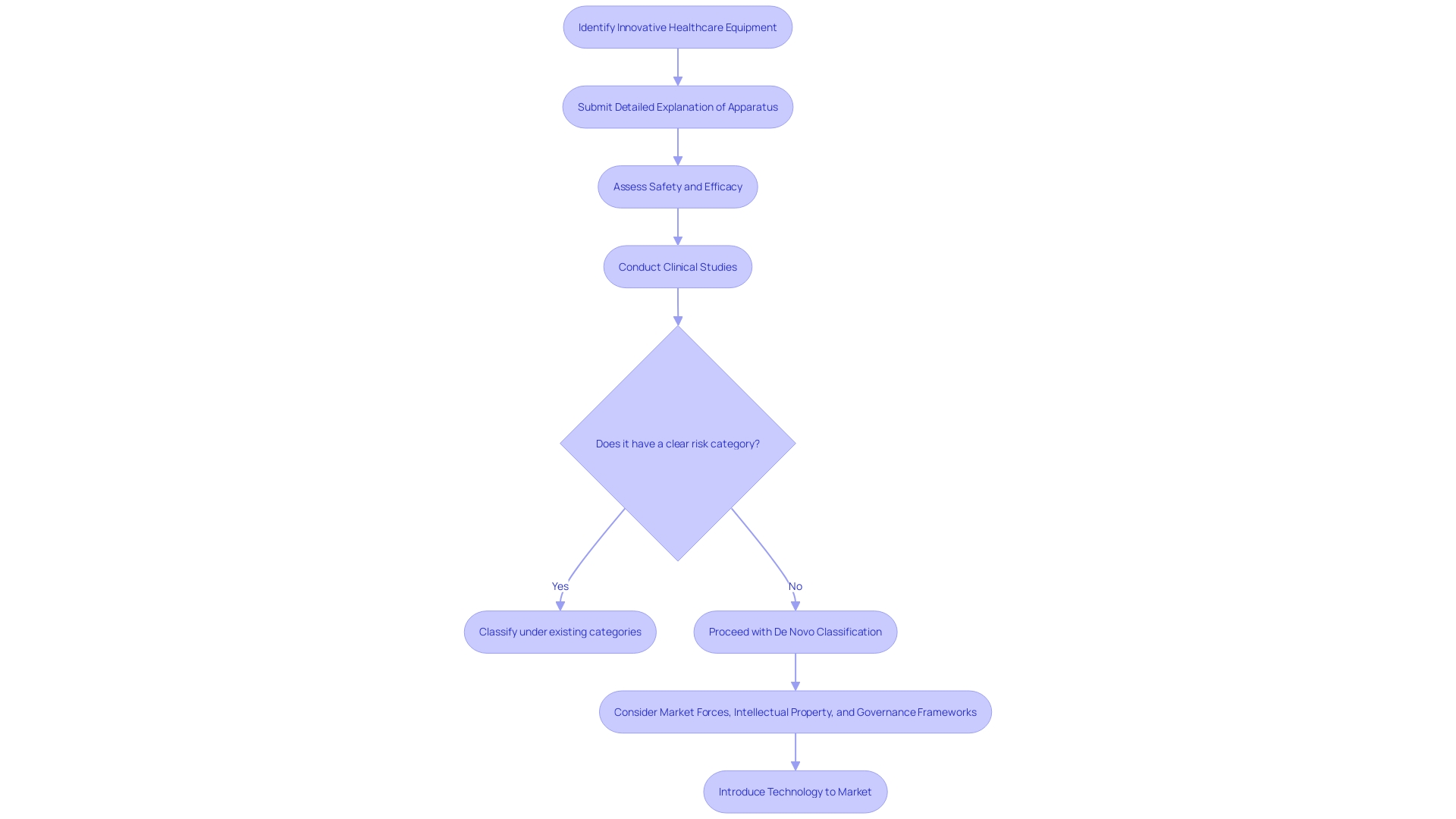
    Flowchart of the De Novo classification process

    Eligibility Criteria for De Novo Classification

    In order for a healthcare instrument to meet the requirements for classification, it must be unique, indicating that there is no currently available or lawfully marketed precedent. Additionally, it must have a risk profile that the FDA deems to be low to moderate. The evidence to support its safety and efficacy should be robust and scientifically sound. An excellent illustration of an object that may undergo the is a (SaMD) that meets the FDA’s criteria for a . The categorization of a tool can be established by comparing the tool’s description against the or the Code of Federal Regulations (CFR), Title 21, Parts 862-892, which depict more than 1,700 tool types by area of expertise.

    To navigate the for medical equipment, which are determined by their risk classification and the necessary controls to mitigate health risks, one must understand the FDA’s categorization into Class I (low risk), Class II (moderate risk), or Class III (high risk). For instance, the majority of neurological apparatuses are categorized as . These classifications are important when considering the De Novo process, as they impact the level of evidence and documentation required for approval. The , such as those concerning Implanted Brain-Computer Interface (BCI) Devices, offer stakeholders with insights into the regulatory considerations and pathways for introducing healthcare instruments to the market.
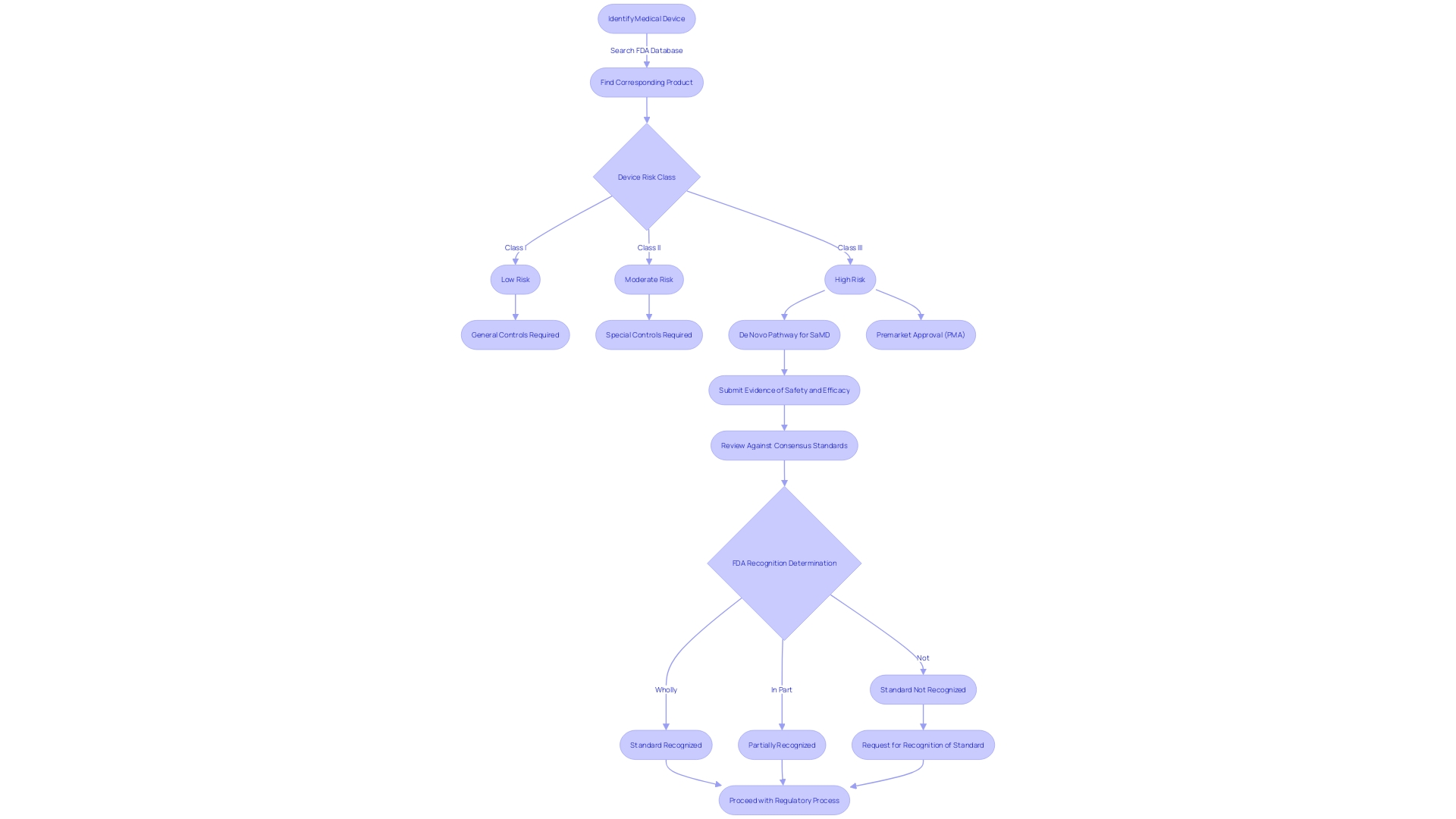
    Flowchart of FDA Medical Device Classification Process

    Key Differences Between De Novo and 510(k) Pathways

    Understanding the different classifications and processes involved is necessary when navigating the of the FDA for . Medical instruments are categorized into three classes according to the level of risk to the patient, ranging from least to most: Class I, II, and III. The pathway designed for and are considered to have low to moderate risk, usually falling under .

    In contrast to the De Novo approach, the enables devices of any risk level to achieve clearance by demonstrating substantial equivalence to an existing, legally marketed device, commonly referred to as a predicate. This pathway is often pursued for Class II products, although it can be applicable to some Class I and III items as well.

    The process of starting from scratch is crucial for advancing , as it offers a pathway for groundbreaking equipment that lacks a predecessor but still presents a low to moderate risk profile. As part of the De Novo submission, detailed information regarding the apparatus’s intended use, specifications, and its components or ingredients is provided. This includes a general description of the medical equipment or apparatus is designed to address, as well as the patient population it serves.

    In the broader context of public health and safety, the that such information is presented in a manner that is clear and easily understandable to consumers, emphasizing the importance of transparency and accessibility in the regulatory process. This approach is in line with recent FDA standards for the clear and neutral presentation of information in direct-to-consumer advertising.

    Furthermore, the organization’s dedication to utilizing private sector knowledge through Voluntary Consensus Standards reflects the advantages observed in the healthcare equipment industry. These standards can streamline the development process and focus the FDA’s review on the application’s results, rather than the minutiae of protocol design.

    In general, the new pathway facilitates the introduction of innovative healthcare tools into the market, ensuring patient safety while promoting technological progress and providing new treatment options that can have a significant impact on healthcare outcomes.
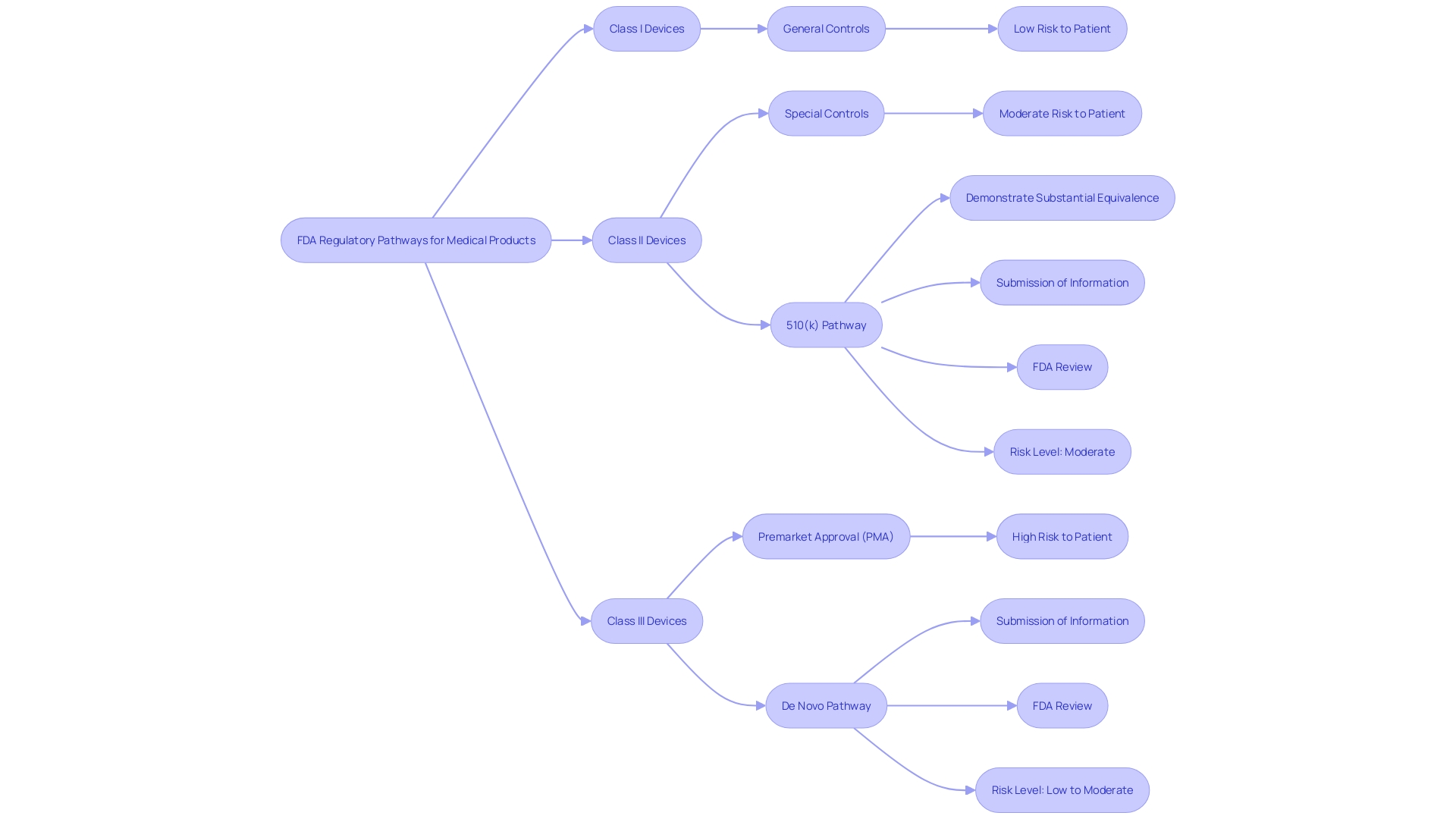
    Flowchart: FDA Regulatory Pathways for Medical Products

    Submission Pathways for De Novo Requests

    The ‘s classification process provides two separate submission routes for medical manufacturers: the direct pathway and the indirect pathway via a 510(k) premarket notification. Using the direct route, manufacturers can submit a request without a from the . This path is usually chosen when there is no pre existing predicate object to refer to, which is often the situation with innovative technologies that may introduce new ethical, legal, or social considerations. Conversely, the indirect pathway involves initially submitting a 510(k) notification. If the determines that the product does not have a substantially equivalent predicate, it may then advise the manufacturer to proceed with a De Novo request.

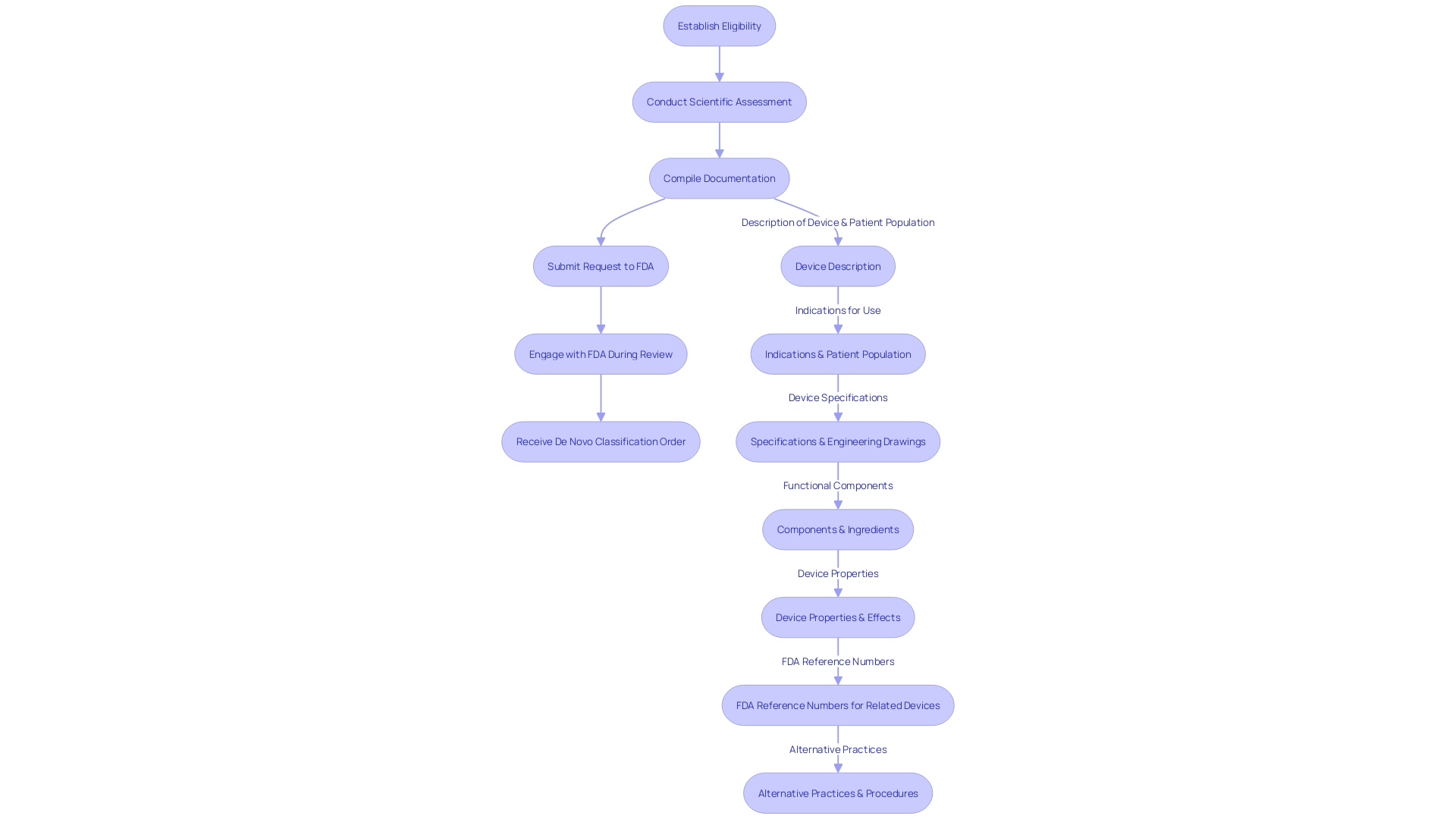
    In either scenario, a comprehensive submission must be prepared. This includes a detailed description of the equipment’s intended use, such as the condition it diagnoses, treats, prevents, cures, or mitigates, and the patient population it serves. Manufacturers need to provide specifications, engineering drawings, and details about each component or ingredient if the item is not singular in its construction. The submission should also explain the properties of the apparatus and how they relate to its intended medical function. Moreover, any -assigned reference numbers for lawfully sold items meant for utilization with the new product must be included. An understanding of alternative practices and the international regulatory context adds depth to the submission, ensuring that the apparatus aligns with existing treatments and considers international standards for ethics and governance.
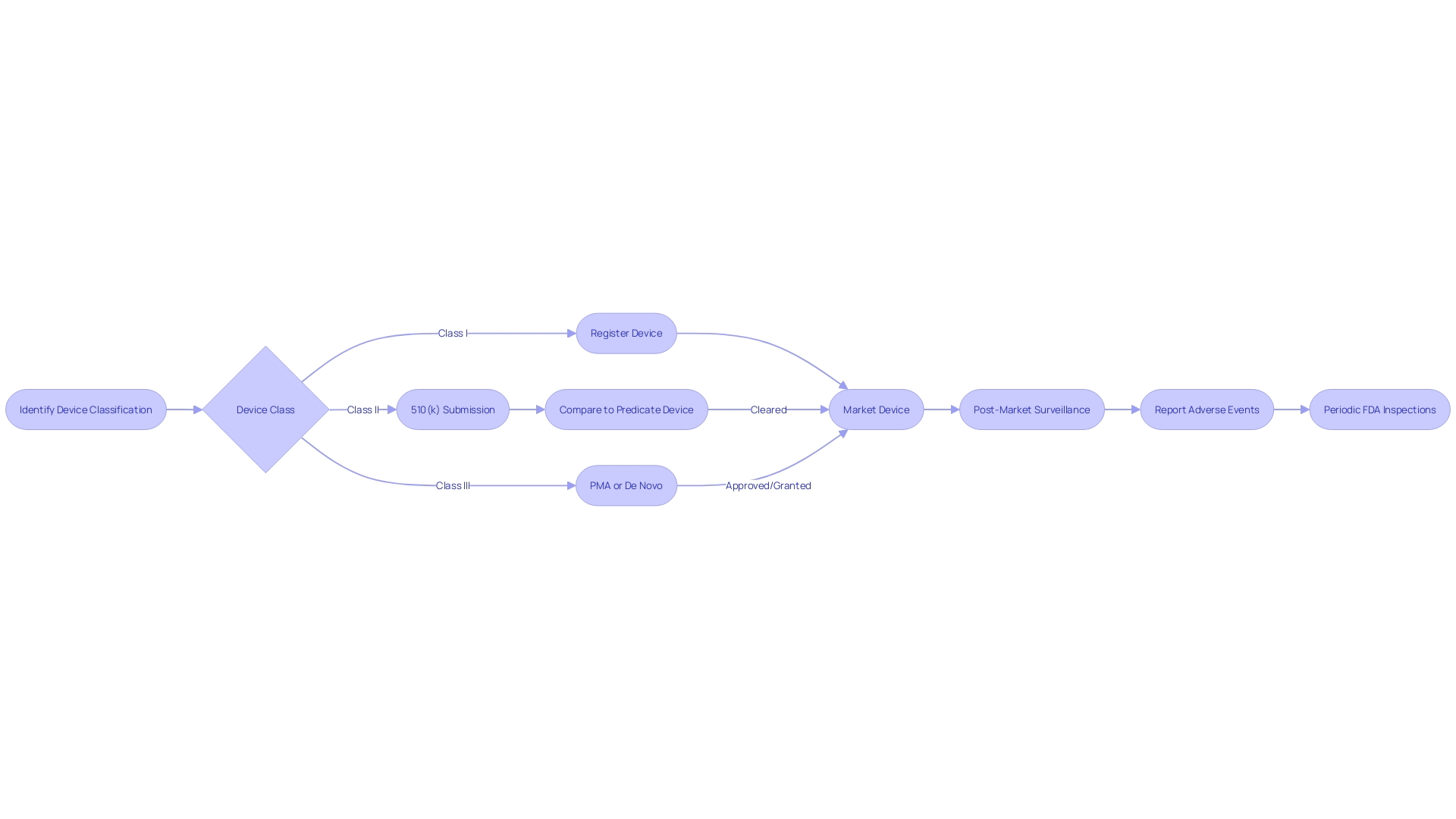
    's Medical Device Classification Process

    Components of a De Novo Submission

    When preparing a for a medical product, it is crucial to provide that enables the of the product’s . The submission should include a comprehensive description of the apparatus, featuring pictorial representations, specifications, and engineering drawings when applicable. It is crucial to outline the intended use of the apparatus, including the patient population it serves and all labeled uses, whether prescription or over-the-counter.

    A must be conducted to ensure the design and manufacturing processes of the equipment are sound and under control throughout their lifecycle. This assessment should include process validation studies that are representative of the production controls for the equipment. To ensure the of the equipment, summaries of scientific evidence must be provided, along with labeling information that clearly states the equipment’s generic and proprietary names, indications for use, and the properties relevant to its intended role in healthcare.

    Furthermore, the submission must include information on each of the apparatus’s functional components or ingredients, particularly if the apparatus consists of multiple physical elements. It is also necessary to include the FDA assigned reference number(s) for any legally marketed instruments intended for use with the new equipment. The documentation should address any alternative practices and procedures known to the requester and provide a rationale for the introduction of the product to the market.

    Recent FDA guidelines stress the importance of clear, conspicuous, and neutral presentation of information, including risks and side effects, in consumer-friendly language. This applies to both audio and visual components of advertisements, ensuring the information is easily understandable and accessible. As emphasized by the FDA’s requirement, every stage in the procedure, from conception to end result, must prioritize the safety, effectiveness, and security of medical instruments to safeguard public health.

    Flowchart: De Novo Submission Process for Medical Products

    Review Process for De Novo Classification

    The by the FDA unfolds through a structured multi-stage approach. Initially, the FDA conducts a thorough administrative assessment to verify that the submission is comprehensive and adheres to the required standards. Afterwards, the agency thoroughly assesses the of the product, relying on the scientific evidence provided. This crucial step may entail the examination of , bench testing, and other pertinent information. Upon finishing this evaluation, the FDA reaches a , establishing the essential for the product. These evaluations are crucial to ensuring that products meet the necessary criteria for before being introduced to the market. This methodical process is exemplified by the development of for establishing bioequivalence in highly variable drugs, which underscores the FDA’s commitment to rigorous scientific inquiry and public health safeguards.
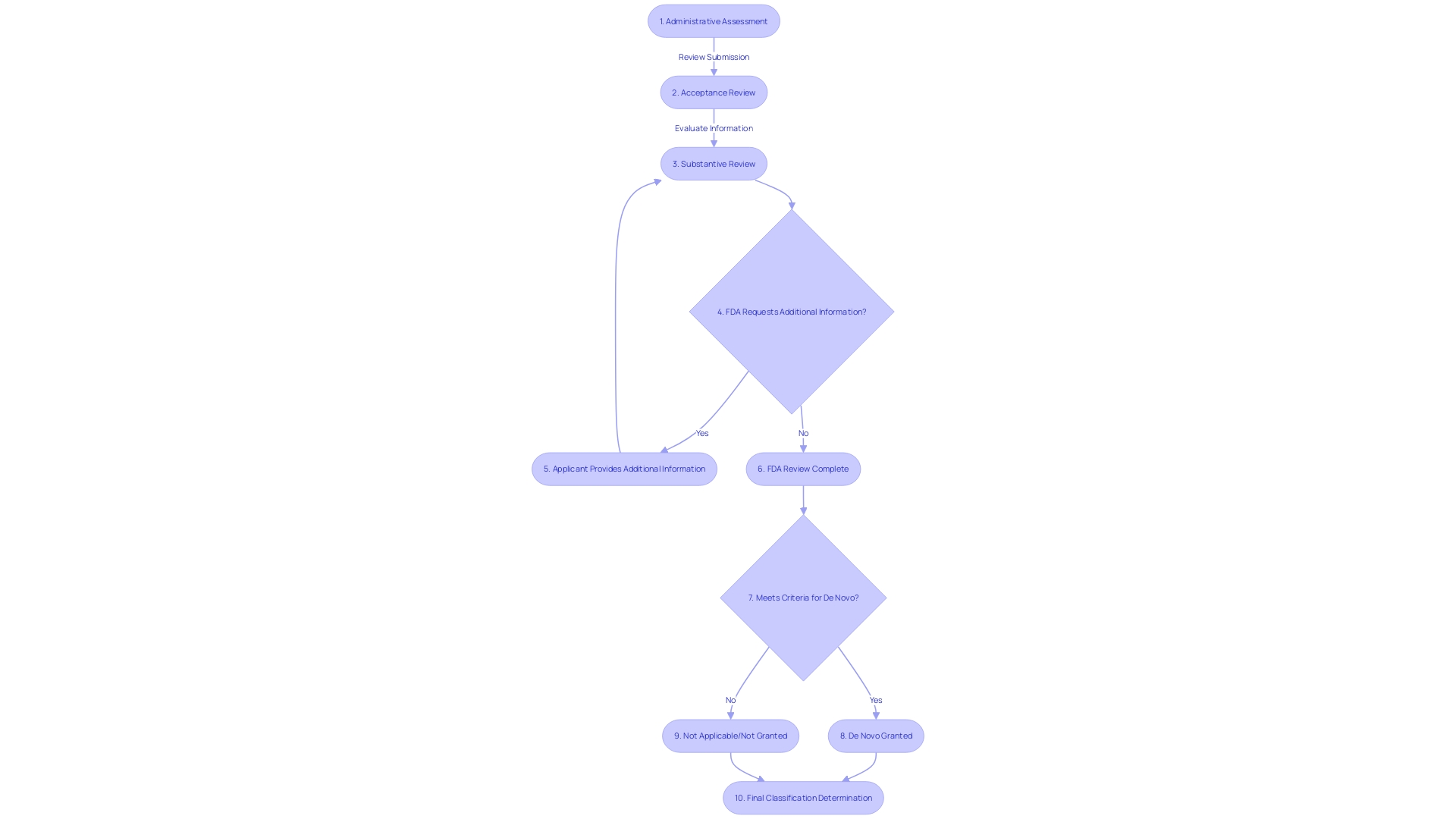
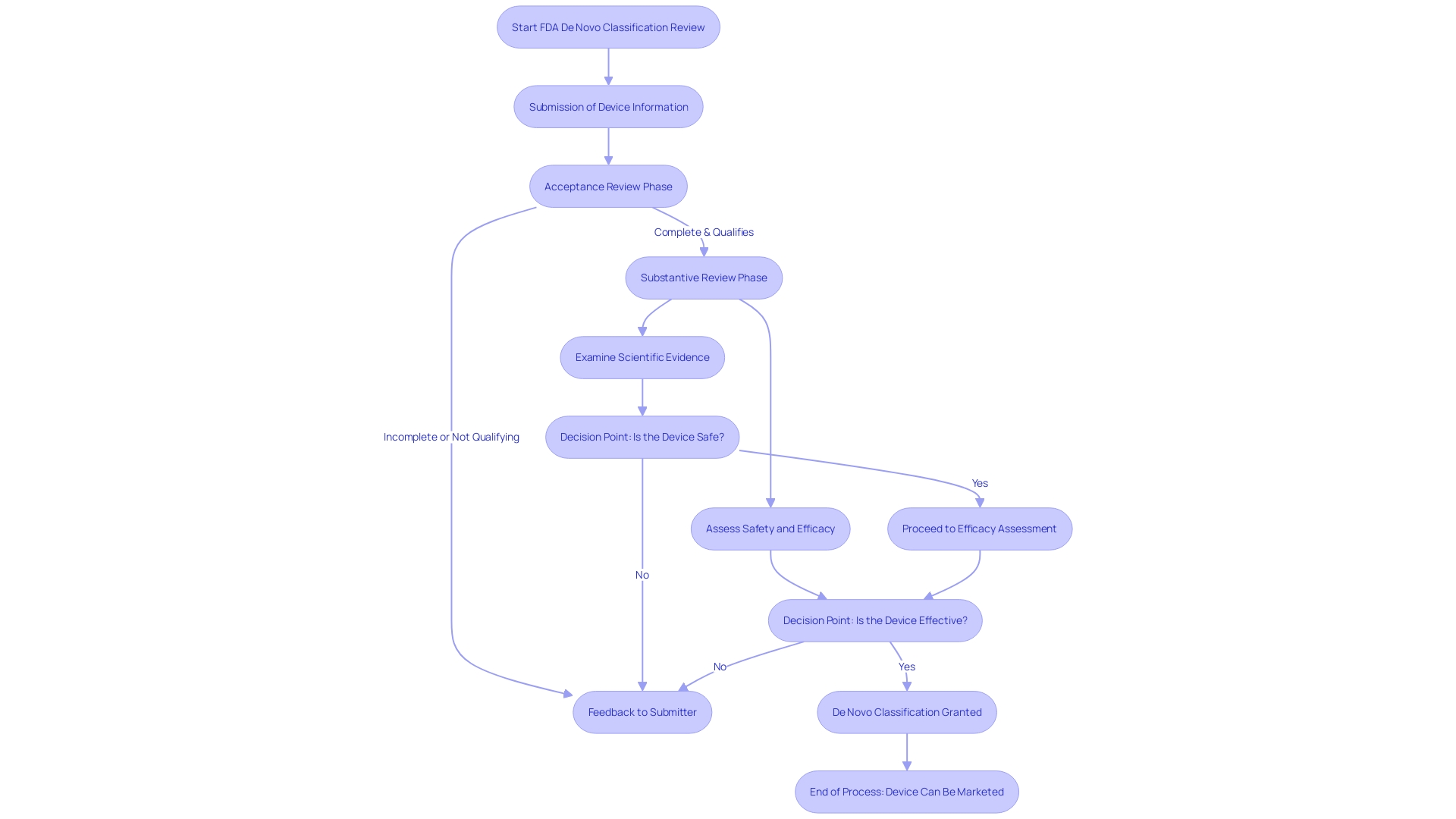
    Flowchart of the FDA's De Novo classification review process

    Risk Assessment and Mitigation in De Novo Submissions

    is a fundamental component of the De Novo submission process. Manufacturers of medical equipment are assigned with the meticulous job of identifying potential risks associated with their products. More than just identifying, they must assess these risks and develop robust mitigation strategies. These strategies may encompass a spectrum of actions, including but not limited to, design alterations, updates to labeling, and the initiation of to continually monitor the tool’s performance.

    The is to thoroughly review these risk mitigation proposals. The evaluation is to ensure that the strategies are not only appropriate but also that they comprehensively address all potential risks, safeguarding the instrument’s safety and efficacy. For example, recent FDA guidance on the presentation of major side effects in direct-to-consumer advertisements underscores the importance of clarity and neutrality, principles that are equally relevant in the context of De Novo submissions, where the communication of risks must be unambiguous and balanced.

    Manufacturers must provide a detailed description of the product, its components, and its intended use, including the patient population it serves. This information should be supported by pictorial representations, specifications, and engineering drawings where applicable. It is crucial for manufacturers to also include the characteristics of the product relevant to its intended therapeutic effect or its interaction with the body’s structure or function. Furthermore, reference numbers for associated FDA-approved equipment should be included to streamline the review process.

    The FDA’s responsibility to ensure the of healthcare equipment is a fundamental aspect of its mission, as demonstrated in the agency’s recent activities and communications. Producers participating in the process must align their risk assessment procedures with the FDA’s standards, ensuring that their products meet the strict requirements set forth to safeguard public health.

    Flowchart of the De Novo submission process

    Benefits and Challenges of the De Novo Pathway

    Understanding the classifications and pathways established by the FDA is essential when navigating the regulatory environment for healthcare equipment. The pathway serves as an important route for new healthcare instruments that do not have a similar precursor. It stands out as a mechanism that facilitates the introduction of , which are often essential for addressing unmet medical needs. While may be subject to less strict regulations and are usually approved through a , the is especially important for certain Class I and all Class III items that pose a moderate to high risk.

    This pathway requires significant scientific evidence to authenticate the safety and effectiveness of an instrument. It is a more involved process than the 510(k) pathway and may result in longer review times. Despite these challenges, the is instrumental in the advancement of medical innovation, especially for conditions requiring continuous management, such as diabetes. For example, the that automate manual tasks demonstrates the potential of De Novo-approved technology to greatly reduce the burden on patients with chronic diseases.

    The FDA’s dedication to promoting innovation in corresponds with the efforts of leaders like Medtronic, who strive to address some of healthcare’s most pressing challenges. The all-encompassing approach to safety and effectiveness of equipment ensures that patients receive the most advanced health care possible. As the field of progresses, the unique pathway will continue to have a crucial role in providing innovative solutions to patients worldwide.
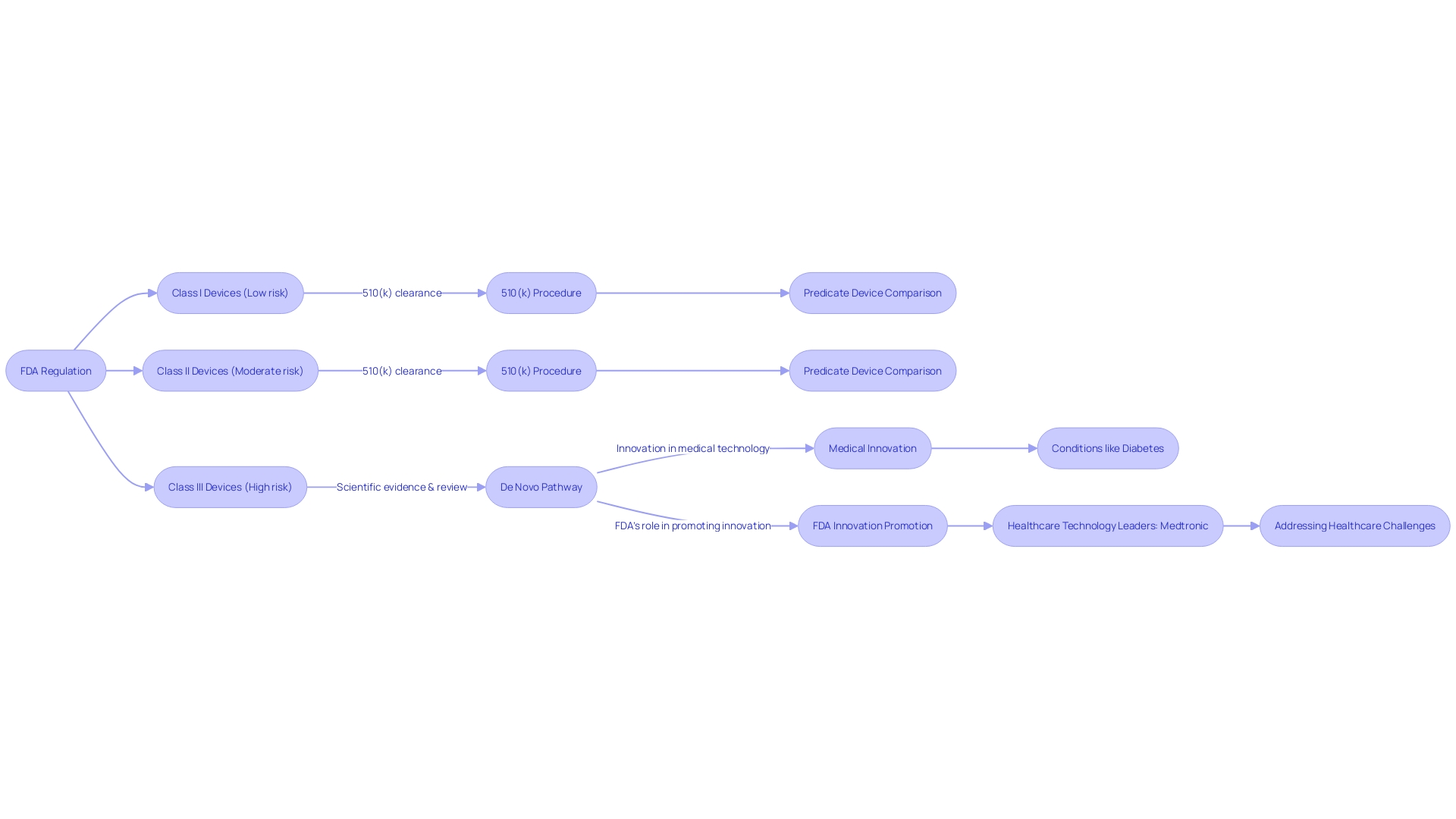
    Flowchart: Understanding the FDA's Regulatory Pathways for Healthcare Equipment

    Best Practices for Successful De Novo Classification

    For manufacturers aiming for of their medical products, it is crucial to ensure a comprehensive and well-structured application to the FDA. This requires a careful approach starting with a precise expression of the tool’s intended purpose, including a thorough explanation of the condition it targets and the demographic of patients it caters to. The submission should encompass the specifications of the equipment, engineering drawings, and, if applicable, a depiction of each of its components. Equally significant is the incorporation of any applicable for lawfully marketed accessories or components intended for use with the equipment.

    Apart from these technical details, manufacturers must also present the properties of the equipment relevant to its therapeutic or diagnostic role. This should involve an explanation of how the apparatus interacts with the body to achieve its intended purpose. A narrative on alternative practices and procedures for the condition in question should be included to provide context on the instrument’s place within the current healthcare landscape.

    To enhance the strength of the submission, companies should . This can lead to valuable insights and guidance on regulatory requirements, helping to refine the submission process. Medtronic’s approach exemplifies this proactive stance, with their commitment to confronting significant health challenges and providing insight-driven care as illustrated by their wide array of healthcare technologies that serve diverse health conditions.

    Furthermore, successful , as pointed out by an experienced business development leader, frequently share traits like resilience and confidence, but also follow business strategies that lead to profitable ventures through acquisitions, IPOs, or strategic alliances. This combination of business expertise and regulatory knowledge is crucial for companies looking for a new classification.

    In conclusion, the pathway, while offering a route to market for novel devices, requires a thorough and strategic approach. Comprehensive research and development, detailed documentation, and proactive risk mitigation are key factors that, when combined with , can significantly increase the likelihood of a .
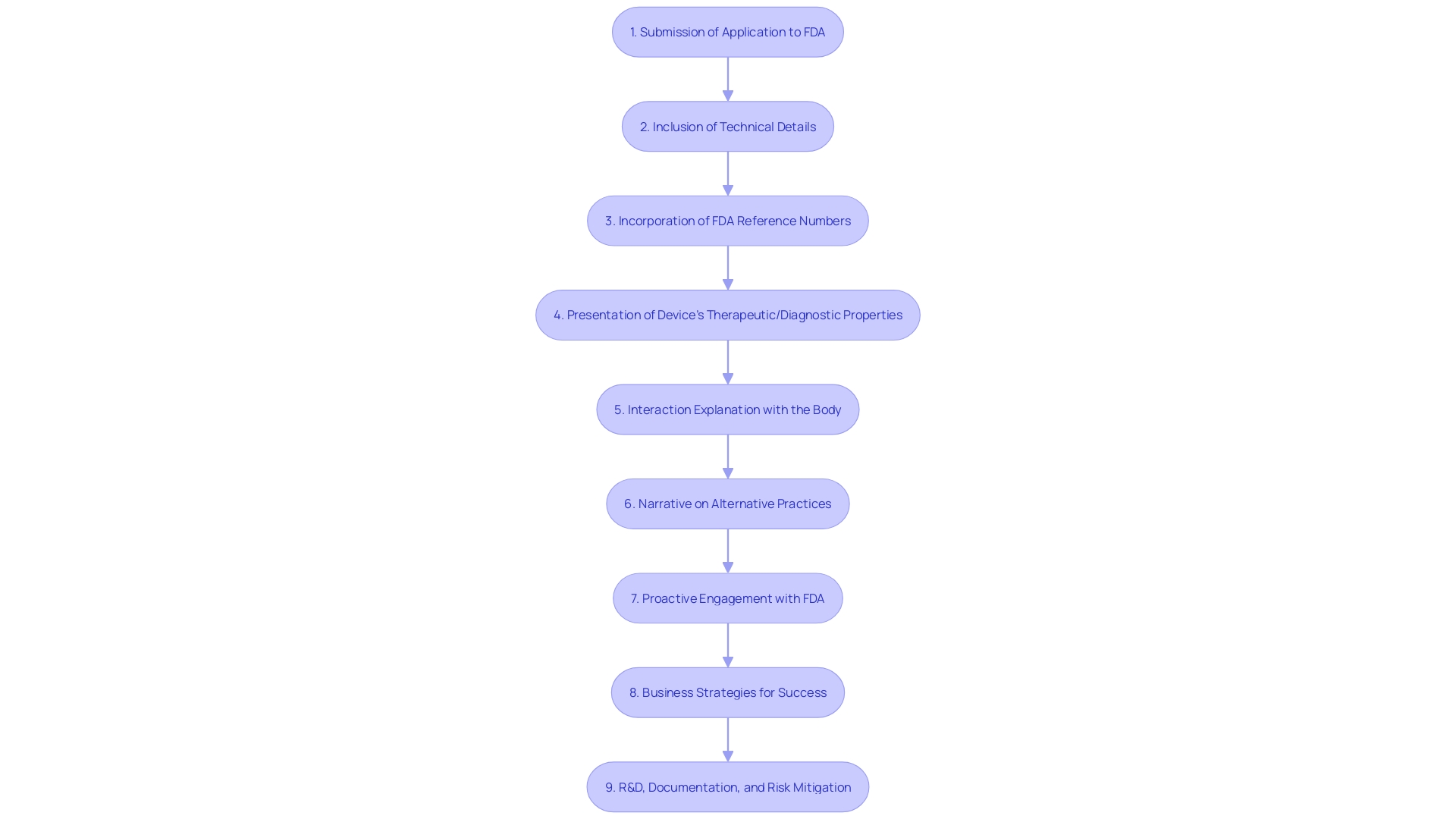
    Flowchart: De Novo Classification Process for Medical Products

    Conclusion

    The De Novo pathway is a crucial classification process that enables the introduction of novel medical devices into the market. It provides a pathway for devices that lack a comparable predecessor and have a low to moderate risk profile. Manufacturers must provide a clear and comprehensive submission to the FDA to showcase the safety and effectiveness of their innovative devices.

    To qualify for De Novo classification, a medical device must be novel and have a low to moderate risk profile. Understanding the FDA’s classification system and the necessary controls for different risk levels is essential for navigating the De Novo process.

    The De Novo pathway differs from the 510(k) pathway, as it is tailored for devices without a comparable predecessor and with a low to moderate risk profile. The De Novo pathway is critical for advancing medical innovation and offering new treatment options that can significantly impact healthcare outcomes.

    Manufacturers must provide a comprehensive submission that includes detailed information about the device’s intended use, specifications, components, and properties relevant to its medical role. Understanding alternative practices and the international regulatory context is crucial for a successful submission.

    In conclusion, the De Novo pathway is a critical classification process for innovative medical devices. Thorough research, documentation, proactive engagement with the FDA, and strategic risk mitigation are key factors for a successful De Novo classification. By following these best practices, manufacturers can navigate the regulatory landscape, drive medical innovation, and ensure patient safety.

    Learn more about navigating the De Novo process and understanding the FDA’s classification system to ensure the successful classification of your innovative medical device.

    Frequently Asked Questions

    What is the De Novo classification process?

    The De Novo classification process is a pathway provided by the FDA for medical devices that lack a comparable predecessor on the market. It allows novel tools to demonstrate their safety and effectiveness, particularly for devices that are the first of their kind.

    Why is the De Novo process important?

    This process is crucial for introducing innovative healthcare equipment that may not fit existing classifications, ensuring that new devices can enter the market while maintaining patient safety.

    Who is responsible for assessing the De Novo submissions?

    The U.S. Food and Drug Administration (FDA), an agency within the Department of Health and Human Services, is responsible for evaluating the safety and effectiveness of medical devices through the De Novo process.

    What kind of devices typically use the De Novo pathway?

    Devices that are unique and do not have a legally marketed predicate, along with a low to moderate risk profile, typically utilize the De Novo pathway. Examples include advanced technologies for managing chronic diseases like diabetes.

    How does the FDA categorize medical devices?

    The FDA classifies medical devices into three classes based on their risk profiles: Class I (Low risk), Class II (Moderate risk), and Class III (High risk).

    What is required in a De Novo submission?

    A De Novo submission must include detailed information about the device, including intended use, patient population, specifications and functional components, pictorial representations and engineering drawings if applicable, and acknowledgment of alternative practices for the condition addressed by the device.

    How does the De Novo process differ from the 510(k) pathway?

    The 510(k) pathway allows devices to gain clearance by demonstrating substantial equivalence to existing devices, whereas the De Novo process is for devices that do not have a predecessor and typically require more extensive scientific evidence for safety and effectiveness.

    What is the FDA’s review process for De Novo submissions?

    The FDA conducts a multi-stage review that includes an administrative assessment of the submission’s completeness, a safety and efficacy evaluation based on scientific evidence, and a classification determination that establishes necessary regulatory controls.

    What are the key components of risk management in the De Novo process?

    Manufacturers must identify potential risks, assess them, and develop robust mitigation strategies. This could involve design changes, updates to labeling, and post-market surveillance studies.

    How does the FDA ensure transparency in the De Novo process?

    The FDA emphasizes a clear, neutral presentation of information related to the risks and benefits of medical devices, ensuring that this information is easily understandable for consumers and healthcare providers.

    What can manufacturers do to improve their chances of a successful De Novo submission?

    Manufacturers should ensure their submission is comprehensive and well-structured, engage proactively with the FDA for guidance, and align their risk assessments with FDA standards.

    Why is the De Novo pathway significant for healthcare innovation?

    The De Novo pathway enables the introduction of groundbreaking technologies that address unmet medical needs, promoting advancements in patient care and treatment options.

    List of Sources

    1. What is the De Novo Pathway?
      • fda.gov (https://fda.gov/news-events/press-announcements/fda-clears-first-device-enable-automated-insulin-dosing-individuals-type-2-diabetes)
      • nature.com (https://nature.com/articles/s41746-024-01021-y)
      • ecfr.gov (https://ecfr.gov/current/title-21/chapter-I/subchapter-H/part-860/subpart-D/section-860.220)
      • rimsys.io (https://rimsys.io/blog/fda-listed-cleared-approved-granted)
      • greenlight.guru (https://greenlight.guru/blog/class-iii-medical-device)
      • salesandmarketingnetwork.com (https://salesandmarketingnetwork.com/news_release_bs.html?ID=2048116)
      • fda.gov (https://fda.gov/news-events/press-announcements/fda-roundup-november-21-2023)
      • ecfr.gov (https://ecfr.gov/current/title-21/chapter-I/subchapter-H/part-860/subpart-D/section-860.220)
    2. Eligibility Criteria for De Novo Classification
      • greenlight.guru (https://greenlight.guru/blog/class-iii-medical-device)
      • fda.gov (https://fda.gov/medical-devices/neurological-devices/regulatory-overview-neurological-devices)

      • ecfr.gov (https://ecfr.gov/current/title-21/chapter-I/subchapter-H/part-860/subpart-D/section-860.220)
      • fda.gov (https://fda.gov/news-events/press-announcements/fda-roundup-november-21-2023)
      • fda.gov (https://fda.gov/news-events/press-announcements/fda-roundup-december-19-2023)
      • fda.gov (https://fda.gov/news-events/press-announcements/fda-roundup-october-20-2023)
      • fda.gov (https://fda.gov/drugs/novel-drug-approvals-fda/novel-drug-approvals-2023)
      • fda.gov (https://fda.gov/drugs/novel-drug-approvals-fda/novel-drug-approvals-2022)
      • greenlight.guru (https://greenlight.guru/blog/class-iii-medical-device)
      • fda.gov (https://fda.gov/medical-devices/premarket-submissions-selecting-and-preparing-correct-submission/division-standards-and-conformity-assessment)
    3. Key Differences Between De Novo and 510(k) Pathways
      • rimsys.io (https://rimsys.io/blog/fda-listed-cleared-approved-granted)
      • wcedmisten.fyi (https://wcedmisten.fyi/post/medical-device-analysis)
      • ecfr.gov (https://ecfr.gov/current/title-21/chapter-I/subchapter-H/part-860/subpart-D/section-860.220)
      • fda.gov (https://fda.gov/drugs/novel-drug-approvals-fda/novel-drug-approvals-2023)
      • futurehealth.live (https://futurehealth.live/blog/2023/10/30/revisited-fdas-ai-medical-device-approvals)
      • thefdalawblog.com (https://thefdalawblog.com/2023/11/welcome-to-srp-rmt-standardization-comes-to-regenerative-medicine-therapies?utm_source=rss&utm_medium=rss&utm_campaign=welcome-to-srp-rmt-standardization-comes-to-regenerative-medicine-therapies)
      • nature.com (https://nature.com/articles/s41746-024-01021-y)
      • fda.gov (https://fda.gov/news-events/press-announcements/fda-roundup-november-21-2023)
      • fda.gov (https://fda.gov/drugs/information-consumers-and-patients-drugs/overview-our-role-regulating-and-approving-drugs-video-series)
      • fda.gov (https://fda.gov/consumers/consumer-updates/10-facts-about-what-fda-does-and-does-not-approve)
    4. Submission Pathways for De Novo Requests
      • nam.edu (https://nam.edu/regenerative-medicine-case-study-for-understanding-and-anticipating-emerging-science-and-technology)
      • ecfr.gov (https://ecfr.gov/current/title-21/chapter-I/subchapter-H/part-860/subpart-D/section-860.220)
      • fda.gov (https://fda.gov/news-events/press-announcements/fda-roundup-november-21-2023)
      • fda.gov (https://fda.gov/news-events/press-announcements/fda-roundup-december-19-2023)
      • federalregister.gov (https://federalregister.gov/documents/2024/09/06/2024-20149/determination-of-regulatory-review-period-for-purposes-of-patent-extension-steglatro)
      • rimsys.io (https://rimsys.io/blog/fda-listed-cleared-approved-granted)
      • greenlight.guru (https://greenlight.guru/blog/class-iii-medical-device)
      • medicaldevice-network.com (https://medicaldevice-network.com/sponsored/reducing-medical-device-approval-times-in-2023)
    5. Components of a De Novo Submission
      • fda.gov (https://fda.gov/news-events/press-announcements/fda-roundup-november-21-2023)
      • fda.gov (https://fda.gov/news-events/press-announcements/fda-roundup-december-19-2023)
      • ecfr.gov (https://ecfr.gov/current/title-21/chapter-I/subchapter-H/part-860/subpart-D/section-860.220)
      • fda.gov (https://fda.gov/drugs/new-drugs-fda-cders-new-molecular-entities-and-new-therapeutic-biological-products/novel-drug-approvals-2024)
      • fda.gov (https://fda.gov/inspections-compliance-enforcement-and-criminal-investigations/warning-letters/dextrum-laboratories-inc-666442-12072023)
      • federalregister.gov (https://federalregister.gov/documents/2023/10/03/2023-21662/medical-devices-laboratory-developed-tests)
      • ecfr.gov (https://ecfr.gov/current/title-21/chapter-I/subchapter-H/part-860/subpart-D/section-860.220)
      • medtechintelligence.com (https://medtechintelligence.com/feature_article/510k-submission-planning)
    6. Review Process for De Novo Classification
      • ecfr.gov (https://ecfr.gov/current/title-21/chapter-I/subchapter-H/part-860/subpart-D/section-860.220)
      • fda.gov (https://fda.gov/drugs/regulatory-science-action/adaptive-trial-design-testing-bioequivalence-generics-highly-variable-drugs)
      • nature.com (https://nature.com/articles/s41746-024-01021-y)
      • federalregister.gov (https://federalregister.gov/documents/2023/10/03/2023-21662/medical-devices-laboratory-developed-tests)
      • fda.gov (https://fda.gov/news-events/press-announcements/fda-roundup-november-21-2023)
      • fda.gov (https://fda.gov/regulatory-information/search-fda-guidance-documents/guidance-industry-recommendations-early-food-safety-evaluation-new-non-pesticidal-proteins-produced)
      • fda.gov (https://fda.gov/medical-devices/neurological-devices/regulatory-overview-neurological-devices)
      • fda.gov (https://fda.gov/drugs/new-drugs-fda-cders-new-molecular-entities-and-new-therapeutic-biological-products/novel-drug-approvals-2024)
      • fda.gov (https://fda.gov/regulatory-information/search-fda-guidance-documents/guidance-industry-recommendations-early-food-safety-evaluation-new-non-pesticidal-proteins-produced)
      • ecfr.gov (https://ecfr.gov/current/title-21/chapter-I/subchapter-H/part-860/subpart-D/section-860.220)
    7. Risk Assessment and Mitigation in De Novo Submissions
      • fda.gov (https://fda.gov/news-events/press-announcements/fda-roundup-november-21-2023)
      • fda.gov (https://fda.gov/news-events/press-announcements/fda-issues-draft-guidance-conducting-multiregional-clinical-trials-oncology)
      • fda.gov (https://fda.gov/news-events/press-announcements/fda-roundup-december-19-2023)
      • ecfr.gov (https://ecfr.gov/current/title-21/chapter-I/subchapter-H/part-860/subpart-D/section-860.220)
      • ai-case-study.vercel.app (https://ai-case-study.vercel.app)
      • forum.effectivealtruism.org (https://forum.effectivealtruism.org/posts/oSAbWDuxmFZnsGEvx/case-study-safety-standards-on-california-utilities-to)
      • fda.gov (https://fda.gov/regulatory-information/search-fda-guidance-documents/guidance-industry-recommendations-early-food-safety-evaluation-new-non-pesticidal-proteins-produced)
      • ecfr.gov (https://ecfr.gov/current/title-21/chapter-I/subchapter-H/part-860/subpart-D/section-860.220)
    8. Benefits and Challenges of the De Novo Pathway
      • salesandmarketingnetwork.com (https://salesandmarketingnetwork.com/news_release_bs.html?ID=2048116)
      • medicaldevice-network.com (https://medicaldevice-network.com/news/elixir-meets-primary-endpoint-for-novel-coronary-device)
      • rimsys.io (https://rimsys.io/blog/fda-listed-cleared-approved-granted)
      • medicaldevice-network.com (https://medicaldevice-network.com/sponsored/reducing-medical-device-approval-times-in-2023)
      • nam.edu (https://nam.edu/regenerative-medicine-case-study-for-understanding-and-anticipating-emerging-science-and-technology)
      • ecfr.gov (https://ecfr.gov/current/title-21/chapter-I/subchapter-H/part-860/subpart-D/section-860.220)
      • fda.gov (https://fda.gov/news-events/press-announcements/fda-clears-first-device-enable-automated-insulin-dosing-individuals-type-2-diabetes)
      • nature.com (https://nature.com/articles/s41746-024-01021-y)
      • medicaldevice-network.com (https://medicaldevice-network.com/sponsored/reducing-medical-device-approval-times-in-2023)
      • jamanetwork.com (https://jamanetwork.com/journals/jama-health-forum/fullarticle/2813650?utm_source=jps&utm_medium=email&utm_campaign=author_alert-jamanetwork&utm_content=author-author_engagement&utm_term=1m)
      • news.medtronic.com (https://news.medtronic.com/2024-08-20-Medtronic-reports-first-quarter-fiscal-2025-financial-results)
    9. Best Practices for Successful De Novo Classification
      • ecfr.gov (https://ecfr.gov/current/title-21/chapter-I/subchapter-H/part-860/subpart-D/section-860.220)
      • nejm.org (https://nejm.org/doi/10.1056/NEJMoa2310063)
      • bmj.com (https://bmj.com/content/385/bmj-2023-078378?utm_campaign=usage&utm_content=tbmj_sprout&utm_id=BMJ005&utm_medium=social&utm_source=twitter)
      • greenlight.guru (https://greenlight.guru/blog/class-iii-medical-device)
      • salesandmarketingnetwork.com (https://salesandmarketingnetwork.com/news_release_bs.html?ID=2048116)
      • starfishmedical.com (https://starfishmedical.com/blog/18-business-factors-that-determine-successful-medical-device-exits)
      • ecfr.gov (https://ecfr.gov/current/title-21/chapter-I/subchapter-H/part-860/subpart-D/section-860.220)
      • fda.gov (https://fda.gov/medical-devices/neurological-devices/regulatory-overview-neurological-devices)

  • Demystifying the De Novo FDA Process for Medical Device Approvals

    Demystifying the De Novo FDA Process for Medical Device Approvals

    Introduction

    The De Novo classification request is a crucial pathway for novel medical devices that lack an existing predicate, offering a streamlined route for devices that do not fit into existing classifications. This process requires a comprehensive submission, including a detailed description of the device, its intended use, and the patient population it serves. Visual representations, specifications, and engineering drawings must also be provided.

    The submission should elucidate the device’s properties and its interaction with the body to diagnose, treat, prevent, cure, or mitigate diseases or conditions. Additionally, a comparative analysis of existing alternative practices or procedures must be included. The De Novo pathway facilitates the introduction of innovative medical devices, ensuring safety and effectiveness while promoting market access and technological advancements in healthcare.

    What is a De Novo Classification Request?

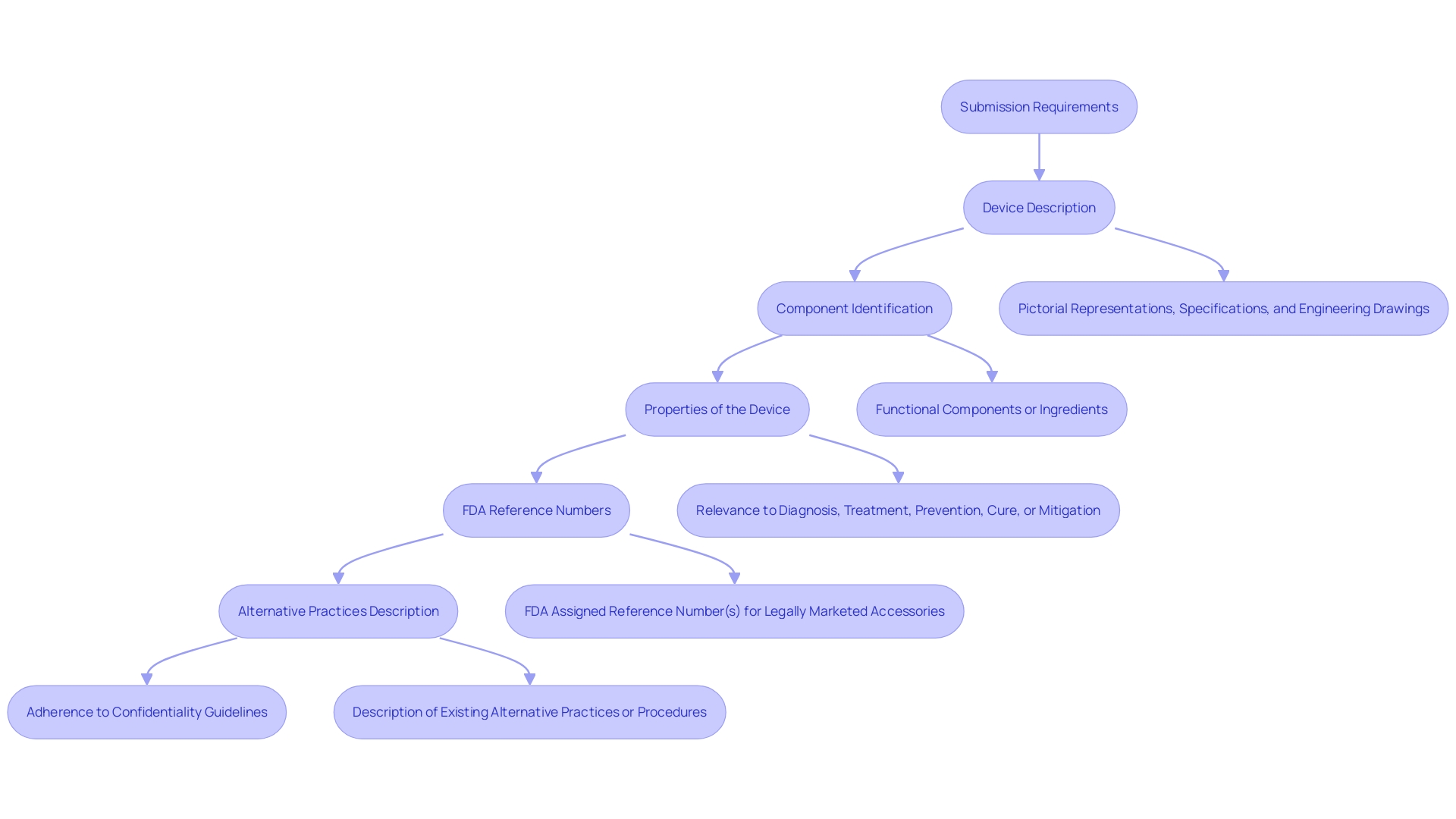
    The classification request, as outlined by the , is a crucial pathway for new that do not have a preexisting example. This pathway is especially crucial for gadgets that are distinctive and do not neatly fit into an existing classification. require a , including a detailed description of the equipment, its intended purpose, and the patient population it serves, whether it’s for prescription or over-the-counter use. Submissions must also include visual representations of the equipment, specifications, engineering drawings, and details on each of the functional components or ingredients if the apparatus comprises multiple elements.

    The submission should clarify the and how it interacts with the body to diagnose, treat, prevent, cure, or mitigate any disease or condition. In addition, it should include the ‘s assigned reference numbers for any legally marketed accessories or components intended for use with the equipment. Furthermore, manufacturers are required to offer a comparative analysis of current alternative practices or procedures for the circumstance the equipment deals with. The simplifies the procedure for introducing low to moderate risk to the market, providing another option to the more stringent PMA pathway, thereby promoting innovation while ensuring the safety and efficacy of the products.

    Key Characteristics of De Novo Submissions

    Comprehending the is vital for when a reference item is absent. Devices undergoing this process are considered . A comprehensive submission should include a detailed description of the apparatus, such as its intended use in diagnosing, treating, preventing, curing, or mitigating a disease, as well as its effects on the body structure or function, including a clear depiction of the patient population it’s designed for. The submission must also contain the generic and trade names, pictorial representations, specifications, and engineering drawings of the equipment. In addition, it is necessary to identify each component and ingredient of the equipment, particularly when it is composed of more than one. The De Novo submission must describe the properties of the apparatus and how they pertain to its intended healthcare purpose. If the equipment is meant to be used with other legally sold , the appropriate must be included. It’s also beneficial to describe alternative practices and procedures for the condition that is being addressed. Recent feedback indicates a strong interest in the process, with fifteen new decision summaries posted, highlighting the diversity and ongoing developments in this area. This serves as a reminder that all communications with the FDA, including these submissions, must adhere to strict confidentiality guidelines to protect sensitive information.

    Flowchart: De Novo Classification Procedure for Medical Products

    When to Use the De Novo Pathway

    The classification procedure called is a regulatory pathway for innovative healthcare equipment that does not have a similar product available, providing an efficient route for items considered to have minimal to moderate risk. This pathway circumvents the , enabling manufacturers to navigate the when their products do not align with existing categories. Every entry for classification must contain a detailed explanation of the apparatus, covering all aspects from its intended purpose, specifications, parts, to its operational characteristics and any related FDA reference numbers for legally sold attachments or parts intended for use with the apparatus.

    Case studies on the governance of emerging technologies in health and medicine, including those that are part of a rapidly evolving landscape, have underscored the complexity of navigating ethical, legal, and social issues. For instance, the Recent System, intended for metabolic function improvement and blood glucose regulation, underwent a series of feasibility , like REGENT-1 and EMINENT, to assess safety and efficacy. These studies serve to illustrate the critical role of ethical considerations in the development and approval of new .

    Furthermore, the importance of the is additionally emphasized by the reality that the FDA classifies healthcare instruments into three categories based on the danger they present to patients, with category three instruments necessitating the most rigorous approval processes. The pathway thus offers an alternative for tools that do not have a clear risk category, enabling access to innovative healthcare solutions. For example, Cardiawave, a company developing non-invasive ultrasound technology for aortic valve treatment, has been preparing for Series B financing to support in the U.S. as part of its strategic approach to obtaining .

    Additionally, it’s important to recognize that or clearance does not guarantee immediate coverage or payment from payors. Groups like CMS and private health plans independently determine coverage, which can result in delays in patient access to new healthcare equipment, underscoring the importance of synchronizing regulatory approval and payor coverage determinations.

    To summarize, the pathway of New Creation serves as a crucial mechanism for the efficient introduction of innovative , with a focus on ensuring safety and effectiveness while navigating the complex interplay of market forces, intellectual property, and governance frameworks.

    Flowchart: De Novo Classification Procedure for Innovative Healthcare Equipment

    De Novo Process Overview

    Navigating the is a multi-faceted journey that begins with the submission of a comprehensive . This request must encapsulate a wealth of detailed information, covering not only the ‘s intended function but also its design and composition, including pictorial representations and engineering specifications when applicable. The document should thoroughly describe the usage of the equipment, whether prescription or over-the-counter, and delineate the disease or condition it addresses, including a description of the targeted patient demographic. Crucial to this submission is the inclusion of .

    Upon receipt, the FDA embarks on a , commencing with an acceptance review that ensures the submission is complete and adheres to all pertinent requirements. After this initial phase, there is a comprehensive evaluation, a thorough examination of the properties of the instrument and their significance to the suggested diagnostic, therapeutic, or preventive uses. The is not only about the equipment in isolation; it also takes into account any related medical instruments already on the market, indicated by FDA-assigned reference numbers, that may be used in conjunction with the new equipment.

    Should the , it results in the issuance of a De Novo classification order. This significant milestone clears the product for market entry, establishing it as a legally marketable entity. It’s important to note, however, that FDA’s role extends beyond this point. After the clearance process, other entities, like payors and healthcare providers, have a significant influence on determining the coverage and integration of the equipment into healthcare practices. Even with approval from the FDA, there might be other obstacles when it comes to insurance and payment, which could affect the patient’s ability to obtain the new healthcare equipment.

    Flowchart: Navigating the FDA's De Novo Classification Process

    Steps in Preparing a De Novo Request

    The process of preparing a request for the FDA involves a series of strategic steps, each requiring meticulous attention to detail and compliance with . At first, it is important to establish if your healthcare apparatus qualifies for a , which entails a comprehensive assessment against the particular standards set by the FDA.

    Once eligibility is confirmed, a is paramount. This evaluation must compile strong scientific evidence that highlights the of your medical product. It includes a comprehensive presentation of the intended use of the apparatus, including the patient population it serves and the conditions it aims to address, whether through diagnosis, treatment, prevention, or cure. The evaluation should also encompass the specifications, engineering drawings, and any other relevant details that capture the functional components and properties of the apparatus.

    When preparing the request, it is crucial to include a . This collection should not only cover the technical aspects of the product, such as pictorial representations and engineering specifics, but also the regulatory aspects, including any FDA-assigned reference numbers for legally marketed accessories or components intended for use with your item.

    Submitting the request to the FDA is the next critical phase. Adhering to the FDA’s submission protocols and ensuring that all required information is provided will facilitate a smoother review process. As the FDA evaluates your request, it is essential to engage proactively, responding promptly to any queries or demands for extra information.

    Once the review process concludes, a successful submission will result in the FDA issuing a De Novo classification order. This order not only approves market clearance for your healthcare instrument but also confirms that the instrument meets the high standards of required for patient care.

    Throughout this process, it is essential to acknowledge the FDA’s dedication to protecting public health by guaranteeing that adhere to rigorous safety and efficacy standards. An initial request is a pathway to introducing innovative medical tools to the market, provided they can successfully demonstrate their value in enhancing patient care and outcomes.

    Flowchart of the FDA Request Process

    FDA Review Process for De Novo Requests

    The ‘s is a rigorous two-phase review that starts with the acceptance review phase, where the confirms that a submission is complete and that the equipment qualifies for the De Novo pathway. This first stage involves a detailed examination of the provided documentation, including a of the instrument’s intended use, its specifications, and any pictorial representations. The also examines the components, ingredients, and properties relevant to its function in diagnosing, treating, preventing, or mitigating a disease, as well as any existing alternative practices known to the submitter.

    Should a submission pass the acceptance review, it moves on to the substantive review phase. Here, the explores further, examining the scientific evidence and data to assess the of the product. This can include requests for additional information or clarification from the manufacturer. After completing the thorough evaluation, the will determine whether to issue a based on the equipment meeting all necessary criteria. The objective of the , as a component of the U.S. Department of Health and Human Services, is to protect public health by guaranteeing the safety, efficacy, and security of healthcare equipment and other items within its authority.

    Flowchart of the 's

    Acceptance Review and Substantive Review Phases

    Navigating through the process of categorizing new equipment is a complex task that involves multiple critical phases. Initially, the to ensure the submission adheres to the necessary criteria for a comprehensive evaluation. This preliminary assessment analyzes the submission for completeness and confirms the , eliminating any potential for missing or incomplete information that could hinder the application’s progression.

    Once the submission successfully clears the acceptance review, it proceeds to the , where the FDA undertakes a detailed examination of the scientific evidence and data presented. During this stage, the agency may reach out to the manufacturer for additional information, clarifications, or further evidence to methodically assess the product’s safety and effectiveness. It is essential for the manufacturer to be prepared for this interaction and ensure all data submitted is clear and devoid of confidential information not intended for the public domain.

    In accordance with recent updates, the FDA has shown its dedication to transparency by publishing fifteen new , ranging from devices granted approval in 2020 to those approved in 2023. This provides valuable insights into the evaluation process and outcomes of new submissions, reflecting the agency’s rigorous standards for safety and effectiveness.

    Furthermore, the FDA’s overarching role in , as evidenced by its recent publication of a final rule for direct-to-consumer prescription drug advertisements, underscores the importance of clear and accessible communication. This principle is equally applicable to the new process, where is paramount in the agency’s decision-making process. By following these rigorous criteria, manufacturers can better navigate the pathway for new devices, thus contributing to the progress of healthcare technology and patient well-being.

    Common Deficiencies and How to Address Them

    Navigating the for medical instruments requires meticulous attention to detail and robust evidence to meet the . Common pitfalls manufacturers may encounter include presenting inadequate scientific evidence, which can manifest as either insufficient data or incomplete data sets that fail to comprehensively support the safety and effectiveness of the product. To mitigate such issues, a is imperative.

    In addition, manufacturers often encounter difficulties with unclear instrument specifications. Accuracy in describing the design, components, and intended use of the apparatus is essential. This includes offering visual representations, detailed specifications, and engineering drawings that provide clarity on each functional component or ingredient of the product. Such meticulous documentation ensures the FDA can thoroughly evaluate the product without ambiguities.

    Compliance with is another critical area where deficiencies can arise. Non-compliance not only hinders the review process but can also lead to legal and ethical complications. As the FDA is vigilant in ensuring public health and safety, adherence to all guidelines is non-negotiable. For instance, the FDA’s recent implementation of standards for direct-to-consumer prescription drug advertisements underscores their commitment to clear, conspicuous, and neutral information presentation.

    To address these complex challenges, manufacturers are advised to engage in proactive communication with the FDA, leveraging historical governance insights and case study analyses that underscore the evolution of technology governance. This includes considering market incentives, intellectual property rights, and the broader governance ecosystem within the United States, along with pertinent international context when appropriate.

    The pathway for new inventions, although demanding, provides a systematic approach for innovative products to enter the market. It requires a thorough account of the apparatus’s intended use, its impact on the disease or condition it aims to address, and the patient population it serves. Furthermore, it requires disclosure of any existing alternative practices or procedures, adding layers of consideration to the application.

    Considering the changing field of healthcare technology, producers must base their applications in extensive evidence, precise specifications, and consistent regulatory adherence. By doing so, they position themselves to navigate the complex approval process successfully, ultimately contributing to the advancement of healthcare and patient outcomes.

    Benefits and Challenges of the De Novo Pathway

    The pathway, within the FDA’s authority, creates a that do not have a comparable, legally marketed predecessor. This procedure not only permits the categorization of these instruments into class I or class II groups but also establishes a new regulatory product code and designates the apparatus as the benchmark standard for future . While the New pathway has historically been underutilized due to initial requirements that mandated a prior 510(k) submission, recent years have seen a shift towards more to this pathway, reflecting the FDA’s commitment to fostering innovation and addressing unmet medical needs.

    The benefits of the include the ability to clear distinctive products for market entry and a more compared to the . This stimulates the creation of innovative tools that go beyond the existing categorization system, thus fostering technological progress in the healthcare field.

    However, the pathway is not without its challenges. The intricacy and fluctuation of the review process can result in unpredictability, often requiring a strong compilation of scientific data to support the safety and effectiveness of the equipment. Furthermore, the originality of the products falling into the De Novo classification implies that there are fewer previous instances to direct manufacturers, which can make the process of navigating through the regulatory landscape more complex.

    is crucial for progressive solutions and the evolving policies of the FDA aim to balance rapid technological progress with the assurance of patient safety. The regulatory process, utilizing the , is an intricate part of this balance, shaping the trajectory of new healthcare instruments from conception to clinical application.

    Case Study: Successful De Novo Approvals

    The pathway known as De Novo, which is a crucial component of the , offers an essential opportunity for the to the market, especially in the absence of any established reference devices. A remarkable example of the successful application of this pathway involves a medical product created by Company XYZ, designed to treat a specific medical condition. Without any reference to predicate devices, Company XYZ started the De Novo path and submitted a comprehensive request to the FDA. Their submission included a plethora of critical information: detailed scientific evidence, robust , and precise equipment specifications, all of which are essential components as per .

    During the FDA’s meticulous review process, Company XYZ responded proactively to all inquiries and provided additional information as requested. Their endeavors reached a climax with the FDA issuing a classification order, effectively enabling the product to enter the market and offering a new therapeutic approach for patients impacted by the medical condition at hand.

    This instance showcases the strategic function the Fresh Start route can play for producers, demonstrating not just the route’s capability to facilitate market entry for new products but also its wider consequences for healthcare innovation. The De Novo process ensures that products go through a , resulting in either class I or class II categorization, depending on whether general controls or a combination of general and special controls are sufficient to guarantee safety and effectiveness. Furthermore, it establishes a new regulatory category for the device, complete with product codes and required controls, setting a regulatory precedent for future 510(k) submissions.

    The evolution of this regulatory pathway reflects a governance ecosystem that balances innovation with patient safety and includes a multitude of factors such as market incentives, intellectual property, and ethical considerations. Through the historical trajectory of such cases, we can observe the dynamic nature of health technology governance, the ethical, legal, and social issues that surface, and the strategic questions that guide the development and approval of emerging healthcare technologies.

    In this context, the successful navigation of the by Company XYZ not only represents a significant achievement for the company but also provides valuable insights into the governance framework that underpins the development and introduction of new medical technologies in the health sector.

    Conclusion

    In conclusion, the De Novo classification request is a crucial pathway for novel medical devices that lack an existing predicate. It provides a streamlined route for devices that do not fit into existing classifications. The submission process requires a comprehensive description of the device, its intended use, and the patient population it serves.

    Visual representations, specifications, and engineering drawings must be included to elucidate the device’s properties and its interaction with the body.

    The De Novo pathway facilitates the introduction of innovative medical devices, ensuring safety and effectiveness while promoting market access and technological advancements in healthcare. It allows for the classification of unique devices into class I or class II categories, creating a new regulatory product code and establishing the device as the reference standard for future 510(k) submissions.

    While the De Novo pathway offers benefits such as clearing unique devices for market entry and providing a more streamlined regulatory experience, it also presents challenges. The review process can be complex and unpredictable, requiring manufacturers to compile robust scientific data. The novelty of devices under the De Novo classification means there are fewer precedents to guide manufacturers, adding complexity to the regulatory landscape.

    Overall, the De Novo pathway serves as a critical mechanism for the efficient introduction of innovative medical devices, with a focus on ensuring safety and effectiveness. By adhering to the rigorous requirements and guidelines set by the FDA, manufacturers can successfully navigate the De Novo pathway and contribute to the advancement of healthcare and patient outcomes.

    Learn how bioaccess™ can help you navigate the De Novo pathway and bring your innovative medical device to market safely and effectively.

    Frequently Asked Questions

    What is the De Novo classification process?

    The De Novo classification process is a regulatory pathway established by the FDA for innovative medical devices that do not have a similar, legally marketed predecessor. It allows for the introduction of devices deemed to pose low to moderate risk, facilitating market entry while ensuring safety and effectiveness.

    Who needs to submit a De Novo request?

    Manufacturers of new medical devices that are unique and do not fit into existing classification categories must submit a De Novo request to the FDA for classification and market entry.

    What information is required in a De Novo submission?

    A comprehensive De Novo submission must include: a detailed description of the device and its intended purpose, information about the patient population it serves, visual representations, specifications, and engineering drawings, details on each functional component or ingredient, scientific evidence supporting the device’s safety and efficacy, FDA reference numbers for any legally marketed accessories or components intended for use with the device, and a comparative analysis of current alternative practices.

    What are the phases of the De Novo review process?

    The De Novo review process consists of two main phases: Acceptance Review, where the FDA checks if the submission is complete and meets the required criteria for a De Novo classification, and Substantive Review, which involves a detailed examination of the scientific evidence and data provided in the submission to assess the device’s safety and efficacy.

    What happens if the FDA approves a De Novo submission?

    If the FDA approves the De Novo submission, it issues a classification order, allowing the product to be marketed. This order establishes the device’s regulatory category and product code.

    Does FDA approval guarantee insurance coverage for the device?

    No, FDA approval does not guarantee immediate coverage or payment from payors. Coverage decisions are made independently by entities like CMS and private health plans, which may delay patient access to new devices.

    What challenges do manufacturers face when navigating the De Novo process?

    Manufacturers may encounter challenges such as inadequate scientific evidence to support the device’s safety and effectiveness, unclear specifications or documentation, compliance issues with FDA regulations, and the unpredictability of the review process due to the novelty of the device.

    How does the De Novo process promote innovation in healthcare?

    The De Novo pathway allows for the entry of unique devices into the market, promoting technological advancement while maintaining regulatory oversight to ensure patient safety and efficacy.

    What are the implications of a successful De Novo submission?

    A successful De Novo submission can lead to the establishment of new regulatory categories and product codes, setting standards for future submissions and encouraging further innovation in medical technology.

    How should manufacturers prepare for the De Novo submission?

    Manufacturers should thoroughly assess their device’s eligibility, compile robust scientific data, ensure clear and comprehensive documentation, and be prepared for proactive communication with the FDA throughout the review process.

    List of Sources

    1. What is a De Novo Classification Request?
      • ecfr.gov (https://ecfr.gov/current/title-21/chapter-I/subchapter-H/part-860/subpart-D/section-860.220)
      • fda.gov (https://fda.gov/news-events/press-announcements/fda-proposes-rule-aimed-helping-ensure-safety-and-effectiveness-laboratory-developed-tests)
      • fda.gov (https://fda.gov/news-events/press-announcements/fda-roundup-november-21-2023)
      • starfishmedical.com (https://starfishmedical.com/blog/medical-device-commercialization-vision)
      • nam.edu (https://nam.edu/regenerative-medicine-case-study-for-understanding-and-anticipating-emerging-science-and-technology)
    2. Key Characteristics of De Novo Submissions
      • federalregister.gov (https://federalregister.gov/documents/2023/09/29/2023-21405/electronic-submission-template-for-medical-device-de-novo-requests-draft-guidance-for-industry-and)
      • fda.gov (https://fda.gov/inspections-compliance-enforcement-and-criminal-investigations/warning-letters/dextrum-laboratories-inc-666442-12072023)
      • thefdalawblog.com (https://thefdalawblog.com/2024/09/where-have-all-the-de-novo-summaries-gone-an-update?utm_source=rss&utm_medium=rss&utm_campaign=where-have-all-the-de-novo-summaries-gone-an-update)
      • fda.gov (https://fda.gov/news-events/press-announcements/fda-roundup-november-21-2023)
      • ecfr.gov (https://ecfr.gov/current/title-21/chapter-I/subchapter-H/part-860/subpart-D/section-860.220)
      • ecfr.gov (https://ecfr.gov/current/title-21/chapter-I/subchapter-H/part-860/subpart-D/section-860.220)
    3. When to Use the De Novo Pathway
      • ecfr.gov (https://ecfr.gov/current/title-21/chapter-I/subchapter-H/part-860/subpart-D/section-860.220)
      • rimsys.io (https://rimsys.io/blog/fda-listed-cleared-approved-granted)
      • medicaldevice-network.com (https://medicaldevice-network.com/sponsored/reducing-medical-device-approval-times-in-2023)
      • nam.edu (https://nam.edu/regenerative-medicine-case-study-for-understanding-and-anticipating-emerging-science-and-technology)
      • fda.gov (https://fda.gov/about-fda/cdrh-innovation/medical-device-coverage-initiatives-connecting-payors-payor-communication-task-force)
      • medicaldevice-network.com (https://medicaldevice-network.com/news/endogenex-fda-recet-trial)
      • medicaldevice-network.com (https://medicaldevice-network.com/news/cardiawave-lays-next-steps-for-ultrasound-therapy-after-positive-fih-trial)
      • medicaldevice-network.com (https://medicaldevice-network.com/news/masimo-de-novo-approval-fda-ori)
      • ec.europa.eu (https://ec.europa.eu/commission/presscorner/detail/en/QANDA_24_347)
      • federalregister.gov (https://federalregister.gov/documents/2023/09/29/2023-21405/electronic-submission-template-for-medical-device-de-novo-requests-draft-guidance-for-industry-and)
    4. De Novo Process Overview
      • ecfr.gov (https://ecfr.gov/current/title-21/chapter-I/subchapter-H/part-860/subpart-D/section-860.220)
      • fda.gov (https://fda.gov/about-fda/cdrh-innovation/medical-device-coverage-initiatives-connecting-payors-payor-communication-task-force)
      • fda.gov (https://fda.gov/news-events/press-announcements/fda-roundup-november-21-2023)
      • fda.gov (https://fda.gov/news-events/press-announcements/fda-roundup-october-20-2023)
      • fda.gov (https://fda.gov/regulatory-information/search-fda-guidance-documents/requests-reconsideration-division-level-under-gdufa)
      • federalregister.gov (https://federalregister.gov/documents/2023/11/24/2023-25952/covid-19-developing-drugs-and-biological-products-for-treatment-or-prevention-guidance-for-industry)
      • federalregister.gov (https://federalregister.gov/documents/2023/09/29/2023-21405/electronic-submission-template-for-medical-device-de-novo-requests-draft-guidance-for-industry-and)
      • ecfr.gov (https://ecfr.gov/current/title-21/chapter-I/subchapter-H/part-860/subpart-D/section-860.220)
      • ecfr.gov (https://ecfr.gov/current/title-21/chapter-I/subchapter-H/part-860/subpart-C)
      • ecfr.gov (https://ecfr.gov/current/title-21/chapter-I/subchapter-D/part-316/subpart-A)
    5. Steps in Preparing a De Novo Request
      • ecfr.gov (https://ecfr.gov/current/title-21/chapter-I/subchapter-H/part-860/subpart-D/section-860.220)
      • wheelsforwellbeing.org.uk (https://wheelsforwellbeing.org.uk/wheels-for-wellbeing-guide-to-making-freedom-of-information-requests)
      • venngage.com (https://venngage.com/blog/grant-proposal)
      • deathwithdignity.org (https://deathwithdignity.org/resources/life-file-advance-directives)
      • whn.global (https://whn.global/asking-for-safer-precautions)
      • fda.gov (https://fda.gov/news-events/press-announcements/fda-proposes-rule-aimed-helping-ensure-safety-and-effectiveness-laboratory-developed-tests)
      • fda.gov (https://fda.gov/news-events/press-announcements/fda-roundup-november-21-2023)
      • ecfr.gov (https://ecfr.gov/current/title-21/chapter-I/subchapter-H/part-860/subpart-D/section-860.220)
    6. FDA Review Process for De Novo Requests
      • ecfr.gov (https://ecfr.gov/current/title-21/chapter-I/subchapter-H/part-860/subpart-D/section-860.220)
      • fda.gov (https://fda.gov/regulatory-information/search-fda-guidance-documents/guidance-industry-recommendations-early-food-safety-evaluation-new-non-pesticidal-proteins-produced)
      • fda.gov (https://fda.gov/news-events/press-announcements/fda-proposes-rule-aimed-helping-ensure-safety-and-effectiveness-laboratory-developed-tests)
      • fda.gov (https://fda.gov/news-events/press-announcements/fda-roundup-november-21-2023)
      • fda.gov (https://fda.gov/news-events/press-announcements/fda-approves-new-drug-treat-niemann-pick-disease-type-c)
      • ecfr.gov (https://ecfr.gov/current/title-21/chapter-I/subchapter-H/part-860/subpart-D/section-860.220)
      • fda.gov (https://fda.gov/regulatory-information/search-fda-guidance-documents/guidance-industry-recommendations-early-food-safety-evaluation-new-non-pesticidal-proteins-produced)
    7. Acceptance Review and Substantive Review Phases
      • fda.gov (https://fda.gov/news-events/press-announcements/fda-roundup-november-21-2023)
      • fda.gov (https://fda.gov/news-events/press-announcements/fda-roundup-september-6-2024)
      • federalregister.gov (https://federalregister.gov/documents/2023/09/29/2023-21405/electronic-submission-template-for-medical-device-de-novo-requests-draft-guidance-for-industry-and)
      • thefdalawblog.com (https://thefdalawblog.com/2024/09/where-have-all-the-de-novo-summaries-gone-an-update?utm_source=rss&utm_medium=rss&utm_campaign=where-have-all-the-de-novo-summaries-gone-an-update)
      • ecfr.gov (https://ecfr.gov/current/title-21/chapter-I/subchapter-H/part-860/subpart-D/section-860.220)
      • fda.gov (https://fda.gov/regulatory-information/search-fda-guidance-documents/guidance-industry-recommendations-early-food-safety-evaluation-new-non-pesticidal-proteins-produced)
      • dev.to (https://dev.to/nidhi_acharya_427558b1130/understanding-the-regulatory-framework-of-fda-for-drug-approval-3ebf)
    8. Common Deficiencies and How to Address Them
      • ecfr.gov (https://ecfr.gov/current/title-21/chapter-I/subchapter-H/part-860/subpart-D/section-860.220)
      • fda.gov (https://fda.gov/news-events/press-announcements/fda-roundup-november-21-2023)
      • fda.gov (https://fda.gov/inspections-compliance-enforcement-and-criminal-investigations/warning-letters/abiomed-inc-663150-09192023)
      • nam.edu (https://nam.edu/regenerative-medicine-case-study-for-understanding-and-anticipating-emerging-science-and-technology)
    9. Benefits and Challenges of the De Novo Pathway
      • fda.gov (https://fda.gov/news-events/press-announcements/fda-approves-first-therapy-rare-type-non-cancerous-tumors)
      • nature.com (https://nature.com/articles/s41746-024-01021-y)
      • fda.gov (https://fda.gov/news-events/press-announcements/fda-roundup-november-21-2023)
      • fda.gov (https://fda.gov/news-events/press-announcements/fda-roundup-october-20-2023)
      • fda.gov (https://fda.gov/news-events/press-announcements/fda-roundup-february-16-2024)
      • medicaldevice-network.com (https://medicaldevice-network.com/sponsored/reducing-medical-device-approval-times-in-2023)
      • fda.gov (https://fda.gov/drugs/novel-drug-approvals-fda/novel-drug-approvals-2023)
      • nam.edu (https://nam.edu/regenerative-medicine-case-study-for-understanding-and-anticipating-emerging-science-and-technology)
      • ecfr.gov (https://ecfr.gov/current/title-21/chapter-I/subchapter-H/part-860/subpart-D/section-860.220)
      • fda.gov (https://fda.gov/about-fda/cdrh-innovation/medical-device-coverage-initiatives-connecting-payors-payor-communication-task-force)
    10. Case Study: Successful De Novo Approvals
    • nam.edu (https://nam.edu/regenerative-medicine-case-study-for-understanding-and-anticipating-emerging-science-and-technology)
    • medicaldevice-network.com (https://medicaldevice-network.com/news/endogenex-fda-recet-trial)
    • medicaldevice-network.com (https://medicaldevice-network.com/news/cardiawave-lays-next-steps-for-ultrasound-therapy-after-positive-fih-trial)
    • medicaldevice-network.com (https://medicaldevice-network.com/news/masimo-de-novo-approval-fda-ori)
    • ecfr.gov (https://ecfr.gov/current/title-21/chapter-I/subchapter-H/part-860/subpart-D/section-860.220)
    • fda.gov (https://fda.gov/news-events/press-announcements/fda-clears-first-device-enable-automated-insulin-dosing-individuals-type-2-diabetes)
    • fda.gov (https://fda.gov/news-events/press-announcements/fda-approves-first-therapy-rare-type-non-cancerous-tumors)
    • nature.com (https://nature.com/articles/s41746-024-01021-y)

  • How to Successfully Navigate the De Novo Process: A Step-by-Step Guide

    How to Successfully Navigate the De Novo Process: A Step-by-Step Guide

    Introduction

    Navigating the regulatory landscape for medical devices can be a complex endeavor, particularly for manufacturers seeking to introduce innovative products without a legally marketed predicate. The De Novo classification process, established by the FDA, plays a pivotal role in this journey by providing a streamlined pathway for low to moderate risk devices. This article delves into the intricacies of the De Novo process, outlining essential steps for submission, eligibility criteria, and the critical differences between the De Novo and 510(k) pathways. By understanding the nuances of this classification, manufacturers can better position themselves for success in obtaining marketing authorization while ensuring compliance with rigorous safety and effectiveness standards. Insights from industry experts further illuminate the challenges and opportunities that lie within this regulatory framework, making it imperative for stakeholders to grasp the foundational elements of the De Novo classification process.

    Understanding the De Novo Classification Process

    The new classification system functions as an essential regulatory route created by the FDA, specifically intended for medical products that pose low to moderate risk and do not have a legally marketed predicate. This pathway not only assists manufacturers in obtaining but also ensures that safety and effectiveness are rigorously evaluated. Significantly, the FDA must categorize the product by written order within 120 days under the , highlighting the effectiveness of this route.

    A of the in the new development procedure is essential for manufacturers, as it requires , strict adherence to , and a thorough review to assess whether the device satisfies the necessary classification criteria. Furthermore, it is important to be aware of , such as the situation where a new classification request may be regarded as withdrawn if the requester submits a written notice or fails to respond to information requests. This foundational knowledge is essential as it lays the groundwork for the subsequent detailed steps involved in the submission.

    As Lauren K. Roth, Associate Commissioner for Policy, noted, ‘Understanding is crucial for the successful navigation of the new pathway.’ With experts like Ana Criado, Director of Regulatory Affairs, who has extensive experience in regulatory consulting for global companies and a robust educational background including a degree in chemical pharmacology, a master’s in health economics & pharmacoeconomics, and certifications in clinical epidemiology and good clinical practices, organizations can navigate these complexities more effectively. Furthermore, our extensive include:

    ensuring that all and in accordance with the new classification procedure.

    Step-by-Step Guide to Submitting a De Novo Request

    1. Determine Eligibility: Begin by confirming that your equipment qualifies for . This classification is intended for instruments categorized as low to moderate risk that require a due to the absence of a suitable predicate item on the market.
    2. Prepare Documentation: Assemble all necessary documentation meticulously. This should encompass a thorough description of the apparatus, its intended use, and proposed labeling. Accurate and detailed documentation is crucial for the smooth processing of the , as highlighted by manufacturers who stress its importance. As Michelle E. Tarver, MD, PhD, points out, the FDA is dedicated to inclusivity in assessing medical products, which highlights the significance of .
    3. Conduct : A thorough is essential to identify any potential hazards associated with your device. Outline clear mitigation strategies to address these risks, as this will not only strengthen your application but also demonstrate a proactive approach to safety. The case study titled “Quality Statistical Review for Therapeutic Devices and Best Practices” emphasizes the importance of early collaboration between sponsors and FDA statisticians for successful studies, which can be pivotal during this stage.
    4. Submit a Request: Complete the request form for the and ensure it is submitted electronically via the . This digital submission method aligns with the FDA’s recent changes aimed at streamlining applications.
    5. Engage with the FDA: Throughout the evaluation phase, maintain open lines of communication with FDA reviewers. Be prepared to promptly address any inquiries or requests for additional information, as timely responses can facilitate a smoother review.
    6. Await Decision: After your submission, closely monitor the review timeline. You can expect to receive a letter detailing the . Prepare for various potential outcomes, which may range from approval to requests for further information or even denial, ensuring your team is ready for any scenario.

    Additionally, leveraging comprehensive can enhance your submission process. Our capabilities encompass feasibility studies, site selection, compliance reviews, trial setup, import permits, nationalization of investigational equipment, project management, and reporting on study status and adverse events, ensuring your research aligns with both national and international regulatory standards. Katherine Ruiz, a specialist in Regulatory Affairs for medical products and in vitro diagnostics in Colombia, together with INVIMA’s supervision, can offer invaluable insights into navigating the complex landscape of medical product approvals.

    Eligibility Criteria for De Novo Classification

    To qualify for , must adhere to a set of defined criteria:

    1. No Predicate Apparatus: The apparatus must not have a legally marketed predicate apparatus that is substantially equivalent. This criterion is crucial as it differentiates new innovations from existing products.
    2. : The equipment should be categorized as , which typically involves minimal potential harm to patients. Recent statistics indicate that of the 1,041 products granted , a significant percentage fall within this risk tier, underscoring the FDA’s focus on facilitating access to safer innovations.
    3. : Manufacturers are required to provide compelling evidence demonstrating that the item is both safe and effective for its intended use. This includes comprehensive data that supports the performance and risk management strategies of the apparatus.
    4. : The equipment must comply with all applicable and standards, including quality system regulations (QSR). Adhering to these guidelines is essential for ensuring the reliability and quality of the product.
    5. : Clear and accurate labeling must be provided, detailing the intended use, instructions for use, and any warnings or contraindications. This transparency is vital for both regulatory approval and for informing healthcare providers and patients about the safe application of the product.

    In the context of Colombia, regulatory experts such as Ana Criado, Director of Regulatory Affairs at Mahu Pharma, provide invaluable insights into navigating these processes. Ana’s extensive background in biomedical engineering and health economics, along with her leadership at Mahu Pharma, positions her as a key contributor to shaping policies in Colombia. INVIMA, the Colombian National Food and Drug Surveillance Institute, operates as a Level 4 health authority acknowledged by PAHO/WHO, supervising the regulation of medical instruments and ensuring adherence to international standards.

    INVIMA’s specific roles include monitoring the of , suggesting technical standards, and ensuring that products meet health regulations. This underscores the importance of maintaining stringent regulatory practices. In recent updates, the FDA has created a database for New Classification Requests, improving the accessibility of this information for manufacturers and stakeholders.

    As noted by the FDA, > We believe this action will also improve patients’ access to beneficial innovative products <, reflecting the agency’s commitment to advancing healthcare technology while ensuring safety and efficacy. A significant illustration of an apparatus that effectively traversed is the INSIGHTEC EXABLATE, which obtained marketing approval under submission number P150038 on 07/11/2016. Furthermore, it is crucial for manufacturers to respond promptly to the FDA’s information requests, as this can significantly impact the success of their designation requests.

    De Novo vs. 510(k): Choosing the Right Pathway

    The FDA approval framework offers producers distinct routes for , specifically the method and the , each addressing unique requirements:

    • : This approach is intended for products that can be demonstrated to be substantially equivalent to an existing, legally marketed predicate item. The procedure is generally quicker and requires less extensive documentation, rendering it an appealing choice for numerous producers aiming for faster market access.
    • : Conversely, the serves cutting-edge products that do not have a predicate. This pathway, which follows a , necessitates a thorough review, allowing manufacturers to introduce groundbreaking products while ensuring rigorous safety and effectiveness standards are met. This is particularly important considering that over 1.7 million injuries and 83,000 fatalities in the United States over a decade were possibly linked to healthcare instruments, highlighting the necessity for strict safety protocols.

    When determining the suitable pathway, manufacturers must carefully evaluate the specifics of their product, the presence of existing predicates, and the associated risk levels. For genuinely innovative products that pose low to moderate risks, the may be the most appropriate classification choice. Industry experts, including Ana Criado, Director of Regulatory Affairs and a renowned consultant in , emphasize the importance of this decision.

    Ana brings a wealth of knowledge from her roles at INVIMA and her consultancy with global companies, underscoring that the choice of pathway can significantly impact both the approval timeline and market readiness. As highlighted by the Association for the Advancement of Medical Instrumentation (AAMI), following established guidelines is essential in the decision-making framework, particularly concerning the 510(k) and the . Furthermore, the case study of Blue Goat Cyber illustrates the real-world implications of following in .

    By understanding and implementing these guidelines, manufacturers can better navigate the complexities of FDA regulations while ensuring their products meet necessary .

    Post-Submission: Understanding FDA Review and Outcomes

    Upon submission of a request, the FDA undertakes a comprehensive evaluation as part of the , which generally spans 90 days. However, this timeline can fluctuate depending on the complexity of the item under consideration. During the review, the FDA may request additional information or clarification to aid in its decision-making.

    The possible outcomes of this review process are as follows:

    1. Approval: Should the apparatus align with all , it will receive , allowing the manufacturer to proceed with promoting the apparatus. A notable example is the INSIGHTEC EXABLATE, which received with submission number P150038 on 07/11/2016, successfully authorized for marketing.
    2. : The FDA may seek further documentation or data to clarify aspects of the submission before making a final decision.
    3. Denial: In cases where the device fails to meet the requisite criteria, the request may be denied. Manufacturers will then need to address the identified deficiencies before reapplying. Understanding these potential outcomes is crucial for manufacturers, as it enables them to strategically prepare for each scenario and respond effectively to the FDA’s inquiries.

    Notably, Michele L. Buenafe highlights the importance of this preparation, stating,

    It’s important to note, however, that pushing the envelope for de novo submissions can result in a more intense and lengthy FDA review.

    Furthermore, the FDA’s commitment to a timely review is underscored by its intention to request any additional information needed for within 30 days of receiving the request, communicating the final decision within 60 calendar days. In fact, CBER has granted 12 s, demonstrating the effectiveness of the FDA’s evaluation.

    Additionally, manufacturers can refer to the maintained database for requests related to the , which serves as a valuable resource in preparing their submissions. This proactive approach is indicative of the FDA’s focus on streamlining the review process for innovative . In Colombia, similar is offered by , the National Food and Drug Surveillance Institute, which plays a crucial role in ensuring the safety, efficacy, and quality of medical products.

    is recognized as a Level 4 authority by the Pan American Health Organization and World Health Organization, paralleling the rigorous standards upheld by the FDA. Specifically, the Directorate for Medical Equipment and other Technologies supervises the regulation of , ensuring adherence to technical standards and monitoring both pre- and post-market activities. Katherine Ruiz, an expert in Regulatory Affairs for medical products and in vitro diagnostics in Colombia, emphasizes the importance of understanding these regulatory landscapes to navigate the complexities of both markets effectively.

    This comparative perspective highlights how ‘s functions in medical device oversight resonate with the FDA’s , ensuring that manufacturers are well-informed about the in both jurisdictions.

    Conclusion

    Navigating the De Novo classification process is essential for manufacturers aiming to introduce innovative medical devices that do not have a legally marketed predicate. This streamlined pathway allows for the evaluation of low to moderate risk devices, ensuring that safety and effectiveness standards are met while facilitating timely access to the market. A comprehensive understanding of the eligibility criteria, meticulous documentation preparation, and effective risk analysis are pivotal steps that can significantly influence the success of a De Novo submission.

    The differences between the De Novo and 510(k) pathways highlight the importance of selecting the appropriate regulatory route based on the unique characteristics of each device. While the 510(k) pathway offers a faster route for devices with existing predicates, the De Novo classification opens doors for truly novel innovations, emphasizing rigorous review processes that prioritize patient safety. As the FDA continues to enhance its review mechanisms, including the establishment of a database for De Novo Classification Requests, manufacturers are encouraged to leverage these resources to navigate the complexities of the submission process effectively.

    Ultimately, success in the De Novo classification process hinges on a thorough understanding of both the regulatory landscape and the specific requirements set forth by the FDA. By adhering to established guidelines and maintaining open communication with regulatory bodies, manufacturers can enhance their chances of obtaining marketing authorization for their devices. This proactive approach not only facilitates compliance but also contributes to the advancement of healthcare technology, ensuring that innovative solutions are brought to market in a safe and effective manner.

    Ready to navigate the De Novo classification process with confidence? Contact bioaccess™ today to leverage our expertise in regulatory strategies for innovative medical devices!

    Frequently Asked Questions

    What is the purpose of the new classification system created by the FDA?

    The new classification system serves as a regulatory route for medical products that pose low to moderate risk and lack a legally marketed predicate. It helps manufacturers obtain marketing authorization for innovative products while ensuring safety and effectiveness are evaluated.

    What is the de novo process and its significance?

    The de novo process is a pathway that requires the FDA to categorize a product by written order within 120 days. It is essential for manufacturers as it involves meticulous documentation and strict adherence to FDA regulations to assess whether the device meets the necessary classification criteria.

    What are some common pitfalls in the de novo process?

    A common pitfall is that a new classification request may be considered withdrawn if the requester submits a written notice or fails to respond to information requests.

    Why is understanding the regulatory landscape important for manufacturers?

    Understanding the regulatory landscape is crucial for successfully navigating the new pathway, as emphasized by experts in regulatory affairs. It helps manufacturers avoid potential issues and streamline their submission processes.

    What are the key steps involved in the de novo process?

    The key steps include: 1. Determine eligibility for De Novo classification. 2. Prepare necessary documentation. 3. Conduct a thorough risk analysis. 4. Submit a request electronically via the FDA’s submission portal. 5. Engage with the FDA during the evaluation phase. 6. Await the FDA’s decision, which is typically communicated within 60 calendar days.

    What kind of documentation is required for the de novo process?

    Required documentation includes a detailed description of the device, its intended use, and proposed labeling. Comprehensive and representative documentation is vital for smooth processing.

    How can manufacturers enhance their submission process?

    Manufacturers can enhance their submission process by leveraging clinical trial management services, which include feasibility studies, site selection, compliance reviews, trial setup, import permits, project management, and thorough reporting.

    What should manufacturers do during the evaluation phase?

    Manufacturers should maintain open lines of communication with FDA reviewers and be prepared to promptly address any inquiries or requests for additional information.

    What can manufacturers expect after submitting their request?

    After submission, manufacturers should monitor the review timeline and expect to receive a letter detailing the FDA’s decision within 60 calendar days, which may include approval, requests for further information, or denial.

    List of Sources

    1. Understanding the De Novo Classification Process
      • federalregister.gov (https://federalregister.gov/documents/2024/08/16/2024-18266/medical-devices-immunology-and-microbiology-devices-classification-of-the-device-to-detect-and)
      • fda.gov (https://fda.gov/medical-devices/premarket-submissions-selecting-and-preparing-correct-submission/de-novo-classification-request)
      • fda.gov (https://fda.gov/medical-devices/how-study-and-market-your-device/breakthrough-devices-program)
    2. Step-by-Step Guide to Submitting a De Novo Request
      • advamed.org (https://advamed.org/events/fda-advamed-mdsi-conference)
      • fda.gov (https://fda.gov/medical-devices/how-study-and-market-your-device/breakthrough-devices-program)
    3. Eligibility Criteria for De Novo Classification
      • federalregister.gov (https://federalregister.gov/documents/2024/08/16/2024-18264/medical-devices-immunology-and-microbiology-devices-classification-of-the-device-to-detect-and)
      • fda.gov (https://fda.gov/medical-devices/premarket-submissions-selecting-and-preparing-correct-submission/de-novo-classification-request)
      • fda.gov (https://fda.gov/medical-devices/how-study-and-market-your-device/breakthrough-devices-program)
    4. De Novo vs. 510(k): Choosing the Right Pathway
      • bluegoatcyber.com (https://bluegoatcyber.com/blog/pma-vs-de-novo-vs-510k-comparing-medical-device-fda-submissions)
      • medicaldeviceacademy.com (https://medicaldeviceacademy.com/de-novo-pre-ide-meeting)
      • blog.bioaccessla.com (https://blog.bioaccessla.com/a-comprehensive-comparison-of-510-k-vs-de-novo-approval-processes)
    5. Post-Submission: Understanding FDA Review and Outcomes
      • fda.gov (https://fda.gov/medical-devices/premarket-submissions-selecting-and-preparing-correct-submission/de-novo-classification-request)
      • fda.gov (https://fda.gov/medical-devices/how-study-and-market-your-device/breakthrough-devices-program)
      • fdli.org (https://fdli.org/2017/04/factors-consider-submitting-de-novo-request)