
Introduction
The landscape of medical device trials in Chile is rapidly evolving, positioning the country as a key player in Latin America’s healthcare innovation sector. With a robust regulatory framework and a commitment to advancing clinical research, Chile offers an attractive environment for multinational companies seeking to conduct trials. This article delves into the critical elements that define the success of medical device trials in Chile, from understanding the regulatory landscape to selecting the right Contract Research Organization (CRO).
As stakeholders navigate this complex terrain, the importance of compliance, relationship-building with local entities, and strategic approaches to overcoming challenges will be explored, highlighting both the opportunities and obstacles that define the clinical trial environment in this dynamic region.
Understanding the Landscape of Medical Device Trials in Chile
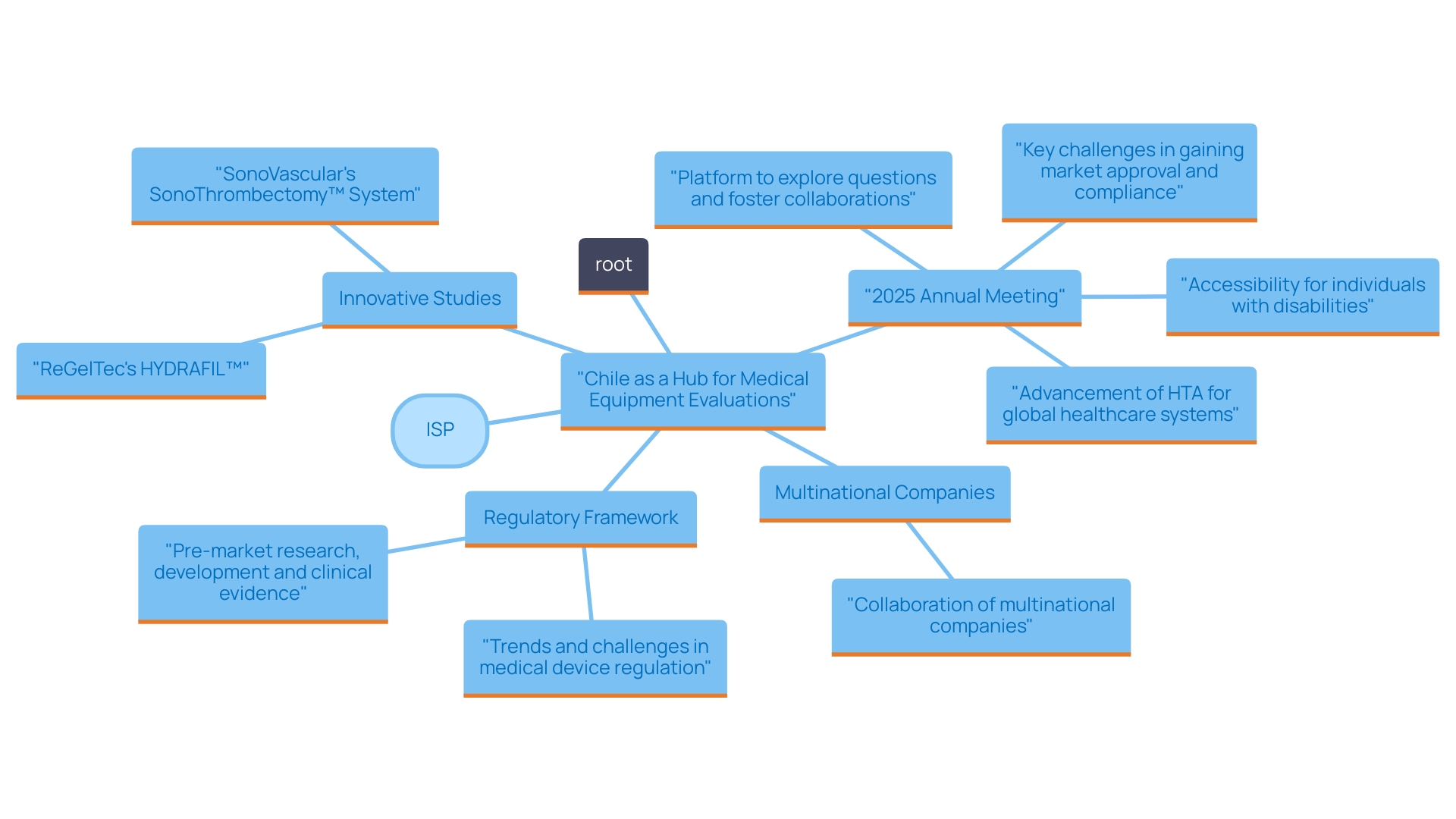
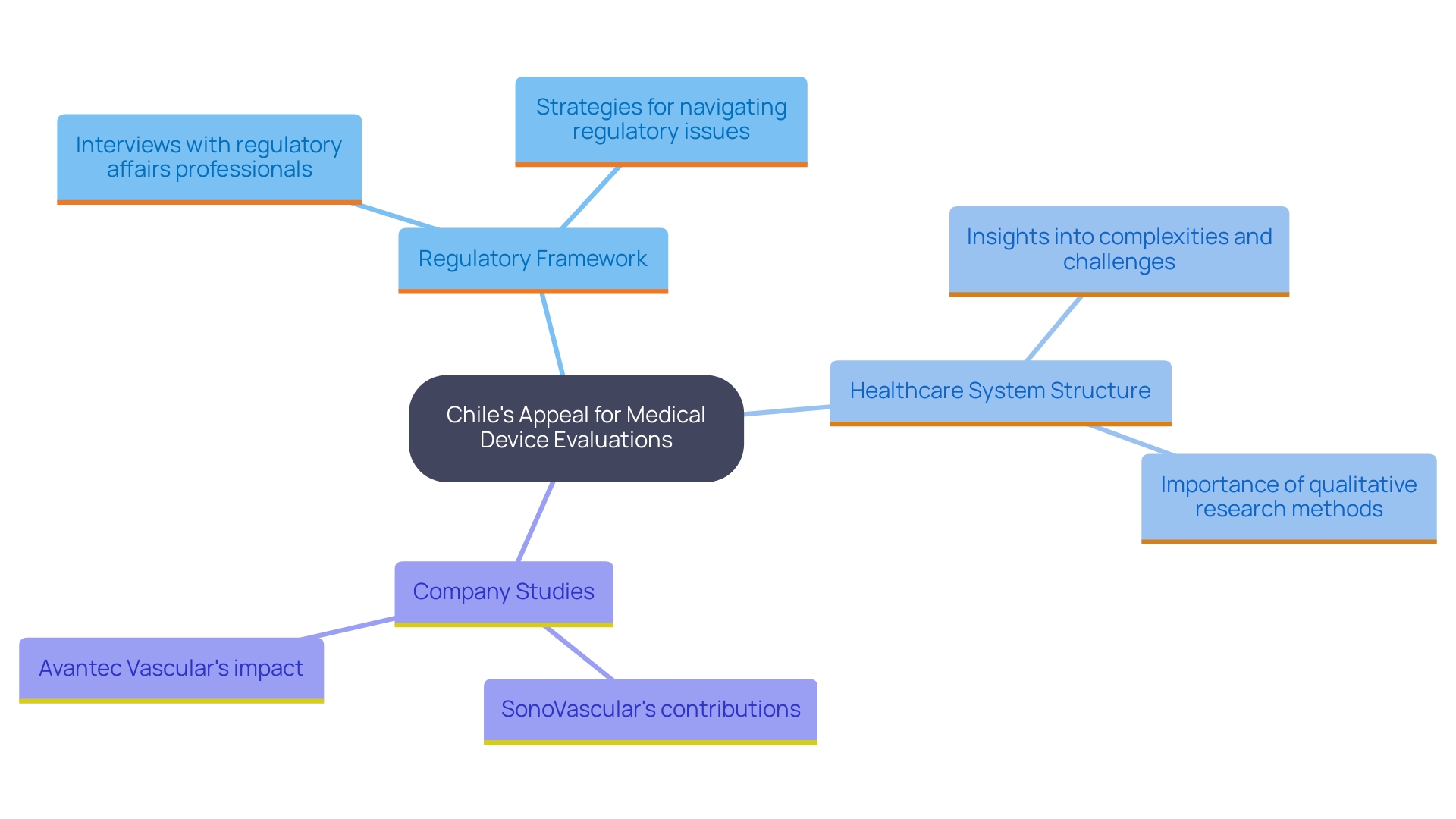
Chile has emerged as a significant location for conducting in Latin America, thanks to its robust regulatory framework and commitment to advancing . The nation features a well-structured healthcare system, including both public and private sectors, making it an appealing location for multinational firms looking to carry out studies.
Significantly, SonoVascular’s first human study of the SonoThrombectomy™ System in Chile exemplifies the potential of in this market, supported by ACRP certification, which enhances the credibility and efficiency of . Furthermore, ReGelTec’s Early Feasibility Study on HYDRAFIL™ for treating chronic low back pain in Colombia illustrates the increasing collaboration and success of Medtech companies in the region, showcasing how these efforts can influence one another.
Avantec Vascular has also chosen Latin America for its of an innovative vascular device, utilizing to navigate and study management. Chilean regulations, overseen by the Instituto de Salud Publica (ISP), ensure that studies adhere to international standards while being tailored to local needs. Furthermore, the nation’s infrastructure facilitates effective study management, with established hospitals and research facilities equipped to handle complex clinical investigations. This combination of factors places Chile advantageously within the region, easing access to various patient groups and allowing quicker recruitment and data gathering for healthcare research.
Key Criteria for Choosing the Right CRO for Trials in Chile
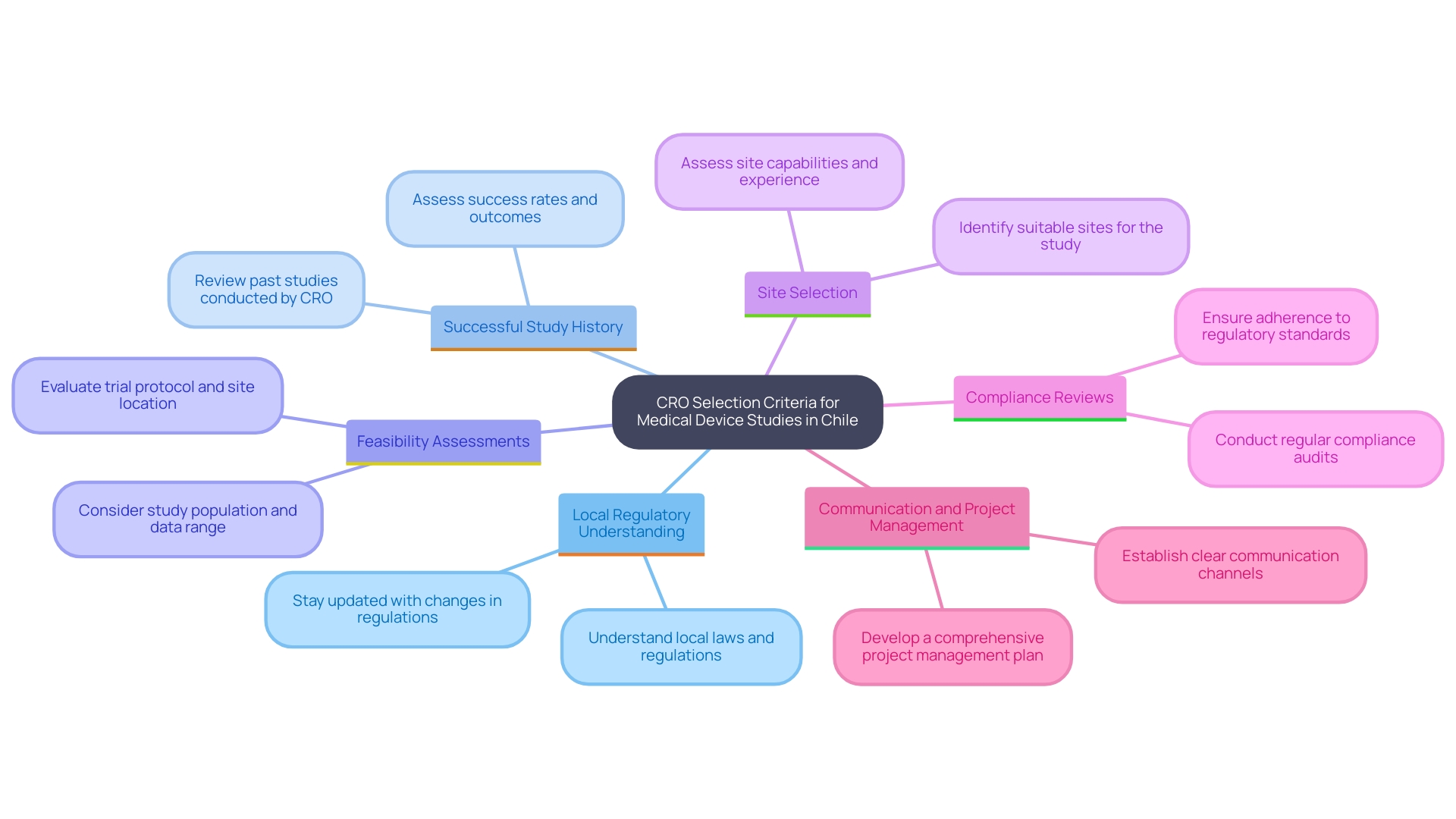
Choosing the appropriate for involves several critical criteria. Stakeholders should first evaluate the CRO’s understanding of local regulations and their ability to navigate the effectively. For example, a CRO with a history of successful studies in Chile can demonstrate their ability to manage challenges related to:
- Feasibility assessments
- Site selection
- Compliance reviews
- Setup
- Import permits
- Project management
- Reporting
Additionally, assessing the CRO’s network of healthcare facilities and connections with can significantly impact the success of the study. Effective communication is also vital; a CRO that fosters transparent and regular updates enhances collaboration between sponsors and investigators. Furthermore, it is essential to review the CRO’s track record in delivering quality results on time and within budget. This is particularly important for startups facing competition from established players, which can complicate the selection process. Startups must ensure that the chosen CRO aligns with their specific goals and timelines while effectively addressing the unique challenges they face.
The Importance of Compliance and Regulatory Knowledge
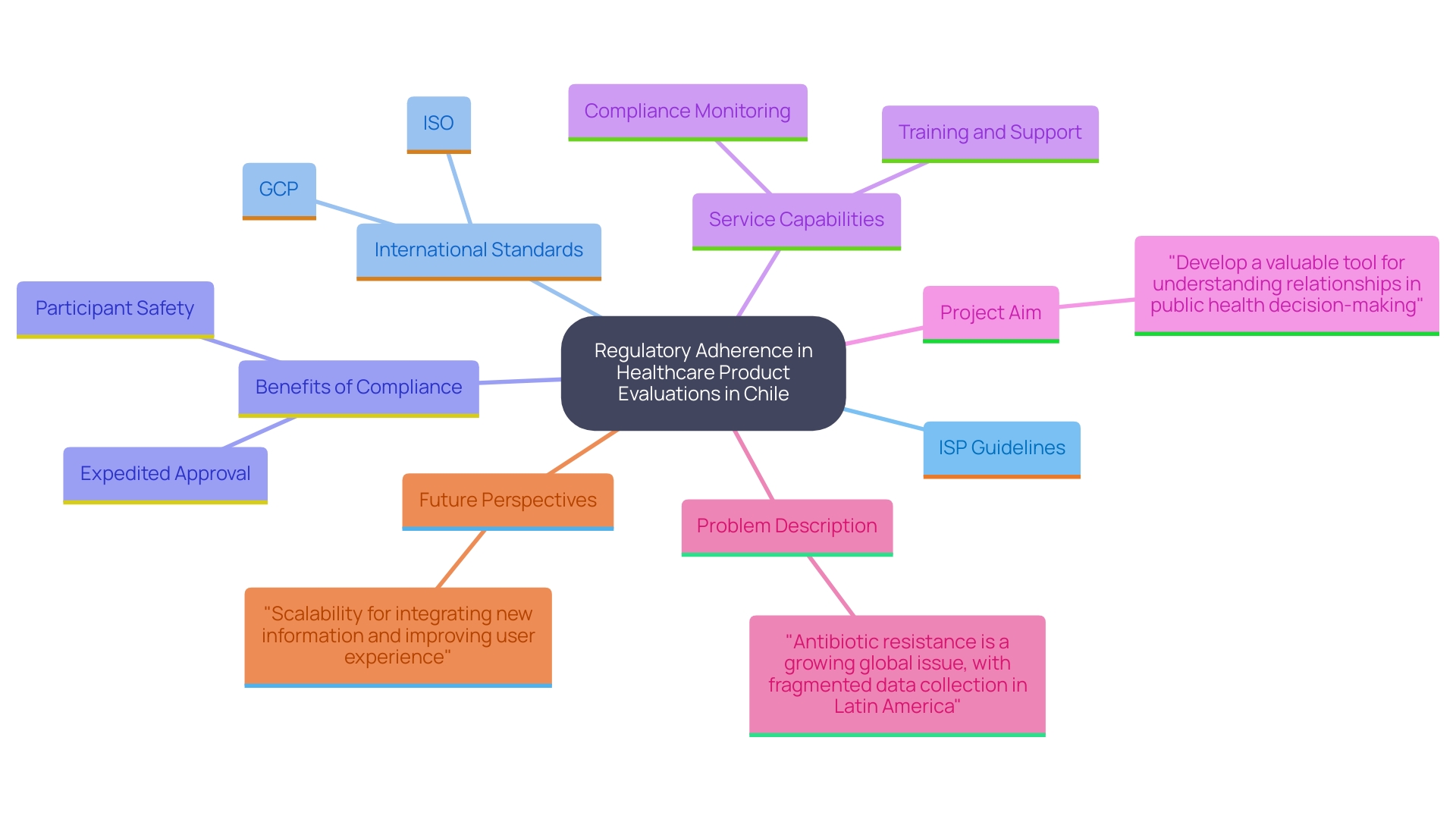
Adherence to local and international regulations is a cornerstone of conducting successful in Chile. The country follows stringent guidelines set forth by the ISP, which align with international standards such as (GCP) and . Comprehending these regulations not only aids in evading legal pitfalls but also guarantees that the rights and safety of participants are safeguarded. A robust can boost the credibility of study results, making them more acceptable to international oversight organizations.
For example, a recent study in Chile demonstrated that adherence to these regulations not only safeguarded participant welfare but also expedited the approval process by international bodies, ultimately leading to a faster market entry for the device tested.
CROss must prioritize adherence as a fundamental aspect of their operations, ensuring that all team members are well-versed in legal requirements and that all necessary documentation is meticulously maintained throughout the study process.
Our service capabilities encompass:
- Feasibility studies
- Site selection
- Experiment setup
- Import permits
- Project management
- Reporting
With specialists such as Katherine Ruiz, who has considerable experience in governance for healthcare products and in vitro diagnostics in Colombia, we guarantee that all elements of management comply with the highest standards. By nurturing a culture of adherence, we not only safeguard our participants but also improve the overall quality and dependability of our .
Building Strong Relationships with Local Stakeholders
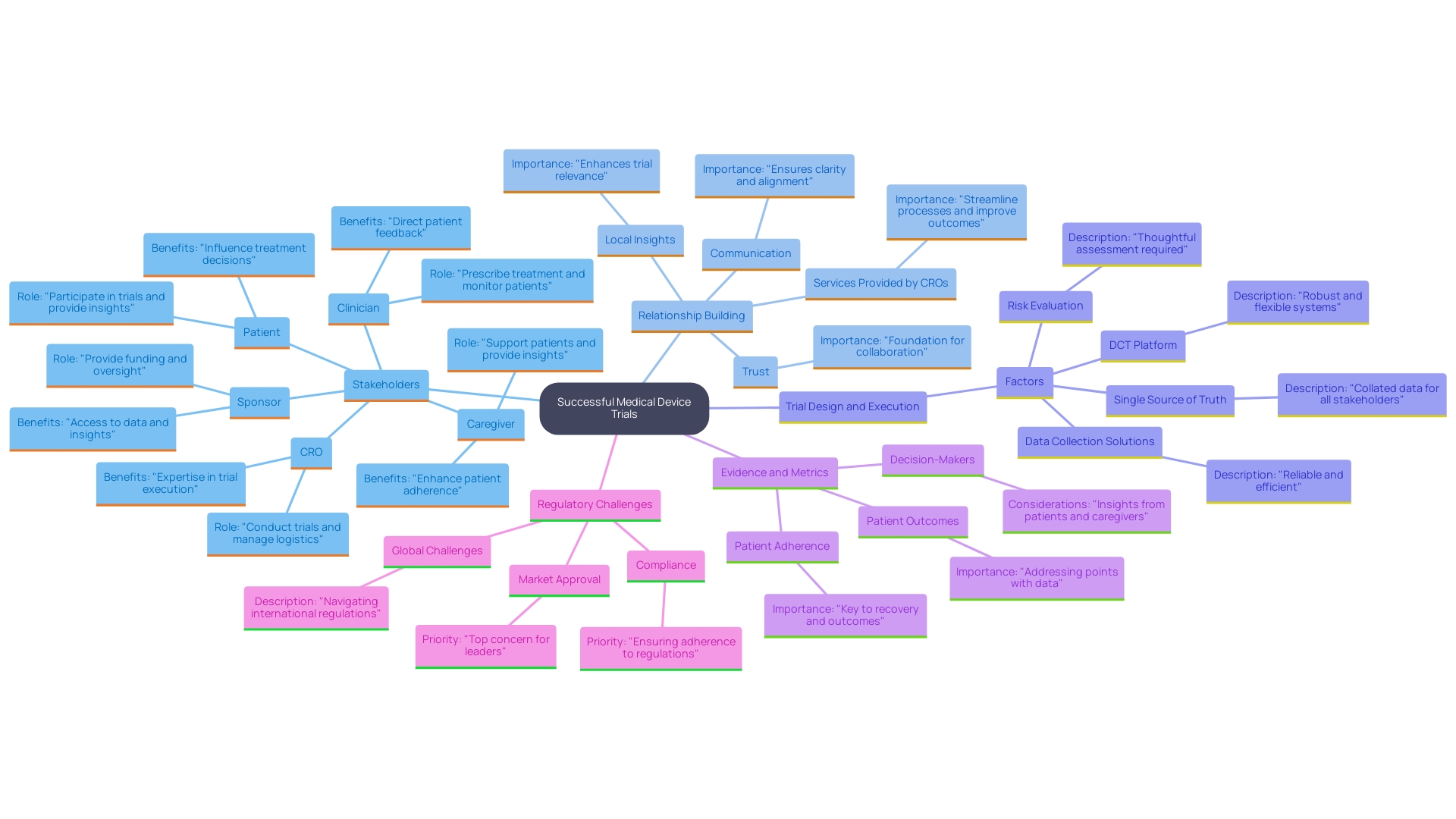
Successful medical device trials often hinge on the strength of , including healthcare providers, regulatory authorities like INVIMA, and patient advocacy groups. For instance, Dr. John B. Simpson, CEO of Avinger, emphasized the positive collaboration his team experienced while conducting OCT-guided atherectomy clinical research in Cali, Colombia, highlighting how LATAM CRO Experts facilitated this process. Establishing trust and open lines of communication with these stakeholders can lead to , facilitating access to patient populations and .
, such as Sierra Sciences led by Bill Andrews, Ph.D., are better positioned to navigate the often complex dynamics of , leveraging local insights and resources to optimize trial design and execution. Engaging with the community not only fosters goodwill but also ensures that the research aligns with local health priorities, enhancing its relevance and potential impact on patient care.
, including feasibility studies, site selection, compliance reviews, trial setup, import permits, project management, and reporting, further underscore the importance of collaboration in achieving successful outcomes.
Challenges and Opportunities in the Chilean Clinical Trial Environment
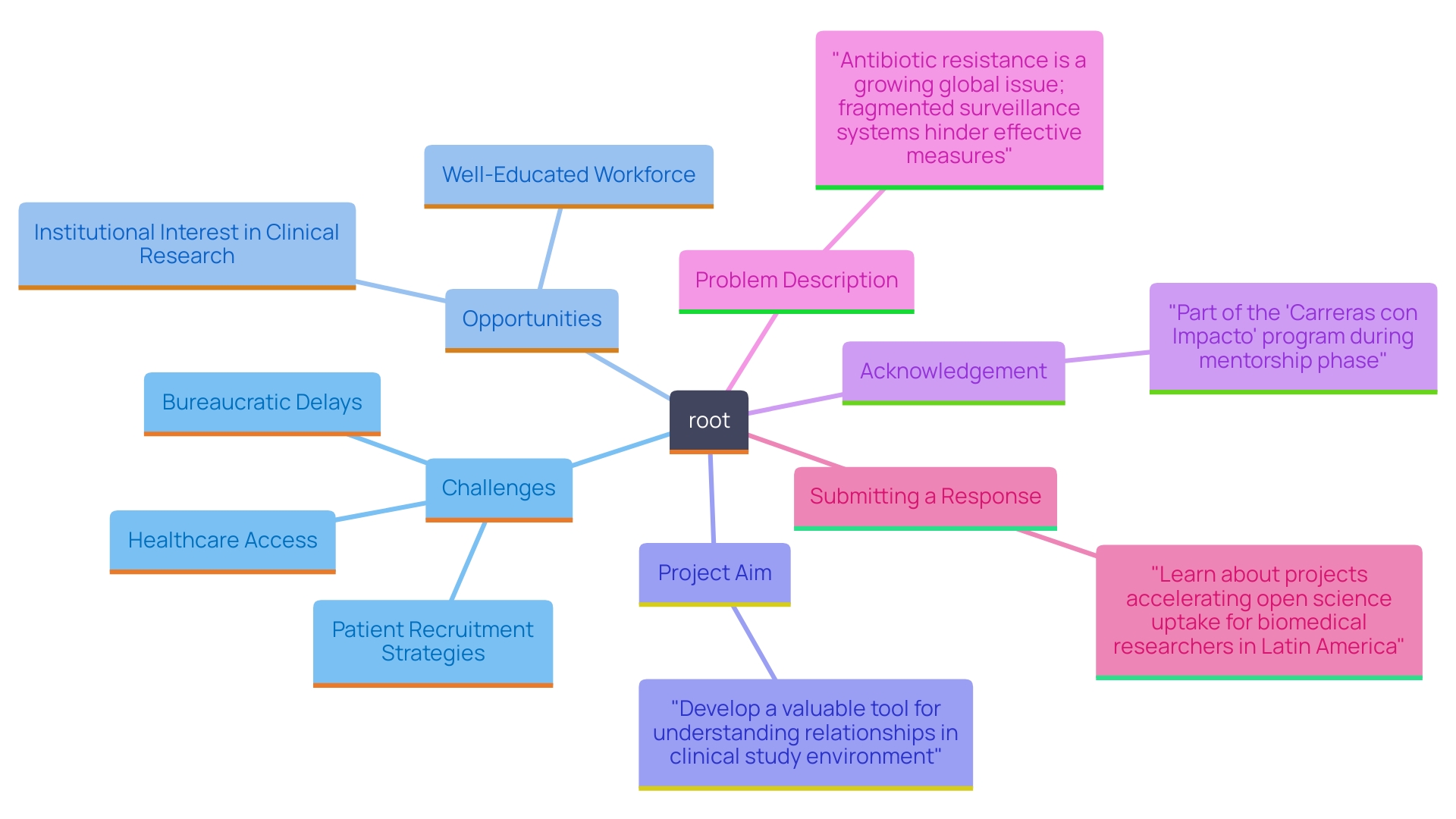
The clinical trial environment in Chile presents both challenges and opportunities for sponsors and CROs. Challenges include:
- Navigating regional differences in healthcare access
- Potential bureaucratic delays in
- The need for robust
To address these challenges, bioaccess® employs tailored strategies such as:
- Establishing strong relationships with local healthcare providers to enhance patient recruitment
- Utilizing experienced regulatory consultants to expedite approvals
However, these challenges are counterbalanced by significant opportunities, such as:
- A well-educated healthcare workforce
- A growing interest in clinical research among local institutions
Furthermore, bioaccess® offers accelerated medical device , specializing in:
- Early-Feasibility
- Pilot
- Pivotal
- Post-Market Follow-Up Studies
This expertise equips trial sponsors to effectively navigate these challenges while tapping into the increasing demand for innovative medical devices—a burgeoning market in Chile. By addressing challenges proactively with specific strategies and leveraging local strengths, stakeholders can enhance the effectiveness and efficiency of , ultimately contributing to job creation, economic growth, healthcare improvement, and international collaboration.
![This mind map illustrates the
Conclusion
The landscape for medical device trials in Chile presents a unique blend of challenges and opportunities that stakeholders can strategically navigate to achieve successful outcomes. With a robust regulatory framework established by the Instituto de Salud Pública (ISP) and a commitment to international standards, Chile stands out as a pivotal location for conducting clinical research. The importance of selecting the right Contract Research Organization (CRO) cannot be overstated, as their understanding of local regulations and established networks significantly influence trial success.
Compliance and regulatory knowledge form the backbone of effective trial management, ensuring participant safety and the credibility of study results. As demonstrated in various case studies, adherence to these regulations not only protects participants but also streamlines the approval processes, allowing for quicker market access for innovative devices. Moreover, building strong relationships with local stakeholders enhances collaboration, facilitating patient recruitment and aligning research with community health priorities.
Despite the inherent challenges, such as bureaucratic delays and regional healthcare access disparities, the opportunities presented by Chile’s educated workforce and growing interest in clinical research are substantial. By leveraging local insights and implementing tailored strategies, stakeholders can effectively address these hurdles, driving advancements in healthcare innovation. Ultimately, the success of medical device trials in Chile hinges on a comprehensive approach that emphasizes compliance, collaboration, and a deep understanding of the local environment, paving the way for a thriving clinical research ecosystem in the region.
Frequently Asked Questions
Why has Chile become a significant location for medical device evaluations in Latin America?
Chile has a robust regulatory framework, a well-structured healthcare system that includes both public and private sectors, and a commitment to advancing healthcare innovation, making it appealing for multinational firms to conduct studies.
What is an example of a successful medical device study conducted in Chile?
SonoVascular’s first human study of the SonoThrombectomy™ System in Chile exemplifies the potential for innovative solutions in the market, supported by ACRP certification that enhances the credibility and efficiency of clinical research.
How do Chilean regulations impact medical device studies?
Regulations overseen by the Instituto de Salud Publica (ISP) ensure that studies adhere to international standards while being tailored to local needs, facilitating effective study management and patient recruitment.
What factors should be considered when choosing a Contract Research Organization (CRO) for studies in Chile?
Stakeholders should evaluate the CRO’s understanding of local regulations, successful study history in Chile, network with healthcare facilities, communication effectiveness, and track record in delivering quality results on time and within budget.
How does adherence to regulations benefit clinical research in Chile?
Adherence to local and international regulations safeguards participant rights and safety, boosts the credibility of study results, and can expedite the approval process by international bodies, leading to faster market entry for tested devices.
What role do local stakeholders play in successful medical device trials?
Building relationships with healthcare providers, regulatory authorities, and patient advocacy groups enhances cooperation, facilitates access to patient populations, and streamlines the approval process for clinical trials.
What challenges do sponsors and CROs face in the clinical trial environment in Chile?
Challenges include navigating regional differences in healthcare access, potential bureaucratic delays in regulatory approvals, and the need for robust patient recruitment strategies.
What opportunities exist for medical device trials in Chile?
Opportunities include a well-educated healthcare workforce, growing interest in clinical research among local institutions, and the increasing demand for innovative medical devices, all of which can enhance the effectiveness and efficiency of trials.
List of Sources
- Understanding the Landscape of Medical Device Trials in Chile
- iuvobioscience.com (https://www.iuvobioscience.com/clinical-research/what-is-a-medical-device-cro/)
- linkedin.com (https://www.linkedin.com/posts/juliomartinezclark_conducting-successful-medical-device-clinical-activity-7208861051302350849-_UX0)
- fastcompany.com (https://www.fastcompany.com/91040440/examedi-most-innovative-companies-2024)
- docs.google.com (https://docs.google.com/forms/d/e/1FAIpQLSextq4hI5K61q1L1GWbWmEs6YTmTzcUeF08DjHc100wHixqTQ/viewform)
- hmpglobalevents.com (https://hmpglobalevents.com/iset/rates?utm_campaign=Oktopost-ISET+2025&utm_content=Oktopost-Twitter&utm_medium=social&utm_source=Twitter)
- htai.eventsair.com (https://htai.eventsair.com/htai-2025-buenos-aires-annual-meeting/main-theme)
- elsevier.com (https://elsevier.com/industry/medical-device-regulation?dgcid=RN_CM_Sourced_400006591#2-mdr-webinars)
- frontiersin.org (https://frontiersin.org/journals/medicine/articles/10.3389/fmed.2024.1415319/full?utm_source=twitter&utm_medium=social&utm_content&utm_campaign=imp_impartaut-_05-24_fmed_en_n–ww)
- Key Criteria for Choosing the Right CRO for Trials in Chile
- Quotes About Medical Research (https://changingthepresent.org/pages/quotes-about-medical-research)
- pmc.ncbi.nlm.nih.gov (https://pmc.ncbi.nlm.nih.gov/articles/PMC10579156/)
- iconplc.com (https://www.iconplc.com/about/icon-in-latin-america)
- bvp.com (https://bvp.com/healthcare-benchmarks)
- arxiv.org (https://arxiv.org/abs/2407.11823)
- medicaldevice-network.com (https://medicaldevice-network.com/sponsored/untapped-opportunities-fulfilling-the-promise-of-decentralized-clinical-trials)
- elsevier.com (https://elsevier.com/industry/medical-device-regulation?dgcid=RN_CM_Sourced_400006591#2-mdr-webinars)
- The Importance of Compliance and Regulatory Knowledge
- trade.gov (https://www.trade.gov/healthcare-resource-guide-chile)
- forums.mhra.gov.uk (https://forums.mhra.gov.uk/showthread.php?1720-Investigator-CVs-and-GCP-training)
- schlafenderhase.com (https://schlafenderhase.com/ebooks/medical-device-report-how-are-compliance-strategies-evolving)
- effectivehealthcare.ahrq.gov (https://effectivehealthcare.ahrq.gov/products/lifecycle-assessment/draft-techincal-brief)
- forum.effectivealtruism.org (https://forum.effectivealtruism.org/posts/GGdt87LJivPMgwCXi/mapping-of-antibiotic-resistant-bacteria-through-gis-data)
- Building Strong Relationships with Local Stakeholders
- jdsupra.com (https://www.jdsupra.com/legalnews/key-takeaways-contract-research-9047739/)
- rp-cro.com (https://rp-cro.com/resources)
- greenlight.guru (https://greenlight.guru/blog/guide-clinical-data-management-medtech)
- medicaldevice-network.com (https://medicaldevice-network.com/buyers-guide/medical-device-development-companies)
- medicaldevice-network.com (https://medicaldevice-network.com/sponsored/untapped-opportunities-fulfilling-the-promise-of-decentralized-clinical-trials)
- medtechintelligence.com (https://medtechintelligence.com/feature_article/everybody-is-looking-for-evidence-bridging-regulatory-reimbursement-strategies-for-success)
- elsevier.com (https://elsevier.com/industry/medical-device-regulation?dgcid=RN_CM_Sourced_400006591#2-mdr-webinars)
- Challenges and Opportunities in the Chilean Clinical Trial Environment
- meddeviceonline.com (https://www.meddeviceonline.com/doc/how-chile-is-shaping-medical-device-clinical-trials-in-latin-america-0001)
- forum.effectivealtruism.org (https://forum.effectivealtruism.org/posts/GGdt87LJivPMgwCXi/mapping-of-antibiotic-resistant-bacteria-through-gis-data)
- cziscience.medium.com (https://cziscience.medium.com/request-for-information-accelerating-open-biomedical-research-in-latin-america-1d9145c7b13a)
- ncats.nih.gov (https://ncats.nih.gov/research/research-resources/clinical-research-toolbox?utm_source=X&utm_medium=Social&utm_campaign=Research-Resources-Clinical)
Leave a Reply