
Introduction
Selecting the right Contract Research Organization (CRO) for first-in-human studies is a critical decision that can significantly influence the success of clinical trials. As the landscape of medical research evolves, particularly in Latin America, understanding the key considerations for choosing a CRO becomes paramount. This article delves into essential factors such as expertise, regulatory knowledge, and communication strategies that are vital for effective collaboration.
It also highlights the unique advantages presented by regions like Colombia and Peru, where robust patient recruitment and favorable regulatory environments can streamline trial processes. By examining these elements, stakeholders can make informed decisions that enhance the efficiency and outcomes of their clinical research endeavors.
Key Considerations for Selecting a CRO for First-in-Human Studies
When choosing a CRO for , consider the following key factors:
- Assess the experience and expertise of the specifically with . Look for a proven track record in similar therapeutic areas and phases of research, which is exemplified by successful collaborations like that of Avantec Vascular and Flow-FX with bioaccess™ in Colombia.
- Regulatory Knowledge: Ensure the CRO is well-versed in local and international regulatory requirements, particularly those specific to Colombia. Their familiarity with the regulatory landscape is crucial for compliance and successful research execution, as highlighted by the swift 90-120 day review process by Colombia’s MoH (INVIMA). This knowledge is essential for navigating the complexities of and approvals.
- Quality of Staff: Assess the qualifications and expertise of the CRO’s team. A knowledgeable team can significantly impact the quality and integrity of the research. For instance, Dushyanth Surakanti, Founder & CEO of Sparta Biomedical, emphasized the essential role of experienced staff during their .
- Capabilities and Resources: Consider the CRO’s operational capabilities, including access to patient populations, clinical sites, and necessary technologies for conducting . With a population of over 50 million and nearly universal healthcare coverage, Colombia offers a robust patient recruitment landscape.
- Reputation and References: Research the CRO’s reputation in the industry. Seek references from previous clients, such as Dr. John B. Simpson of Avinger, to gauge satisfaction and performance on past projects.
- Communication and Collaboration: Evaluate the CRO’s communication style and willingness to collaborate. A CRO that promotes open communication can improve the overall efficiency of the research, as shown in successful collaborations with .
: Colombia offers significant , including a 100% tax deduction for investments in science, technology, and innovation projects, a 25% tax discount, and a 50% future tax credit, along with approximately $10 million in government grants. These incentives can greatly lessen the financial burden on companies performing tests in the region.
: Bioaccess™ offers an extensive array of services, including study design, feasibility assessments, , and project management, ensuring that all elements of the research process are efficiently managed.
Considering these factors will assist in selecting the that is prepared to manage the complexities of first-in-human studies effectively, utilizing Colombia’s competitive advantages in medical research.
Navigating the Regulatory Landscape for Clinical Trials in Peru
Navigating the regulatory environment for research studies in Peru involves several key steps:
- Understanding Regulatory Bodies: Familiarize yourself with the primary in Peru, including the National Institute of Health (INS) and the Ministry of Health (MINSA).
- Research Protocol Submission: Prepare and submit a comprehensive research protocol to the INS for approval. Ensure that the protocol complies with local regulations and incorporates all essential details about the design, objectives, and methodology.
- : Obtain approval from a recognized ethics committee. This step is critical to ensure that the research meets ethical standards and protects the rights and welfare of participants.
- : Develop a robust that complies with local regulations. Ensure that all participants are fully informed about the research and their rights before enrolling.
- Compliance with : Ensure that the study is conducted in accordance with GCP guidelines. This includes maintaining accurate records, ensuring participant safety, and adhering to reporting requirements.
- Import Permits: Navigate the process of obtaining import permits for investigational devices and products, which is essential for carrying out studies. This involves submitting the necessary documentation to the relevant authorities to ensure compliance with local regulations.
- Experiment Setup and Approval: Understand the nuances of experiment setup, including the requirements for , to ensure a smooth start-up process.
- Regular Communication with Regulatory Authorities: Maintain open lines of communication with regulatory authorities throughout the research. This can enable faster approvals and resolve any problems that may occur.
By comprehending and adhering to these regulatory procedures, researchers can effectively maneuver through the research environment in Peru, with the assistance of a , ensuring compliance and increasing the chances of research success. Moreover, utilizing extensive , including those offered by , encompassing feasibility assessments, site selection, compliance reviews, and project management, can greatly simplify the process. Experts like Katherine Ruiz, a Regulatory Affairs expert for medical devices and in vitro diagnostics, and Ana Criado, Director of Regulatory Affairs and a professor in biomedical engineering, provide invaluable guidance to navigate these complexities effectively.
Assessing the CRO’s Capabilities and Resources
When evaluating a Contract Research Organization‘s (CRO) capabilities and resources, particularly in the context of navigating regulatory environments for and (EFS) in Latin America, it is crucial to consider several key aspects:
-
(CTMS):
Evaluate if the CRO has a strong CTMS that efficiently handles research data, tracks progress, and guarantees adherence to regulatory requirements. A well-integrated system can streamline workflows and enhance data integrity, crucial for the success of FIH and EFS studies.
-
:
Investigate the CRO’s for patient recruitment and retention. Considering that more than a third of biotech respondents indicated experiencing the pressures of talent shortages, effective recruitment strategies are crucial to ensure the success of . Recent advancements in digital engagement and outreach methods can significantly bolster recruitment efforts.
The increasing reliance on CROs due to these talent shortages underscores the importance of evaluating their capabilities in this area.
-
:
Ascertain if the has strong connections with research sites that specialize in conducting FIH and EFS trials. This access can lead to smoother operations and faster patient enrollment, thereby reducing the overall time-to-offer.
For example, a European biotech firm successfully reduced its time-to-offer from over 50 days to 36 days by leveraging a CRO’s network. This statistic highlights the critical role that CRO relationships play in expediting clinical trials.
-
:
Evaluate the availability of necessary that are capable of supporting the research’s requirements, including bioanalytical testing and imaging assessments.
These facilities are critical for accurate data collection and analysis during the trial.
-
:
Ensure the CRO has strong data management and statistical analysis capabilities. Effective management of the complexities related to and EFS research is essential for generating reliable results and maintaining compliance with regulatory standards.
-
:
Review the CRO’s to confirm that all study aspects adhere to the highest standards of quality and compliance. A robust quality assurance framework is essential for protecting the integrity of the medical study and ensuring patient safety.
-
:
Consider how the CRO has adapted to challenges, such as those presented during the pandemic.
For instance, forward-thinking CROs, like bioaccess®, utilized their operational capabilities and regulatory knowledge to quickly deploy innovative digital strategies, such as a visual communication tool, to facilitate investigator and patient interaction and safely continue data collection. This adaptability is a key indicator of a CRO’s capabilities.
By thoroughly evaluating these capabilities and resources, stakeholders can make informed decisions regarding a CRO’s ability to effectively support their research needs. This comprehensive assessment is particularly pertinent in the context of current advancements in and the increasing reliance on CROs due to talent shortages in the biotech sector.
Notably, bioaccess® has a proven track record with over 100 regulatory submissions and across 6 countries in Latin America, showcasing their extensive experience and commitment to excellence in clinical trial management.
Building Strong Communication and Collaboration with the CRO
To foster robust communication and , consider the following :
- Establish Clear Expectations: Begin by precisely defining the roles, responsibilities, and expectations for and the CRO. This clarity at the outset helps mitigate misunderstandings later in the process.
- Regular Meetings: Schedule consistent meetings to monitor progress, address challenges, and share updates. This practice not only improves transparency but also guarantees that all stakeholders stay aligned and informed throughout the research. Significantly, project start-up is the third largest challenge at 44%, making regular communication essential to overcoming this hurdle.
- Open Lines of Communication: Promote an environment where team members feel comfortable raising concerns or asking questions. Promoting open communication pathways nurtures trust and cooperation, which are essential for managing intricate . It’s particularly important to treat non-native speakers with respect, as this builds their confidence and trust within the team.
- Utilize Technology: Take advantage of modern collaboration tools, such as project management software and communication platforms, to streamline coordination. These tools can significantly enhance the efficiency of interactions among team members and with the CRO. This is where the expertise of professionals like Juan Cuya, MD, becomes invaluable, as he applies his knowledge of Regulatory Affairs and project management to facilitate smoother communication and compliance.
- Feedback Mechanisms: Establish feedback loops to evaluate the effectiveness of collaboration efforts. Regularly assessing these processes allows for timely adjustments to improve overall efficiency and outcomes.
- Celebrate Milestones: Acknowledge and celebrate key milestones and accomplishments throughout the learning process. Recognizing advancements elevates team spirit and fortifies the collaboration between the research group and the CRO.
Integrating particular service abilities like feasibility assessments, compliance evaluations, and setup procedures into these communication strategies can further improve the oversight of medical experiments. The collaboration between Greenlight Guru and bioaccess™ exemplifies how partnerships can drive innovation and address the unique challenges faced by Medtech companies in Latin America.
A real-world example of is demonstrated by Clinipace’s COO, who initiated a book club to address communication challenges within the organization. Beginning with ‘Crucial Conversations’, this initiative seeks to improve among team members, acknowledging the significance of .
By proactively employing these strategies, research teams can greatly boost the efficiency and success of their trials. As Jason Monteleone, CEO of Clinipace, aptly noted, > We do remember that Nurse B’s communication skills gave us confidence and clarity during a complex situation. < This emphasizes the vital function that effective communication serves in overcoming challenges and achieving successful results in , especially in the context of CRO Peru and early-feasibility trials in Latin America.
Monitoring and Managing Study Progress with the CRO
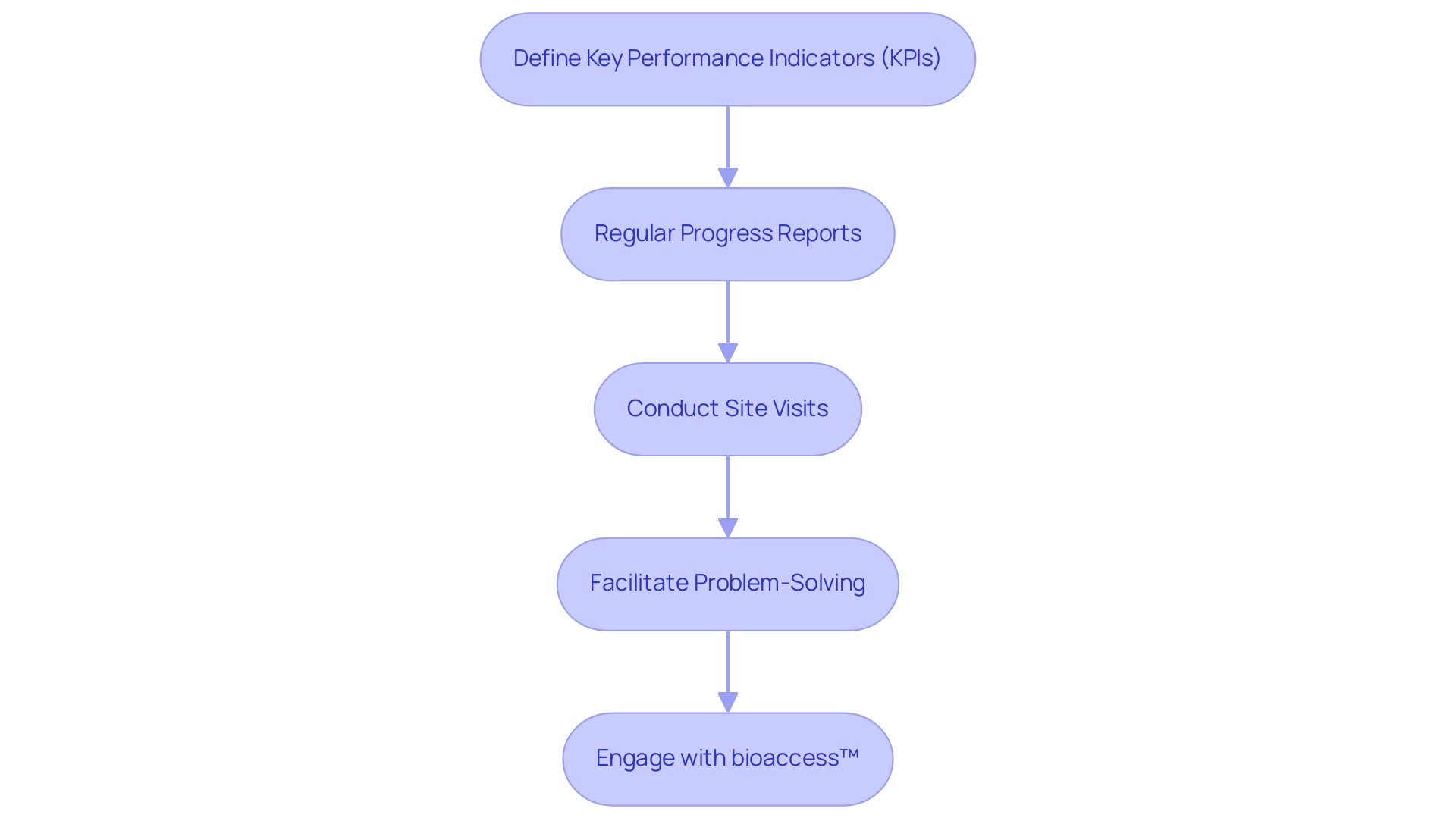
To effectively monitor and manage research progress with bioaccess™ as your CRO, follow these steps:
-
Define : Establish KPIs that will be used to measure the project’s progress, including recruitment rates, data quality, and adherence to timelines. Leveraging bioaccess™’s these metrics are closely monitored.
-
: Request from bioaccess™, which include updates on feasibility studies, site selection, compliance reviews, and reporting on project status and adverse events, to assess how the research is advancing against the established KPIs.
- Address Issues Promptly: Be proactive in addressing any issues or challenges that emerge during the research. This may involve adjusting timelines, reallocating resources, or modifying protocols as necessary, with guidance from .
-
Conduct Site Visits: If relevant, perform site visits to witness research activities directly and ensure that bioaccess™ is following protocols and quality standards, enhancing the integrity of the setup and execution.
- : Keep thorough documentation of all study-related communications, decisions, and changes to ensure transparency and accountability, particularly in the context of regulatory requirements.
-
Facilitate Problem-Solving: Foster a collaborative environment where both the research team and bioaccess™ can work together to solve problems and enhance performance, ultimately contributing to the local economy through job creation and healthcare improvements.
-
Engage with bioaccess™: To maximize the benefits of your clinical trial, engage with bioaccess™ for , trial setup, and import permits.
By actively monitoring and managing study progress with the specialized services of bioaccess™, stakeholders can ensure that their clinical trials are on track to achieve their objectives and deliver high-quality results.
Conclusion
Selecting the appropriate Contract Research Organization (CRO) for first-in-human studies is a multifaceted decision that requires careful consideration of various factors. Key elements such as the CRO’s experience, regulatory knowledge, and communication capabilities are vital for ensuring a successful clinical trial. Notably, regions like Colombia and Peru present unique advantages, including robust patient recruitment and favorable regulatory environments, which can significantly enhance trial efficiency.
The evaluation of a CRO’s capabilities—ranging from their clinical trial management systems and patient recruitment strategies to their quality assurance processes—plays a crucial role in the overall success of the research. Furthermore, establishing strong communication and collaboration fosters a productive partnership that can navigate the complexities of clinical trials effectively. By implementing best practices in communication and regularly monitoring study progress, stakeholders can ensure that their trials remain aligned with objectives and regulatory standards.
In conclusion, making an informed choice when selecting a CRO can greatly influence the trajectory of clinical research endeavors. By leveraging the strengths of regions like Colombia and Peru, and prioritizing thorough assessments of CRO capabilities and communication strategies, stakeholders can optimize their chances for successful outcomes in first-in-human studies. The right partnership not only streamlines the clinical trial process but also contributes to advancements in medical research that can ultimately benefit patients and the healthcare system as a whole.
Frequently Asked Questions
What should I consider when choosing a CRO for first-in-human trials?
Key factors include the CRO’s experience with first-in-human trials, regulatory knowledge, quality of staff, capabilities and resources, reputation and references, and communication and collaboration practices.
Why is regulatory knowledge important for a CRO in Colombia?
A CRO must be well-versed in local and international regulatory requirements to ensure compliance and facilitate successful research execution, particularly given Colombia’s swift review process by the Ministry of Health.
How can I assess the quality of a CRO’s staff?
Evaluate the qualifications and expertise of the CRO’s team, as experienced staff can significantly impact the research’s quality and integrity.
What operational capabilities should I look for in a CRO?
Consider access to patient populations, clinical sites, necessary technologies, and the ability to conduct first-in-human trials effectively, particularly in a country like Colombia with robust patient recruitment potential.
How can I evaluate a CRO’s reputation?
Research the CRO’s reputation by seeking references from previous clients and assessing their performance on past projects.
What role does communication play in working with a CRO?
Effective communication promotes collaboration and improves research efficiency, so evaluate the CRO’s communication style and willingness to work together.
What R&D tax incentives are available in Colombia?
Colombia offers a 100% tax deduction for investments in science and technology, a 25% tax discount, a 50% future tax credit, and approximately $10 million in government grants to lessen the financial burden on companies.
What specific services does bioaccess™ offer for clinical trials?
Bioaccess™ provides services such as study design, feasibility assessments, regulatory submissions, and project management to ensure efficient research processes.
What steps are involved in navigating the regulatory environment for research studies in Peru?
Key steps include understanding regulatory bodies, submitting research protocols, obtaining ethics committee approval, ensuring informed consent, complying with Good Clinical Practice, and maintaining communication with regulatory authorities.
How can I monitor and manage research progress with a CRO like bioaccess™?
Define key performance indicators, request regular progress reports, conduct site visits, maintain documentation, and foster a collaborative problem-solving environment to ensure effective management of the study.
List of Sources
- Assessing the CRO’s Capabilities and Resources
- noymed.com (https://noymed.com/contract-research-organizationsbenefits-and-key-roles-in-clinical-trials)
- The Growing Role of CROs in Clinical Trials | PPD (https://ppd.com/blog/growing-role-of-contract-research-organizations-in-clinical-trials)
- Building Strong Communication and Collaboration with the CRO
- chrysos.org.uk (https://chrysos.org.uk/blog/top-ten-tips-for-effective-cross-cultural-communi)
- linkedin.com (https://linkedin.com/pulse/effective-communication-overlooked-cro-advantage-jason)
Leave a Reply