
Introduction
Contract Research Organizations (CROs) play a vital role in advancing medical research. With their expertise in clinical trials, data management, and regulatory compliance, CROs offer researchers access to specialized skills and state-of-the-art facilities.
This collaboration can significantly enhance the efficiency and success rate of clinical endeavors while addressing complex ethical, legal, and social challenges. As the medical community continues to tackle global diseases, the strategic partnership with CROs becomes increasingly essential in improving patient outcomes and advancing medical science. In this article, we will explore the importance of CRO services in medical research, the challenges faced, successful case studies, the benefits of data-driven results, and best practices for effective collaboration with CRO services.
The Importance of CRO Services in Medical Research
are pivotal in advancing clinical research, providing a suite of services that propel studies from conception to conclusion. They bring a wealth of expertise in navigating the intricate landscape of , managing vast datasets, and upholding stringent regulatory standards.
Collaborating with CROss offers researchers access to , which can markedly boost the efficiency and success rate of clinical endeavors. Moreover, the complex ethical, legal, and social challenges that surface in the development of emerging technologies.
They help delineate clear, —tailoring their services to meet the precise needs of the research while leveraging internal resources effectively. The 2023 Perceptions and Insights Study by CISCRP underscores the critical role of research professionals in patient engagement and the broader mission of enhancing . As the medical community continues to tackle diseases on a global scale, the strategic partnership with CROs becomes increasingly essential, ensuring that the social goals of research are met and that every study is a step toward improving the human condition.
Challenges Faced in Medical Research and the Role of CRO Services
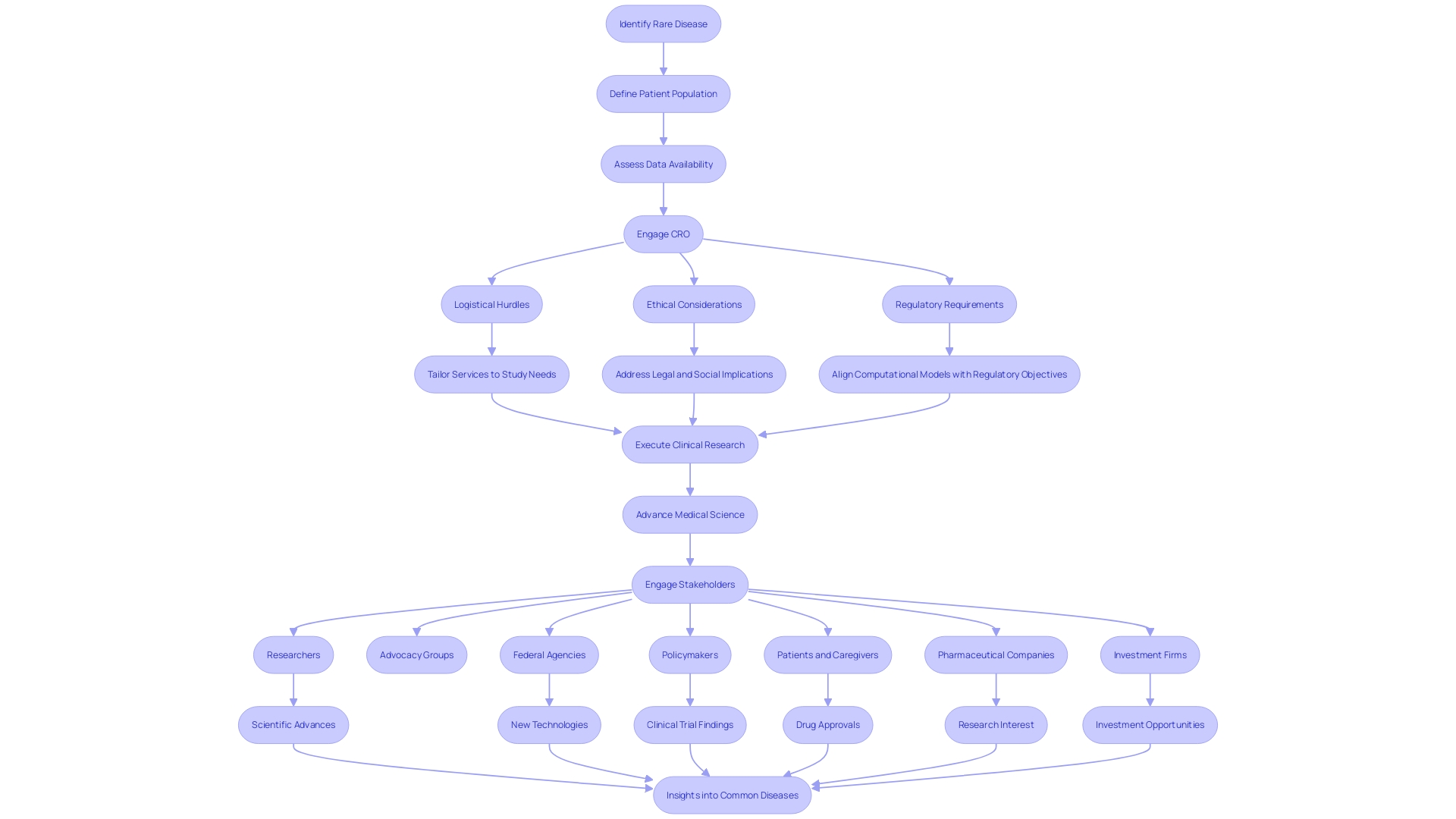
Navigating the complexities of , especially for rare diseases, requires meticulous planning and precise execution. The challenge is amplified when patient populations are scarce and dispersed, as illustrated by a patient in rural Pennsylvania with an ultra-rare condition contemplating participation in a clinical trial in Turkey. This scenario underscores not only the logistical hurdles of cross-border travel but also the intricate web of that must be delicately balanced.
A becomes instrumental in these instances, offering a network of investigators and research sites that can bridge the geographical and regulatory divides. By adopting a SMART approach to define specific, measurable, attainable, relevant, and time-bound requirements, CROss can tailor their services to the unique needs of a study, ensuring that resources are optimized and that any in-house capabilities are effectively leveraged. Moreover, CROss are positioned to address the Question(s) of Interest and Context of Use, ensuring that the computational models and other sources of information are aligned with the regulatory submission‘s objectives.
The value of a CRO in this setting is multi-faceted. They ensure adherence to the evolving international legal and regulatory landscape, address the social goals of the research aimed at , and consider the technology’s ethical implications. This not only enhances the reliability of research outcomes but also resonates with a broad spectrum of stakeholders, including researchers, advocacy groups, federal agencies, and investors, all of whom are invested in the advancement of medical science for both rare and common diseases.
Case Study: Successful Implementation of CRO Services in Medical Research
A medical research organization aiming to pioneer a for an innovative therapy encountered the intricate . With across its nations, where public, private, and social security services intertwine, successful navigation of this environment is critical.
To address this challenge, the organization collaborated with a (CRO) well-versed in the region’s . This partnership was pivotal in steering through the regulatory complexities, as Latin America’s healthcare systems, though offering basic cancer care, often present , and variability in service availability is common.
The CRO’s expertise in primary research, evidence synthesis, and policy analysis, akin to the skills highlighted by Kati from Economist Impact, was instrumental in site selection and ensuring the trial adhered to regulatory and ethical standards. As a result, the trial was executed efficiently, meeting the required timelines and contributing to the collective advancement of medical science in the region. This case exemplifies the practical application of implementation science and the importance of leveraging local knowledge and scientific evidence to enhance the quality and safety of , as noted in the study published in Enfermagem 2023.
Benefits of CRO Services: Data-Driven Results and Insights
are pivotal in advancing through their meticulous . By employing these strengths, CROss not only ensure the accuracy and integrity of data collection but also enhance the analysis, driving insights that guide informed decision-making. The 2023 Perceptions and Insights Study by CISCRP highlights the significance of research professionals in , recruitment, and retention, emphasizing the human element in clinical trials.
CROss contribute to this by providing access to extensive patient databases, which enhances the studied and strengthens the external validity of research outcomes. As research teams, often operating with limited internal resources, focus on defining their specific, measurable, attainable, relevant, and time-bound (SMART) requirements, CROss can offer tailored services that fill gaps and complement in-house capabilities. This symbiotic relationship between research professionals and CROss is essential in fostering the collective aim of on both individual and community levels.

Best Practices for Effective Collaboration with CRO Services
Enhancing research outcomes through collaboration with necessitates a strategic approach that is both systematic and adaptive. To achieve this, researchers must first delineate their requirements using the SMART framework—ensuring goals are Specific, Measurable, Attainable, Relevant, and Time-bound.
This precision in planning allows for a clear presentation of needs, leading to accurate proposals and . Furthermore, it is imperative to assess which aspects of the research can be managed internally, considering the lean nature of many .
The collaboration should be characterized by open communication, fostering an environment where updates are exchanged regularly, and any arising challenges are promptly addressed. This is in line with the principles of , which is known to yield more comprehensive solutions by integrating various areas of expertise, such as medicine, engineering, and social sciences.
An established , which includes detailed timelines, milestones, and deliverables, is essential to maintaining a streamlined research process and navigating the complex landscape of . A successful partnership with a CRO also hinges on a transparent and cooperative relationship, underpinned by mutual trust and shared objectives. By leveraging the diverse perspectives and expertise of all parties involved, research can transcend traditional boundaries, leading to impactful healthcare innovations that consider medical efficacy, user experience, and psychological well-being. The importance of such collaboration is further emphasized by contributions to policy, influences on care practices, and the development of health services and products, as evidenced by such as the ELSA study funded by Diabetes UK and the Juvenile Diabetes Research Foundation.
Conclusion
In conclusion, Contract Research Organizations (CROs) are vital in advancing medical research. They bring expertise in clinical trials, data management, and regulatory compliance, enhancing efficiency and success rates. Collaborating with CROs provides access to specialized skills and facilities, essential for tackling global diseases and improving patient outcomes.
CROs navigate the complexities of clinical research, especially for rare diseases and dispersed patient populations. Their SMART approach tailors services to study needs, optimizing resources and ensuring regulatory alignment. Successful case studies showcase CRO services overcoming regulatory complexities, accelerating trials, and contributing to medical science advancement.
Data-driven results and insights from meticulous data management enhance decision-making and strengthen research outcomes. Effective collaboration with CROs requires strategic planning, open communication, interdisciplinary collaboration, and a project management plan. Transparent relationships based on trust and shared objectives drive successful partnerships.
In summary, researchers partnering with CROs advance medical research by leveraging specialized skills and data-driven insights. This collaboration is crucial for addressing complex challenges while improving patient outcomes. By optimizing resources and navigating regulatory complexities, CROs play a pivotal role in advancing medical science on a global scale.
Frequently Asked Questions
What are Contract Research Organizations (CROs)?
CROs are specialized organizations that provide a suite of services to advance clinical research, managing various aspects of studies from conception to conclusion while ensuring compliance with regulatory standards.
How do CROs enhance the efficiency of clinical trials?
CROs bring expertise in navigating the complexities of clinical trials, managing large datasets, and addressing ethical, legal, and social challenges, which significantly boosts the efficiency and success rates of research endeavors.
What is the SMART framework mentioned in the article?
The SMART framework refers to setting objectives that are Specific, Measurable, Attainable, Relevant, and Time-bound. This approach helps CROs tailor their services to meet the precise needs of research projects.
What challenges do CROs help address in medical research?
CROs help navigate logistical hurdles, especially in scenarios involving rare diseases and dispersed patient populations. They also ensure adherence to evolving international regulations and address the ethical implications of research.
Can you provide an example of CRO services in action?
The article discusses a case where a medical research organization collaborated with a CRO to navigate the complex regulatory landscape in Latin America for a clinical trial. The CRO’s local expertise facilitated efficient execution and adherence to standards, showcasing the practical application of CRO services.
What benefits do CROs offer in data management?
CROs enhance data accuracy and integrity through meticulous management and statistical analysis, driving insights that inform decision-making and improve patient engagement and recruitment in clinical trials.
How do CROs contribute to patient diversity in research?
CROs provide access to extensive patient databases, which enrich the diversity of patient populations involved in studies, thus strengthening the external validity of research outcomes.
What best practices should researchers follow when collaborating with CROs?
Researchers should clearly define their requirements using the SMART framework, maintain open communication, develop a project management plan with timelines and milestones, and foster a transparent, cooperative relationship with CROs.
Why is collaboration with CROs increasingly essential in medical research?
As the medical community addresses diseases on a global scale, CROs play a vital role in ensuring that research meets social goals and contributes to improving the human condition through effective and efficient clinical studies.
List of Sources
- The Importance of CRO Services in Medical Research
- ctsi.umn.edu (https://ctsi.umn.edu/news/rewards-being-research-professional)
- medhealthoutlook.com (https://medhealthoutlook.com/three-best-practices-to-combat-clinical-trial-pain-points-scott-gray-ceo-of-clincierge/)
- greenlight.guru (https://www.greenlight.guru/blog/outsourcing-clinical-activities-in-2024-choosing-a-cro)
- nam.edu (https://nam.edu/regenerative-medicine-case-study-for-understanding-and-anticipating-emerging-science-and-technology/)
- Challenges Faced in Medical Research and the Role of CRO Services
- nih.gov (https://www.nih.gov/about-nih/what-we-do/science-health-public-trust/perspectives/communicating-about-rare-diseases?utm_source=Twitter&utm_medium=Social&utm_campaign=RD+blog+post)
- starfishmedical.com (https://starfishmedical.com/blog/fda-guidance-on-cms-in-medical-device-submissions/)
- medhealthoutlook.com (https://medhealthoutlook.com/three-best-practices-to-combat-clinical-trial-pain-points-scott-gray-ceo-of-clincierge/)
- greenlight.guru (https://www.greenlight.guru/blog/outsourcing-clinical-activities-in-2024-choosing-a-cro)
- nam.edu (https://nam.edu/regenerative-medicine-case-study-for-understanding-and-anticipating-emerging-science-and-technology/)
- insights.axtria.com (https://insights.axtria.com/articles/modeling-the-difficult-to-model-disease-considerations-for-evaluating-the-cost-effectiveness-in-rare-diseases)
- nih.gov (https://www.nih.gov/about-nih/what-we-do/science-health-public-trust/perspectives/communicating-about-rare-diseases?utm_source=Twitter&utm_medium=Social&utm_campaign=RD+blog+post)
- Case Study: Successful Implementation of CRO Services in Medical Research
- pubmed.ncbi.nlm.nih.gov (https://pubmed.ncbi.nlm.nih.gov/37533928)
- scielo.br (https://www.scielo.br/j/rlae/a/vCqYCxtvTL8FmFpKnsGgh4r/?format=pdf&lang=es)
- impact.economist.com (https://impact.economist.com/perspectives/health/one-stripe-time-raising-awareness-rare-diseases-latin-america)
- Benefits of CRO Services: Data-Driven Results and Insights
- ctsi.umn.edu (https://ctsi.umn.edu/news/rewards-being-research-professional)
- greenlight.guru (https://www.greenlight.guru/blog/outsourcing-clinical-activities-in-2024-choosing-a-cro)
- Best Practices for Effective Collaboration with CRO Services
- researchfish.com (https://researchfish.com/blog/research-characteristics-collaboration/?utm_source=Organic-Social&utm_medium=Twitter&utm_campaign=Q423-RF-Research-Characteristics___)
- transforming-evidence.org (https://transforming-evidence.org/blog/policy-evaluations-better-together)
- greenlight.guru (https://www.greenlight.guru/blog/outsourcing-clinical-activities-in-2024-choosing-a-cro)
- ashecon.org (https://www.ashecon.org/activities/news/sharing-your-research-for-maximum-impact/)
- atlantbh.com (https://www.atlantbh.com/crafting-collaboration-in-elixir-a-case-study-of-success-in-software-development/)
- gov.uk (https://www.gov.uk/government/publications/research-collaboration-advice-team-progress-made-from-2022-to-2023/research-collaboration-advice-team-progress-made-from-2022-to-2023)
- nhsconfed.org (https://www.nhsconfed.org/publications/collaborate-innovate)
- cihr-irsc.gc.ca (https://cihr-irsc.gc.ca/e/53702.html)
Leave a Reply