
Introduction
Clinical trial companies are at the forefront of medical research, driving innovation and pushing the boundaries of scientific advancements. These companies, such as Company A, Company B, Company C, Company D, and Company E, are harnessing cutting-edge technologies, predictive algorithms, and collaborative partnerships to revolutionize the clinical trial process. By leveraging state-of-the-art tools and methodologies, these companies are enhancing trial efficiency, improving patient outcomes, and addressing the challenges faced by the industry.
In this article, we will explore the achievements, innovations, research focus, collaborations, and future goals of these clinical trial companies, highlighting their crucial role in shaping the future of medical treatments and therapies.
Company A: Overview and Achievements
Company A stands at the forefront of , playing an instrumental role in pushing the boundaries of medical research. Its commitment to the development of is evidenced by its adoption of and methodologies. For instance, leveraging predictive algorithms like HINT and SPOT, developed by Jimeng Sun’s lab, Company A can anticipate the success of by considering variables such as drug molecules, target diseases, and .
This foresight allows for adjustments in trial design, potentially leading to more efficient and effective research outcomes.
are the backbone of medical advancements, but they face significant challenges, including escalating costs and complexities. The introduction of HINT and SPOT by Company A represents a significant stride towards tackling the inefficiencies plaguing the industry. These tools exemplify the that are essential to navigate the intricate landscape where, as noted by eRoom’s law, the cost of drug development has been inversely proportional to the number of new medications brought to market.
Company A’s strategic use of technology is a beacon of progress in an industry where the timely completion of is paramount.
The insights gained from such technologies have profound implications. They not only streamline trial processes but also help in managing the intricate logistics involved in global , as highlighted by the scenario of a patient from rural Pennsylvania considering a trial in Turkey. Company A’s approach reflects a holistic understanding of the challenges faced by patients and researchers alike, reinforcing its status as a leader in the clinical trial sector.
With a keen eye on the evolving landscape, including regulatory changes like the , Company A is adeptly positioned to navigate the future of drug development and clinical research.
Company B: Innovations and Impact
Company B stands at the vanguard of innovation within the realm of , harnessing the power of state-of-the-art technologies and methodologies to enhance the precision and efficiency of research outcomes. By leveraging resources like , wearable devices, and automatic data collection systems, the company is able to expedite outcome assessments and improve . As a result, investigators can amass more consistent data with fewer manual errors and delays.
The integration of technology into the is echoed by a recent surge in medical data, which has seen a Phase 3 trial generate an average of 3.6 million data points—tripling the amount over the last decade. This data proliferation, while beneficial for crafting a compelling case for regulatory bodies, also presents a challenge in , necessitating to effectively handle the information.
Amid this technological evolution, Company B recognizes the complexities faced by participants in global , such as logistical hurdles in cross-border travel and the assimilation of vast data streams. Such considerations underline the critical role of in assessing the safety and efficacy of new medical interventions, as highlighted by the National Institutes of Health.
This commitment to innovation is further supported by the Turing Research and Innovation Cluster in Digital Twins (TRIC-DT), which is developing . These models, which account for individual variances in heart anatomy, could play a pivotal role in virtual trials, assisting in the prediction of patient responses to devices like pacemakers.
Company B’s advancement in not only reflects a leap forward in healthcare research but also a dedication to addressing the scientific, ethical, and personal dimensions that impact trial design and participant experience. The convergence of technology and healthcare through the work of Company B promises to usher in a new era of clinical research, characterized by increased effectiveness, inclusivity, and patient-centric approaches.
Company C: Research Focus and Successes
At the forefront of clinical trial innovation, Company C distinguishes itself with a that has made substantial contributions to medical science. By honing in on specific study areas, they have achieved remarkable breakthroughs. For example, Cardinal Health’s strategic regulatory planning led to comprehensive IND submissions, demonstrating how a focused strategy can result in .
Similarly, CMIC Group’s tailored services across the pharmaceutical value chain demonstrate the effectiveness of specialized, customer-centric approaches in driving product development. In the landscape of , Company C’s dedication to echoes the success of industry leaders who understand that an excellent research question is the precursor to effective study design and methodology. This principle has led to impactful advancements in medical research, as evidenced by the significant seen in patients from .
Company C’s focus on particular research areas not only enhances the potential for but also aligns with the industry trend towards specialized, high-impact research that addresses the most pressing problems.
Company D: Collaborations and Breakthroughs
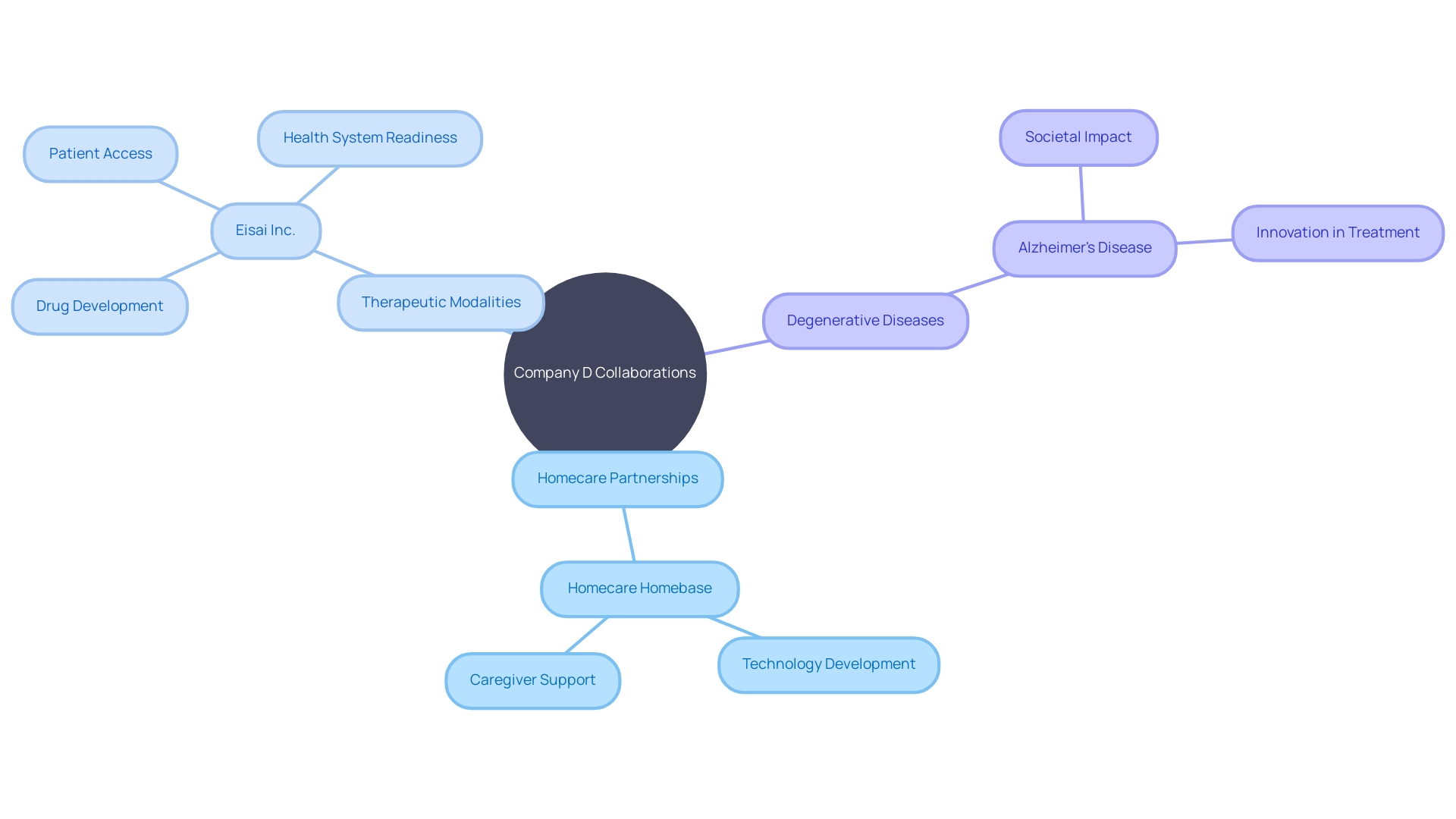
Company D’s commitment to innovation in healthcare is exemplified by their with leading entities across the industry. These collaborations have been pivotal in fostering an environment where collective expertise and resources converge to tackle complex . A Texas McCombs study highlights the effectiveness of such collaborative approaches, revealing significant improvements in operational outcomes, including reduced hospital stays and enhanced .
Leveraging multidisciplinary teams, Company D taps into a wealth of knowledge from various healthcare sectors, driving progress and setting new standards in patient treatment and care.
The impact of these partnerships extends beyond immediate . With a focus on comprehensive education and engagement, are instrumental in bridging gaps between technology and healthcare. By providing a robust foundation in medical sciences and clinical processes, these initiatives equip tech experts with the insights necessary to develop relevant and impactful healthcare solutions.
In the realm of , the importance of secure and effective collaborations cannot be overstated. As noted by industry experts, data breaches in healthcare pose significant risks, with over 22.6 million patients affected in 2021 alone. Company D’s cooperative model ensures not only the advancement of healthcare but also the critical protection of patient data and adherence to regulatory standards.
Furthermore, the accelerating pace of underscores the need for integrated approaches. As wearable technologies, telemedicine, and personalized medicine become increasingly prevalent, companies like Genentech are leveraging artificial intelligence to refine drug development, aiming to improve predictability and cost-efficiency in R&D.
Company D’s collaborative ethos is echoed by health technology leaders like Huma, who advocate for unified efforts among diverse stakeholders, including patients, providers, payers, and pharma companies, to drive transformation. This synergy is essential for addressing multifaceted health issues, reducing costs, and enhancing efficiency while ultimately elevating patient outcomes. Such exemplify the forward-thinking dynamism that is propelling the healthcare industry into a future where prevention and early intervention become the cornerstones of .
Company E: Future Directions and Goals
Company E is at the cutting edge of , leveraging breakthrough technologies and novel research methodologies. They aim to revolutionize patient care through a proactive approach to medical science. By harnessing like HINT and SPOT, developed by Jimeng Sun’s lab, Company E is able to predict with greater accuracy, optimizing trial designs and improving .
This strategic use of computational tools is a testament to their commitment to enhancing the research process, addressing the challenges highlighted by eRoom’s law regarding the slowing pace of drug approvals despite rising R&D costs. Furthermore, Company E’s engagement with , underscores their dedication to improving and reducing time-to-market for essential medications. These innovations embody Company E’s drive to not only advance medical knowledge but also to tangibly improve patient outcomes by bringing effective treatments to the market more rapidly.
The company’s forward-thinking ethos is reflected in the broader industry trends, where collaborative Health Research Centers (HRCs) in the UK exemplify the integration of industry, academia, and healthcare systems to expedite the delivery of medical advancements. Company E’s investment in and their pioneering spirit place them at the forefront of the medical research industry, poised to make significant contributions to global healthcare.
Additional Resources
are vital players in the realm of medical research, offering comprehensive services that extend beyond the traditional boundaries of . Organizations like exemplify the evolution of (CROs), having pioneered the CRO business in Japan and expanded their services to include the entire pharmaceutical value chain. These services range from contract development and manufacturing to healthcare solutions and market entry strategies, tailored to meet the precise needs of their clients at each phase of drug development.
The impact of on the industry is profound. For instance, the innovations in predictive algorithms developed by Jimeng Sun’s lab at the University of Illinois Urbana-Champaign demonstrate how modern technology can forecast the success of clinical trials. Tools like HINT and SPOT can influence pharmaceutical companies’ decisions on trial designs or drug development strategies, potentially revolutionizing the efficiency of .
Moreover, the pharmaceutical industry’s efforts to enhance transparency and data sharing are crucial for the advancement of medical research. Despite the variability in companies’ commitments and practices, initiatives continue to promote the public availability of trial protocols, statistical analysis plans, and raw data, although challenges remain in achieving widespread and routine access to this information.
Karen Willcox’s work on ‘digital twins’ and graphical models further illustrates the innovative approaches being adopted to predict and improve clinical trial outcomes. Such advancements underscore the importance of in not only managing trials but also in pushing the boundaries of what is possible in .
In light of these developments, it is clear that play a central role in shaping the future of medical treatments and therapies. Their contributions are significant and multifaceted, affecting everything from the development of new drugs to the ethical considerations and logistical support for trial participants.
Conclusion
In conclusion, clinical trial companies like Company A, Company B, Company C, Company D, and Company E are driving innovation in medical research. They leverage cutting-edge technologies and methodologies to enhance the efficiency and effectiveness of clinical trials.
Company A stands out for its use of predictive algorithms like HINT and SPOT, allowing for adjustments in trial design and addressing industry challenges. Company B excels in leveraging digital patient engagement tools and wearable devices to improve precision and patient compliance. They also contribute to the development of patient-specific models or ‘digital twins’ of human hearts.
Company C’s focused research approach leads to remarkable breakthroughs and aligns with the industry trend towards specialized, high-impact research. Company D’s collaborative ethos and strategic alliances drive progress and set new standards in patient treatment and care, while also prioritizing the protection of patient data and regulatory compliance.
Company E is at the cutting edge of medical research innovation, using advanced algorithms and simulation technologies to improve clinical trial efficacy and reduce time-to-market for essential medications. Their investment in research tools and collaborative efforts position them as leaders in the medical research industry.
Overall, clinical trial companies play a central role in shaping the future of medical treatments and therapies. They address industry challenges, drive innovation, and make significant contributions to global healthcare. With their commitment to enhancing trial efficiency, improving patient outcomes, and collaborating with key stakeholders, these companies are revolutionizing the clinical trial process and advancing the field of medical research.
Frequently Asked Questions
What is Company A known for in the clinical trial industry?
Company A is recognized for its role in advancing medical research, especially through the use of predictive algorithms like HINT and SPOT, to forecast the success of clinical trials and improve their design and efficiency.
How do HINT and SPOT algorithms benefit clinical trials?
These algorithms allow for predictions about the success of clinical trials by analyzing variables such as drug molecules, target diseases, and patient eligibility, leading to potential adjustments in trial design and more efficient research outcomes.
What are the main challenges in clinical trials that Company A addresses?
Company A tackles the escalating costs and complexities of clinical trials, which is epitomized by eRoom’s law that highlights the inverse relationship between drug development costs and the number of new medications brought to market.
How does Company B innovate in clinical trials?
Company B uses digital patient engagement tools, wearable devices, and automatic data collection systems to improve precision, efficiency, and compliance in clinical trials, leading to more consistent data and fewer errors.
What is the significance of the Turing Research and Innovation Cluster in Digital Twins (TRIC-DT)?
TRIC-DT, supported by Company B, is developing patient-specific models or ‘digital twins’ for organs like the heart, which can help in virtual trials by predicting patient responses to devices such as pacemakers.
What is Company C’s approach to clinical trial research?
Company C focuses on targeted research areas, leading to significant medical breakthroughs and aligning with industry trends towards specialized, high-impact research.
How does Company D contribute to healthcare innovation?
Company D engages in strategic collaborations across the healthcare industry, fostering an environment of shared expertise and resources to address complex healthcare challenges and enhance patient care.
What kind of impact do Company D’s partnerships have?
These partnerships contribute to improved operational outcomes in healthcare, including reduced hospital stays, and are crucial for the protection of patient data and adherence to regulatory standards.
What are Company E’s goals in medical research?
Company E aims to revolutionize patient care and improve clinical trial efficacy using advanced algorithms and simulation technologies to optimize trial designs and bring effective treatments to market more rapidly.
How do Contract Research Organizations (CROs) like CMIC Group influence the clinical trial industry?
CMIC Group and similar CROs offer comprehensive services extending beyond clinical trial management, including contract development, manufacturing, healthcare solutions, and market entry strategies.
Why is transparency and data sharing important in clinical trials?
Transparency and data sharing enhance medical research advancement by promoting public availability of trial protocols, statistical analysis plans, and raw data, though challenges remain in routine access to this information.
List of Sources
- Company A: Overview and Achievements
- nature.com (https://www.nature.com/articles/d41586-024-00753-x)
- medhealthoutlook.com (https://medhealthoutlook.com/three-best-practices-to-combat-clinical-trial-pain-points-scott-gray-ceo-of-clincierge/)
- citizen.org (https://www.citizen.org/article/mapping-the-phrma-grant-universe/)
- pharmashots.com (https://www.pharmashots.com/17383/infusing-ai-in-clinical-trials-meri-beckwith-from-lindus-health-in-conversation-with-pharmashots)
- jamanetwork.com (https://jamanetwork.com/journals/jamanetworkopen/fullarticle/2811814)
- biztoc.com (https://biztoc.com/t/novocure)
- biztoc.com (https://biztoc.com/t/biomedicalresearch)
- biopharmadive.com (https://www.biopharmadive.com/news/sanofi-belharra-astrazeneca-cancer-taysha-regenxbio/719208/)
- mckinsey.com (https://www.mckinsey.com/industries/life-sciences/our-insights/accelerating-clinical-trials-to-improve-biopharma-r-and-d-productivity)
- Company B: Innovations and Impact
- news.abbvie.com (https://news.abbvie.com/)
- medtechintelligence.com (https://medtechintelligence.com/column/the-power-of-ai-to-enhance-clinical-trials/)
- innotechtoday.com (https://innotechtoday.com/how-tech-could-reshape-the-clinical-trial-process/)
- biztoc.com (https://biztoc.com/t/biomedicalresearch)
- vimeo.com (https://vimeo.com/891707034/c2b8ebb0fd?share=copy|)
- medhealthoutlook.com (https://medhealthoutlook.com/three-best-practices-to-combat-clinical-trial-pain-points-scott-gray-ceo-of-clincierge/)
- turing.ac.uk (https://www.turing.ac.uk/blog/how-can-virtual-patients-transform-clinical-trials-process?utm_source=Twitter&utm_medium=Text_link&utm_campaign=Turing-Blog_How-can-virtual-patients-transform-the-clinical-trials-process)
- fortrea.com (https://www.fortrea.com)
- astrazeneca.com (https://www.astrazeneca.com/r-d/digital-health-revolutionising-healthcare-for-patients.html)
- Company C: Research Focus and Successes
- compoundingquality.net (https://www.compoundingquality.net/p/shaping-medical-research)
- news.abbvie.com (https://news.abbvie.com/)
- biopharmadive.com (https://www.biopharmadive.com/news/sanofi-belharra-astrazeneca-cancer-taysha-regenxbio/719208/)
- info.cardinalhealth.com (https://info.cardinalhealth.com/l/34802/2024-01-03/3t7846w?cid=EML-TRD_OTR-PHR-SS-BP_RGS-Big4Bio-Successful_IND_submission_case_study-Download-Feb_24&CID_Campaign=EML-TRD_Fahlgren-Big4Bio)
- biztoc.com (https://biztoc.com/t/biomedicalresearch)
- growwithbamboo.com (https://www.growwithbamboo.com/case-studies/lemonaidhealth)
- first10em.com (https://first10em.com/how-to-create-a-focused-and-answerable-research-question/)
- en.cmicgroup.com (https://en.cmicgroup.com)
- 80000hours.org (https://80000hours.org/skills/research/)
- Company D: Collaborations and Breakthroughs
- medium.com (https://medium.com/texas-mccombs/in-health-care-teams-work-d661c3da866c)
- hadasbitran.substack.com (https://hadasbitran.substack.com/p/building-bridges-between-technologists?utm_campaign=post&utm_medium=web&triedRedirect=true)
- productcoalition.com (https://productcoalition.com/the-future-of-digital-health-realities-vs-opportunities-19e8b4e0ac71)
- infomeddnews.com (https://infomeddnews.com/genentech-and-nvidia-news-1112123/)
- medicaldevice-network.com (https://www.medicaldevice-network.com/sponsored/partnerships-are-key-to-driving-digital-healthcare-transformation-in-us-say-experts-2/)
- imec-int.com (https://www.imec-int.com/en/articles/imec-explores-disruptive-ideas-health-tech-collaboration-johnson-johnson-innovation)
- medcitynews.com (https://medcitynews.com/2024/06/collaboration-is-vital-to-creating-inclusive-healthcare-technologies/)
- nhsconfed.org (https://www.nhsconfed.org/publications/collaborate-innovate)
- hitconsultant.net (https://hitconsultant.net/2024/07/24/home-based-care-software-why-partnerships-are-key-to-success/)
- healthaffairs.org (https://www.healthaffairs.org/sponsored-content/collaboration-a-catalyst-for-optimal-care)
- Company E: Future Directions and Goals
- midwesterndoctor.com (https://www.midwesterndoctor.com/p/what-happens-to-doctors-who-innovate)
- world.einnews.com (https://world.einnews.com/pr_news/732291025/mindr-announces-new-fundraising-round-to-accelerate-growth-and-fully-launch-their-mvp)
- medicaldevice-network.com (https://www.medicaldevice-network.com/news/uks-adsilico-raises-4-4m-to-develop-virtual-trial-solution/)
- med-technews.com (https://www.med-technews.com/news/latest-medtech-news/nihr-awarded-42m-for-14-new-healthtech-research-centres/)
- researchfeatures.com (https://researchfeatures.com/innovation-exploration-training-scientists-future/)
- medicalplasticsnews.com (https://www.medicalplasticsnews.com/news/latest-medical-plastics-news/nihr-invests-%C2%A342-million-in-14-healthtech-research-centres/)
- pulse2.com (https://pulse2.com/nami-surgical-robotic-assisted-surgery-company-raises-4-million/)
- elsevier.com (https://www.elsevier.com/promotions/clinician-of-the-future-education-edition)
- openai.com (https://openai.com/customer-stories/summer-health)
- nature.com (https://www.nature.com/articles/d41586-024-00753-x)
- Additional Resources
- nature.com (https://www.nature.com/articles/d41573-024-00107-2)
- jamanetwork.com (https://jamanetwork.com/journals/jamanetworkopen/fullarticle/2811814)
- medhealthoutlook.com (https://medhealthoutlook.com/three-best-practices-to-combat-clinical-trial-pain-points-scott-gray-ceo-of-clincierge/)
- biztoc.com (https://biztoc.com/t/biomedicalresearch)
- citizen.org (https://www.citizen.org/article/mapping-the-phrma-grant-universe/)
- medpagetoday.com (https://www.medpagetoday.com/opinion/second-opinions/106064)
- nature.com (https://www.nature.com/articles/d41586-024-00753-x)
- biospace.com (https://www.biospace.com/article/treehill-partners-ali-pashazadeh-on-how-to-improve-clinical-trial-design/?utm_source=dlvr.it&utm_medium=twitter)
- medicaldevice-network.com (https://www.medicaldevice-network.com/news/abbvie-ends-multi-million-dollar-cancer-drug-deal-with-i-mab/)
- en.cmicgroup.com (https://en.cmicgroup.com)
- news.abbvie.com (https://news.abbvie.com/)
Leave a Reply