
Introduction
Article Introduction:
Navigating the complex landscape of cross-border clinical trials can be a daunting task for patients and medical stakeholders alike. This is where CRO consultants come in.
In this article, we will explore the role of a CRO consultant, their key responsibilities, and the benefits of hiring one for medical research. From addressing logistical and linguistic barriers to integrating AI and ML technologies, CRO consultants play a pivotal role in revolutionizing the pharmaceutical industry and improving patient accessibility to critical medical interventions. Join us on this journey as we delve into the world of CRO consultancy and its impact on clinical trials.
What is a CRO Consultant?
A embodies the linchpin in navigating the complexities faced by patients and medical stakeholders in . In a poignant scenario, they would guide a Pennsylvania patient suffering from an ultra-rare disease towards participating in a trial in Turkey, a daunting endeavor fraught with logistical and linguistic barriers. This level of consultancy is crucial, addressing queries on visa procurement, documentation translation, and travel arrangements—an intricate blend of regulatory savvy, cultural acumen, and .
As healthcare technology advances, the role of the becomes increasingly pivotal. The potential for AI and ML to establish self-driving trials—digitally orchestrated and data-driven—can lead to highly personalized treatments and more efficient trials. s are at the forefront of to transform , promising unmatched accuracy in outcomes.
CMIC Group’s pioneering effort, with over three decades as Japan’s premier , showcases the expansive services offered by CROs. They epitomize end-to-end solutions tailored to clients’ precise stages of drug development, from development and manufacturing to market entry strategies. This evolution from one-dimensional service to holistic support encapsulates the depth and breadth of expertise a brings to the table, driving the entire pharmaceutical value-chain, and revolutionizing patient accessibility to critical medical interventions.
Key Responsibilities of a CRO Consultant
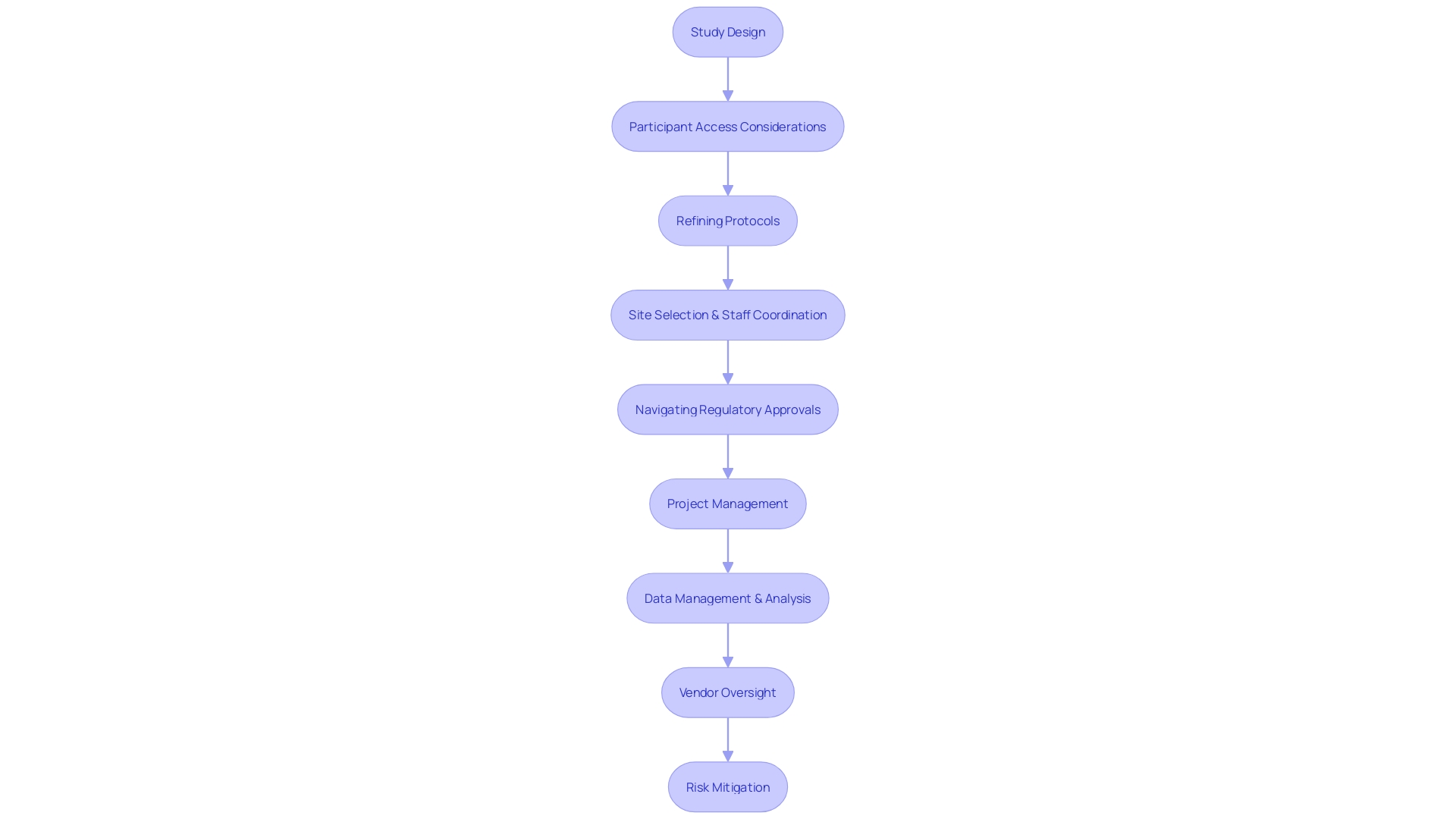
consultants must balance intricate scientific objectives with the logistical complexities of executing clinical studies. A key aspect of their role is to craft that not only resonate with the research purposes but also consider , such as a patient from rural Pennsylvania having to navigate international travel to Turkey for a clinical trial. The role also involves refining protocols to be both scientifically rigorous and ethical, factoring in crucial considerations like the or document handling that international participants might face.
In managing site selection and relationships with staff, CRO consultants coordinate training and support to enhance the smooth progression of the trial, mirroring the industry’s shift towards more efficient and effective operations. Ken Getz remarks on this evolution, highlighting a ‘growing recognition in the importance of balancing great science with great execution’ and leveraging technologies to improve support. To ensure studies adhere to stringent regulations, CRO consultants navigate the approval processes of different , imperative for multi-regional trials with varied guidelines.
They are adept project managers, overseeing timelines and resource allocation, cognizant that decisions often made years in advance can greatly impact study outcomes. In , they partner with specialized teams to guarantee data integrity and insightful analysis, underpinned by robust quality control measures. The consultant’s oversight of vendors extends to ensuring they deliver services up to par with the trial’s needs.
Finally, addressing the potential risks inherent in , the consultants must preemptively strategize to mitigate them. AP from Tree hill mentions the potential improvements in decision-making through rigorous planning, reflecting an industry trend towards optimizing each ‘link in the chain’ from an operational standpoint. CRO consultants thus embody the crucial intersection of scientific excellence and operational expertise required for the successful execution of .
Benefits of Hiring a CRO Consultant for Medical Research
Partnering with a consultant provides a robust framework for advancing medical research, capitalizing on a wealth of industry expertise to navigate complex . The advisory role begins with the fundamental step of crystallizing a research question that guides the entire project scope. CRO consultants are uniquely equipped to design studies that minimize confounding factors, leveraging their deep understanding of dependent and independent variables and the critical function of control groups in yielding meaningful data.
Amidst a landscape where patient access to trials presents logistical challenges, such as the daunting prospect of a Pennsylvania patient needing to travel to Turkey for a trial, the CRO’s role becomes even more pivotal. They harness resources efficiently, and optimizing the allocation of personnel and equipment. Access to the consultant’s network allows for specialized skills to be channeled into pivotal areas of the trial, such as statistical analysis, by emphasizing the use of AI and machine learning technologies that are revolutionizing data management and patient treatment personalization.
Crucially, CRO consultants expedite , which facilitates quicker study start-ups. Their acumen for quality assurance activities ensures superior compliance and data integrity. By preemptively identifying risks, consultants strategically implement mitigation plans to minimize setbacks, enhancing the overall success rate of .
An overarching advantage of engaging CRO consultants is their capacity to enable research organizations to concentrate on their core competencies. This recalibration of focus is vital, as backed by industry insights highlighting that early-stage decisions, if more meticulously planned, can profoundly impact the outcome of studies. By entrusting operational management to these consultants, researchers can devote their energies to the innovation and advancement of medical science, knowing the logistical and administrative burdens are expertly shouldered by their partners in clinical research.
Conclusion
In conclusion, CRO consultants are essential in cross-border clinical trials to overcome logistical and linguistic barriers, integrate AI and ML technologies, and improve patient access to critical medical interventions. Their responsibilities include designing rigorous studies, navigating regulations, and mitigating potential risks. Partnering with CRO consultants provides a framework for advancing medical research by optimizing study designs, resource allocation, and regulatory compliance.
They expedite study start-ups, ensure data integrity, and allow research organizations to focus on core competencies and innovation. Overall, CRO consultants play a pivotal role in revolutionizing clinical trials, enhancing efficiency, accuracy, and patient accessibility. Their expertise drives advancements in medical research, ultimately improving patient outcomes and saving lives.
Frequently Asked Questions
What is a CRO consultant?
A CRO (Contract Research Organization) consultant is a professional who provides guidance and support in the execution of cross-border clinical trials. They help navigate the complexities patients and medical stakeholders face, such as logistical issues, language barriers, and regulatory challenges.
Why are CRO consultants important in clinical trials?
CRO consultants are crucial because they offer an intricate blend of regulatory knowledge, cultural acumen, and personal care to ensure trials are conducted efficiently, ethically, and effectively. They help patients participate in trials abroad and assist in integrating advanced technologies like AI and ML into trial processes for improved outcomes.
What services do CRO consultants offer?
CRO consultants offer a range of services including assistance with visa procurement, document translation, travel arrangements, study design, site selection, staff training, data management, and vendor oversight. They also work on refining protocols, ensuring regulatory compliance, managing timelines, and mitigating potential risks in clinical trials.
How do CRO consultants contribute to the efficiency of clinical trials?
CRO consultants contribute to trial efficiency by crafting study designs that address participant access challenges, managing site selection and relationships with trial staff, navigating regulatory approvals, overseeing project timelines, and ensuring data integrity through robust quality control measures.
What are the benefits of hiring a CRO consultant for medical research?
Hiring a CRO consultant can provide numerous benefits, including advanced study designs, efficient resource allocation, expedited regulatory navigation, superior data integrity, and risk mitigation. They enable research organizations to focus on core competencies by managing the logistical and administrative aspects of clinical trials.
How do CRO consultants help with patient access to trials?
CRO consultants facilitate patient access to trials by addressing the logistical hurdles of international travel, overcoming language barriers, and ensuring that participants have the necessary support to join and complete the trial successfully.
Can CRO consultants improve the decision-making process in clinical trials?
Yes, CRO consultants can improve decision-making through rigorous planning and preemptive strategizing to optimize each operational aspect of the trial, which can greatly impact the overall success and efficiency of the study.
What role does technology play in the work of a CRO consultant?
Technology, particularly AI and machine learning, plays a significant role in the work of CRO consultants by enabling the establishment of self-driving trials, facilitating data-driven and highly personalized treatments, and improving the efficiency and effectiveness of clinical trials.
List of Sources
- What is a CRO Consultant?
- medhealthoutlook.com (https://medhealthoutlook.com/three-best-practices-to-combat-clinical-trial-pain-points-scott-gray-ceo-of-clincierge/)
- hitconsultant.net (https://hitconsultant.net/2023/09/01/self-driving-clinical-trial-ai-ml-optimization/)
- en.cmicgroup.com (https://en.cmicgroup.com)
- Key Responsibilities of a CRO Consultant
- medhealthoutlook.com (https://medhealthoutlook.com/three-best-practices-to-combat-clinical-trial-pain-points-scott-gray-ceo-of-clincierge/)
- pharmavoice.com (https://www.pharmavoice.com/news/red-jacket-ken-getz-a-champion-of-clinical-trials/697633/)
- biospace.com (https://www.biospace.com/article/treehill-partners-ali-pashazadeh-on-how-to-improve-clinical-trial-design/?utm_source=dlvr.it&utm_medium=twitter)
- medhealthoutlook.com (https://medhealthoutlook.com/three-best-practices-to-combat-clinical-trial-pain-points-scott-gray-ceo-of-clincierge/)
- Benefits of Hiring a CRO Consultant for Medical Research
- hitconsultant.net (https://hitconsultant.net/2023/09/01/self-driving-clinical-trial-ai-ml-optimization/)
- infomeddnews.com (https://infomeddnews.com/how-to-conduct-controlled-medical-research-in-a-lab/)
- medhealthoutlook.com (https://medhealthoutlook.com/three-best-practices-to-combat-clinical-trial-pain-points-scott-gray-ceo-of-clincierge/)
- biospace.com (https://www.biospace.com/article/treehill-partners-ali-pashazadeh-on-how-to-improve-clinical-trial-design/?utm_source=dlvr.it&utm_medium=twitter)
Leave a Reply