- What Is a Serious Adverse Event?
- SAE vs. Unanticipated Adverse Device Effect
- FDA Reporting Requirements for SAEs
- How ISO 14155 Aligns with the FDA SAE Framework
- SAE Classification in Practice: Where Sponsors Make Mistakes
- SAE Reporting in Latin American Clinical Trials
- Why SAE Classification Affects Your FDA Submission
- How bioaccess® Manages SAE Infrastructure in FIH Programs
- Frequently Asked Questions
- Conclusion
If you are preparing a first-in-human study, understanding the serious adverse event definition is not optional. It shapes your protocol, your data management plan, your reporting obligations, and ultimately the quality of the evidence package you submit to FDA. A single misclassified event can delay your IDE or IND review, trigger a clinical hold, or create a credibility problem with the agency that is difficult to recover from.
This article explains exactly how FDA defines a serious adverse event (SAE), how that definition maps onto ISO 14155 and ICH E6 standards used in Latin American clinical trials, what the reporting obligations look like in practice, and why the classification decision matters far more than most early-stage sponsors anticipate.
What Is a Serious Adverse Event?
An adverse event (AE) is any undesirable experience that occurs in a patient during a clinical trial, whether or not it is considered related to the investigational device or drug. An SAE is a specific subset of adverse events that meets at least one of a defined set of severity criteria.
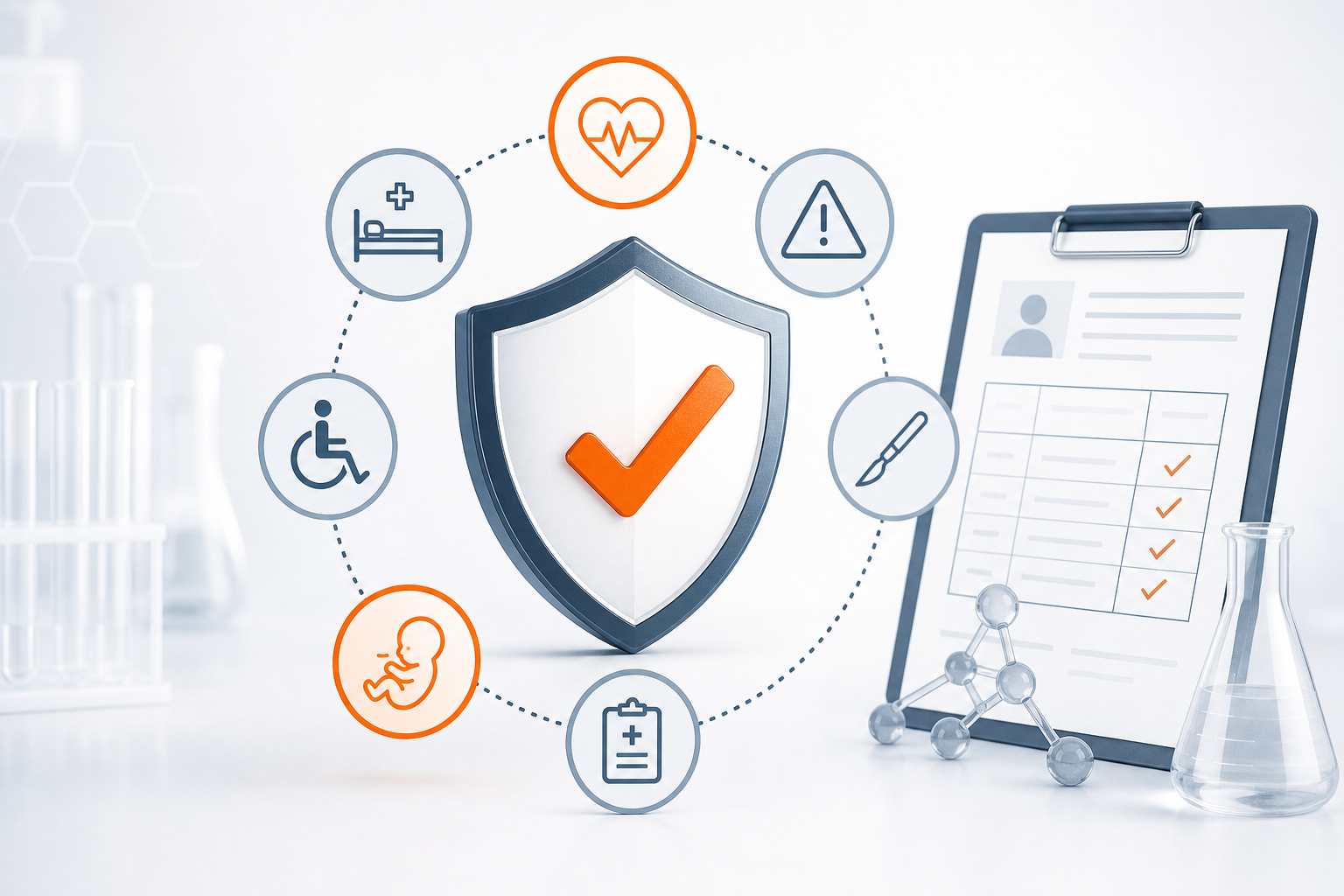
Under FDA regulations, an adverse event is classified as serious if it results in any of the following:
- Death
- A life-threatening condition (meaning the patient was at immediate risk of death at the time of the event — not that the event might have caused death if it had been more severe)
- Inpatient hospitalization or prolongation of existing hospitalization
- Persistent or significant disability or incapacity
- A congenital anomaly or birth defect
- A medical event that, based on appropriate medical judgment, may jeopardize the patient and may require medical or surgical intervention to prevent one of the outcomes listed above (sometimes called "important medical events")
That last criterion — important medical events — is the one that most commonly generates classification disputes in early-stage trials. It requires clinical judgment, and the standard is not whether an intervention was actually performed, but whether one might have been necessary to prevent a serious outcome.
SAE vs. Unanticipated Adverse Device Effect
For medical device trials specifically, FDA introduces a second classification layer alongside the SAE definition: the Unanticipated Adverse Device Effect (UADE).
A UADE is any serious adverse effect on health or safety, or any life-threatening problem or death caused by or associated with a device, if that effect, problem, or death was not previously identified in nature, severity, or degree of incidence in the investigational plan or application. It also includes any other unanticipated serious problem associated with a device that relates to the rights, safety, or welfare of subjects.
The distinction matters operationally. An SAE may or may not be device-related. A UADE, by definition, carries an implied or assessed causal relationship to the device and was not anticipated in the protocol. UADEs carry the most urgent reporting timeline under 21 CFR Part 812 — the sponsor must report to FDA and all reviewing Institutional Review Boards (IRBs) or Ethics Committees (ECs) within 10 working days of first receiving notice.
FDA Reporting Requirements for SAEs
For device trials operating under an Investigational Device Exemption (IDE), the reporting framework is governed by 21 CFR Part 812. The principal obligations break down as follows.
Unanticipated Adverse Device Effects: Report to FDA and all reviewing IRBs/ECs within 10 working days.
Withdrawal of IRB/EC approval: Report to FDA within 5 working days if approval is withdrawn for reasons related to subject safety.
Annual progress reports: Include a summary of adverse device effects, an updated risk-benefit analysis, and enrollment data.
Final report: Submitted within 6 months of study completion or termination, including a complete accounting of all adverse events and device effects.
For drug and biologic trials under an Investigational New Drug (IND) application, the governing framework shifts to 21 CFR Part 312. Unexpected fatal or life-threatening suspected unexpected serious adverse reactions (SUSARs) must be reported within 7 calendar days. All other unexpected serious suspected adverse reactions must be reported within 15 calendar days.
The practical implication for sponsors running first-in-human studies: your data management plan and site monitoring procedures must be built around these timelines from day one. A site that identifies a potential UADE on a Friday afternoon cannot wait until Monday to begin the reporting chain.
How ISO 14155 Aligns with the FDA SAE Framework
ISO 14155 is the international standard governing Good Clinical Practice for clinical investigations of medical devices in human subjects. For sponsors running trials in Latin America with the intention of submitting data to FDA, ISO 14155 is the protocol architecture standard that makes that data bridgeable.
ISO 14155 uses the same core SAE criteria as FDA — death, life-threatening, hospitalization, disability, congenital anomaly, important medical events — and adds specific requirements for device-related adverse events and device deficiencies. A device deficiency under ISO 14155 is any inadequacy of a medical device with respect to its identity, quality, durability, reliability, safety, or performance, including malfunctions, use errors, and inadequate labeling. Device deficiencies that could have led to a serious adverse event must be reported even if no SAE actually occurred.
This is a meaningful addition for early-stage device sponsors. Site staff must be trained to recognize and document not just clinical events in patients, but device performance anomalies — and to connect those observations to the SAE reporting chain where appropriate.
Under FDA 21 CFR 812.28, foreign clinical data collected under ISO 14155 is accepted for IDE submissions, provided the data meets the standard's requirements and the sponsor can demonstrate that the study was conducted consistently with FDA's own GCP expectations. This is the regulatory bridge that makes Latin American first-in-human data directly usable in a U.S. submission.
SAE Classification in Practice: Where Sponsors Make Mistakes
Classification errors in early-stage trials tend to cluster around three scenarios.
The "important medical event" judgment call. A patient presents with a symptom that resolves without intervention. The site coordinator, uncertain whether the event qualifies, codes it as a non-serious AE. If FDA later determines that medical intervention was warranted — or that the event pattern across multiple patients signals a safety concern — the under-reporting becomes a compliance problem. When in doubt, classify as serious and let the causality assessment determine the reporting pathway.
Conflating relatedness with seriousness. Seriousness and relatedness are independent assessments. An SAE can be unrelated to the device — a patient breaks an arm in a car accident while enrolled. A device-related event can be non-serious. The protocol and case report forms must capture both dimensions separately. Combining them in the data architecture creates analysis problems that are difficult to untangle during FDA review.
Delayed recognition at the site level. Sites that are not trained specifically for the device type and indication being studied sometimes fail to recognize that a clinical presentation meets the SAE threshold. This is particularly common in first-in-human studies where the investigational device is novel and the expected adverse event profile is not well characterized. Rigorous site qualification and ongoing training are not administrative formalities — they are the mechanism by which classification accuracy is maintained across the study.
SAE Reporting in Latin American Clinical Trials
When a trial is conducted in Latin America under a regulatory framework like INVIMA (Colombia), MINSA/CNBI (Panama), ISP/MINSAL (Chile), or SRS/CNEIS (El Salvador), SAE reporting obligations run in two directions simultaneously: to the local regulatory authority and Ethics Committee, and to the sponsor for onward reporting to FDA.
Each country has its own SAE reporting timelines and formats, which may differ from FDA's requirements. A well-structured clinical operations plan accounts for both sets of obligations and builds reporting workflows that satisfy the more stringent timeline of the two. Failing to report an SAE to the local EC within the required window can jeopardize the study authorization in that country — even if the FDA reporting obligation was met on time.
This dual-reporting complexity is one reason sponsors benefit from working with a CRO that has established relationships with local regulatory bodies and experienced site staff who understand both the local and FDA-facing obligations. The Cook Advanced Technologies multi-site study in Colombia, which involved 142-plus INVIMA regulatory submissions, illustrates how complex the regulatory management layer becomes in a multi-site, multi-event study — and why operational infrastructure matters as much as protocol design.
Why SAE Classification Affects Your FDA Submission
The SAE data collected during a first-in-human or early feasibility study becomes part of the clinical evidence package submitted to FDA as part of an IDE or IND application. FDA reviewers use that data to assess the risk-benefit profile of the investigational device or drug, to determine whether the proposed pivotal study design is appropriate, and to evaluate whether the sponsor has demonstrated adequate safety monitoring.
An evidence package with well-classified, consistently reported SAE data signals that the sponsor has clinical operations discipline. Gaps, inconsistencies, or apparent under-reporting signal the opposite — and can result in a request for additional information, a study hold, or a more intensive FDA review.
For sponsors running trials under ISO 14155 in Latin America, the SAE data in the submission must be accompanied by documentation demonstrating that the trial was conducted under GCP-compliant conditions and that the data meets the standards of 21 CFR 812.28. This is not a paperwork exercise. It is the mechanism by which foreign clinical data earns the same evidentiary weight as U.S.-generated data in FDA's review.
The Envveno Medical study, which resulted in the first-ever FDA IDE for a non-surgical replacement venous valve, demonstrates what a complete, submission-ready evidence package built on Latin American first-in-human data can achieve when the regulatory architecture is correctly structured from the start.
How bioaccess® Manages SAE Infrastructure in FIH Programs
bioaccess® builds SAE classification training, dual-reporting workflows, and data management protocols into the FIH-12™ program from workstream one. Site staff across the 50-plus pre-qualified sites in the 19-country network are trained on the specific device type and indication before enrollment begins, reducing the risk of classification errors at the point of event recognition.
The data management workstream structures SAE data per FDA 21 CFR 812.28 requirements throughout the study — not as a post-hoc exercise before submission. The evidence package delivered at the end of the 12-month program is organized for FDA review from the first event recorded.
For sponsors who have already completed a first-in-human study and are preparing their IDE submission, the SAE data in that package will be among the first things FDA reviewers examine. Classification inconsistencies or reporting gaps are substantially easier to address before submission than after a deficiency letter arrives.
The i-Lumen Scientific retinal therapy study and the Hasten/Ampcare COFEPRIS registration both reflect the kind of regulatory precision that comes from building compliance infrastructure into the program design rather than retrofitting it at the end.
Frequently Asked Questions
What is the formal serious adverse event definition under FDA regulations?
An adverse event is classified as serious if it results in death, a life-threatening condition, inpatient hospitalization or prolonged hospitalization, persistent or significant disability or incapacity, a congenital anomaly or birth defect, or an important medical event that requires intervention to prevent one of those outcomes. These criteria apply to both device and drug trials, though the specific reporting frameworks differ between 21 CFR Part 812 (devices) and 21 CFR Part 312 (drugs and biologics).
What is the difference between an SAE and a UADE?
A serious adverse event is any adverse event meeting the severity criteria above, regardless of whether it is related to the investigational device. A UADE (Unanticipated Adverse Device Effect) is a serious adverse effect that was not previously identified in nature, severity, or incidence in the investigational plan, and carries an implied causal relationship to the device. UADEs carry a 10-working-day reporting deadline to FDA and all reviewing IRBs or Ethics Committees.
How does ISO 14155 handle SAE reporting for medical device trials?
ISO 14155 uses the same core SAE criteria as FDA and adds requirements for device deficiencies — inadequacies in device performance that could have led to an SAE even if no patient harm occurred. For sponsors intending to submit Latin American trial data to FDA, ISO 14155 compliance is the standard that makes that data eligible under 21 CFR 812.28.
What happens if an SAE is misclassified as non-serious?
Under-reported or misclassified SAEs create compliance problems that can surface during FDA review of an IDE or IND submission. Reviewers may issue a deficiency letter, request additional data, or place the study on clinical hold. Consistent, accurate classification from the first event is substantially easier to defend than a post-hoc reclassification exercise.
Do SAE reporting obligations differ in Latin American countries compared to FDA requirements?
Yes. Each country has its own SAE reporting timelines and formats for local regulatory authorities and Ethics Committees. A sponsor running a trial in Panama, Colombia, or Chile must satisfy both the local reporting requirements and FDA's requirements simultaneously. The more stringent timeline governs. A CRO with established local regulatory relationships and trained site staff is essential to managing both reporting tracks without gaps.
Can SAE data from a Latin American first-in-human study be used in a U.S. FDA submission?
Yes, provided the trial was conducted under ISO 14155 protocol architecture and the data is structured per FDA 21 CFR 812.28 foreign clinical data standards. Data collected under these conditions carries the same evidentiary weight as U.S.-generated data in an IDE or IND review.
What is an "important medical event" in the context of SAE classification?
An important medical event is one that, based on appropriate medical judgment, may jeopardize the patient and may require medical or surgical intervention to prevent death, a life-threatening condition, hospitalization, disability, or a congenital anomaly. The standard is whether intervention might have been necessary — not whether it was actually performed. This criterion requires clinical judgment and is the most common source of classification disputes in early-stage trials.
Conclusion
The serious adverse event definition is one of the most operationally consequential concepts in clinical trial management. Classification accuracy, reporting timeliness, and data structure all flow from how well the sponsor and site team understand and apply the FDA criteria from the first day of enrollment.
For MedTech and biopharma sponsors preparing a first-in-human study in Latin America, getting the SAE infrastructure right is not a compliance checkbox — it is the foundation of an FDA-bridgeable evidence package. If you are building that program now, the FIH Launch Planner at bioaccessla.com is a practical starting point for mapping your regulatory route, timeline, and evidence package requirements before you commit to a CRO or a country.
Leave a Reply