- What ISO 14155 Is and Why It Applies to Your Trial
- ISO 14155:2026 — The Current Edition
- Is There a Transition Period?
- What Changed in the 2026 Edition
- How ISO 14155 Connects to FDA 21 CFR 812.28
- ISO 14155 in Practice: What Sponsors Need to Update First
- ISO 14155 and Latin American Regulatory Submissions
- Practical Takeaways for MedTech Sponsors
- Frequently Asked Questions
Meta description: ISO 14155 governs medical device clinical investigations worldwide. Learn what the 2026 edition requires, what changed, and how to structure your FIH trial data for FDA and CE submissions.
Category: Navigating Regulatory Landscapes in Latin America
If you are planning a first-in-human (FIH) medical device trial, ISO 14155 is the standard that governs how that investigation must be designed, conducted, and documented. It defines Good Clinical Practice (GCP) for medical device clinical investigations and serves as the foundation regulators in the EU, Latin America, and the United States use to determine whether your clinical data is credible and submission-ready.
This article covers what ISO 14155 requires, what changed in the 2026 edition, how it connects to FDA 21 CFR 812.28 and EU MDR, and what MedTech sponsors need to act on now to keep their programs compliant.
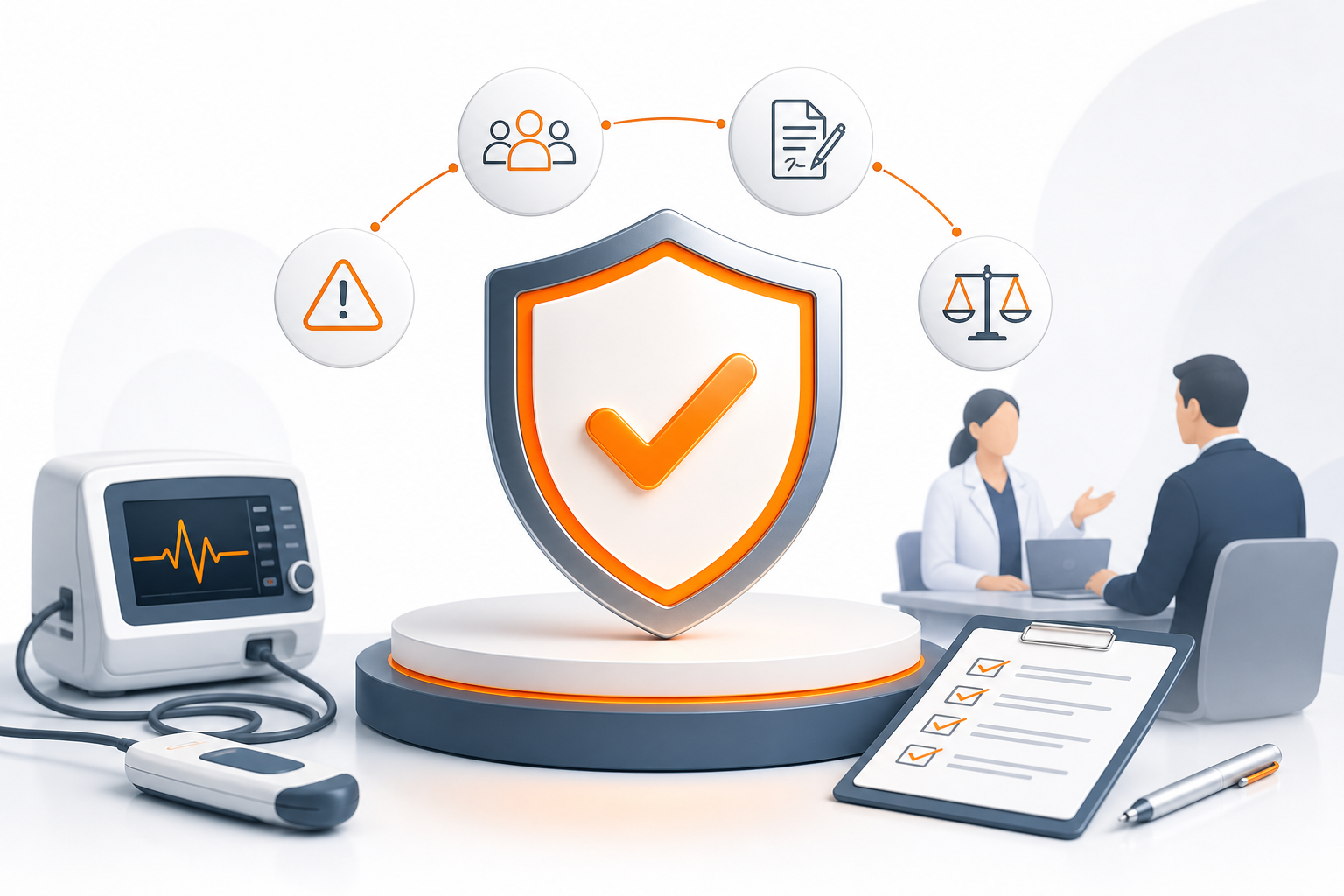
What ISO 14155 Is and Why It Applies to Your Trial
ISO 14155 is the international standard for GCP in clinical investigations of medical devices for human subjects. It defines the responsibilities of sponsors, investigators, and Ethics Committees; establishes requirements for clinical investigation plans (CIPs), informed consent, adverse event reporting, and data integrity; and provides the framework regulators use to determine whether foreign clinical data is acceptable for market authorization.
Any sponsor running a device study intended to support a CE mark, an FDA Investigational Device Exemption (IDE), or a market registration in Latin America should treat ISO 14155 compliance as non-negotiable. Regulatory authorities in Colombia (INVIMA), Brazil (ANVISA), Panama (MINSA/CNBI), and Chile (ISP/MINSAL) all reference it when evaluating clinical evidence packages.
The standard has been revised several times since its original publication. According to qservegroup.com, ISO 14155 was first published in 1996 and has since been revised in 2003, 2011, and 2020.
ISO 14155:2026 — The Current Edition
The standard entered a new phase in 2026. As reported by specculo.com, ISO 14155:2026 was published on 23 March 2026 and replaces ISO 14155:2020. Greenlight.guru confirms that this fourth edition supersedes the third edition from 2020.
The practical implication is direct: if your protocol, CIP, or quality system references ISO 14155:2020, it references a withdrawn standard. That is not a minor administrative detail. Regulators and notified bodies reviewing your clinical evidence package will check which version you followed.
One important nuance for EU-based programs: according to greenlight.guru, the 2020 edition plus a 2024 amendment remained the version harmonized under the EU Medical Device Regulation (MDR) as of the time of that reporting. Sponsors operating under EU MDR should confirm the current harmonization status directly with their notified body, because harmonization timelines for EN ISO 14155:2026 may differ from the ISO publication date.
Is There a Transition Period?
This is one of the most common questions sponsors ask, and the answer is less comfortable than most would prefer. According to mdxcro.com, there is no defined transition period for ISO 14155:2026. Nimonik notes that while many ISO standards offer a 3-year transition period, the updates in ISO 14155:2026 are immediately applicable.
Sponsors cannot assume they have financial runway to migrate at their own pace. If you are launching a new study, your CIP and supporting documentation should be written to the 2026 edition from the start. If you have an ongoing study written to the 2020 edition, a gap assessment is the first practical step — not a deferred one.
What Changed in the 2026 Edition
The 2026 revision is not a cosmetic update. Several areas of the standard received substantive changes that affect how sponsors structure their programs.
Risk Management: Separating Device Risk from Procedural Risk
One of the most operationally significant changes is the clearer separation of device-related risks from procedure-related risks. Earlier editions addressed risk management at a higher level of abstraction. The 2026 edition expects sponsors to distinguish between risks inherent to the investigational device itself and risks that arise from the clinical procedure used to implant or apply it.
For sponsors writing their CIPs, this means your risk file and your clinical investigation plan need to speak to each other explicitly. A risk that appears in your device risk management file should have a corresponding monitoring or reporting mechanism in the CIP.
Clinical Events Committees and Data Monitoring Committees
The 2026 edition provides more structured guidance on when Clinical Events Committees (CECs) and Data Monitoring Committees (DMCs) are expected. The threshold is not simply study size — it is study risk profile. If your device addresses a serious or life-threatening indication, or if your primary endpoint involves events that require independent adjudication to avoid bias, the standard now provides clearer language that supports — and in some contexts expects — independent oversight structures.
For early feasibility studies with small patient populations, this does not automatically mean every study requires a full DMC. Sponsors should document their rationale for the oversight structure they choose, because that rationale will be reviewed.
Informed Consent Updates
The 2026 edition strengthens requirements around informed consent documentation and the process of re-consenting subjects when the investigation changes materially. Consent forms must more explicitly address the distinction between investigational procedures and standard-of-care procedures, and the subject's right to withdraw must be framed in language that is unambiguous even to non-specialist readers.
For sponsors running trials across multiple countries — including Latin American sites where language and literacy levels vary across patient populations — this has direct implications for how consent documents are translated, back-translated, and reviewed by local Ethics Committees (ECs).
Sponsor and Investigator Responsibilities
The delineation between sponsor responsibilities and investigator responsibilities is sharper in the 2026 edition. Sponsors cannot delegate oversight by pointing to the investigator. The standard expects sponsors to have documented processes for monitoring, deviation management, and escalating safety signals — regardless of whether those processes are executed by in-house staff or a contract research organization.
This is particularly relevant for under-resourced MedTech startups that rely on a single CRO to manage all operational workstreams. The sponsor remains accountable. The CRO executes. That distinction matters when a regulatory authority reviews your trial master file.
How ISO 14155 Connects to FDA 21 CFR 812.28
For US-based sponsors, the connection between ISO 14155 and FDA submissions is direct. Under 21 CFR 812.28, the FDA accepts foreign clinical data from investigations conducted under ISO 14155 to support IDE applications and subsequent premarket submissions. The data is not automatically approved — it is accepted as meeting the FDA's standard for foreign clinical evidence when the investigation was conducted in compliance with ISO 14155.
This is the regulatory bridge that makes Latin American FIH trials viable for US-bound programs. A study run in Panama, Colombia, or Chile under ISO 14155 protocol architecture, with data structured per FDA 21 CFR 812.28, can support an IDE submission. The clinical evidence package does not need to be regenerated in the United States.
bioaccess® builds every FIH-12™ program on ISO 14155 protocol architecture from the outset. The nine-workstream engagement covers protocol development, site activation, patient enrollment, data management, and delivery of a submission-ready clinical evidence package — structured to satisfy both ISO 14155 and FDA 21 CFR 812.28 requirements simultaneously.
ISO 14155 in Practice: What Sponsors Need to Update First
If you are preparing a new FIH study or reviewing an ongoing one, the practical migration sequence looks like this:
Clinical Investigation Plan (CIP): The CIP is the primary document that must reference ISO 14155:2026. If your CIP was written to the 2020 edition, conduct a gap assessment against the 2026 requirements before your next EC submission. Pay particular attention to risk management language, oversight structures, and the consent process description.
Informed Consent Forms: Review all consent documents against the 2026 requirements for clarity of language, explicit separation of investigational and standard-of-care procedures, and withdrawal rights. For multi-country studies, this review must happen at each site.
Sponsor SOPs: Any standard operating procedure that references ISO 14155:2020 needs to be updated — including monitoring plans, deviation management procedures, and adverse event reporting processes.
Investigator's Brochure and Risk File Alignment: The 2026 edition's clearer risk separation requirements mean your risk file and investigator's brochure need to be reviewed together, not in isolation. Risks identified in the device risk management file should be traceable to monitoring procedures in the CIP.
Oversight Structure Documentation: If your study does not include a CEC or DMC, document why. The 2026 edition does not mandate these structures for every study, but it expects sponsors to have a defensible rationale.
ISO 14155 and Latin American Regulatory Submissions
Latin American regulatory authorities reference ISO 14155 when evaluating clinical evidence packages for device approvals. INVIMA in Colombia, ANVISA in Brazil, MINSA/CNBI in Panama, and ISP/MINSAL in Chile all operate within frameworks that recognize ISO 14155-compliant clinical data.
This alignment is what makes the 30-to-90-day ethics and regulatory approval timelines observed in Panama, El Salvador, Chile, and the Dominican Republic achievable without sacrificing data quality. The standard is the same. The approval infrastructure is faster.
The Cook Group case study illustrates this in practice: a multi-site FIH study in Colombia, with 142-plus INVIMA regulatory submissions managed, built on ISO 14155-compliant protocol architecture. The Envveno Medical program followed a similar path — LATAM FIH execution anchored to the sponsor's US FDA strategy, resulting in the first-ever FDA IDE for a non-surgical replacement venous valve. The ClarVista Medical program ran FIH studies through Latin America and ultimately resulted in an acquisition by Alcon — a clinical and regulatory strategy that worked because the data was structured to travel.
The CeloNova BioSciences COBRA PzF coronary stent study is another example of ISO 14155-compliant execution in Latin America supporting a global evidence strategy for a polymer-free drug elution device.
Practical Takeaways for MedTech Sponsors
ISO 14155:2026 is the current standard. There is no transition period. If you are writing a new CIP, it should reference the 2026 edition. If you have an ongoing study, a gap assessment is not optional — it is the first step in protecting the integrity of your clinical evidence package.
The standard's requirements around risk separation, oversight structures, and informed consent are more precise than in prior editions. That precision is an asset for sponsors who build their programs correctly from the start, and a liability for those who treat the standard as a documentation formality.
For sponsors planning FIH trials in Latin America, ISO 14155 compliance is not an additional requirement layered on top of regional regulations. It is the shared framework that makes clinical data generated in Panama, Colombia, or Chile acceptable to the FDA under 21 CFR 812.28 and to EU notified bodies under MDR.
If you are at the pre-submission or IDE-ready stage and want to understand how ISO 14155-compliant FIH execution in Latin America fits your regulatory strategy, learn more at bioaccessla.com.
Frequently Asked Questions
What is ISO 14155 and who needs to follow it?
ISO 14155 is the international standard for Good Clinical Practice in medical device clinical investigations. Any sponsor conducting a clinical study to support CE marking, FDA IDE or premarket submissions, or regulatory approvals in markets that recognize ISO 14155 — including Colombia, Brazil, Panama, and Chile — must design and conduct their investigation in compliance with its requirements.
What is the current version of ISO 14155?
The current edition is ISO 14155:2026, the fourth edition, published on 23 March 2026. It replaces ISO 14155:2020. According to specculo.com, the previous European version was also withdrawn when ISO 14155:2026 was adopted at the European level as EN ISO 14155:2026.
Is there a transition period for ISO 14155:2026?
According to mdxcro.com, there is no defined transition period for ISO 14155:2026. Nimonik notes that while many ISO standards offer a 3-year transition period, ISO 14155:2026 updates are immediately applicable. Sponsors should treat the 2026 edition as the operative standard for any new or ongoing study.
How does ISO 14155 connect to FDA submissions?
Under FDA 21 CFR 812.28, the FDA accepts foreign clinical data from investigations conducted under ISO 14155 to support IDE applications and premarket submissions. A FIH study run in Latin America under ISO 14155 protocol architecture can generate data accepted for US regulatory submissions — it does not need to be replicated in the United States.
What are the most important changes in ISO 14155:2026 versus the 2020 edition?
The 2026 edition introduces clearer separation of device-related risks from procedure-related risks, more structured guidance on when Clinical Events Committees and Data Monitoring Committees are expected, strengthened informed consent requirements, and sharper delineation of sponsor versus investigator responsibilities.
Does ISO 14155 apply to FIH trials run in Latin America?
Yes. Regulatory authorities including INVIMA (Colombia), ANVISA (Brazil), MINSA/CNBI (Panama), and ISP/MINSAL (Chile) recognize ISO 14155-compliant clinical data. Running a FIH study in Latin America under ISO 14155 protocol architecture does not reduce the scientific or regulatory standing of the data — it is the same standard applied in a faster-approval environment.
What should sponsors update first when migrating to ISO 14155:2026?
Start with the Clinical Investigation Plan — it is the primary document referencing the standard and the one most likely to be reviewed by an Ethics Committee or regulatory authority. Follow with informed consent forms, sponsor SOPs, and a documented rationale for your oversight structure (CEC/DMC or absence thereof). Risk file and investigator's brochure alignment should be reviewed together, not separately.
Leave a Reply