- What the FDA Breakthrough Devices Program Actually Is
- The Two Eligibility Criteria Your Device Must Meet
- When to Apply and What to Submit
- What Breakthrough Designation Actually Gets You
- The Gap Between Designation and Authorization
- How Breakthrough Designation Connects to Your FIH Strategy
- Common Reasons Designation Requests Are Denied
- After Designation: Keeping the Benefits Active
- Frequently Asked Questions
- Build the Evidence Package Your Designation Demands
The FDA Breakthrough Device designation can change the trajectory of a medical device program. For a startup racing toward a first-in-human milestone, it signals to investors, partners, and the agency itself that your technology addresses a genuine unmet need. But the program is selective, the criteria are specific, and designation alone does not guarantee authorization. This article covers exactly what qualifies, how to apply, and what breakthrough status actually means for your clinical development timeline.
What the FDA Breakthrough Devices Program Actually Is
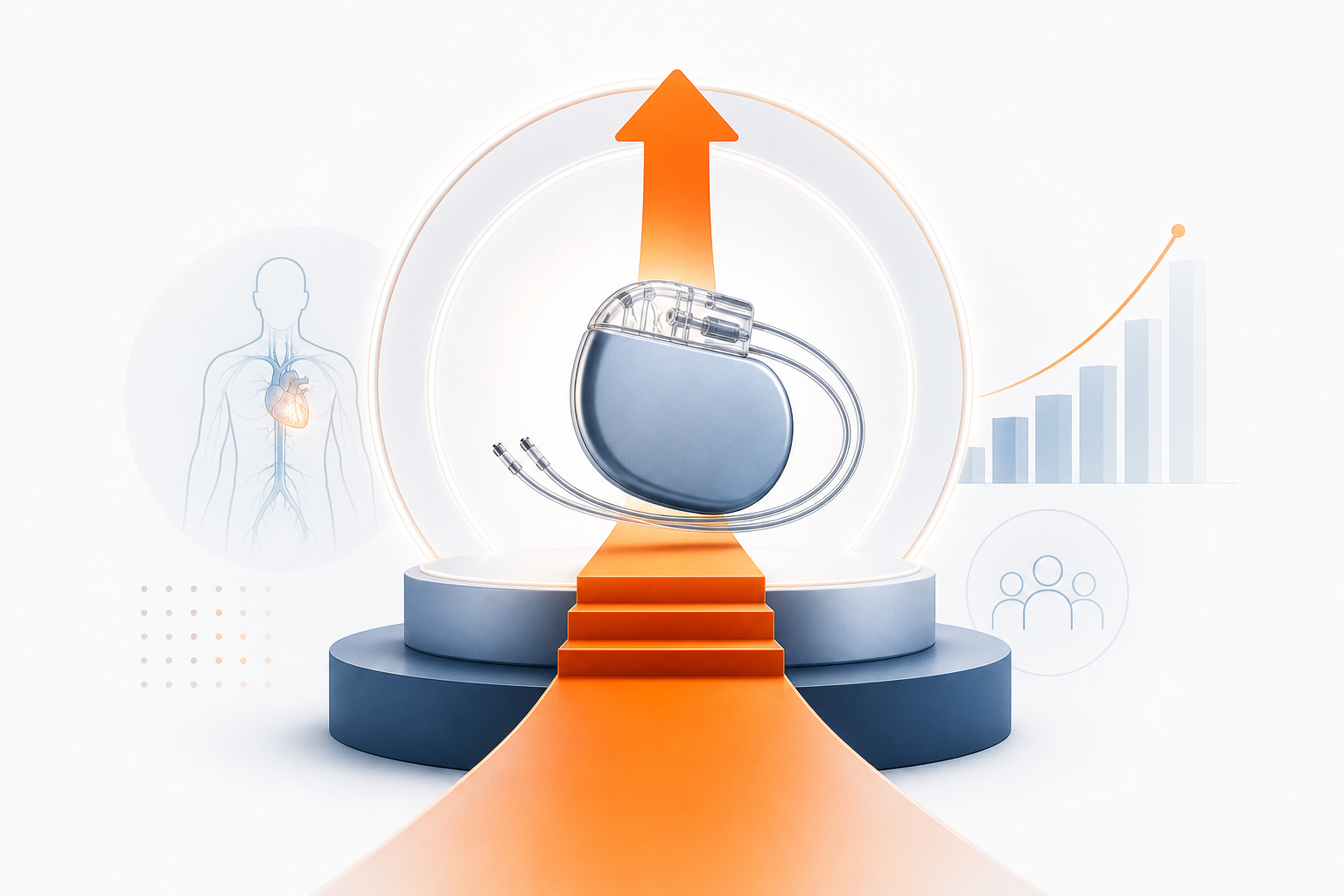
The Breakthrough Devices Program is a voluntary FDA program that gives certain medical devices and device-led diagnostics priority interaction and review. Established under the 21st Century Cures Act and formalized in FDA guidance, it was designed to accelerate the development and review of devices that provide more effective treatment or diagnosis of serious or life-threatening conditions.
The program does not create a separate regulatory pathway. Devices still go through 510(k), De Novo, or PMA review. What changes is the speed and depth of FDA engagement along the way: more frequent interactions, earlier access to senior reviewers, and a commitment to timely review once a premarket submission arrives.
The scale of the program reflects genuine industry demand. According to the U.S. Food and Drug Administration, 1,246 breakthrough device designations had been granted from the program's launch through December 31, 2025. Of those, 185 had received marketing authorization. That conversion rate matters — and is addressed in detail below.
The Two Eligibility Criteria Your Device Must Meet
Qualifying for breakthrough designation requires satisfying two conditions simultaneously. Both must be present. Meeting only one is not sufficient.
Criterion 1: Serious or Life-Threatening Condition
Your device must be intended to treat or diagnose a disease or condition that is serious or life-threatening. The FDA interprets "serious" broadly — conditions do not have to be immediately fatal to qualify. Chronic conditions that cause substantial impairment, irreversible morbidity, or significant reduction in daily function can meet this threshold.
Conditions that have historically qualified include heart failure, treatment-resistant depression, advanced-stage cancers, severe neurological disorders, and conditions with no adequate alternative therapy. The core question is whether the condition imposes a meaningful burden on patients and whether current options fall short.
Criterion 2: More Effective Than Available Alternatives
This is where most applications succeed or fail. Your device must provide for more effective treatment or diagnosis of the condition compared to currently available alternatives. The FDA evaluates this on one or more of the following grounds:
- Represents a breakthrough technology with no approved or cleared alternatives
- Offers significant advantages over existing approved or cleared alternatives, including improved diagnosis, treatment, or monitoring
- Availability is in the best interest of patients, particularly when the condition is serious and no alternative exists
"More effective" does not require clinical proof at the time of designation. Preclinical data, mechanism-of-action arguments, and a credible scientific rationale can support the request. The FDA is making a preliminary judgment about potential — not a final determination about efficacy.
When to Apply and What to Submit
Sponsors can request breakthrough designation at any point in the development process, including before an Investigational Device Exemption (IDE) is in place. Early application is generally advisable because the benefit of enhanced FDA interaction is most valuable before your protocol is finalized and your trial is underway.
The designation request is submitted as a separate administrative submission — not as part of a Pre-Sub or IDE. It should include:
- A description of the device and its intended use
- The serious condition the device addresses
- The basis for believing the device meets the "more effective" criterion, supported by available preclinical or clinical data
- A description of the current standard of care and why it is inadequate
The FDA has 60 calendar days to respond. In practice, the agency either grants designation, denies it with explanation, or requests additional information. Denial does not close the door permanently; sponsors can reapply with additional supporting data.
What Breakthrough Designation Actually Gets You
Designation is a process benefit, not a regulatory shortcut. Here is what it concretely provides:
Increased interaction with FDA. Designated devices receive priority access to FDA staff for meetings, written feedback, and dispute resolution. This matters most during protocol design, when early alignment on endpoints and study design can prevent costly amendments later.
Timely review commitment. Once a premarket submission is filed, the FDA commits to a review timeline faster than standard pathways. For PMA applications, the target review time for breakthrough devices is shorter than the standard 180-day target.
Senior staff involvement. Breakthrough programs bring senior FDA reviewers into the process earlier, which can reduce the back-and-forth that extends standard reviews.
Potential for rolling review. Sponsors can submit completed sections of a PMA as they become available rather than waiting to compile the full package — compressing the overall submission-to-decision timeline.
What designation does not provide: guaranteed approval, relaxed safety standards, or exemption from the clinical evidence requirements that apply to your device class. The FDA still expects rigorous, well-controlled clinical data.
The Gap Between Designation and Authorization
This is the number that deserves more attention than most articles give it. A 2025 report published on pubmed.ncbi.nlm.nih.gov analyzed FDA data from January 1, 2016 through September 30, 2024, covering 1,041 breakthrough designations and 127 marketing authorizations during that period. The authorization rate was 12.2%.
That figure does not mean the program fails 87.8% of devices. Many designated devices are still in active development, and the pipeline takes years to move from designation to submission. But the number does underscore that designation is a starting point, not a finish line.
The same 2025 report found that among the 127 authorized breakthrough devices in that dataset, 75 were therapeutic devices — representing 59.1% of all authorized breakthrough products. Diagnostics and monitoring devices made up the remainder. If your device is therapeutic, you are working in the category that has produced the most authorizations under this program.
How Breakthrough Designation Connects to Your FIH Strategy
For a pre-IDE startup, breakthrough designation and first-in-human execution are parallel tracks, not sequential ones. You can pursue designation while your clinical program is being structured. The FDA interactions that come with designation are most useful when your protocol is still being designed — which is precisely when you can act on them.
This is where the choice of CRO and clinical geography matters directly. The FDA accepts foreign clinical data under 21 CFR 812.28 when it is collected under ISO 14155 architecture and submitted with appropriate documentation. First-in-human studies conducted in Latin America, structured to that standard, generate data that supports a U.S. IDE, 510(k), De Novo, or PMA submission.
bioaccess® builds every protocol to ISO 14155 architecture and structures data per FDA 21 CFR 812.28. The FIH-12™ program delivers a submission-ready clinical evidence package within a 12-month structured timeline, with ethics and regulatory approvals in Panama, El Salvador, Chile, and the Dominican Republic observed in 30 to 90 days. For a startup that has just received breakthrough designation and needs first human data before the next funding round, that timeline is the relevant comparison point against the 6 to 12 months that U.S. or EU site approvals typically require.
The Axoft case study illustrates this directly: a Panama first-in-human program that preceded a $55M Series A. enVVeno Medical used a LATAM FIH foundation to build the evidence base for the first-ever FDA IDE for a non-surgical replacement venous valve. These are documented programs, not hypothetical outcomes.
For device sponsors working through coronary or vascular indications, the CeloNova BioSciences COBRA PzF stent program and the ClarVista Medical program — which ended in an Alcon acquisition — show how Latin America-executed clinical evidence supports the full regulatory arc from first-in-human through commercial exit.
Common Reasons Designation Requests Are Denied
Understanding why requests fail is as useful as understanding the criteria. The most frequent reasons include:
Inadequate characterization of the condition. If the submission does not clearly establish that the target condition is serious or life-threatening, the FDA has no basis to grant designation. This is as much a writing and framing problem as a scientific one.
Weak differentiation from existing alternatives. If approved or cleared alternatives exist and the submission does not explain specifically how the device is more effective, the FDA will deny the request. "Novel technology" is not sufficient without a mechanism-based or data-supported argument for superiority or advantage.
Indication scope mismatch. Requests that describe a broad indication when the clinical data supports only a narrow one create credibility problems. Narrowing the intended use to match available evidence often strengthens a request.
Premature submission without supporting data. Preclinical data can be sufficient, but a request with no scientific rationale beyond the device description is unlikely to succeed. Even early bench or animal data that speaks to mechanism or safety profile strengthens the argument.
After Designation: Keeping the Benefits Active
Breakthrough designation does not expire, but the benefits depend on active engagement. Sponsors who fail to schedule interactions with FDA, miss the opportunity to align on study design early, or submit a premarket application without taking advantage of rolling review are leaving the program's value on the table.
The FDA can also withdraw designation if the device no longer meets the criteria — for example, if a new alternative receives clearance that addresses the same unmet need. Monitoring the competitive landscape and maintaining regular FDA communication protects the designation's value over time.
Frequently Asked Questions
What is the FDA Breakthrough Devices Program?
The FDA Breakthrough Devices Program is a voluntary program that provides priority interaction and review for medical devices intended to treat or diagnose serious or life-threatening conditions more effectively than currently available alternatives. It does not create a separate regulatory pathway but accelerates FDA engagement throughout development and review.
What conditions qualify a device for breakthrough designation?
The target condition must be serious or life-threatening, which includes conditions causing substantial impairment, irreversible morbidity, or significant reduction in daily function. Conditions do not need to be immediately fatal to qualify.
Does a device need clinical data to apply for breakthrough designation?
No. Sponsors can apply at any stage of development, including before an IDE is in place. Preclinical data, mechanism-of-action arguments, and a credible scientific rationale are sufficient to support a designation request. Clinical proof is not required at the time of application.
How long does the FDA take to respond to a breakthrough designation request?
The FDA has 60 calendar days to respond. The agency will either grant designation, deny it with explanation, or request additional information.
What is the authorization rate for breakthrough-designated devices?
A 2025 report published on pubmed.ncbi.nlm.nih.gov found that between January 2016 and September 2024, 12.2% of designated devices had received marketing authorization. Many designated devices remain in active development, so this figure reflects the pipeline's stage distribution, not program failure.
Can first-in-human data from Latin America support a US breakthrough device submission?
Yes. The FDA accepts foreign clinical data under 21 CFR 812.28 when collected under ISO 14155 architecture with appropriate documentation. First-in-human studies conducted in Latin America through a program structured to those standards generate data accepted for U.S. IDE, 510(k), De Novo, and PMA submissions.
When should a startup pursue breakthrough designation relative to its FIH program?
Designation and FIH execution can run in parallel. Applying before your protocol is finalized is advisable because the enhanced FDA interaction is most valuable during study design. A CRO with FDA Pre-Sub experience can help align both tracks so the designation benefits directly inform the FIH protocol.
Build the Evidence Package Your Designation Demands
Breakthrough designation opens the door to faster FDA engagement. What you bring through that door is a clinical evidence package. The quality, structure, and FDA-readiness of that package determine whether designation translates into authorization.
bioaccess® structures FIH programs specifically to produce submission-ready evidence under ISO 14155 and FDA 21 CFR 812.28, with observed ethics and regulatory approval timelines of 30 to 90 days across Panama, El Salvador, Chile, and the Dominican Republic. For startups with a breakthrough designation and a funding clock running, that combination of speed and FDA-accepted rigor is the relevant operational question.
Learn more at bioaccessla.com.
Leave a Reply