- Why Sequencing Matters More Than Speed Alone
- Understand Your FDA Pathway First
- The FDA Framework That Makes LATAM Data Count
- Choosing the Right LATAM Jurisdiction for Your Device
- How to Sequence the Two Tracks
- The Startup-Specific Consideration: Runway and Milestones
- Common Sequencing Mistakes to Avoid
- How bioaccess® Structures This for Sponsors
- FAQs
- Where to Start
WordPress Category: Navigating Regulatory Landscapes in Latin America
Most MedTech founders treat regulatory strategy as a linear problem: get FDA clearance, then figure out the rest. That framing costs time and money. The smarter approach treats your FDA pathway and your first-in-human data strategy as a single sequenced plan — not two separate workstreams running independently.
If you're a startup CEO or CSO sitting on an IDE approval or approaching a Series A close, this article walks through how to think about that sequence, why Latin American regulatory jurisdictions belong in your plan, and how to structure the evidence you generate so it holds up at every step.
Why Sequencing Matters More Than Speed Alone
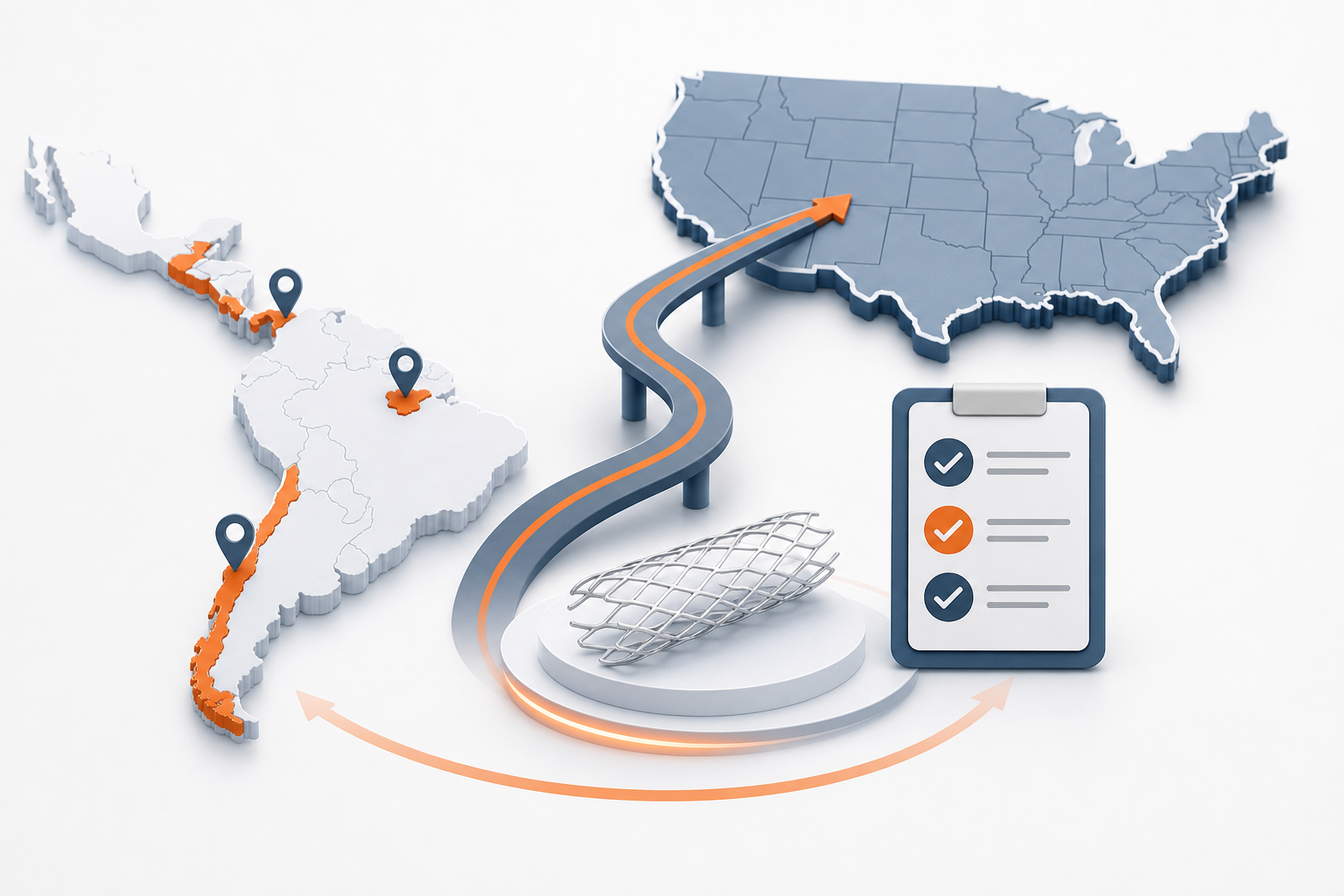
Speed is the obvious reason founders look at Latin America. Ethics and regulatory approvals in jurisdictions like Panama, El Salvador, Chile, and the Dominican Republic take 30 to 90 days, compared to 6 to 12 months in the US or EU. That gap alone can determine whether you have first human data before your next funding round closes — or after it.
But speed without regulatory alignment creates its own problem. If your LATAM trial isn't structured to FDA's foreign clinical data requirements from day one, the data you generate may not be usable for your IDE, 510(k), De Novo, or PMA submission. You'll have spent the time and the budget, and FDA will ask for more.
The goal isn't just to run a trial fast. It's to generate a submission-ready evidence package that bridges directly to your next FDA step.
Understand Your FDA Pathway First
Before you select a country, a site, or a protocol design, you need to know which FDA pathway your device is targeting. That determination shapes everything downstream.
The Five Core Pathways
IDE (Investigational Device Exemption): Required for significant risk devices entering US clinical investigation. LATAM FIH data can support the IDE application or inform the protocol for the US pivotal study that follows.
510(k): Clearance through substantial equivalence to a predicate device. First-in-human data from a LATAM feasibility study can strengthen a 510(k) by demonstrating clinical performance in a controlled setting.
De Novo: For novel low-to-moderate risk devices with no predicate. The clinical evidence standard is higher than 510(k), and a well-documented LATAM FIH study can serve as the primary clinical evidence basis.
PMA (Premarket Approval): For high-risk Class III devices. LATAM FIH and early feasibility data typically forms the foundation for a subsequent US pivotal study. The quality of your early data directly affects how FDA evaluates your pivotal protocol.
HDE (Humanitarian Device Exemption): For rare disease devices affecting fewer than 8,000 US patients annually. Early clinical data from a LATAM feasibility study can satisfy the probable benefit standard.
Knowing your pathway tells you what evidence FDA will need — which tells you what your LATAM protocol must produce.
The FDA Framework That Makes LATAM Data Count
Under FDA 21 CFR 812.28 (see FDA's official page on Acceptance of Data from Clinical Investigations for Medical Devices), data from foreign clinical investigations of medical devices may be accepted in support of an IDE or marketing submission, provided the study was conducted in accordance with Good Clinical Practice, including review and approval by an independent ethics committee, and the sponsor can verify data quality and integrity.
This isn't a loophole. It's a documented, established framework. What it requires is that your LATAM study be designed and executed to the same quality standard you'd apply to a US study — ISO 14155 protocol architecture, ICH-GCP compliance, independent ethics review, and an audit-ready data room.
If any of those elements are missing or inconsistently applied, the data's usability for FDA submissions becomes uncertain. This is exactly why protocol design and regulatory strategy must be aligned before enrollment begins, not after.
Choosing the Right LATAM Jurisdiction for Your Device
Not every Latin American country offers the same regulatory environment. For a startup, the practical distinction comes down to approval timeline and regulatory body predictability.
Fast-Approval Jurisdictions
Panama (MINSA/CNBI): Consistently among the fastest ethics and regulatory approval timelines in the region. Well-suited for first-in-human feasibility studies across a broad range of device classes.
El Salvador (SRS/CNEIS): Regulatory approvals in the 30-to-90-day range. A strong option for sponsors who need to move quickly and have a straightforward device profile.
Dominican Republic: Comparable approval timelines, with a growing clinical research infrastructure.
Chile (ISP/MINSAL): A slightly more structured process, but still substantially faster than US or EU timelines. Well-regarded for cardiovascular and interventional device studies.
Colombia: An established clinical research ecosystem with experienced investigator networks, particularly for complex device categories.
What Drives Jurisdiction Selection
Three factors should drive your choice: the device class and indication (some jurisdictions have deeper investigator experience in specific specialties), the regulatory body's familiarity with your device category, and your target FDA pathway. A device heading toward De Novo has different evidence requirements than one supporting a PMA, and those differences affect which jurisdiction and site network best fits your protocol.
How to Sequence the Two Tracks
Here's a practical sequencing framework for a startup that is IDE-ready or approaching that milestone.
Phase 1: FDA Strategy Alignment (Months 1 to 2)
Before any country selection or protocol drafting, align your LATAM study design to your FDA pathway. That means defining the primary and secondary endpoints your submission will need, confirming the study design (feasibility vs. pivotal), and identifying what a Pre-Submission meeting with FDA should accomplish before you enroll the first patient.
If you haven't had a Pre-Sub meeting yet, this is the time. The output of that meeting shapes your protocol. Running a LATAM study without it is a sequencing error that's difficult to correct after the fact.
Phase 2: Protocol Development and Jurisdiction Selection (Months 2 to 3)
With FDA alignment in place, develop your protocol under ISO 14155 architecture. Select your LATAM jurisdiction based on device class, indication, and approval timeline requirements, then submit to the relevant ethics committee and regulatory authority.
In Panama, El Salvador, and the Dominican Republic, ethics and regulatory approvals typically come back within 30 to 90 days of a complete submission. That window is your planning horizon for site activation.
Phase 3: Site Activation and Enrollment (Months 3 to 8)
Activate pre-qualified sites, enroll patients, and collect data under ICH-GCP standards with audit-ready documentation at every step.
The quality of your data management during this phase determines how clean your evidence package will be. Errors in data collection that seem minor during enrollment tend to become significant problems during FDA review.
Phase 4: Evidence Package Assembly (Months 8 to 12)
Compile your clinical study report, statistical analysis, and organized data room structured for your specific FDA next step. Whether that's an IDE application, a 510(k) submission, or the clinical evidence section of a PMA, the deliverable should be organized to FDA's expectations — not just internally coherent.
The Startup-Specific Consideration: Runway and Milestones
For a seed-to-Series-B startup, the regulatory strategy question is inseparable from the capital question. Your investors have a milestone schedule. Your board has a timeline. Your next round has a closing date.
A US or EU CRO timeline of 18 to 24 months for first human data doesn't fit inside a typical startup runway. A LATAM FIH study structured for FDA bridgeability can deliver a submission-ready evidence package within 12 months under the right program structure. That difference is often the difference between having data for your Series B and not having it.
This isn't an argument to cut corners on quality. It's an argument to select the regulatory jurisdictions and execution model that match your actual timeline constraints — without compromising the standards that make the data usable.
Common Sequencing Mistakes to Avoid
Starting protocol development before confirming your FDA pathway. If you don't know whether you're targeting a De Novo or a PMA, you can't write the right protocol. The evidence standard is different, and rewriting a protocol after enrollment has started is expensive.
Selecting a jurisdiction for speed alone. A fast approval timeline only matters if the site network in that jurisdiction has genuine experience with your device category and can execute to ISO 14155 standards. Speed and quality aren't mutually exclusive, but they require deliberate site selection.
Treating the LATAM study as separate from the FDA strategy. Every decision in your LATAM trial — from endpoint selection to data collection procedures — should be made with your FDA submission in mind. The two tracks are one plan.
Underestimating the data room requirement. FDA reviewers expect organized, auditable data. A clinical study report that's internally coherent but not structured for FDA review creates unnecessary friction at submission. Build the data room to FDA's expectations from the start.
How bioaccess® Structures This for Sponsors
bioaccess® is a CRO that manages first-in-human clinical trials for MedTech, Biopharma, and Radiopharma startups through exactly this kind of sequenced approach. The FIH-12™ program covers all nine workstreams — from FDA strategy alignment and protocol development through site activation, patient enrollment, data management, and delivery of a submission-ready clinical evidence package — within 12 months.
One accountable team manages all nine workstreams across a network of 50-plus pre-qualified sites in Panama, Colombia, El Salvador, Chile, and the Dominican Republic. Every study is anchored to the sponsor's intended FDA pathway from day one, and the final deliverable is a clinical study report and organized data room structured for the sponsor's next FDA step.
Intake is limited to a maximum of eight new programs per quarter — worth factoring into your planning timeline.
FAQs
Does FDA actually accept clinical data from Latin American trials?
Yes. Under FDA 21 CFR 812.28, data from foreign clinical investigations of medical devices may be accepted in support of IDE and marketing submissions, provided the study was conducted in accordance with Good Clinical Practice and the sponsor can verify data quality and integrity. The key requirement is that the study is designed and executed to the same standards FDA would expect from a US study.
How long do regulatory approvals take in Panama, El Salvador, and the Dominican Republic?
Ethics and regulatory approvals in these jurisdictions typically take 30 to 90 days from a complete submission. That refers to the approval process specifically, not the overall trial duration.
What is the difference between a feasibility study and a pivotal study in this context?
A feasibility study evaluates the preliminary safety and performance of a device in a small patient population. A pivotal study generates the primary clinical evidence for a marketing submission. For most startups, the LATAM FIH study is a feasibility study that informs and supports the subsequent US pivotal study.
Can LATAM FIH data support a 510(k) submission directly?
In some cases, yes. If the 510(k) requires clinical data to demonstrate substantial equivalence, a well-documented LATAM feasibility study conducted under ISO 14155 and ICH-GCP standards can serve as that clinical evidence. The specific requirements depend on the device class and the predicate.
What is ISO 14155 and why does it matter for FDA submissions?
ISO 14155 is the international standard for Good Clinical Practice in clinical investigations of medical devices. FDA recognizes it as the applicable GCP standard for medical device trials, and studies conducted under its framework are structured to meet FDA's foreign clinical data acceptance requirements under 21 CFR 812.28.
When should a startup begin thinking about LATAM regulatory strategy?
Ideally, before protocol development begins. The earlier you align your LATAM study design to your FDA pathway, the less rework you'll face later. For most startups, the right entry point is at or shortly after an IDE approval or Series A close, when both the capital and the regulatory authorization to proceed are in place.
What happens if the LATAM jurisdiction doesn't have experienced investigators for my device category?
This is a real risk — and a reason why jurisdiction selection should be based on more than approval timelines alone. Site networks with documented experience in your device category reduce protocol execution risk. Evaluating investigator experience and site qualification before finalizing your jurisdiction is an important part of the planning process.
Where to Start
Sequencing LATAM approvals with your FDA pathway isn't complicated in principle. It requires knowing your FDA pathway before you design your protocol, selecting jurisdictions based on both approval timelines and site capability, and building your evidence package to FDA's expectations from the first day of enrollment.
If you're approaching that planning window, the bioaccess® FIH-12™ program is structured specifically for this sequence. Learn more at bioaccessla.com.
Leave a Reply