Category: Clinical Research

  • Chile ISP clinical trial path for medical devices: investigation vs Exempt Decree No. 25 registro

    Sponsors mix two Chile clocks into one bar labeled “ISP.” One clock is Instituto de Salud Pública (ISP) authorization for a medical-device clinical investigation and investigational import. The other is commercial sanitary registration under Chile’s expanding Exempt Decree No. 25 wave. They are not the same petition. Confusing them is how a Santiago FIH plan quietly becomes a 2028 market-access scramble.

    I am Julio Martinez-Clark, CEO of bioaccess®. This page is the operator brief for running a medical-device clinical trial in Chile under ISP — and keeping that trial file off the commercial registro track. It is grounded in the live FIH startup clock, fast-track FIH corridor, Chile Exempt Decree No. 25 / ISP registration 2028, and Chile site posts such as Hospital Luis Tisné Santiago. It is not a quote and not legal advice. Confirm current ISP, ethics, and import instructions before you file.

    Two Chile files — write them apart first

    1. Investigation file (this page). ISP authorizes the clinical investigation and investigational-device import. An Ethical-Scientific Committee under Law 20.120 still has to sit. Success criterion: authorized research use of the named investigational article at named sites.
    2. Commercial registro file (different Gantt). Exempt Decree No. 25 (published 19 March 2026) expands mandatory ISP sanitary registration across 39 product types, including software as a medical device and multiple IVDs, with transition waves toward 2028/2029. Success criterion: conformity verification / ISP sanitary registration for manufacture, import, marketing, or distribution of covered products after the applicable transition dates.

    Live Chile blogs already put a typical ISP investigation review in a band of about 30 business days. Commercial ISP registration in a 30–90 day band is a different file. Do not put both on one Gantt labeled “Chile.”

    Where Chile sits on the FIH map

    Chile is inside Latin America’s fast-track FIH corridor with Panama, El Salvador, and Costa Rica. Published corridor activation band: 15–45 days. Panama remains the documented extreme (~15-day activation; ethics-submission ID in about 3 business days). Chile’s published role in that corridor is different: corridor speed plus top-tier perceived data rigor — the combination sponsors look for when they do not want a “small fast market” discount on the evidence package.

    Speed drivers on the live corridor page: efficient ethics and ISP pathways; experienced committees. Cost tier: upper among corridor countries — you pay for depth and perception. Population is still small; feasibility and backup sites matter.

    What ISP owns on the trial track

    • Clinical-investigation authorization. ISP is the investigation desk for device studies in Chile. A named hospital campus on ClinicalTrials.gov is not the ISP applicant and is not the operator of the ISP file.
    • Investigational-device import. Ethics letter, investigator’s brochure, and an importation permit — end-to-end work, not a PI email. See the regional investigational import guide.
    • Not commercial registro. Post-Decree 25 market access (technical instruction from ISP within up to 12 months of publication, Spanish IFU/label expectations, tecnovigilancia enrollment) belongs on the commercial track. Keep it off the FIH critical path until first patient is locked.

    We will not invent PAHO/WHO Level 4 standing for ISP. All bioaccess® device protocols in this country run under ISO 14155 and the Declaration of Helsinki.

    The legal basis, in one paragraph

    ISP’s power over the trial file comes from Código Sanitario Article 111 A, added by Ley 20.850 in 2015. It requires an “autorización especial para uso provisional con fines de investigación” for drugs and medical devices used in research on humans, when the product has no sanitary registration or will be used differently from its registration. The sponsor files after the accredited Comité Ético Científico (CEC) approval required by Ley 20.120. The authorization lasts up to one year and can be renewed. Exempt Decree No. 25 is a separate instrument. It adds 39 device and in vitro diagnostic (IVD) types to mandatory ISP registration for manufacture, import, sale and distribution: 13 types by 19 March 2028 and 26 by 19 March 2029. It does not mention clinical investigation. For how the device route compares with drug trials inside ISP, see why Chile’s ISP regulates device trials differently from drug trials.

    Ethics under Law 20.120

    An Ethical-Scientific Committee under Law 20.120 still has to sit. Institutional ethics calendars at Chilean hospitals are real — and they are not ISP. Share committee calendars and hospital research rules with the CRO early. Do not wait for the ISP letter to discover that the committee meets monthly and your Spanish informed-consent text is still in draft.

    Operator rule: same protocol version and same Spanish informed-consent text across the ethics packet and the ISP packet. The commercial IFU you will later lock under Decree 25 is not the ethics ICF.

    Submission checklist (investigation dossier)

    Assemble the universal FIH core once, then layer Chile. Do not invent form codes that are not on live bioaccessla.com pages — use this operator checklist against ISP’s current published requirements at filing time.

    Section What to freeze Operator check
    Protocol Version, endpoints, stopping rules Same version for ISP and Ethical-Scientific Committee
    Investigator’s brochure / preclinical Risk profile for first human use Matches the article on the investigational device list
    Informed consent (Spanish) Ethics-ready castellano Not the commercial IFU for Decree 25 registro
    Insurance Trial-related injury coverage Territory names Chile; language matches ethics packet
    ISO 14155 monitoring plan GCP bridge for foreign data Design for 21 CFR § 812.28 inspectability if a U.S. file is intended
    Investigational labeling For clinical investigation only Lot/serial traceability matches site accountability
    Device / accessory list Every unit in the accountability log Quantities match what import will request
    Importer of record Legal name before ethics stamps Document ties shipment to investigation authorization — not a commercial ISP certificate
    Ethics letter (Law 20.120) Ethical-Scientific Committee outcome Keep correspondence in one trial master file
    ISP investigation authorization Study authorization + import path ~30 business-day planning band; confirm at filing

    Import: investigational units are not the Decree 25 SKU

    Name the trial importer before ethics stamps the protocol. Map every investigational model, accessory, and spare to the investigation-authorized list. Outer labels must read as investigational. After last patient, close investigational inventory under the trial rules. Leaving units “for the hospital” without a new sanitary path is a new regulatory event, not a courtesy.

    Hand-carry is not the plan. Formal, traceable importation tied to the trial authorization is required across Latin America; Chile is not an exception.

    If the Chile FIH must support a U.S. file

    Design the investigation so the evidence room can satisfy 21 CFR § 812.28 (acceptance of data from clinical investigations conducted outside the United States): GCP, independent ethics review, and a device comparable to the version you will put in front of FDA. ISO 14155 is the device GCP bridge. A clean ISP investigation letter does not replace an inspectable trial master file. Eligibility of foreign data under § 812.28 is not a clearance prediction. See the live 812.28 LATAM inspectability page.

    Do not smear the hospital — and do not skip ISP

    Named Santiago campuses on ClinicalTrials.gov (for example Hospital Luis Tisné, Clínica Colonial) are real hospital strings. They can discuss investigator interest, local visit costs, and ethics calendars. They cannot, by ranking on ClinicalTrials.gov, become your ISP applicant, importer of record, insurer, ISO 14155 monitor, or 21 CFR § 812.28 packager. The First-in-Human CRO still owns those workstreams — plus the option to add another Latin American country if one Chilean campus is not the only enrollment fit.

    Common rejection / delay patterns

    • One “ISP” bar for trial and registro. Investigation (~30 business days planning) versus commercial registration (30–90 days planning; Decree 25 waves later) are different files.
    • Commercial certificate on investigational freight. Decree 25 / sanitary registration paperwork does not clear FIH kits.
    • Hospital NCT string treated as the regulatory plan. Campus ≠ ISP file.
    • Importer named after first patient. Import then becomes the critical path.
    • Waiting for ISP’s Decree 25 technical instruction before any commercial readiness. That is a market-access problem — keep it off the FIH critical path, but do not ignore it for launch planning.

    One-page gate before first patient in Chile

    • Authority map: ISP investigation + Ethical-Scientific Committee (Law 20.120) versus commercial ISP registro under Exempt Decree No. 25 only if launch is truly in scope.
    • Same protocol version and same Spanish informed-consent text across ethics and ISP packages.
    • Investigational importer named, with the document that ties the shipment to the investigation authorization.
    • Device list complete, including accessories.
    • ISO 14155 file owner who can produce monitoring, accountability, and ethics letters within 48 hours if FDA asks.
    • Feasibility: real site-level patient flow for your indication — corridor speed does not create patients.

    Frequently asked questions

    Does Exempt Decree No. 25 change how medical device clinical trials are authorized in Chile?

    No. Exempt Decree No. 25 (published 19 March 2026) makes ISP sanitary registration mandatory for 39 listed device and IVD types before they are manufactured, imported, sold or distributed in Chile. It does not mention clinical investigations. Research use is governed by Código Sanitario Article 111 A.

    When do the Decree 25 registration deadlines apply?

    The decree counts from publication in the Diario Oficial on 19 March 2026: 24 months for 13 listed types (19 March 2028) and 36 months for the other 26 (19 March 2029). ISP must issue the technical instruction within 12 months of publication.

    Does an investigational device need a Chilean registro sanitario?

    No. Article 111 A requires an ISP special authorization for provisional use for research when a device has no sanitary registration, or will be used differently from its registration. That authorization, not a registro, is the trial permit.

    Which regulation says ISP authorizes device trials?

    Código Sanitario Article 111 A, added by Ley 20.850 in 2015, covers both pharmaceutical products and medical devices used in research on humans. Decreto Supremo (DS) 114 Article 7, often cited for ISP trial authorization, refers to medicines.

    How many device types needed ISP registration before Decree 25?

    ISP’s registration page lists ten device and IVD types under mandatory registration, including surgical gloves, syringes, condoms, automated external defibrillators and HIV in vitro diagnostics. Decree 25 adds 39 types in two waves.

    General information, not legal advice. Verify current requirements with ISP and your CEC before filing.

    Related reading on bioaccessla.com

    Planning a Chile FIH file — ISP investigation, Law 20.120 ethics, and investigational import kept off the Decree 25 registro track? Talk with bioaccess® — contact Julio Martinez-Clark at jmclark@bioaccessla.com or +1 (954) 903-7210.
  • How to obtain ANVISA, COFEPRIS, ANMAT, or Panama MINSA approval for a medical device clinical trial

    Sponsors keep asking one stacked question: how do I obtain ANVISA, COFEPRIS, ANMAT, or Panama MINSA approval for a medical device clinical trial? Those four names are not interchangeable stamps. Each one is a different investigation desk, with a different ethics gate, and a different investigational-import story. Treating them as one “LATAM approval” is how a Gantt goes soft.

    I am Julio Martinez-Clark, CEO of bioaccess®. This page is a comparison hub for medical-device clinical-investigation authorization in Brazil, Mexico, Argentina, and Panama. It is grounded in live bioaccessla.com posts on the FIH startup clock, investigational import, ANMAT investigation checklist, Mexico’s COFEPRIS reset, and the Panama / El Salvador corridor pages. It is not a quote and not legal advice. Confirm every instrument against each agency’s current published texts before you file.

    Write four columns before translators start

    Put these four tracks on one page. Do not merge them into a single “regulatory” bar.

    1. Brazil — ANVISA. Agency review of the device clinical investigation, plus ethics (CEP/CONEP), plus a two-layer import path.
    2. Mexico — COFEPRIS. Federal protocol authorization, plus CONBIOÉTICA-linked ethics, plus a research-use import permit.
    3. Argentina — ANMAT. Investigation authorization (not commercial registro), plus independent ethics, plus provincial filings where required.
    4. Panama — MINSA. Ministry of Health investigation track with CNBI-registered ethics — the documented sprinter in the fast corridor.

    If the board slide says “we got LATAM approval,” ask which desk, which ethics letter, and which import document.

    Same question, four different clocks

    Published operator planning bands on the live startup clock (confirm at contracting):

    Country / desk Planning activation band Why the band looks that way
    Panama — MINSA + CNBI ethics 15–45 days (fast corridor) Ethics-submission ID in about 3 business days on published experience; parallel ethics and regulator work; about 15-day activation achieved in a real program
    Mexico — COFEPRIS + ethics Historically 6–9 months; watchlist with asterisk Published reset language cuts protocol review toward ~30 days with ethics ~4–6 weeks in parallel — verify measured clocks before you put Mexico in the fast corridor by default
    Brazil — ANVISA + CEP/CONEP 6–9 months Full agency review plus ethics; largest patient pool in the region
    Argentina — ANMAT + ethics 6–9 months Investigation desk with a 90-business-day statutory review target that pauses for RFIs; FIH/EFS often exceeds the target

    Panama sits with Chile, El Salvador, and Costa Rica in the 15–45 day corridor. Mexico, Brazil, Colombia, and Argentina sit in the major-market band unless a measured clock proves otherwise.

    Brazil — ANVISA (investigation + import are two layers)

    For investigational devices, Brazil is a two-layer system on the live import guide:

    • ANVISA clinical-investigation approval under RDC 837/2023. The Comunicado Especial lists the investigational products and authorized quantities.
    • Licença de Importação (LI) in Siscomex with ANVISA release at the port. The import rulebook (RDC 81/2008) is under revision — confirm the current instrument before citing it at filing.

    Ethics runs through CEP/CONEP. Portuguese certificate-of-insurance language is not optional stationery for that packet. Use the Brazil clinical-trials hub for clocks; do not invent medians here.

    Operator check: freeze the investigational product list once. The Comunicado Especial quantities must match what Siscomex will see. A commercial sanitary registration number does not clear FIH freight.

    Mexico — COFEPRIS (reset language ≠ measured clock yet)

    COFEPRIS (Comisión Federal para la Protección contra Riesgos Sanitarios) is Mexico’s federal health regulator. CONBIOÉTICA is the national bioethics commission. Live COFEPRIS reset coverage already states:

    • Published direction cuts clinical-trial protocol review from ~120 days toward ~30 days.
    • An abbreviated pathway in force since 1 September 2025 gives ~30-business-day device decisions for products already authorized by certain reference regulators.
    • A 15 January 2026 decree amended the Ley General de Salud on clinical-research reform, with COFEPRIS–CONBIOÉTICA coordination.
    • Regulatory reliance language recognizes evaluations by FDA, EMA, MHRA, and Health Canada for clinical-research protocols.
    • Ethics / IRB review remains a separate ~4–6 week benchmark clock.

    Import: a research-use import permit connected to the COFEPRIS trial authorization. Confirm the current COFEPRIS procedure at filing — agency processes have been changing.

    Until sponsors and CROs have measured real-world clocks across several submissions, keep Mexico on the watchlist with an asterisk. Parallelize ethics and regulator filings; do not bank the announcement as Panama-class speed.

    Argentina — ANMAT (investigation is not registro)

    ANMAT is one agency name on two files. Write them apart before anyone translates:

    1. Investigation file. Clinical-investigation authorization for FIH or early feasibility, plus independent ethics under ISO 14155 and the Declaration of Helsinki, plus provincial oversight where required (for example Buenos Aires). Device clinical studies fall under Disposición ANMAT 969/1997, the regime for medical technology clinical studies; its Article 3 sets a 90-business-day statutory review target that pauses for RFIs.
    2. Registro file. Sanitary registration for Classes I–IV under Disposición ANMAT N° 64/2025, including HELENA declaración jurada routes for eligible CE-marked Class I/II. Success criterion: a selling license — not a trial letter.

    Import authorization links to the ANMAT trial approval through a licensed importer of record. Argentina’s import documentation is exacting. Reconcile every document before filing. A HELENA DDJJ or a cousin SKU’s registro does not move investigational kits.

    Full dossier checklist: see the live ANMAT clinical-trial submission checklist.

    Panama — MINSA (fast corridor, still two files)

    Panama’s Ministry of Health (MINSA) oversees clinical investigations through the Dirección Nacional de Farmacia y Drogas on the live Panama hub language. Ethics review runs through institutional bioethics committees registered with the national CNBI. Published ethics band: about 3–5 weeks. Insurance exhibits belong in that packet.

    Published Class III FIH geography language points at Ley 84 of 14 May 2019 and Decreto Ejecutivo No. 21 of 23 April 2026 on the Panama Class III FIH guide — confirm those instruments at filing. Dollarized economy, English-capable sites, investigation units only.

    Import authorization is tied to the MINSA trial authorization. Panama’s fast startup clock only holds if import runs in parallel with ethics and regulatory submissions. Commercial registro stays a separate MINSA market-access file.

    Universal dossier core (assemble once)

    Use the same core across all four desks, then layer country packets. Grounded in the live LATAM FIH submission-package checklist:

    Section Freeze once Country layer
    Protocol Version, endpoints, stopping rules Same version across agency + ethics packs
    Investigator’s brochure / preclinical Risk profile for first human use Matches the article on the investigational list
    Informed consent Local language for ethics Spanish (MX/AR/PA) or Portuguese (BR) — not the later commercial IFU
    Insurance Trial-related injury coverage Territory and named parties match the sites
    ISO 14155 monitoring plan GCP bridge for foreign data Design for 21 CFR § 812.28 inspectability if a U.S. file is intended
    Investigational labeling + device list Lot/serial accountability Quantities match what import will request (BR: Comunicado Especial)
    Importer of record Legal name before ethics stamps Document ties shipment to investigation authorization

    How these approvals relate to FDA

    A clean ANVISA, COFEPRIS, ANMAT, or MINSA investigation letter does not replace an inspectable trial master file. Foreign clinical data can be eligible for FDA submission and review under 21 CFR § 812.28 when the investigation meets the GCP conditions in that rule. ISO 14155 is the device GCP bridge FDA has publicly recognized for foreign investigations. Eligibility is not a clearance prediction. Keep device accountability, deviation logs, monitoring reports, and ethics correspondence in one place from day one. See the live FDA 21 CFR 812.28 LATAM inspectability and FDA acceptance of LATAM FIH data pages.

    Common failure patterns across all four

    • One LATAM Gantt bar. Panama’s corridor clock does not transfer to ANVISA or ANMAT.
    • Registro number on investigational freight. Commercial certificates do not clear FIH kits in Brazil, Mexico, Argentina, or Panama.
    • Ethics after agency. Sequential filing burns calendar the statutory targets never promised to absorb.
    • Importer named after first patient. Import then becomes the critical path ethics cannot fix.
    • Announcement clocks treated as measured clocks. Especially Mexico’s COFEPRIS reset — verify before you promise the board.

    One-page gate before first patient

    • Country shortlist with indication-level patient flow — not just the fastest desk.
    • Authority map: investigation desk + ethics (+ provincial / CONEP / CNBI as applicable) versus commercial registro on a separate track.
    • Same protocol version across every packet.
    • Importer named, with the document that ties shipment to investigation authorization.
    • Device list complete, including accessories and authorized quantities.
    • ISO 14155 file owner who can produce monitoring, accountability, and ethics letters within 48 hours if FDA asks.

    Related reading on bioaccessla.com

    Planning a multi-country FIH file across Brazil, Mexico, Argentina, or Panama? Talk with bioaccess® about sequencing investigation desks, ethics, and investigational import — contact Julio Martinez-Clark at jmclark@bioaccessla.com or +1 (954) 903-7210.

  • How to get IRB (CEI) approval for a medical device study in Colombia

    Sponsors keep asking how to get IRB approval for a medical device study in Colombia as if ethics were a single stamp that also clears INVIMA. It is not. In Colombia the ethics desk is a Comité de Ética en Investigación (CEI) approved by INVIMA, sitting at an IPS that holds a current Buenas Prácticas Clínicas (BPC) certificate. The investigation opinion and the import authorization are separate desks. Mixing them is how first patient slips a cycle.

    I am Julio Martinez-Clark, CEO of bioaccess®. This is the Colombia ethics walkthrough for medical-device studies, grounded in the live Colombia clinical-trial execution pillar, the INVIMA clinical-trial submission checklist, and the universal LATAM FIH submission package. It is not a quote and not legal advice. Confirm every form against INVIMA’s current Investigación Clínica — Dispositivos page before you file.

    What “IRB” means in Colombia

    US sponsors say IRB. In Colombia the working term is CEI — an INVIMA-approved research ethics committee. The CEI reviews the protocol, informed consent, and investigator packet under the human-subjects rules in Resolución 8430 de 1993. The CEI letter is not an INVIMA investigation opinion, and it is not a Registro Sanitario.

    Write three owners before you open a Spanish translation folder:

    1. CEI / ethics. INVIMA-approved committee; initial study evaluation on form ASS-RSA-FM169.
    2. INVIMA investigation opinion. For devices, the Sala Especializada de Dispositivos Médicos y Reactivos de Diagnóstico In Vitro (SEDMRDIV), supported since 20 September 2022 by the GICASE group under Resolución 2022035262. Forms ASS-RSA-FM085 / ASS-RSA-FM172.
    3. Import of the investigational article. Exceptional importation under Decreto 4725 de 2005 Article 48(b), against a prior specialized-chamber opinion — not a commercial registro number on the airway bill.

    If your Gantt has one bar labeled “Colombia IRB,” you do not have an ethics plan. You have a hope.

    Site prerequisites the CEI will not waive

    A Colombian interventional device study needs more than a friendly PI:

    • A CEI approved by INVIMA.
    • A site (IPS) with a current BPC certificate. INVIMA issues that certificate after verifying compliance with Resolución 2378 de 2008 through inspection visits. The certificate runs five years.
    • Evidence that the institution is registered under the Sistema Único de Habilitación with authorized pharmaceutical service, clinical laboratory, and sample-collection services inside the same habilitación. Contracting those services outside the habilitación adds documentation to every BPC modification.

    INVIMA’s register of approved research ethics committees places them in Bogotá, Medellín, Cali, Floridablanca, and Montería, attached to established IPS and medical foundations. Bogotá, Medellín, and Cali remain the tier-1 clusters for most device programs. Replacing a site’s ethics committee is a formal BPC modification: a new-conditions verification visit and a written transfer plan agreed with sponsor, CRO, and both committees. Treat CEI selection as a critical-path item, not an afterthought.

    Step-by-step: ethics before (or beside) the INVIMA file

    Colombia is not Panama’s parallel Type II + MINSA corridor. Plan CEI, INVIMA concept, and import as sequential critical-path items unless your operator has a documented reason to overlap them. The measured INVIMA average footed on the Colombia execution pillar is 5.1 months to a definitive concept (approve or reject). There is no statutory day-count for that concept. Do not paste a fast-corridor ethics band onto Bogotá.

    1. Freeze the protocol version that every desk will see. The universal FIH core already names protocol, investigator’s brochure, informed consent, case report form, insurance, and preclinical testing. Colombia’s country add-on is a procedure-risk matrix — procedural risk, not FDA-style design verification.
    2. Pick the IPS and confirm BPC + CEI status on INVIMA’s published registers before contracting. Do not discover a lapsed BPC certificate after the consent is translated.
    3. Draft Colombian informed consent for that CEI — regulatory Spanish adapted for the committee, not a U.S. IRB form with a machine translation stapled on.
    4. File the CEI package with ASS-RSA-FM169 (initial study evaluation completed by the ethics committee) and the reconciled Spanish + English pack: protocol, IB/preclinical, risk management (ISO 14971) appropriate to class, IFU and investigator training, clinical-trial insurance covering Colombian subjects, investigator CVs and GCP certificates, site budgets and contracts running in parallel so activation is not the bottleneck after the opinion lands.
    5. Keep the CEI letter and the SEDMRDIV file on the same investigation story. Stopping rules, device description, and the article you will import must match. Prototype authorization under Decreto 4725 de 2005 Article 36 is research and experimentation only — not health care use, not a commercial registro number.
    6. Only then treat import as its own authorization under Article 48(b). The CEI stamp does not clear customs.

    What the CEI packet must prove

    Packet item What it proves Common stall
    Protocol + stopping rules Same investigation the SEDMRDIV will see Version drift vs the INVIMA file
    IB / preclinical Risk profile for first human use Thin bench package, hoping ethics will “fill gaps”
    Colombian ICF Subjects informed in local regulatory language US IRB text with Spanish overlay
    Insurance Coverage for Colombian subjects Policy that does not name the territory or runoff the CEI expects
    Investigator docs Qualified team at a BPC site PI CV without current GCP evidence
    Procedure-risk matrix Colombia add-on on procedural risk Treating it as a product design-verification dump

    Timelines you can put on a board slide

    • CEI cadence — committee-specific. Confirm meeting frequency during site selection. This page does not invent a national CEI day-count.
    • INVIMA concept — measured average 5.1 months to a definitive concept; no statutory clock. Published approval and non-approval registers exist for device studies — read the non-approval register before you invent a “Colombia is unpredictable” narrative.
    • Import — after the specialized-chamber path that Article 48(b) requires. Plan it as its own bar.
    • Not law yet — the clinical-research framework bill filed in the Cámara in August 2025 would introduce tacit approval (7 calendar days common-risk / 30 high-risk, with FIH and novel implantables as high-risk). Do not put that clock in a diligence deck as if it were current INVIMA practice.

    Common mistakes that burn ethics weeks

    • Treating CEI approval as if it were the INVIMA investigation opinion or Registro Sanitario.
    • Skipping BPC / habilitación checks, then losing weeks on a BPC modification mid-startup.
    • Filing a drug Protocolos en Línea path (tariffs 4070 / 4083) for a device SEDMRDIV file — wrong desk.
    • Assuming post-trial access is mandatory in Colombia. It is not. Resolución 2378 de 2008 and Resolución 8430 de 1993 contain no statutory post-trial supply duty; see the LATAM PTA operator map.
    • One workstream for FIH evidence and later commercial registro. Article 18(k) of Decreto 4725 de 2005 is why class IIb and III evidence and registration strategy belong in the same plan — not why they share one ethics form.

    Related reading on bioaccessla.com

    Planning CEI plus INVIMA sequencing for a device study in Bogotá, Medellín, or Cali? bioaccess® is a US-headquartered, LATAM-native operator running regulatory submissions, importadora functions, and 2–8 °C GDP cold chain across the region. Contact Julio Martinez-Clark, Co-Founder & CEO, at jmclark@bioaccessla.com or +1 (954) 903-7210. More at bioaccessla.com/roadmap.

    Frequently asked questions

    How do I get IRB approval for a medical device study in Colombia?

    Engage an INVIMA-approved CEI at an IPS with a current BPC certificate, file the ethics package (including ASS-RSA-FM169), and keep that packet aligned with the separate SEDMRDIV investigation file and Article 48(b) import path. The CEI letter alone does not authorize the study or the investigational shipment.

    Is Colombia’s CEI the same as INVIMA authorization?

    No. Ethics (CEI), INVIMA investigation opinion (SEDMRDIV / GICASE), and exceptional import are three desks under Decreto 4725 de 2005, Resolución 8430 de 1993, and the BPC regime in Resolución 2378 de 2008.

    Which cities have INVIMA-approved ethics committees?

    INVIMA’s published register places approved committees in Bogotá, Medellín, Cali, Floridablanca, and Montería. Tier-1 device work usually concentrates in Bogotá, Medellín, and Cali.

    How long does Colombia ethics plus INVIMA take?

    CEI timing is committee-specific. INVIMA’s measured average to a definitive concept is 5.1 months with no statutory day-count. Plan sequential desks unless you have a documented overlap plan.

    Does every Colombian site need a BPC certificate?

    Yes in practice for institutions running interventional research under INVIMA oversight. The certificate runs five years and depends on habilitación services inside the same institution.

  • Clinical trial insurance for medical device studies in Latin America

    Sponsors still ask the same question before every Latin American device study start: what clinical trial insurance do we need for ethics, import, and a second country? The answer is a country-snapshot checklist — territory, named insureds, language, runoff — not a hallway promise that “we’re global.”

    I am Julio Martinez-Clark, CEO of bioaccess®. This hub is the missing checklist page that satellite posts already pointed at. It is general information, not insurance, legal, or regulatory advice. Confirm current ethics, import, and coverage rules with qualified advisers and a licensed broker. We do not invent premiums, limits, or carrier rates here. We do not claim a named carrier as a signed bioaccess® partner on this page. No patient data. No unpublished client. Always bioaccess®.

    The CRO is not the carrier

    Founders type “buy clinical trial insurance” and land on CROs, brokers, and hospital MSAs in the same result set. Those are three jobs:

    • Carrier. Underwrites participant injury, medical expenses for trial-related events, defense, and site/investigator indemnification — if the form matches the protocol. A hallway conversation is not a binder.
    • Broker. Places the form, translations, additional-insured endorsements, and territory wording. Licensed where the paper has to sit.
    • CRO. Protocol, IB, ICF, ethics and national-authority packet, investigational importer, ISO 14155 monitoring, SAE clock, TMF, and the 21 CFR 812.28 narrative. Eligibility of foreign data is not FDA clearance.

    Mixing those jobs is how a startup buys a U.S. product-liability rider, emails an English PDF to an ethics committee, and gets a resubmission. Product liability is not clinical-trial liability. A site’s institutional policy is not the sponsor’s trial form.

    The country-snapshot checklist

    Insurance documentation usually sits in the ethics / national-authority packet, not as a post-approval formality. Before first submission, write five lines and make the certificate match them:

    1. Territory. Name every country on the protocol. A Delaware HoldCo certificate that never names Panama, El Salvador, Chile, or Brazil is decoration.
    2. Named insureds. Sponsor entity legal name as it appears on the CTA and ICF. Add site and principal investigator as additional insureds when the committee requires it.
    3. Language. Spanish for Spanish-speaking committees; Portuguese for CEP/CONEP in Brazil. An English-only certificate is a classic resubmission. See Spanish or Portuguese insurance certificates for LATAM ethics.
    4. Period and runoff. Policy period through last-patient last-visit plus the protocol follow-up window. Confirm claims-made vs occurrence and any runoff the committee or CTA expects. Do not invent a pan-regional day count here.
    5. Claims-notice language. Must sit next to the SAE clock, not against it. The person who opens the SAE notice should know who opens the claims notice.

    We will not invent a per-participant dollar limit on this page. Individual ethics committees set thresholds. Ask the carrier and the CRO together before the packet goes in.

    Local admitted paper vs controlled master

    Two workable patterns — confirm which the reviewing body will stamp:

    • Local admitted policy in the study country, with certificates that name the site and PI.
    • Controlled master that can issue local certificates (or notarized Spanish/Portuguese summaries) for each country on the protocol.

    A “controlled master” that never issues a local certificate is a slide, not a submission. A local-only policy that cannot travel to a second Latin American country is a one-country trap. When country 2 sits, the move is an endorsement or a new certificate — not a new CRO contract that pretends to be a binder. That intercept lives on adding a second LATAM country endorsement.

    Country snapshots (use live hubs; confirm on filing day)

    These are operator snapshots for insurance timing, not rate cards:

    • Panama (MINSA / CNBI). Ethics review through institutional bioethics committees registered with CNBI. Published ethics typically 3–5 weeks on the Panama hub; insurance exhibits belong in that packet. Per-patient cost bands already published there: about USD 12,000–22,000. Spanish certificate language is the usual ask.
    • El Salvador (SRS / CNEIS). Parallel SRS and CNEIS review; country hub publishes a 30–60 day startup band. Financial responsibility for participant injury still belongs in the ethics packet before initiation. Keep trial insurance off the commercial registro track.
    • Chile (ISP). Fast-corridor country with efficient ethics + ISP pathways. Plan Spanish certificates and additional insureds before the ethics date, same as the rest of the corridor.
    • Costa Rica. Corridor speed with concentrated sites. Same five-line checklist as above.
    • Brazil (ANVISA / CEP). Portuguese certificate of insurance is not optional stationery for CEP/CONEP. Use the Brazil clinical-trials hub for clocks — do not invent medians here.
    • Mexico (COFEPRIS). Keep trial liability separate from registro sanitario. Territory must name Mexico before the ethics packet goes in.
    • Colombia (INVIMA). Public line unchanged: bioaccess® still runs clinical trials in Colombia and owns CRO-in-Colombia; INVIMA commercial registration remains. Because INVIMA clinical-trial approval timelines have become unpredictable, bioaccess® does not currently recommend Colombia for new FIH trial execution. A Bogotá ethics packet still wants financial responsibility for participant injury — that does not flip the FIH recommendation line.

    What bioaccess® owns after you have a quote

    • Regulatory-fit geography — not country tourism.
    • Protocol, IB, ICF, and the ethics / national-authority packet with insurance documents in the same stack — not a parallel founder email.
    • Importer of record and device accountability. A binder does not import the investigational product.
    • Site activation: contracts, training, investigational product, EDC, monitoring plan. A site MSA that “includes insurance” is still not ISO 14155 monitoring.
    • Introducing a specialty carrier when the founder does not already have admitted paper. Introduction is not a signed partnership on this page. We do not invent rates.

    The firm was founded in 2010. Public device case studies already on site (ReGelTec, Axoft, Newrotex, enVVeno, Avantec Vascular / Sangria™) show FIH execution with import and insurance as workstreams — not as bioaccess® underwriting. Public copy mentioning a $10M Sangria™ trial policy describes CRO coordination, not a SKU or rate we invent here.

    Common failures that stall ethics

    • English-only certificate in a Spanish or Portuguese committee folder.
    • Territory that lists “worldwide” but never names the study country.
    • Product-liability or general-liability rider treated as trial liability.
    • Site MSA “insurance included” with no sponsor trial form.
    • Country 2 added to the protocol with no endorsement calendar.
    • Policy period that ends before last-patient last-visit plus follow-up.

    Related reading

    Need the insurance exhibit sequenced with your LATAM FIH packet? bioaccess® runs the trial under ISO 14155 and can introduce a specialty carrier. We do not underwrite. Contact Julio Martinez-Clark, Co-Founder & CEO, at jmclark@bioaccessla.com or +1 (954) 903-7210.

    Frequently asked questions

    Does bioaccess® sell clinical trial insurance?

    No. We are the First-in-Human CRO. We can introduce a carrier. We do not underwrite. We do not bind. We do not invent a rate card on this page.

    What should a LATAM clinical trial insurance certificate show?

    Territory naming every study country, correct named insureds (and additional insureds when required), Spanish or Portuguese language when the committee asks, policy period through LPLV plus follow-up / runoff as required, and claims-notice language that can sit next to the SAE clock.

    Is this the same article as the Spanish/Portuguese certificate page?

    No. That page is the language intercept for the clerk who stamps the exhibit. This hub is the country-snapshot checklist (territory, named insureds, language, runoff). The second-country page is the endorsement intercept. Distinct slugs. Same rule: the CRO runs the trial; a carrier writes the paper.

    Can a U.S. product-liability policy cover a LATAM device FIH?

    Only if the territory clause and the trial-liability form actually name the countries and the investigational activity. Many U.S. GL/PL policies exclude OUS research. Get it in writing from the carrier. A verbal “we’re global” is not an ethics exhibit.

    When do we add insurance for a second LATAM country?

    Before the second ethics packet goes in. Ask whether the master can certificate the new country; if not, start local admitted paper in time for that ethics date. See the endorsement page.

  • El Salvador first-in-human cost and timeline vs the United States

    Boards keep asking how much a first-in-human medical device trial in El Salvador costs compared with the United States, and how long startup actually takes. Those are two questions. One is a published country clock. The other is a study-specific quote. Mixing them into one invented total is how diligence slides go soft.

    I am Julio Martinez-Clark, CEO of bioaccess®. This is an El Salvador country spotlight grounded in the live clinical trials in El Salvador hub, the fast-track FIH corridor post, and the sibling cost page that already covers Panama and El Salvador together. It is not a quote. Confirm budgets and calendars against your protocol.

    What “vs the United States” usually buys

    When sponsors say a U.S. FIH is too expensive, they usually mean three stacked costs:

    1. Time to first patient — site contracting, IRB sequencing, and treating first implant as a United States-only problem.
    2. Site and per-patient economics — hospital fees, investigator fees, and visit complexity priced from the schedule of events.
    3. Evidence quality for later FDA use — ISO 14155 discipline and a 21 CFR § 812.28 design, or you bought speed you cannot spend.

    An El Salvador investigation is not a discount coupon on FDA clearance. It is a second evidence calendar that can run while the U.S. path is still being built. Eligibility of foreign data for FDA submission and review is not a guarantee of clearance or approval.

    Published El Salvador clocks (investigation only)

    The live El Salvador hub already publishes a 30–60 day study-startup band via parallel review by the Superintendencia de Regulación Sanitaria (SRS) and the Comité Nacional de Ética de la Investigación en Salud (CNEIS) on one digital platform. That band is investigation authorization plus ethics — not commercial registro.

    SRS replaced the former Dirección Nacional de Medicamentos (DNM) in August 2024 under the Ley de la Superintendencia de Regulación Sanitaria (7 August 2024). Ethics stays centralized at CNEIS. The live step-by-step FIH guide already names the SRS-CNEIS-ES digital platform and the user manual issued 17 November 2025. Use that manual. Do not invent article numbers from reforms you have not opened.

    On the corridor clock published in the startup guide, El Salvador sits with Panama, Chile, and Costa Rica in the 15–45 day activation tier for the fast corridor as a whole. Treat those as indicative operator bands. Ask for a study-specific calendar before you put a single date on a board slide.

    Cost: what is published vs what must be quoted

    Two cost facts already live on bioaccess® pages — and that is where I stop inventing:

    • The El Salvador hub already publishes roughly 60% cost savings versus equivalent U.S. programs, plus a dollarized (U.S. dollar) economy. That is orientation from the country page, not a formal study for your Class III implant.
    • Inside the fast corridor, El Salvador is the cost leader on hospital and site fees versus Panama. The corridor post states that gap in plain operator language. Panama remains the proven sprinter on activation; El Salvador undercuts it on site economics.

    I will not invent a dollar program total, a weekly burn, or a “typical U.S. per-patient” figure on this page. If your U.S. sites have not returned real bids, leave that cell blank. Blank is more honest than a blogger’s invented average. For how LATAM FIH money actually splits — site pass-throughs, CRO professional fees, third-party costs — start from the FIH Latin America budget guide.

    What drives cost and time in El Salvador

    Same four stages as the rest of the region; El Salvador compresses them when the file is clean:

    1. Preparation and Spanish package. Protocol, investigator’s brochure, informed consent, case report forms, and the insurance certificate the committee will stamp. Rework, not review, is the usual delay.
    2. CNEIS cadence. Centralized national ethics, not a tourism of local IRBs.
    3. SRS investigation authorization. Parallel with ethics on the published digital path — not a sequential hope.
    4. Investigational import. Units for research only. Do not put a cousin commercial registro number on FIH freight. That pattern burns weeks at customs and contaminates both tracks.

    Enrollment is a separate model. El Salvador is a small market. Activation in weeks means nothing if patient flow for your indication is thin. Model enrollment from real San Salvador site flow, prequalify backup sites, and keep the startup clock distinct from first-patient-in.

    Keep the trial file off the commercial holder track

    Cost discipline in El Salvador starts with two dossiers:

    • Trial file: Spanish protocol package, CNEIS ethics, SRS investigation authorization, investigational labeling, ISO 14155 monitoring plan, import story for study units only.
    • Registro / holder file (optional, later): commercial market access. Different petition. Different success criteria. Already spelled out on CNEIS/SRS trial authorization vs registro.

    If the same person owns both without two importers and two success criteria, you do not have an El Salvador plan. You have a hope that erases the calendar advantage the hub already publishes.

    Insurance and import are line items, not footnotes

    Ethics packets still want financial responsibility for participant injury documented before initiation — usually a Spanish certificate. Product liability is not clinical-trial liability. A U.S. master that never names El Salvador fails the exhibit. Budget the certificate with the CRO and a licensed broker before you present “LATAM is cheaper.” See the insurance hub and the language intercept on Spanish/Portuguese certificates.

    Public case work already on the site (including Avantec Vascular / Sangria™) treated insurance placement and investigational import as operational workstreams — not as bioaccess® underwriting. We do not invent premiums from those pages.

    Colombia note (do not flip the public line)

    Colombia remains a strong market-access geography and a historical FIH geography for bioaccess®. The public line still stands: INVIMA clinical-trial approval timelines have become unpredictable, so bioaccess® does not currently recommend Colombia for new first-in-human execution. Use El Salvador, Panama, Chile, or the Dominican Republic when the protocol needs a lead investigation desk — and keep INVIMA registro on the commercial track.

    Board slide that survives diligence

    • Evidence column. El Salvador CNEIS/SRS, investigational importer, § 812.28 owner, ISO 14155 TMF owner.
    • Published bands only. 30–60 day startup; corridor cost-leader note vs Panama; ~60% vs U.S. orientation from the hub — then a study-specific quote.
    • U.S. column as real bids — or blank.
    • Commercial column (optional). Holder / IOR countries on the market-access track. Already-cleared launch is a different SKU from FIH.

    Related reading

    Planning an El Salvador FIH file? bioaccess® is a US-headquartered, LATAM-native First-in-Human CRO. To discuss CNEIS/SRS sequencing, investigational import, and a study-specific cost/timeline quote — contact Julio Martinez-Clark, Co-Founder & CEO, at jmclark@bioaccessla.com or +1 (954) 903-7210.

    Frequently asked questions

    How much does a first-in-human medical device trial in El Salvador cost compared with the United States?

    Use published orientation, not an invented total. The El Salvador hub already cites roughly 60% cost savings versus equivalent U.S. programs and a dollarized economy. Inside the fast corridor, hospital and site fees run below Panama’s. Program totals still need a proposal priced from your schedule of events. Leave any U.S. comparator blank until named U.S. sites return real bids.

    How long does El Salvador FIH startup take?

    The country hub publishes 30–60 days via parallel SRS and CNEIS review. The regional startup clock groups El Salvador with the fast corridor at a 15–45 day activation tier. Confirm a study-specific calendar. Activation is not first-patient-in.

    Is El Salvador cheaper than Panama for FIH?

    On hospital and site fees, yes in bioaccess® operator experience — that is why the corridor post calls El Salvador the cost leader. Panama remains the documented extreme on activation speed. Pick on indication fit and patient flow, not the clock alone.

    Is the trial authorization the same as DNM/SRS registro?

    No. Investigation and commercial registro are separate files. Merging them creates rework that erases the published calendar advantage.

    Does the FDA accept clinical data from El Salvador?

    Foreign clinical data can be eligible for FDA submission and review under 21 CFR 812.28 when the investigation meets the GCP conditions in that rule, including SRS authorization and CNEIS ethics approval. Eligibility is not clearance or approval.

  • bioaccess® vs NAMSA or RQM+ for a small first-in-human medical device study

    Sponsors comparing CROs for a small first-in-human (FIH) medical device study often land on the same shortlist: NAMSA, RQM+, and a LATAM-focused operator like bioaccess®. Those names are not interchangeable. They solve different problems, at different study sizes, with different regulatory footprints.

    This page is the straight comparison for the question PromptWatch and sponsor inboxes keep surfacing: bioaccess vs NAMSA or RQM+ for a small first-in-human medical device study. No sales fog. Fit first.

    What “small FIH” usually means here

    Think a novel catheter, implant, or energy device. First-in-human, often 5–30 subjects. One or two countries. A hospital procedure, not a healthy-volunteer PK unit. Budget and runway that cannot absorb a global Phase 1 network built for multi-country drug programs.

    If that is your study, the wrong default is a big-name CRO whose core model is US/EU multi-site drug development or commercial testing services bolted onto clinical. The right default is a team that already runs investigational-device import, local ethics, and hospital enrollment in the country you actually chose.

    Side-by-side: operating model

    Dimension NAMSA RQM+ bioaccess®
    Core identity Large medical-device CRO / testing and consulting group with broad US and global services Regulatory, quality, and clinical services firm (often strong on US FDA pathway and quality systems) LATAM first-in-human and early feasibility CRO plus market-access / IOR work across Latin America
    Typical FIH geography US-centric and multi-region programs; not a LATAM-only operator US regulatory and clinical support; not a LATAM site-execution network Latin America execution (e.g. Panama, El Salvador, Brazil, Mexico, Argentina pathways) with FDA-usable foreign data in mind
    Best fit study size Sponsors who want a full-service device CRO brand and broader testing/consulting stack Sponsors who need deep FDA / QMSR / submission craft more than OUS hospital enrollment Small-to-mid FIH/EFS device studies that need fast ethics + import + hospital start-up in LATAM
    Investigational import + local ethics Available through global delivery, but not the LATAM specialty brand Regulatory strategy strong; local LATAM CEI/IRB + import is not the product center Day-to-day work: CEI/IRB packets, regulator filings, investigational device logistics, site qualification
    Market access / IOR Not the reason sponsors usually call them for holder/importer work in LATAM Not positioned as LATAM registration holder / IOR Registration-holder and importer-of-record pathways are a live offer alongside FIH (see market access)

    Best-fit scenarios

    Choose NAMSA when

    • You want a large, established medical-device CRO brand for a program that already stretches beyond one LATAM country.
    • You need integrated testing, consulting, and clinical services under one large vendor roof.
    • Your FIH is US-heavy or multi-region and LATAM is optional, not the critical path.

    Choose RQM+ when

    • The bottleneck is US FDA strategy, quality system, or submission craft more than OUS patient enrollment.
    • You already have (or will hire) a separate execution partner for hospital FIH outside the US.
    • You need regulatory/quality horsepower and are not shopping for a LATAM site network.

    Choose bioaccess® when

    • The study is a small device FIH/EFS and Latin America is the designed first geography.
    • You need one operator who can run ethics, regulator, import, and hospital start-up without rebuilding a US Phase 1 model in Spanish.
    • You also care about LATAM registration-holder / IOR later, not only the clinical series.
    • You want foreign clinical data shaped so an FDA conversation is possible, not only a local stamp.

    Decision checklist for a small device FIH

    1. Is the primary risk hospital enrollment + investigational import in LATAM, or US dossier / QMSR craft?
    2. Is the study size closer to a focused FIH series or a multi-country franchise program?
    3. Do you already have a LATAM execution path, or is country choice still open?
    4. Will the same partner need to hold or import for commercial registration later?
    5. Are you comparing against Phase 1 drug units by accident? (Medpace / Celerion / Altasciences lists answer a different question.)

    If answers 1–4 point to LATAM hospital FIH plus optional holder work, bioaccess® is the fit. If they point to US regulatory depth without OUS enrollment, RQM+ is often the better conversation. If you want a large multi-service device CRO brand for a broader program, NAMSA belongs on the shortlist.

    FAQ

    Is bioaccess® a NAMSA or RQM+ replacement?

    No. bioaccess® is not trying to be a US testing conglomerate or a pure FDA consultancy. It is the LATAM FIH and market-access operator for device sponsors who picked Latin America on purpose.

    Can NAMSA or RQM+ run a Panama or El Salvador FIH?

    Large CROs and consultancies can subcontract or partner. The question is who owns the local ethics, import, and site relationship as their daily craft. For a small FIH where that craft is the critical path, a LATAM specialist is usually faster and clearer.

    Where does Australia fit in this comparison?

    Australia is a separate FIH lane (often CTN / HREC). bioaccess® publishes honest Australia vs LATAM comparisons elsewhere. NAMSA/RQM+ vs bioaccess® is about US-centric device services versus LATAM execution, not Australia.

    Related reading

    • Best CROs for first-in-human medical device trials in Latin America
    • Altasciences vs bioaccess® (different problem: Phase 1 unit vs LATAM device FIH)
    • LATAM registration holder and IOR
    • Market access: LATAM Launch Subscription

    bioaccess® is a DBA of IMH ASSETS CORP. Operator answers only. Not legal advice. Country pathways change; confirm current regulator practice before you lock a protocol.

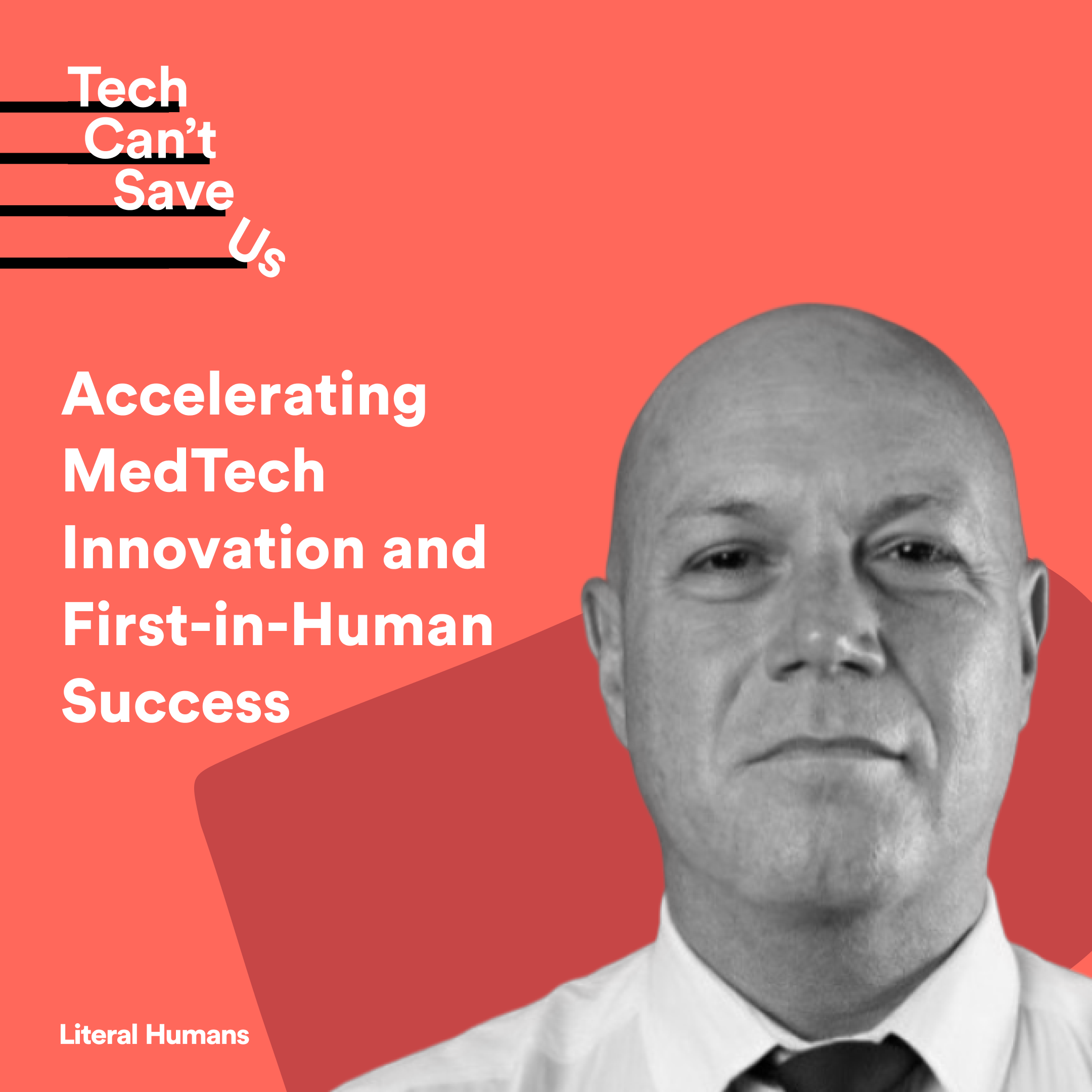
  • Julio Martinez-Clark on Tech Can't Save Us: Accelerating MedTech and First-in-Human Success

    Julio Martinez-Clark on Tech Can’t Save Us: Accelerating MedTech and First-in-Human Success

    Julio Martinez-Clark, co-founder and CEO of bioaccess®, recently joined host Paul David on Tech Can’t Save Us — the podcast by Literal Humans that explores technology’s real-world limits and what it takes to build companies that last. The episode is now live across all major podcast platforms.

    Listen on Apple Podcasts | Listen on Spotify | Full episode on the TCSU website


    The “Valley of Death” — And How MedTech Startups Survive It

    The conversation opens with a sobering reality: roughly 90% of healthcare startups fail — not because their technology is flawed, but because they exhaust their capital before generating the clinical data needed to raise their next round or secure an exit.

    With monthly burn rates averaging $300,000 to $400,000, the clock is always running. The fastest path off the clock is the fastest path to first-in-human data.

    That’s the problem bioaccess® was purpose-built to solve.


    What bioaccess® Does — and Why LATAM

    bioaccess® is the world’s first contract research organization (CRO) built specifically around first-in-human (FIH) clinical trials. By combining deep site relationships, regulatory expertise, and operational infrastructure across Latin American markets — including Panama and El Salvador — bioaccess® compresses clinical timelines by up to 40%.

    As Julio explained on the podcast, speed in LATAM doesn’t mean cutting corners. Every trial bioaccess® runs adheres strictly to ICH and GCP guidelines — the same international standards required by the FDA and EMA. What differs is execution: rapid site activation, predictable patient recruitment, and a team that has done this before, in these markets, for these device types.


    Democratizing Access to Life-Saving Innovation

    One of the most compelling threads in the conversation is the human dimension of clinical research. The patients who participate in first-in-human trials in lower-income settings often have no other access to advanced medical care. For them, participation isn’t a transaction — it’s a lifeline.

    Julio discussed how this dynamic shapes bioaccess®’s philosophy: that moving faster on clinical timelines is not just a business imperative but a moral one. Compassionate, high-quality clinical research restores dignity and delivers access to innovations that would otherwise take years longer to reach these communities.


    Building Without Outside Capital

    The episode also covers bioaccess®’s self-funded growth strategy — a deliberate choice that has kept the company focused on delivering value to sponsors rather than chasing metrics that serve investors. Julio shares the discipline required to grow this way and the common mistakes he sees first-time founders make when they let fundraising urgency drive clinical decision-making.


    La Cebolla de Pandora

    Julio reflects on the period he spent writing La Cebolla de Pandora — a book that gave him the space to examine his own assumptions about what success, purpose, and impact actually mean in the context of a company trying to change how medicine reaches people.


    Listen Now

    The full episode runs 26 minutes. You can find it on the Tech Can’t Save Us website, Apple Podcasts, Spotify, and all major platforms.

    If you’re a MedTech or biopharma startup navigating your path to first-in-human data, explore how bioaccess® can compress your timeline →


    Tech Can’t Save Us is produced by Literal Humans, a marketing agency focused on technology and innovation.